Choosing the best Aluminium Sliding Doors from China requires more than comparing prices or polished product photos. A reliable decision starts with the building envelope. Frame alloy, wall thickness, thermal breaks, glass specification, drainage, rollers, locks, and surface treatment all affect daily performance. A door may look elegant in a showroom, yet struggle when exposed to coastal air, heavy rain, or frequent family use.
Dr. Helen Sanders, a building-envelope specialist, has said, “A window is a system, not a product.” The same principle applies here. Aluminium Sliding Doors should be assessed as complete systems, including the frame, glass, hardware, seals, and installation details. Ask suppliers for test reports, U-values, air-tightness results, water-penetration ratings, and warranty conditions. Check whether replacement rollers and seals are available locally. Small details matter.
Chinese manufacturers now offer impressive slim frames, large glass panels, thermally broken profiles, and custom powder-coated finishes. Some factories also provide strict quality control and export experience. Others rely too heavily on attractive catalogues. That is where buyers need patience. Visit the production line if possible. Inspect corner joints, track alignment, drainage holes, and protective packaging. Feel the rollers move.
No supplier is perfect. Even an excellent door can fail after careless installation. Site measurements, sill support, waterproofing, and adjustment deserve equal attention. The best choice is not always the cheapest option. It is the system that combines verified performance, honest documentation, suitable design, and dependable after-sales support. That balance forms the foundation of this guide.
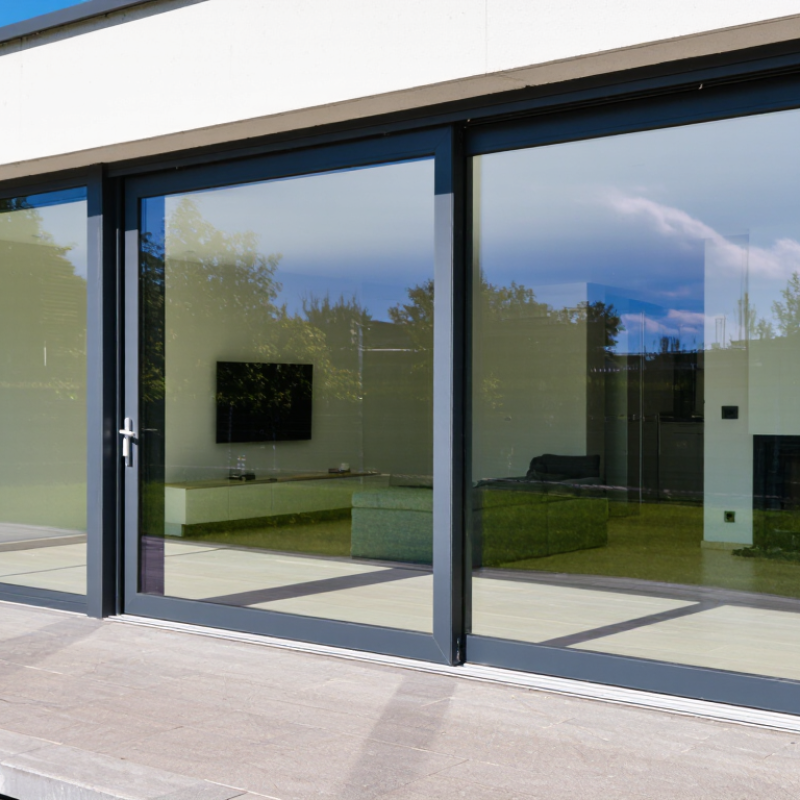
What Are the Best Aluminium Sliding Doors from China?
The best aluminium sliding doors from China are defined by measured performance, not polished photographs. In practice, a strong system needs a stable frame, accurate machining, and smooth rollers. The complete door matters more than the aluminium profile alone. Ask for whole-door U-value data, air-permeability results, water-tightness tests, and wind-load performance under EN 14351-1 or equivalent standards. A low U-value usually indicates better insulation, but installation gaps can weaken it sharply. That detail is often overlooked.
Thermal performance deserves attention. The 2023 Global Status Report for Buildings and Construction reported that buildings created 37% of global energy-related and process emissions in 2022. A well-designed sliding door cannot solve that problem alone. It can, however, reduce drafts and unwanted heat transfer. Look for thermal breaks, insulated glass, compression seals, and drainage channels. The International Aluminium Institute states that recycled aluminium requires roughly 5% of the energy used for primary aluminium. Material traceability therefore supports both sustainability claims and purchasing confidence.
Tips: Request independent test reports, not only supplier specifications. Check roller-cycle testing and replacement access. Test the sample by hand. It should glide quietly, without shaking. Also inspect corner joints closely. Small gaps become real problems in rain. I would still question any product promising perfect insulation, effortless operation, and low cost at once. Trade-offs exist. Door quality depends on glass, hardware, fabrication, and installation as much as the frame.
The best aluminium sliding doors are evaluated by measurable factors rather than appearance alone. This non-brand benchmark scores key purchasing criteria from 1 to 10, including thermal insulation, weather resistance, frame strength, glazing performance, hardware durability, and installation quality. Buyers should verify test reports, applicable EN or ISO standards, system specifications, and project-specific performance requirements before making a decision.
What Are the Best Aluminium Sliding Doors from China?
Chinese aluminium sliding doors are designed through a practical balance of strength, insulation, safety, and appearance. Manufacturers study opening size, wind exposure, drainage, and daily traffic before selecting frame profiles. Thermal breaks can reduce heat transfer through the aluminium. Reinforced corners improve stability. Small details matter.
During manufacturing, aluminium profiles are extruded, cooled, and cut to precise measurements. CNC equipment helps create consistent joints and drainage openings. Workers then assemble frames, install rollers, fit glass, and adjust locking systems. High-quality powder coating requires careful surface preparation and controlled curing temperatures. Otherwise, the finish may fade or peel earlier than expected.
Reliable factories inspect profile thickness, corner alignment, roller movement, glass seating, and water drainage. They also test repeated opening and closing under realistic conditions. In practical sourcing, a polished sample can hide weak production control. Factory records, material certificates, and inspection photographs provide stronger evidence than appearance alone. No process is flawless. Even a well-designed door may perform poorly if the opening is measured incorrectly or the installation is rushed. Buyers should request drawings, hardware specifications, test results, and clear quality requirements before production. A suitable Chinese aluminium sliding door is not simply attractive; it is precisely engineered, carefully assembled, and matched to the building’s actual conditions.
| Evaluation Dimension | Specification or Manufacturing Feature | Typical Industry Range | Why It Matters When Selecting a Door |
|---|---|---|---|
| Aluminium Profile | Thermally broken aluminium frame with reinforced chambers | PreferredFor conditioned buildings | A polyamide thermal barrier separates the interior and exterior aluminium sections, helping reduce heat transfer and interior condensation compared with a non-thermal-break frame. |
| Frame Depth | System depth selected according to panel size, glass weight, wind exposure, and insulation requirements | Approximately 60–200 mm | Deeper systems generally allow larger glass panels, stronger reinforcement, improved drainage design, and more space for seals and thermal barriers. |
| Surface Finish | Powder coating, anodising, or wood-effect decorative coating | Common coating thickness: about 60–120 μm for powder coating | The finish should be uniform, firmly bonded, and suitable for the installation environment. Coastal locations may require enhanced pretreatment and corrosion protection. |
| Glass Configuration | Double or triple insulating glass with safety glass where required | Common overall glass thickness: approximately 24–52 mm | Low-emissivity coatings, inert-gas filling, laminated glass, and solar-control glass can improve thermal performance, acoustic comfort, security, or solar management. |
| Safety Glazing | Tempered or laminated safety glass selected by location and risk assessment | Often required for large, low-level, or impact-prone glazing | Safety glass reduces injury risk if breakage occurs. The exact requirement depends on local building regulations and the door’s installation location. |
| Panel Size | Panel dimensions engineered around glass weight, deflection limits, hardware capacity, and wind load | Approximately 600–3,500 mm wide and 1,800–3,500 mm high per panel | Larger panels provide wider views and fewer sightlines but require stronger rollers, more accurate fabrication, and careful site handling. |
| Opening Layout | Two-, three-, four-, or multi-track configurations with fixed and sliding panels | Common opening ratios: 2-panel, 3-panel, and 4-panel layouts | The selected layout affects clear opening width, frame sightlines, ventilation options, drainage, and the amount of floor space needed for operation. |
| Roller System | Stainless-steel or engineered-metal rollers with sealed bearings | Load capacity commonly engineered from about 80–300 kg per panel | The required capacity must exceed the complete moving panel weight, including glass, frame, hardware, and an appropriate safety margin. |
| Track Design | Recessed, surface-mounted, or raised track with replaceable wear components | Track selection based on drainage, accessibility, and panel weight | Low or flush tracks improve accessibility, while raised tracks may simplify water management in exposed locations. Correct installation is essential for smooth movement. |
| Weather Sealing | EPDM or compatible gaskets, brush seals, interlocking stiles, and pressure-equalised drainage | Performance verified through air, water, and wind testing | A good sealing package helps limit air leakage and water penetration. Test results should be reviewed for the complete door assembly rather than for individual components only. |
| Thermal Performance | Complete-door U-value based on frame, glass, spacer, size, and configuration | Approximately 1.0–2.5 W/m²·K for many insulated systems | Lower U-values generally indicate better insulation, but published results are meaningful only when the tested size, glass specification, and calculation method are clearly stated. |
| Acoustic Performance | Sound reduction influenced by glass thickness, lamination, airspace, seals, and frame joints | Approximately 28–45 dB Rw for many residential configurations | Laminated acoustic glass and well-sealed joints can improve sound reduction. Actual results depend heavily on installation quality and surrounding wall construction. |
| Wind Resistance | Frame, glass, rollers, and fixings designed for project-specific wind pressure | Must be calculated and tested for the project location | Wind performance depends on building height, exposure, opening size, local regulations, and fixing method. A generic rating should not replace project-specific verification. |
| Security Design | Multi-point locking, anti-lift devices, reinforced interlocks, and security-rated glass where needed | Security level varies by hardware and tested door configuration | Anti-lift protection and secure interlocking meeting stiles are especially important for sliding panels. Hardware should be tested together with the exact frame and glass combination. |
| Fabrication Process | Profile cutting, CNC machining, corner joining, hardware installation, glazing, sealing, and adjustment | Manufactured to approved shop drawings and quality checkpoints | Accurate machining and controlled assembly tolerances help maintain panel alignment, drainage, locking operation, and long-term roller performance. |
| Quality Control | Dimensional inspection, coating inspection, glass verification, hardware checks, and operational testing | Inspection before packing and, where required, third-party performance testing | A reliable quality plan should include documented inspection criteria, traceable materials, approved samples, and checks on the finished door rather than only on raw profiles. |
| Installation Tolerance | Opening prepared level, plumb, square, and structurally adequate for the selected system | Follow the system supplier’s approved installation tolerances | Even a well-manufactured door may bind, leak, or wear prematurely if the opening is out of square or the sill is inadequately supported and drained. |
| Maintenance | Regular track cleaning, drainage inspection, seal checks, hardware adjustment, and fastener review | Inspect at least annually; clean more often in dusty or coastal environments | Preventive maintenance keeps rollers moving smoothly and helps identify blocked drainage, damaged seals, corrosion, or loose hardware before performance declines. |
| Best Selection Criteria | Verified performance data, suitable profile system, correct glass, dependable hardware, and documented manufacturing control | RecommendedCompare complete tested assemblies | The best aluminium sliding door is not defined by appearance alone. Compare thermal, weather, acoustic, security, durability, warranty, and installation support against the project requirements. |
| Note: The ranges above are general industry reference values, not guaranteed specifications. Final performance depends on the complete door design, selected materials, dimensions, local climate, applicable building codes, testing methods, and installation quality. | |||
When comparing aluminium sliding door systems from China, begin with the frame, not the finish. A quality system should use stable aluminium profiles with a properly designed thermal break. This reduces heat transfer and limits condensation around the inner frame. Ask for profile wall thickness, alloy information, and section drawings. A polished surface can hide weak construction.
Glass selection changes comfort noticeably. Double glazing with low-emissivity coating can improve insulation, while laminated glass adds useful safety and sound control. Check the spacer type, seal quality, and declared U-value.
Rollers also deserve attention. Stainless steel or reinforced rollers should carry the specified sash weight without grinding. Open the sample repeatedly. Feel for vibration, resistance, and uneven movement.
Water management is often overlooked. Look for sloped tracks, drainage holes, and replaceable weather seals. These details matter during heavy rain, especially on exposed balconies. In project inspections, I also check locking points, corner joints, and installation tolerances.
A strong door can still perform poorly when the opening is inaccurate. Request independent test reports for air leakage, water resistance, wind pressure, and operating cycles.
Supplier communication matters too; unclear drawings create expensive mistakes. No system is perfect. Some narrow frames look elegant but may limit glass size or drainage performance.
Compare the complete assembly, including hardware, glazing, delivery protection, and installation guidance, rather than judging aluminium doors by appearance alone.
Choosing the best aluminium sliding doors from China starts with supplier evaluation, not attractive photographs. A reliable supplier should provide business registration, factory details, export experience, and recent project references. Ask for verifiable test reports, not copied certificates. A video tour helps, but it cannot replace an independent factory inspection.
Product quality appears in small details. Check the aluminium alloy, wall thickness, profile tolerances, and thermal-break material. For many projects, 6063-T5 or 6063-T6 aluminium offers a practical balance of strength and finish. Confirm the coating process and request colour samples under natural light. Inspect rollers, locks, seals, drainage holes, and corner joints. Smooth movement matters.
Test a full-size sample.
A small showroom sample may hide installation problems. Order one door with production hardware and realistic dimensions. Request air, water, wind, and operating-cycle test results where relevant. An independent inspector can measure dimensions, surface defects, glass specifications, packaging, and loading procedures. Clear drawings should show tolerances and installation gaps. Warranties must identify responsibility for glass, hardware, coating, and structural parts.
Price still matters, but the lowest quotation may exclude reinforcement, upgraded rollers, or protective packaging. Compare complete specifications line by line. Allow time for corrective samples. That step can feel inefficient, yet it often prevents expensive site adjustments. Even careful evaluations are imperfect; climate, installation quality, and transport can change performance. A supplier willing to discuss these risks usually deserves closer attention.
High-quality aluminium sliding doors from China depend on more than attractive frames. Installation strongly affects their performance. Measure the opening at several points before ordering. Uneven walls can create pressure on the rollers and locking hardware. Experienced installers should check the sill with a spirit level. They should also confirm that drainage channels remain open. Do not seal them accidentally. That mistake can cause water to collect after heavy rain. A small tolerance around the frame helps manage natural building movement.
Long-term performance requires simple, regular care. Vacuum dust from the bottom track every few months. Wipe the rollers and apply a manufacturer-approved lubricant when movement feels rough. Avoid excessive oil, because it attracts grit. Inspect weather seals for cracks, flattening, or gaps. Replace damaged seals before drafts and rain become noticeable. In coastal areas, rinse aluminium surfaces with clean water more often. Salt deposits can gradually damage finishes and fittings. No door stays perfect forever. Even a careful installation may need roller adjustment after several years.
Tips:
Keep the installation guide and hardware records. Ask a qualified installer to verify drainage and frame alignment. Test each panel before final sealing. Open and close it slowly. Listen for scraping sounds. Photograph the finished drainage details for future maintenance. These small checks often reveal problems earlier than visible water damage.
Designers consider opening size, wind exposure, drainage, insulation, and daily traffic. Small details matter. The frame must match the building’s actual conditions.
Check profile wall thickness, alloy information, section drawings, and thermal-break design. A thermal break reduces heat transfer and may limit condensation. A glossy finish proves little.
Double glazing with low-emissivity coating can improve insulation. Laminated glass may add safety and sound control. Also check spacers, seals, and the declared U-value.
Rollers should support the specified sash weight without grinding or excessive vibration. Open the sample repeatedly. Uneven movement suggests possible hardware or alignment problems.
Sloped tracks, drainage holes, and replaceable weather seals help guide water outside. These features matter on exposed balconies during heavy rain. Poor drainage can damage performance.
Aluminium profiles are extruded, cooled, cut, and prepared for assembly. CNC equipment helps create consistent joints and drainage openings. Workers install rollers, glass, seals, and locking systems before final adjustment.
Request drawings, hardware specifications, material certificates, test results, and inspection photographs. Independent reports should cover air leakage, water resistance, wind pressure, and operating cycles. Records reveal more than appearance.
Yes. Incorrect measurements or rushed installation can reduce sealing, drainage, and smooth movement. Installation tolerances matter. A polished sample may also hide weak production control. That risk deserves attention.
The best Aluminium Sliding Doors from China combine reliable performance, refined design, and practical value. They are defined by strong aluminium profiles, precise dimensions, smooth-operating rollers, secure locking systems, quality glass, and effective weather resistance. Chinese manufacturers often use advanced cutting, welding, coating, and assembly processes to create door systems suitable for residential and commercial applications. When comparing products, buyers should consider thermal insulation, drainage design, sound reduction, glass configuration, track durability, safety features, customization options, and compliance with relevant project requirements.
Evaluating suppliers requires more than comparing prices. Customers should review material specifications, production quality controls, testing documents, sample products, communication standards, and experience with overseas orders. Proper installation is equally important because accurate measurement, level tracks, suitable sealing, and correct adjustment directly affect performance. With regular cleaning, drainage inspection, hardware lubrication, and timely replacement of worn components, well-designed Aluminium Sliding Doors can provide smooth operation, energy efficiency, security, and long-term service.