Choosing an Aluminium Door With Window is not only a style decision. It affects daylight, ventilation, security, and energy performance. The U.S. Department of Energy’s Energy Saver guidance estimates that heat gain and heat loss through windows account for about 25–30% of residential heating and cooling energy use. That figure is a useful warning, not a promise of savings from any single door. The actual result depends on glazing, frame design, installation, and local climate.
Look beyond the frame’s clean lines. Check the glass specification, thermal break, weather seals, hardware, and drainage details. A slim profile may look elegant, but it should still feel solid and close smoothly. Details matter. Ask for documented performance ratings, warranty terms, and care instructions before comparing prices. A well-made product can still disappoint if it is poorly fitted.
Architect Carl Elefante, a former president of the American Institute of Architects, is widely associated with the reminder, “The greenest building is the one that is already built.” His point offers a useful lens for renovation: retaining a sound opening and choosing a durable replacement may avoid unnecessary work. It is not a product endorsement. For this guide, we will weigh practical criteria—measurements, glazing, finish, security, and installation—so you can choose an Aluminium Door With Window that suits your home. One caveat remains: specifications on paper cannot replace a careful site inspection.
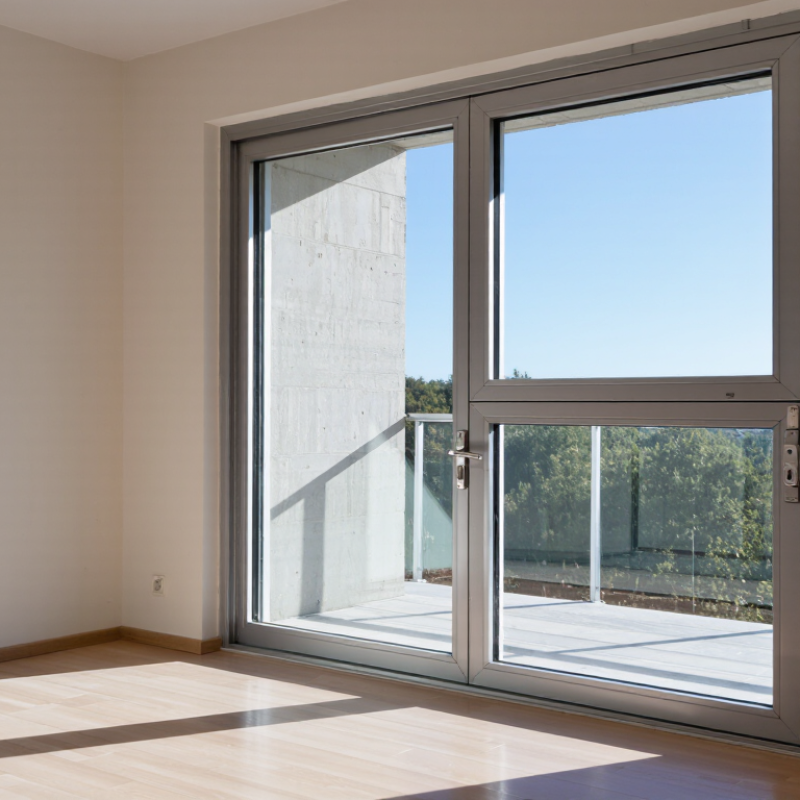
An aluminium door with a window should be selected for its location and daily use, not appearance alone. A sheltered patio entrance may need a different performance class from a wind-exposed upper-floor opening. The AAMA/WDMA/CSA 101/I.S.2/A440 standard, also known as NAFS, defines classes including R, LC, CW, and AW. Its commonly cited minimum performance grades are 15, 25, 30, and 40 psf, respectively. These are class benchmarks, not a guarantee that every door suits a particular building. Check the project’s design pressures and the tested rating for the exact door configuration. Wind matters.
Glazing also affects comfort. The U.S. Department of Energy estimates that windows account for about 25–30% of residential heating and cooling energy use; a glazed door can add to heat transfer. Compare the door’s certified thermal ratings, glass options, and air-leakage information alongside its NAFS class. A high structural grade alone does not mean better insulation. A strong rating can still disappoint if the sill and flashing details are overlooked.
Tips: Ask the supplier for the NAFS test report or label, and confirm the class, performance grade, water resistance, and size match your opening. Check local exposure requirements with a qualified designer or building professional. Do not assume a nearby model has the same rating; glass size and hardware can change the tested configuration.
When comparing aluminium doors with windows, check the NFRC ratings for the exact glass and frame configuration. U-factor measures heat transfer through the product; a lower number generally means better insulation. SHGC measures how much solar heat passes indoors. Lower SHGC can help limit overheating in sunny rooms, while a higher value may bring useful warmth in colder climates. Small differences matter.
Don’t compare ratings from products with different glass packages or sizes and assume the difference comes from the frame alone. Aluminium conducts heat, so a thermally broken frame can affect overall performance. Look for ratings for the complete door, not just a glass sample. The ratings are useful, not perfect: orientation, shade, air leakage, and installation also affect comfort. A west-facing opening may need different solar control than a shaded north-facing one.
Tips: Match the ratings to your climate and room exposure. Ask for the NFRC label or certified product data, and confirm it matches the hardware and glazing you plan to order. Check both numbers, not just the lower U-factor. It’s easy to overlook that. Then consider how much daylight you want and whether direct sun reaches the glass in the afternoon.
When choosing an aluminium door with a window, check the safety-glazing rules that apply to your location. Requirements often depend on the glass panel’s size and position, especially near the floor, beside a doorway, or in a door itself. A small pane can still need safety glass. Do not rely on appearance alone; clear glass may be tempered or laminated without looking different.
Tempered glass breaks into smaller pieces, while laminated glass is designed to remain attached to an interlayer when cracked. Which type is suitable depends on local building codes, the door’s location, and the expected hazards. Ask the supplier or installer for product documentation showing the glass type and applicable compliance details. If the door opens onto a busy walkway, also consider how people might contact the glazing. Details matter. Code requirements can change, and I would not assume that a familiar specification applies everywhere.
Tips: Confirm the rules with your local building department before ordering. Check for permanent safety-glass markings or written certification. Measure the pane’s position carefully, and ask a qualified installer to verify the specification. Keep the paperwork. A missed detail is frustrating, and easy to overlook.
An aluminium door with a window can feel bright and sturdy, but its frame may conduct heat quickly. A thermal break is an insulating section between the interior and exterior aluminium. It slows heat transfer. Not magic. In cold weather, it can reduce chilly frame edges and condensation risk; in warm climates, it may help limit unwanted heat gain.
Use the local energy code’s required U-factor as your starting point. U-factor measures heat flow through the complete door assembly; lower numbers indicate better insulation. Check whether the published value covers the glazed door, not just the glass or frame. This detail is easy to miss. Climate zone, door size, glazing, and installation can affect the final rating.
Ask for tested documentation showing the whole-unit U-factor, then compare it with the limit for your project. A deeper thermal break does not automatically guarantee compliance. Verify the exact configuration, including glass type and any sidelights. If the rating is close to the limit, confirm requirements with the local building department or a qualified energy professional. I would not choose by frame appearance alone; the neatest profile may not perform best.
When choosing an aluminium door with a window, inspect the finish specification, not just the frame colour. Sunlight can fade exposed surfaces, while rain and airborne salt may stress the coating. AAMA 2604 and AAMA 2605 are performance specifications for coatings on architectural aluminium. AAMA 2605 sets more demanding performance requirements than 2604, including weathering and corrosion resistance. Neither number promises that a finish will remain unchanged forever.
Ask the supplier for documentation identifying the coating system and the applicable specification. Check that the paperwork covers the actual finish and aluminium components you are buying, rather than a similar sample. It is tempting to treat the higher number as an automatic guarantee; that is too simple. Exposure, surface preparation, installation, and cleaning all affect results. A shaded inland doorway faces different conditions from a sunlit coastal entrance. That difference matters. Compare the written warranty’s exclusions and maintenance instructions, too. If a sample looks perfect under showroom lights, view it outdoors before deciding; colour and sheen can shift noticeably in daylight. A specification helps you compare finishes, but careful documentation and realistic expectations make the choice more dependable.
| Selection point | AAMA 2604 | AAMA 2605 | What to check when buying |
|---|---|---|---|
| Specification purpose | A performance specification for high-performance organic coatings on architectural aluminum. | A more stringent performance specification for superior-performing organic coatings on architectural aluminum. | Ask for documentation stating that the coating system on the door meets the specified AAMA standard. The standard applies to the coating, not the performance of the complete door or window assembly. |
| South Florida outdoor exposure benchmark | Includes a 5-year outdoor exposure requirement in South Florida. | Includes a 10-year outdoor exposure requirement in South Florida. | For strong sun exposure or a long service-life priority, consider 2605. Local climate, installation, cleaning, and maintenance still affect real-world performance. |
| Color change after exposure | The commonly specified maximum color change is ΔE 5 after the required exposure. | The commonly specified maximum color change is ΔE 5 after the required exposure. | Confirm the test report covers the offered coating and color. Dark or high-contrast colors can make visible fading more noticeable. |
| Gloss retention after exposure | Requires at least 30% gloss retention under the applicable exposure test. | Requires at least 50% gloss retention under the applicable exposure test. | If retaining sheen matters, ask whether the finish is matte, satin, or gloss and request the relevant coating test documentation. |
| Chalking resistance | Requires a chalk rating of at least 8 on the applicable test scale. | Requires a chalk rating of at least 8 on the applicable test scale. | Chalking is a powdery residue that can develop as a coating weathers. Follow the supplied cleaning and care instructions. |
| Exposure conditions at the opening | A useful benchmark for many exterior applications. | A stronger option to consider for demanding exposure and durability priorities. | Consider direct sun, coastal salt, wind-driven rain, nearby pools, and whether the door is sheltered by an overhang. Ask about cleaning frequency and care for the specific environment. |
| Door, glazing, and installation | Does not by itself establish the door’s air, water, structural, thermal, or security performance. | Does not by itself establish the door’s air, water, structural, thermal, or security performance. | Check the complete door’s performance ratings, glass type, safety-glazing requirements, weather seals, hardware, and installation details separately. |
| Warranty and evidence | A standard specification is not the same as a product warranty. | A standard specification is not the same as a product warranty. | Request the coating compliance statement or test report, the warranty terms, exclusions, maintenance requirements, and confirmation that the quoted finish is the tested system. |
Note: AAMA specifications are technical performance standards for coating systems. Confirm the applicable standard edition and test details with the supplier; a specification claim does not guarantee identical service life in every location or on every door.
Match it to the opening’s location and daily use. A sheltered patio door faces different demands than an exposed upper-floor door. Wind matters.
Classes R, LC, CW, and AW have commonly cited benchmarks of 15, 25, 30, and 40 psf. These are not guarantees for every building.
Ask for the test report or label. Confirm the class, pressure rating, water resistance, and size match your exact opening.
Not necessarily. Compare thermal ratings, glass options, and air leakage separately. A strong frame rating can still disappoint if sill details are poor.
They can change the tested configuration. A nearby model may not carry the same rating. Check the exact door details.
Look for documentation covering the actual coating and aluminium parts. Higher performance specifications generally set tougher weathering and corrosion requirements, but finishes can still change over time.
A sunny coastal entrance faces stronger exposure than a shaded inland doorway. Surface preparation, installation, and cleaning also matter. I would still recheck the care instructions.
Not by itself. View the sample outdoors, where daylight may change its colour and sheen. Also read the warranty exclusions. A perfect sample proves little.
Choosing an Aluminium Door With Window starts with understanding where it will be installed and what performance it must deliver. Consider exposure to wind and weather, how often the door will be used, and the relevant performance class under AAMA/WDMA/CSA 101/I.S.2/A440. For the glazing, compare NFRC U-Factor and SHGC ratings: a lower U-Factor can help limit heat transfer, while SHGC indicates how much solar heat enters through the glass. Select safety glazing that meets the applicable building-code requirements for the location and type of door.
Next, assess the frame’s thermal break and confirm that the complete door assembly can meet local energy-code U-Factor limits. Finally, compare the finish’s expected durability with the requirements of AAMA 2604 or 2605, taking local climate and exposure into account. Reviewing these factors together helps you choose a door that balances safety, energy performance, weather resistance, and lasting appearance.