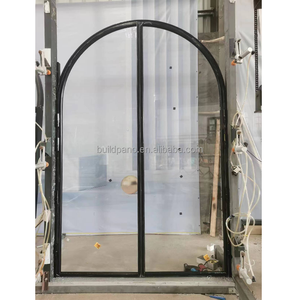
Precision Engineered Fenestration
Featured CE-Certified Glazing & Profile Systems
Explore our primary structural fenestration catalog engineered with 6063-T5/T6 architectural aluminum alloy, multi-chambered polyamide PA66 thermal barriers, and argon-filled insulating low-E glass units.
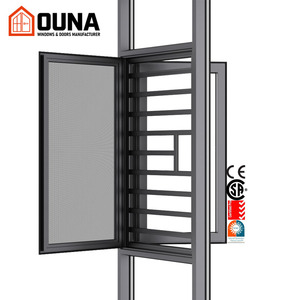
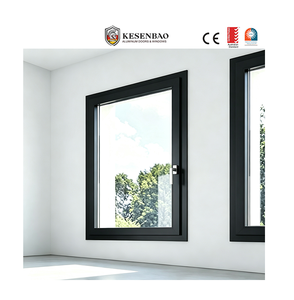
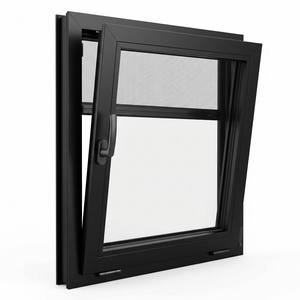
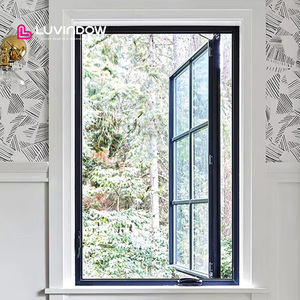
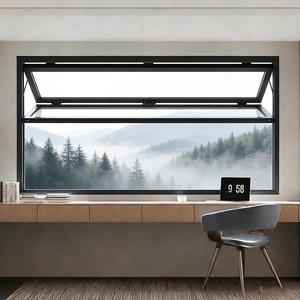
Bi-fold · Vertical Accordion
Modern Bifold Black Aluminum Alloy Tempered Double Glass Heat Insulation Accordion Vertical Folding Window
25+
Years Manufacturing Mastery
180k
Sq. Meters Production Base
100+
International Patents & Certs
60+
Global Export Destinations
Engineering Authority
The Fenestration Engineering Paradigm: Demystifying CE Compliance
An exhaustive analysis of thermal bridges, acoustic mitigation physics, structural deflection indices, and argon containment metrics in commercial-grade architectural envelope systems.
Structural Dynamics, EN 14351-1 Protocols & Glass Architecture
In high-performance commercial and premium residential architecture, a window cannot be evaluated merely as an aesthetic opening; it operates as an active thermodynamic membrane. CE certification under the European Construction Products Regulation (CPR 305/2011) and the harmonized product standard EN 14351-1:2006+A2:2016 establishes stringent verification mechanisms. Fenestration systems must undergo accredited Notified Body testing for mechanical load resilience, watertightness under cyclonic dynamic pressures, and verified heat dissipation coefficients.
DERCHI aluminium double-glazed windows integrate multi-chambered structural polyamide extrusions (PA66 GF25, reinforced with 25% chopped structural glass fiber). This effectively severs the high thermal conductibility of raw aluminum (approx. 160 W/m·K) down to an ultra-efficient barrier performance below 0.3 W/m·K across the profile core. Paired with dual-edge warm edge spacer bars and dual-laminated or tempered low-emissivity glass assemblies, overall window thermal transmission values (Uw) are stabilized between 1.1 and 1.4 W/m²K.
| Mechanical / Thermodynamic Metric | DERCHI Engineered Benchmark | Standard Global Benchmark | Harmonized Verification Code |
|---|---|---|---|
| Thermal Transmittance (Uw) | 1.1 – 1.4 W/m²K (Equipped with Low-E & Argon) | 2.2 – 2.8 W/m²K | EN ISO 10077-1 / EN ISO 10077-2 |
| Air Permeability / Infiltration | Class 4 (Highest European Grade ≤ 3 m³/h·m²) | Class 2 or Class 3 | EN 1026 / EN 12207 |
| Watertightness Under Pressure | Class E900 (900 Pa Dynamic Static Pressure) | Class 4A – 7A (150 – 300 Pa) | EN 1027 / EN 12208 |
| Wind Load Resistance (Structural) | Class C5 (≤ 1/300 Deflection at 2000 – 3000 Pa) | Class B3 / C2 | EN 12211 / EN 12210 |
| Acoustic Decibel Attenuation (Rw) | 38 dB – 45 dB (Asymmetric Laminates) | 28 dB – 32 dB | EN ISO 717-1 / ISO 10140-2 |
| Alloy Composition & Hardness | 6063-T5 / 6063-T6 Pure Ingot (Webster Hardness ≥ 12) | Recycled or Scrap Blend (Webster ≤ 9) | GB 5237 / ASTM B221 |
Global Market Intelligence
Future Procurement & Architectural Fenestration Trends
Analyzing macro supply chain shifts, ESG decarbonization mandates, and technical innovations influencing commercial and residential facade tenders through 2030.
Carbon Border Adjustments & Low-Carbon Billet
With the operational roll-out of the European Carbon Border Adjustment Mechanism (CBAM) and progressive green building directives, enterprise procurement is shifting rapidly toward hydroelectric-smelted, low-carbon certified aluminum billets (≤ 4.0 kg CO2e/kg Al). International developers require complete Environmental Product Declarations (EPD) to secure building taxonomy financing.
Ultra-Slim Minimalist Sightlines & Oversized Glazing
Contemporary high-end residential engineering dictates maximum visible light transmission (VLT) via ultra-narrow visual profiles (interlocking stiles as slender as 18mm–22mm). Realizing structural resistance despite minimal framework relies heavily on structural silicone bonding where the Insulated Glass Unit (IGU) serves as an integral structural shear element.
Smart Hardware & Micro-Climate Automation
Commercial facades increasingly demand factory-integrated building management system (BMS) interfaces. Motorized multi-point perimeter chain actuators, magnetic contact security sensors, and motorized tilt-trickle ventilation modes are built directly within the thermal barrier chambers without disrupting the airtight perimeter seal.
Cyclone & Extreme Weather Hardening
Climate volatility has induced strict cross-continental building code updates across Florida (Miami-Dade NOA), coastal Australia (AS 2047 cyclonic impact), and tropical Asia. Fenestration systems now demand missile-impact SentryGlas® interleaves paired with heavy wall profile thicknesses (≥ 2.0mm–3.0mm) to avert static frame failure.
Off-Site Pre-Fabrication & Modular Glazing
Skyrocketing on-site labor overheads in North America, Western Europe, and Australia are driving demand for pre-glazed, unitized, sub-frame systems. Buyers are requiring suppliers to provide prefabricated extruded sub-sills, sub-heads, and pre-punched nailing flanges that eliminate manual sealing errors on the scaffolding.
Advanced Fluorocarbon (PVDF) Surface Durability
For coastal luxury developments exposed to intense UV degradation and saline sea spray, standard polyester powders fall short. The industry is moving heavily to 3-coat AAMA 2605-compliant PVDF liquid coatings and architectural anodizing (≥ 25 microns) offering guaranteed color retention for up to 30 years without chalking.
Manufacturing Scale & Reliability
DERCHI: Advanced Manufacturing Infrastructure in Foshan
Guangdong Dejiyoupin Doors and Windows Co., Ltd. operates as one of China's premier fenestration conglomerates, providing direct factory accountability from CAD shop drawings to container stuffing.
180,000 m² Mega Industrial Base
Equipped with 600+ skilled personnel, our massive automated extrusion cutting, CNC corner crimping, and automated silicone dispensing lines ensure absolute dimensional fidelity across huge commercial runs.
Multinational Certification Audit
Backed by CE (EN 14351-1), NFRC, AS 2047 N6 cyclonic testing, ISO 9001, and UL fire classifications, our window systems pass third-party lab verification for global compliance.
Full Structural Customization & BIM
Our dedicated engineering team turns structural blueprints into precise, parametric 2D/3D CAD shop drawings, optimizing structural mullions to accommodate high wind-loads and unique architectural geometries.
Export Crating & Global Port Delivery
We deliver turnkey export packaging utilizing multi-layer protective film, foam edge profiles, and fully enclosed IPPC-certified fumigated plywood crates to safeguard glazed units across long sea voyages.
Procurement Knowledgebase
Frequently Asked Questions for B2B Window Importers
Essential technical, logistics, and compliance inquiries answered for commercial contractors, facade consultants, and real estate developers.
What documentation validates authentic CE compliance for aluminium windows?
Legitimate CE certification requires a comprehensive Declaration of Performance (DoP) issued in accordance with standard EN 14351-1. This document must refer to Initial Type Testing (ITT) reports carried out by an accredited EU Notified Testing Body. The DoP explicitly declares tested metrics for wind resistance (EN 12210), watertightness (EN 12208), air permeability (EN 12207), and calculated or tested thermal transmittance (Uw via EN ISO 10077). DERCHI supplies complete factory production control (FPC) audit documentation and DoP certificates with every export consignment.
Why is PA66 GF25 thermal break superior to pour-and-debridge polyurethane?
Polyamide 6.6 reinforced with 25% glass fiber (PA66 GF25) exhibits a thermal expansion coefficient virtually identical to architectural aluminum alloys (approx. 2.3 × 10⁻⁵ K⁻¹). This dimensional harmony ensures that during extreme solar heating or sub-zero freezing, the structural composite profile expands and contracts uniformly without shear failure, cracking, or internal delamination. In contrast, older polyurethane pour-and-debridge methods lack long-term structural shear resistance on tall, oversized architectural panels.
How does glass configuration impact acoustic sound reduction (STC / Rw)?
Symmetrical double glazing (e.g., 6mm glass + 12mm air + 6mm glass) suffers from resonance frequency coincidence, allowing specific noise wavelengths to penetrate effortlessly. To attain high sound attenuation (≥ 38–45 dB), we configure asymmetrical glass assemblies (e.g., 6mm exterior + 16mm warm-spacer argon + 8.76mm acoustic PVB laminated interior). The varying mass of disparate glass thicknesses disrupts sound waves, while the acoustic polyvinyl butyral interleaf dampens vibration transmission across highway, rail, and airport environments.
What hardware brands are integrated, and what is their operational lifecycle?
A window's functional longevity is governed by its operating hardware. DERCHI integrates Tier-1 European systems such as Siegenia, Roto Frank, and G-U, alongside certified high-grade Asian hardware partners (Hopo, Kin Long). Heavy-duty stainless steel 304/316 multi-point lock mechanisms, concealed 180-degree friction stays, and precision tandem rollers undergo cyclic fatigue testing to exceed 50,000 to 100,000 manual opening-closing cycles without operational sag or latch failure.
How does DERCHI ensure zero glass breakage and frame scratches during sea freight?
Our multi-tier export packaging standard guarantees complete physical protection: First, frame surfaces are wrapped with low-tack protective polymer film; second, high-density polyethylene foam corners shield all mitered joints; third, corrugated multi-wall buffer pads wrap the perimeter; and fourth, window units are packed vertically inside structural, fumigation-free solid plywood crates reinforced with interior steel strapping and rubber vibration pads. Containers are blocked and braced with heavy lumber to eliminate marine vessel motion impacts.
What is the standard production lead time and quotation turnaround protocol?
Upon receipt of your window and door schedules, architectural floor plans, or bill of quantities (BOQ), our project engineering group provides itemized, transparent FOB/CIF pricing within 24 to 48 hours. Once shop drawings are signed off and production deposits received, standard manufacturing cycles range from 25 to 35 calendar days (accommodating custom profile extrusion dies or specialized Low-E glass coatings).
Initiate Your Architectural Glazing Consultation
Send your window schedule, elevations, or target thermal U-value specifications. DERCHI's senior fenestration engineers will provide custom CAD shop drawings, structural wind load analysis, and complete commercial quotation support.
Get a Quote