Featured Commercial & Architectural Door Series
Engineered in our 180,000 m² Foshan manufacturing complex, each system integrates cold-rolled aluminum extrusions, advanced thermal barrier technology, and international safety compliance.
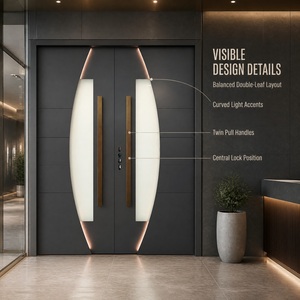
Thermal Break Aluminum Metal Door with Insulated Glass for Main Entrance
- Multi-chamber thermal barrier profile
- Double glazed argon-filled safety glass
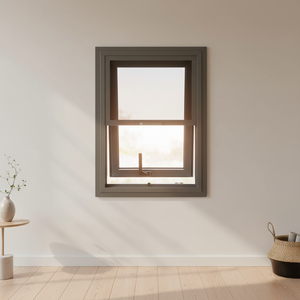
Double Glazed Aluminum Swing Hopper Window for Entry Ventilation
- Acoustic dampening up to 38 dB
- Micro-ventilation security position
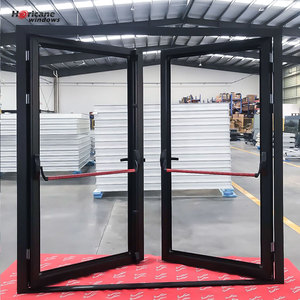
NOA Commercial Safety Quick Escape Door Storefront Push Bar Systems
- Panic push-bar rapid egress mechanism
- High-traffic storefront hinge hardware
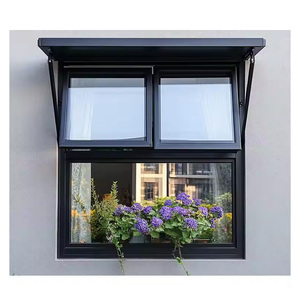
Residential AMJ Aluminum Awning Window for Commercial & Residential Projects
- Continuous co-extruded EPDM gaskets
- Heavy corrosion-resistant hardware
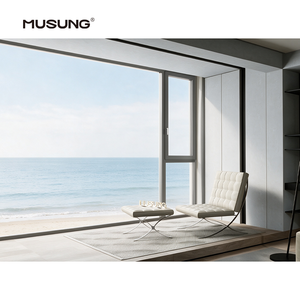
Thermal Break Low-E Insulated Aluminum Casement Architectural Window
- Low Solar Heat Gain Coefficient (SHGC)
- High structural windload resistance
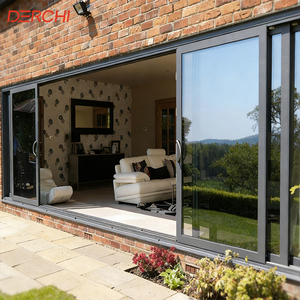
DERCHI Title 24 Hurricane Resistant Aluminum Double Glazed Sliding Door
- AS 2047 N6 cyclonic testing certified
- Reinforced interlocking sill assembly
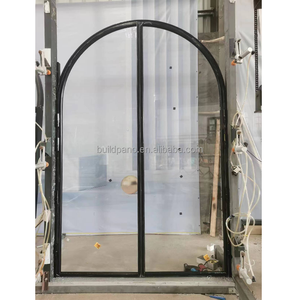
Architectural Soundproof Aluminum Grille Arched Entrance Doors
- Architectural precision arc extrusion
- Interior damping soundproof design
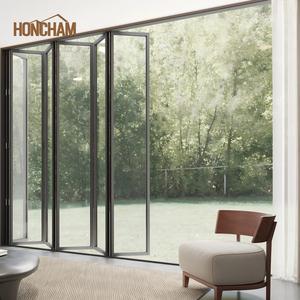
Custom Modern Tempered Double Glass Exterior Patio Bi-Fold Door System
- Stainless steel bottom-rolling guide
- Slim-frame panoramic aesthetic profile
Technical Standards for CE Marked Aluminum Roll Up Systems
A comprehensive engineering evaluation of high-cycle aluminum roller shutters, curtain slat metallurgy, structural wind classification, and electro-mechanical safety integration under European Directives.
Alloy Metallurgy & Structural Profile
Our structural slats utilize primary 6063-T5 and high-tensile 6005-T6 extruded aluminum alloys. Unlike secondary recycled scrap, our profiles maintain a yield strength exceeding 160 MPa and tensile strength of 215 MPa. Double-walled extruded profiles are injected with CFC-free polyurethane foam (density 45–50 kg/m³), achieving thermal insulation U-values as low as 1.4 W/(m²·K) while resisting coastal galvanic corrosion.
EN 13241-1 Structural Compliance
The European Harmonised Standard EN 13241-1 mandates stringent mechanical resistance, operational force safety, and wind resistance. Under EN 12424, DERCHI roll-up assemblies achieve Wind Load Class 4 and Class 5 certifications, tolerating dynamic test pressures in excess of 1200 Pa (equivalent to Category 3 hurricane wind speeds). Precision wind-lock guide assemblies prevent slat pullout during extreme cyclonic events.
Electro-Mechanical Safeguards (EN 12453)
Every commercial roll-up door package is engineered with fail-safe anti-drop parachute inertial brake mechanisms that lock the torsion barrel within 30 mm of descent should motor mechanical linkage fail. Wireless optoelectronic pressure-sensitive safety edges combined with dual through-beam infrared photo cells provide active obstacle detection, guaranteeing closing operational impact forces adhere to EN 12445 dynamic limits.
Architectural Specifier Matrix: Aluminum Roll Up Slats vs. Galvanized Steel & PVC
Tested Under ISO / CE Parameters| Engineering Property | DERCHI 6063-T5 Insulated Aluminum | Standard Single-Skin Galvanized Steel | Rigid PVC / Polycarbonate Composite |
|---|---|---|---|
| Corrosion Resistance (ASTM B117) | Superior >3,000 hrs Salt Spray (0 rust) | Prone to cut-edge oxidation within 400 hrs | Immune to rust; degraded by UV yellowing |
| Structural Dead-Load Weight | 4.8 – 8.5 kg/m² (Optimized motor lifespan) | 12.5 – 18.0 kg/m² (Accelerated motor wear) | 3.2 – 5.0 kg/m² (Low structural rigidity) |
| Wind Resistance (EN 12424) | Class 4 to Class 5 (Up to 1400 Pa with wind hooks) | Class 3 to Class 4 (Heavy slat deflection) | Class 1 to Class 2 (Severe slat blowout risk) |
| Acoustic Isolation (ISO 10140) | Rw 24 dB (Foam-core acoustic barrier) | Rw 16 dB (High resonance rattling) | Rw 14 dB (Hollow core transmission) |
| Surface Coating Longevity | Qualicoat Class 2 Fluorocarbon (>20 yrs) | Basic Polyester Powder (Chalking 5–7 yrs) | Uncoated resin (Micro-crazing under heat) |
| Operational Duty Cycle Rating | 100,000 to 250,000 cycles (High-duty) | 30,000 to 60,000 cycles (Spring fatigue) | 20,000 to 40,000 cycles |
Global Procurement & Engineering Trends (2025–2030)
How mega-logistics facilities, climate-resilient commercial developments, and building energy regulations are reshaping roll-up door specifications.
Thermal Decoupling & Carbon Neutrality Mandates
International building codes such as EU EPBD, California Title 24, and LEED v4.1 are enforcing stringent envelope air leakage limits (EN 12426 Class 2 minimum). Specifiers no longer accept uninsulated single-leaf roll-up doors in climate-controlled warehouses, automotive dealerships, and cold-chain hubs. High-density PU-injected dual-wall slats with dual-fin EPDM side seals and thermal-break guide channels have shifted from high-end options to standard regulatory requirements.
Smart IoT Telemetry & Predictive Maintenance
Industrial procurement is actively transitioning from reactive servicing to automated uptime telemetry. Next-generation European and North American installations demand RS-485 / Modbus / BACnet connectivity directly integrated into building management systems (BMS). Embedded motor cycle counters, thermal sensor monitors, and remote cloud status diagnostics permit facility engineers to track brake pad wear and spring torque relaxation prior to critical failure.
High-Cycle Spiral Acceleration & Rapid Logistics
Modern distribution hubs require opening speeds between 1.0 m/s and 2.0 m/s to reduce building heating/cooling losses and optimize forklift transit efficiency. Traditional coil-drum roll-ups are increasingly being replaced by non-contact spiral track systems where aluminum slats coil without metal-on-metal abrasion. This eliminates slat surface scratching, eliminates resonant operational chatter, and extends the assembly lifecycle past 300,000 cycles without structural re-tensioning.
25+ Years of Certified Manufacturing Excellence in Foshan
Guangdong Dejiyoupin Doors and Windows Co., Ltd. (DERCHI) operates China's leading intelligent manufacturing ecosystem for architectural doors and windows. Centered in Shishan Town, Nanhai District, Foshan, our unified production campus eliminates intermediaries, bringing factory-direct technical accuracy, shop CAD modeling, and certified quality control directly to global developers and importers.


Full-Scope Architectural Portfolio
From CE-certified commercial roll-up doors to high-end villa entrance pivot doors and hurricane glass curtain systems, developers consolidate full container loads under one supplier.

In-House Testing Laboratories
Every extrusion batch undergoes micro-hardness testing, anodized film thickness verification, and simulated 100,000-cycle stress tests to guarantee zero on-site operational failures.

100% Bespoke CAD/BIM Services
Our dedicated engineering department provides parametric CAD shop drawings, structural wind load calculations, and BIM models tailored to project door schedules at no additional cost.

Global Export Freight Engineering
Custom fumigated timber crates, steel-reinforced corner guards, and multi-layer vacuum moisture wrap ensure our door packages reach global destinations in flawless condition.
Independently Audited International Compliance
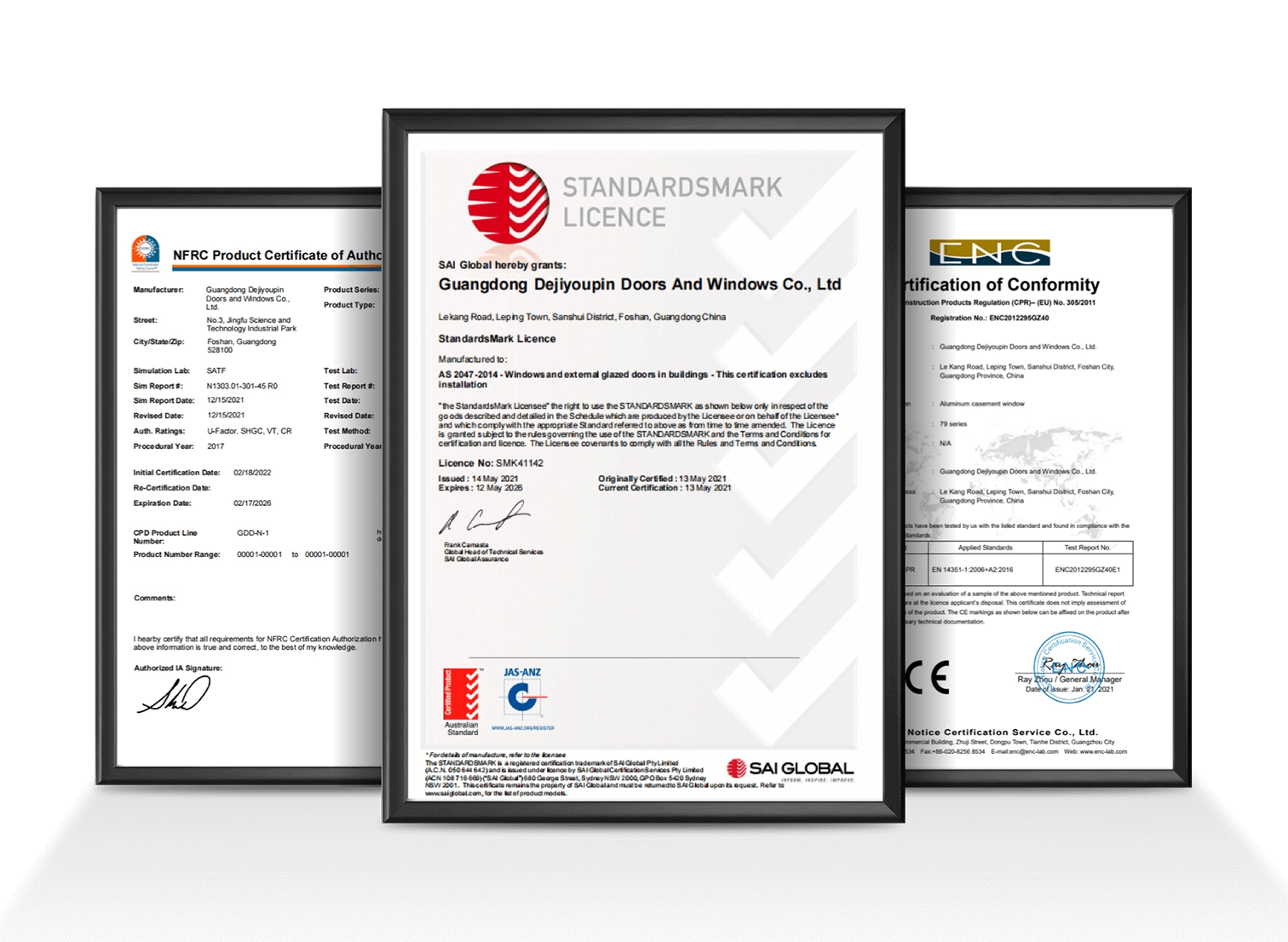
DERCHI doors undergo complete laboratory testing by recognized third-party test institutes, verifying compliance with European CE (EN 13241-1), Australian AS 2047, US Title 24, and ISO 9001 Quality Management standards.
Frequently Asked Procurement & Technical Questions
Direct answers to the questions general contractors, commercial architects, and international importers ask most when sourcing aluminum roll-up systems.
What specific testing documents are included with CE certified roll-up doors?
Every commercial consignment includes the official Declaration of Conformity (DoC) referencing EN 13241-1:2003+A2:2016, Type Test Certificates for wind load resistance (EN 12424), mechanical safety tests (EN 12604), and safe opening operating force compliance (EN 12453). Comprehensive wiring diagrams and motor manufacturer declarations of incorporation are integrated into the project documentation package.
How does extruded 6063-T5 aluminum compare with galvanized steel roll-up slats?
Extruded aluminum delivers higher strength-to-weight efficiency, eliminating excess strain on motor gearboxes and counter-balance spring shafts. Aluminum does not rust when scratched, making it indispensable for coastal, marine, and high-humidity environments. Our dual-wall insulated aluminum profiles provide superior thermal barrier efficiency (U-values below 1.8 W/m²K) and soundproofing, whereas single-skin steel produces noise and thermal bridging.
What drive motor technologies and voltage configurations are supplied?
We supply tubular motors (for compact lintel spaces up to 25 m² door area) and external heavy-duty side-mount chain/gearbox operators (for high-cycle industrial bays up to 100 m²). Motors are customized for international electrical standards: 110V/60Hz, 220V–240V/50Hz, or 380V/415V three-phase. All operators come standard with emergency manual release chains or mechanical clutch overrides to allow manual operation during primary power failure.
How do you guarantee wind resistance in typhoon and cyclone-prone coastal zones?
For high-wind coastal zones, we engineer heavy-gauge guide rails (up to 3.5 mm wall thickness) equipped with structural cast-iron or stainless steel wind-lock retention hooks riveted to the ends of alternating slats. In cyclonic conditions, slat deflection causes the hooks to firmly lock inside the reinforced side track, successfully preventing curtain pullout under test pressures exceeding 1,400 Pa.
What is the standard production lead time and minimum order quantity (MOQ)?
Because we operate automated extrusion and roll-forming equipment in-house, standard sizes require 12 to 18 business days from final CAD shop drawing sign-off. Bespoke colors (custom RAL matching) or oversized commercial orders average 20 to 25 days. We accommodate low MOQ requirements starting from single custom units for prototype testing up to full 40-foot High Cube container distributions for regional developers.
How are the products packaged to eliminate damage during ocean container transit?
Every individual aluminum slat is laminated with protective peelable surface film. Fully assembled curtain rolls are cushioned with high-density EPE foam padding, encased inside waterproof vapor barrier wrapping, and bolted inside heavy fumigated plywood export crates reinforced with steel strapping. Side guide rails, drive shafts, and hardware boxes are crated separately to prevent transit shift and damage.
Initiate Your CE Certified Roll Up Door Sourcing Request
Consult with our structural door engineers to receive detailed CAD shop drawings, wind load verification tables, and factory-direct quotation within 24 hours.