Featured CE System Windows & Architectural Doors
Precision-engineered aluminum systems compliant with European EN standards, designed for extreme wind pressures, sound insulation, and thermal efficiency.
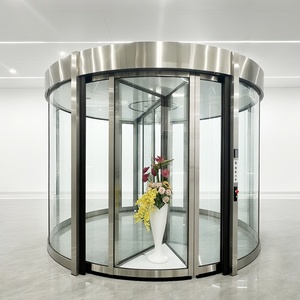
Modern Style Mall Main Entrance Doors Aluminum Revolving Doors
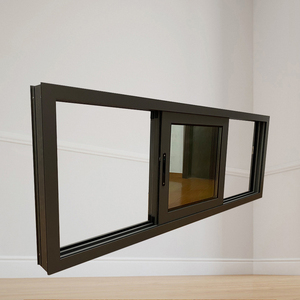
Weatherproof Brown Aluminium Sliding Window Tempered Glass
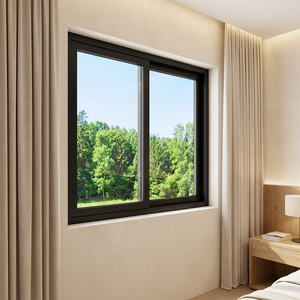
Burglar Proof Hurricane Impact Aluminum Horizontal Sliding Window
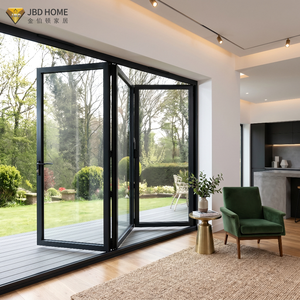
Hurricane Proof Aluminum Exterior Bifold Folding Door
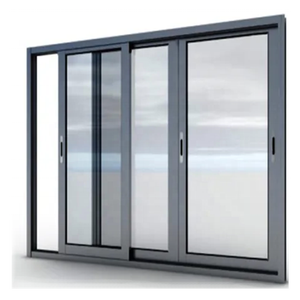
Soundproof Large Aluminum Sliding Glass Windows
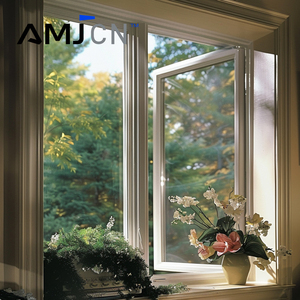
Aluminum Soundproof Casement Window Double Glazed
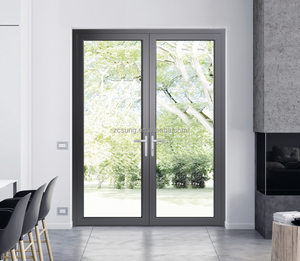
Custom Size Soundproof Aluminium Casement Patio Doors
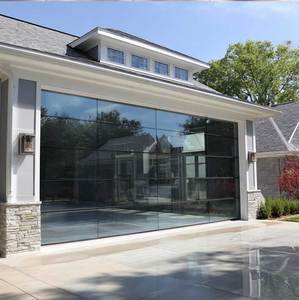
Frosted Matte Finish Aluminum Glass Panel Garage Door
1. Technical Whitepaper: The Engineering Logic Behind CE Certified Aluminum System Windows
In modern architectural engineering, fenestration systems are no longer merely passive building envelope fillers. They serve as multi-functional environmental regulators responsible for acoustic isolation, structural stability under wind load, solar heat gain management, and lifecycle carbon minimization. For international buyers, procurement consultants, and façade architects, choosing a CE Certified Aluminum System Windows Manufacturer & Exporters guarantees that every manufactured unit complies strictly with the European Harmonized Standard EN 14351-1:2006+A2:2016 (Windows and Doors - Product Standard, Performance Characteristics).
A true "System Window" differs fundamentally from a conventional fabricated aluminum window. Conventional windows rely on local, manual assembly of non-standard extrusions, unverified sealant applications, and mismatched hardware. Conversely, an aluminum system window is a holistically tested, standardized ecosystem. Profile geometries, polyamide thermal break struts, continuous EPDM gasket loops, drainage sub-chambers, and multi-point security hardware are systematically calculated, engineered, and third-party certified to operate in unified synergy.
Information Gain Insight: The CE Marking is not a decorative marketing badge. Under the EU Construction Products Regulation (CPR No 305/2011), it mandates factory production control (FPC) audit trails, traceable raw material heat numbers, and legally binding Declaration of Performance (DoP) metrics across thermal transmittance ($U_w$), air permeability, watertightness, and wind resistance.
When evaluating high-performance aluminum fenestration for luxury residential towers, commercial facades, or institutional projects, structural engineers focus on key physical parameters defined by European normative testing:
| Performance Characteristic | CE Test Standard Norm | DERCHI System Window Benchmark | Engineering Impact on Building envelope |
|---|---|---|---|
| Thermal Transmittance ($U_w$) | EN ISO 10077-1 / EN ISO 10077-2 | Down to 0.8 - 1.2 $W/(m^2\cdot K)$ | Drastically lowers HVAC energy consumption; prevents internal profile condensation. |
| Air Permeability | EN 1026 / EN 12207 | Class 4 (Highest Rating, ≤ 3 $m^3/h\cdot m^2$ at 600 Pa) | Eliminates draft infiltration; essential for passive house design and air-conditioned spaces. |
| Watertightness | EN 1027 / EN 12208 | Class E1500 (Delivers seal integrity up to 1500 Pa) | Prevents water penetration during severe storm surges and hurricane conditions. |
| Resistance to Wind Load | EN 12211 / EN 12210 | Class C5 (≤ L/300 deflection under 2000 Pa test pressure) | Guarantees structural safety for high-rise buildings and exposed coastal climates. |
| Acoustic Performance ($R_w$) | EN ISO 10140-2 / EN ISO 717-1 | Up to 45 dB reduction with laminated IGUs | Attenuates low-frequency urban traffic noise and severe ambient airport noise. |
System Engineering & Material Metallurgical Standards
How Guangdong Dejiyoupin Doors and Windows Co., Ltd. (DERCHI) achieves architectural grade durability.
Architectural Alloy 6063-T5 / 6060-T6
We utilize primary, non-recycled billet aluminum extrusions with precise magnesium-silicon alloy ratios. Wall thicknesses range from 1.6mm to 3.0mm depending on dynamic wind load calculations, ensuring structural rigidity without unwanted dead-weight load on building foundations.
PA66-GF25 Polyamide Thermal Barriers
Thermal bridging is neutralized using imported Technoform 25% fiberglass-reinforced polyamide (PA66-GF25) thermal struts. Unlike cheap PVC substitutes, PA66 matches the linear thermal expansion coefficient of aluminum, preventing shear failure under harsh thermal shock tests.
C5-M Surface Treatment & Fluorocarbon PVDF
Engineered for extreme environments—from salt-laden coastal zones to humid monsoon regions. Surface options include AkzoNobel Qualicoat Class 2 powder coating and 3-coat PPG PVDF fluorocarbon spraying, delivering over 25 years of anti-chalking, anti-fading, and anti-corrosion protection.
Multi-Point Concealed Hardware Systems
Collaborating with global leading hardware suppliers (CMECH, Siegenia, Hoppe, Sobinco), our system windows feature multi-point locking gear, stainless steel friction stays, and concealed anti-pry hinges capable of carrying sashes up to 300 kg safely.
2. Strategic Insights: Future Global Procurement Trends in Aluminum System Windows (2025–2030)
As international building codes tighten and sustainability mandates become enforceable law across Europe, North America, the Middle East, and Asia-Pacific, structural procurement managers must adjust their long-term supply chain strategies. Buying system windows is no longer a localized transaction; it is a cross-border strategic decision involving compliance risk, carbon footprint tracking, and total cost of ownership (TCO).
Trend 1: Environmental Product Declarations (EPD) and CBAM Compliance
With the European Union’s Carbon Border Adjustment Mechanism (CBAM) taking full effect, imported aluminum window products will face strict carbon border tariffs unless manufacturers can verify low-carbon production processes. Forward-thinking general contractors are actively auditing Chinese OEMs for green energy utilization, recycled scrap sorting, and ISO 14064 Carbon Footprint Verification. Systems produced in automated, energy-efficient factories like DERCHI offer a distinct landed-cost advantage under future carbon tax frameworks.
Trend 2: Ultra-Slim Sightlines with Structural Glass Bonding
Architectural design language continues to demand minimal frame visibility and maximized daylighting ($VLT > 70\%$). However, reducing frame width without sacrificing structural load capacity requires advanced structural silicone glazing (SSG) technology. Modern system window manufacturing utilizes automated two-component structural sealant application, bonding the Insulated Glass Unit (IGU) directly to the aluminum sash profile to transform the glass into a structural load-bearing member.
Trend 3: Smart Building Actuators and HVAC Integration
Commercial and luxury residential developments are increasingly integrating motorized window actuators into centralized Building Management Systems (BMS). Windows are now equipped with hidden electric chain actuators, rain/wind automated sensors, and IoT smart home connectivity (Zigbee/KNX protocols). This allows automated night purge cooling, reducing reliance on mechanical air conditioning and improving overall building energy ratings (LEED / BREEAM).
Trend 4: Direct Factory Sourcing and Risk Mitigation in Supply Chain
Middlemen and third-party trading intermediaries are rapidly being phased out by large-scale project developers due to communication latency, inflated margins, and lack of technical accountability. The industry baseline has shifted toward direct partnerships with comprehensive manufacturers that possess in-house CAD/BIM shop drawing capabilities, automated CNC machining centers, and dedicated international engineering teams fluent in overseas building codes.
Why Partner with Guangdong Dejiyoupin (DERCHI)?
Recognized among China's Top 10 Premium Window & Door Brands, DERCHI operates a world-class manufacturing base in Foshan, Guangdong.
180,000 m² Production Base
Equipped with German elumatec 5-axis CNC machining centers, automated corner crimping stations, and robotic double-component glass bonding lines, ensuring millimetric precision across high-volume production orders.
30+ Patents & Global Certifications
Fully verified under CE (EN 14351-1), ISO 9001 Quality Management, AS2047 (Australia), and UL Fire-rated standards. Comprehensive test reports are supplied directly to project consultants for hassle-free authority approval.
Global Project Engineering Expertise
With 25+ years of export experience across North America, Australia, the Philippines, the Middle East, and South Asia, our dedicated English-speaking team provides BIM modeling, CAD shop drawings, and remote video installation support.
Procurement FAQ for Buyers & Engineers
Technical and logistical solutions addressing high-intent buyer inquiries.
Accelerate Your Project Fenestration Procurement
Request our comprehensive technical product catalog, complete CE test certificates, and factory-direct pricing for your upcoming architectural development.
Get Catalog