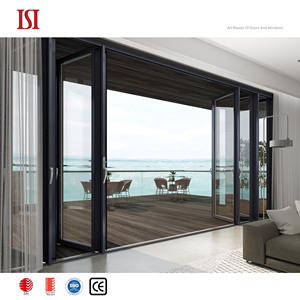
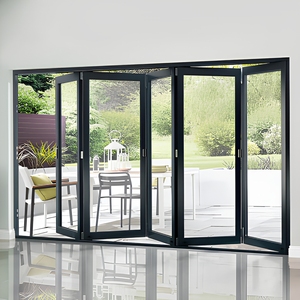
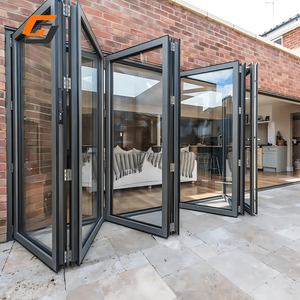
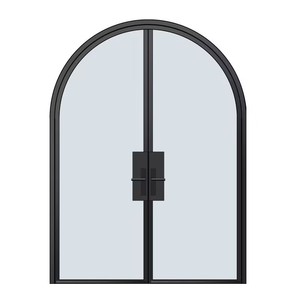
China Best Aluminium Folding Doors Factory & Supplier

Industrial-Grade Architectural Bi-Fold Door Systems Engineered by Guangdong Dejiyoupin (DERCHI) — AS 2047, CE & ISO 9001 Certified Fenestration Solutions for Global Contractors, Architects, and Commercial Developers.

Architectural Fenestration Systems

Engineered Precision Bi-Folding Systems for Modern Façades

As contemporary architecture shifts toward open-concept indoor-outdoor connectivity, aluminum folding doors (also designated as bi-fold accordion doors, concertina sliding systems, and panoramic folding glass walls) represent the critical envelope intersection of structural rigidity, low-emissivity thermal regulation, and expansive visual aperture. This technical white paper examines high-yield extrusion metallurgy, polyamide thermal barriers, cycle-tested hardware kinetics, and the verified manufacturing credentials behind Foshan’s foremost fenestration industrial complex.
25+
Years Industry Engineering
180,000m²
Smart Production Complex
600+
Master Craftsmen & Engineers
100+
Patents & Global Certifications
Engineering White Paper

Structural Fenestration Mechanics: Engineering Bi-Fold Excellence

Unlike static architectural window systems, exterior bifold systems operate under composite dynamic stresses involving localized eccentric loads, cyclic cantilever deflection, repetitive multi-point lock engagements, and variable wind shear loads. Sourcing from a tier-one Chinese manufacturer requires technical verification of structural alloy profiles, thermal dissipation isolators, and carriage mechanics.

6063-T6 Extrusion Metallurgy
Primary structural profiles are precision-extruded from virgin billet 6063-T6 architectural aluminum alloy with a nominal wall thickness between 2.0mm and 3.0mm, exceeding ASTM B221 and GB/T 5237 parameters. This metallurgical integrity guarantees an ultimate tensile strength exceeding 205 MPa and yielding strength beyond 170 MPa, preventing panel sag and frame torsion across spans exceeding 12 meters.
  • Moment of inertia (Ix) optimized for high wind deflection
  • Corrosion-resistant PVDF fluorocarbon coatings
  • Qualicoat Class 2 certified surface powder finishes
Polyamide PA66 GF25 Isolators
To suppress thermal transfer across continental climate extremes, our systems incorporate multi-chambered 24mm to 34mm Polyamide 66 reinforced with 25% glass fiber (PA66 GF25). This composite barrier possesses identical thermal expansion coefficients to structural aluminum (2.3 × 10⁻⁵ K⁻¹), eliminating thermal shear failure, profile bowing, and perimeter air leaks while delivering overall system U-values down to 1.2 W/m²·K.
  • Continuous mechanical crimping prevents shear fatigue
  • Aero-gel infused internal cavity options
  • Warm-edge silicone spacer glass integration
Quad-Roller Kinematic Bogies
The kinetic integrity of a bi-folding system depends entirely on its load-bearing roller carriage. Our top-hung and bottom-rolling architectures utilize 4-wheel and 8-wheel articulated stainless steel (SUS304/SUS316) sealed bogies paired with CNC-machined structural Delrin guidance wheels. This configuration redistributes dynamic loads uniformly, facilitating effortless finger-touch gliding across 150kg+ individual panel capacities.
  • 100,000 continuous cycle operating durability test
  • Corrosion-resistant stainless steel pivot axles
  • Integrated track sweeps prevent debris accumulation
Procurement Dynamics

Future Procurement Trends: Strategic Sourcing Shifts (2025–2030)

Cross-border procurement of architectural building products has matured beyond low-cost labor arbitrage. International project owners, developers, and general contractors now benchmark manufacturing partners against direct factory engineering transparency, standardized BIM compatibility, lifecycle decarbonization, and supply-chain risk hedging.

Direct-from-Source Factory Integration
Middleman markups and trading firm disconnects are being phased out in favor of direct engineering partnerships with verified Chinese manufacturing centers. By liaising directly with factory CAD/BIM engineering teams, commercial developers reduce shop-drawing iteration cycles from months to days, lock in direct mill-run aluminum pricing, and obtain customized glass schedule specifications (e.g., Saint-Gobain or Xinyi Low-E glass) without intermediary brokerage fees.
  • Direct 3D shop drawing reviews prior to profile extrusion
  • Zero intermediary markups (18–35% direct CAPEX reduction)
  • Transparent mill inspection certificates on raw alloys
Stringent Code & Acoustic Verification
Importing nations enforce increasingly stringent compliance thresholds, such as the Australian AS 2047 (with demanding N6 cyclic wind and water penetration tests), European CE EN 14351-1, and American NFRC thermal performance mandates. Savvy procurement teams prioritize suppliers holding authentic, accredited laboratory test reports over unverified vendor datasheets, insulating themselves from building authority rejections and costly site remediation.
  • AS 2047 cyclonic positive/negative wind load validation
  • Water ingress thresholds tested up to 700 Pa static head
  • Sound Transmission Class (STC) verified up to 42 dB
Carbon Footprint & KD Logistics
As global carbon border tax mechanisms (such as EU CBAM) materialize, global buyers mandate low-embodied-carbon aluminum melted via hydroelectric or renewable power grids. Furthermore, logistics optimization favors pre-machined Knock-Down (KD) system delivery kits packed in steel-caged overseas containers, slashing oceanic freight volume by up to 60% compared to fully assembled units while drastically reducing transit vibration damage.
  • Recycled billet and green hydroelectric aluminum billets
  • CNC slotted corner cleat joints for rapid on-site assembly
  • High-density export timber pallets with desiccant protection
Industrial Titan: Foshan Manufacturing Base

Guangdong Dejiyoupin Doors & Windows Co., Ltd. (DERCHI)

Ranked among China's Top 10 luxury door and window manufacturers, Guangdong Dejiyoupin Doors and Windows Co., Ltd. represents the zenith of automated Chinese fenestration engineering. Operating from an expansive 180,000 m² state-of-the-art production complex in Foshan, Guangdong—the world’s foremost aluminum processing capital—DERCHI deploys over 600 skilled technicians, German Elumatec CNC milling centers, and Italian powder-coating production lines.

With an established export track record servicing commercial developments, luxury coastal residences, and institutional projects across the United States, Australia, Canada, the Middle East, and South Asia, DERCHI integrates structural extrusion, robotic dual-seal silicone glazing, and end-of-line cycle testing into an uncompromising total quality framework.

AS 2047 N6 Australian Tested
ISO 9001 & CE Quality Marked
UL Certified Fire Safety Lines
30+ In-House Mechanical Patents
Aerial view of DERCHI 180,000 square meter industrial manufacturing base in Foshan, China
Architect & Contractor FAQ

Bifold System Engineering & Procurement FAQ

In-depth technical answers addressing wind load limits, sill drainage geometry, air infiltration ratings, structural glazing configurations, and international freight containerization.

How do you calculate structural wind load resistance for high-rise or coastal installations?
Wind resistance is dictated by mullion profile inertia (moment of inertia Ix and Iy) according to ASTM E330 and AS 4055. For coastal typhoon zones, DERCHI supplies heavy-gauge 3.0mm wall structural stiles reinforced with internal steel or carbon structural stiffeners, tested to withstand extreme negative design pressures exceeding 4500 Pa (equivalent to cyclonic wind velocities over 250 km/h) with deflection within L/250 span limits.
What threshold / sill profiles are available to balance flush aesthetics with water tightness?
We provide three sill options: (1) Flush Recessed Track with integrated sub-sill drainage for seamless zero-step indoor-outdoor living, ideal for interior partitions or sheltered patios; (2) Stepped Weathered Sill featuring dual EPDM compression seals and stepped cascading drainage chambers tested to resist 450–700 Pa water ingress; and (3) ADA-compliant low-ramp sills designed for commercial facilities.
How are the folding doors packaged to prevent damage during transoceanic shipping?
Every door sash undergoes protective film lamination, high-density polyethylene (EPE) corner cushioning, and five-layer corrugated boxing. Fully glazed units are crated within non-fumigation treated multi-ply solid timber crates fortified with exterior steel bands and internal moisture-absorbing desiccants. Knocked-Down (KD) frames are bundled with color-coded hardware packages, assembly blueprints, and drill jigs.
Can you manufacture bi-fold doors to custom rough opening dimensions and complex panel layouts?
Yes, 100% of our production is made-to-measure. We support multi-panel opening schemes including 3+0, 3+1, 5+0, 5+1, 7+1, and even 16-panel mirrored bi-parting systems spanning over 14 meters. Our engineering office provides complimentary structural calculations, CAD shop drawings, and BIM Revit families within 24 to 48 hours of initial aperture schedule submission.
What acoustic attenuation ratings (STC / Rw) can your folding door systems achieve?
Standard double-glazed units (5mm + 12A + 5mm toughened) achieve an STC of approximately 32–34 dB. By upgrading to asymmetric insulated glass units with acoustic PVB lamination (e.g., 6mm Low-E + 16Ar + 4mm + 0.76mm PVB + 4mm acoustic laminated glass) paired with multi-fin vulcanized EPDM perimeter seals, our systems attain STC ratings up to 42 dB, dampening severe urban and highway sound transmission.
What surface finishes are applied to prevent oxidation in salt-laden marine air?
For coastal environments within 1 km of ocean shorelines, we apply PPG or AkzoNobel fluorocarbon (PVDF) three-coat finishes (70% Kynar 500 resin base) or marine-grade anodizing (Class I, 25-micron thickness) meeting AAMA 2605 specifications. This metallurgical barrier is warranted to withstand 4,000+ hours of continuous salt-spray testing without chalking, pitting, or color degradation.
What multi-point security hardware and burglar-resistance standards do your systems utilize?
Our bifold doors feature heavy-duty German-engineered or proprietary stainless steel multi-point gearboxes engaging top and bottom hardened steel shootbolts (24mm throw), anti-lift hinge pins, and drill-resistant key cylinders conforming to European RC2/RC3 burglar-resistance norms. We also integrate motorized smart lock adapters compatible with biometric access control and home automation protocols.
What are the lead times from contract sign-off to port departure?
Standard architectural finishes (e.g., matte black, architectural white, graphite grey) with standard tempered Low-E IGU glass schedules ship in 25–30 days following CAD sign-off. Custom powder coat RAL color matching, curved arches, bullet-resistant glass, or bespoke decorative hardware variations require approximately 35–40 days. Shipments depart directly from Foshan, Guangzhou, or Shenzhen ports on FOB or CIF terms.

Accelerate Your Project with Mill-Direct Fenestration Engineering

Partner with Guangdong Dejiyoupin (DERCHI) — China’s premier aluminum bi-fold door and entrance system manufacturer. Submit your door schedules, architectural floor plans, or project bill of quantities (BOQ) for instant engineering review, structural load simulation, and direct mill-gate quotation.

Get Catalog