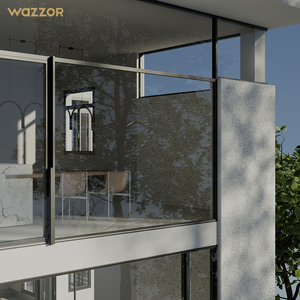
Precision Fenestration Lineup
Featured Architectural Aluminium Systems
Engineered for wind-load rigidity, acoustic attenuation, and certified water-tight performance. Review our prime commercial and residential hinged fenestration models below.
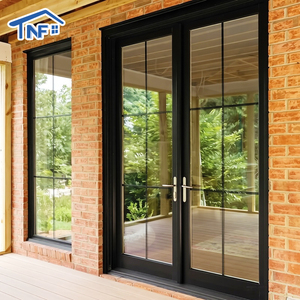
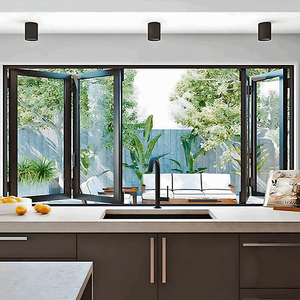
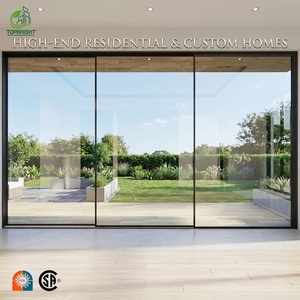
Technical Authority Whitepaper
Engineering Integrity of Modern Aluminium Hinged Windows
Evaluating profile metallurgy, structural deflection, multi-point perimeter compression, and thermodynamic barrier separation for international procurement directors.
Structural Alloy High-Tensile 6063-T5/T6 Extruded Aluminium Substrates
In high-wind coastal environments and multi-storey curtain wall configurations, fenestration load integrity is dictated by alloy purity and wall-thickness precision. China’s premier manufacturing plants implement primary 6063-T5 and 6063-T6 metallurgical profiles conforming rigorously to ASTM B221 and GB 5237 standards. Structural mullions and perimeter sash jambs boast calibrated profile thicknesses ranging from 1.6mm up to 3.0mm, preventing frame distortion under cyclonic pressure drops exceeding 4500 Pa (equivalent to AS 2047 N6 and ASTM E330 ratings).
Unlike standard sliding fenestration, hinged configurations (side-hung casements, top-hung awnings, and tilt-turn systems) place dynamic gravitational shear load entirely on mechanical pivot hardware. Our manufacturing cluster integrates heavy-duty 304/316 grade stainless steel four-bar friction stays, CNC-milled concealed hinges, and mechanical corner-cleat crimping injected with two-part polyurethane structural adhesive (epoxy potting) to guarantee perpendicular rigidity and eliminate sash sagging across a 100,000-cycle life-span.
Thermal & Acoustic Polyamide PA66 GF25 Barriers and Argon-Infilled IGUs
Building energy standards worldwide—such as ASHRAE 90.1, the European EnEV, and Title 24—demand overall window U-values below 1.6 W/(m²·K). DERCHI utilizes precision-extruded Technoform polyamide PA66 reinforced with 25% glass fibre (PA66 GF25) thermal break strips. This architectural barrier isolates exterior heat or sub-zero chill, completely arresting conductive thermal transfer across the aluminium profile frame.
Integrated Insulating Glass Units (IGUs) combine dual or triple-pane tempered glass (Low-E coatings on surface #2 or #3), warm-edge stainless steel/composite spacers, and 95% pure Argon gas fill. Together with continuous three-stage co-extruded EPDM weatherstripping gaskets, this perimeter envelope achieves sound transmission attenuation up to Rw 42 dB—shielding metropolitan luxury villas and urban developments from heavy traffic, extreme monsoon moisture intrusion, and severe thermal dissipation.
| Performance Characteristic | International Standard | DERCHI Engineering Metric | Commercial Advantage |
|---|---|---|---|
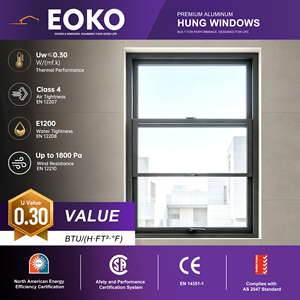
| Air Permeability | EN 12207 / ASTM E283 | Class 4 (≤ 0.5 m³/(h·m)) | Zero perimeter drafts; optimized HVAC loads |
| Water Tightness | EN 12208 / ASTM E331 | Class E900 (900 Pa static pressure) | Complete monsoon wind-driven rain barrier |
| Wind Load Resistance | AS 2047 / ASTM E330 | Serviceability: 3500Pa; Ultimate: 5500Pa | Engineered for super high-rise and coastal cyclones |
| Acoustic Isolation | ISO 10140-2 / ASTM E90 | Rw = 38 dB to 44 dB | Acoustic privacy near expressways and airports |
| Thermal Transmittance | ISO 10077-2 / NFRC 100 | U-value: 1.2 – 1.8 W/(m²·K) | Substantial LEED credits and energy rebates |
Tier-1 Industrial Infrastructure
Guangdong Dejiyoupin Doors & Windows Co., Ltd. (DERCHI)
Recognised among China's Top 10 premium door and window manufacturers, operating automated manufacturing lines in Foshan's high-tech industrial cluster.
25+
Years Engineering Experience
180,000m²
Smart Production Base
600+
Direct Factory Employees
100+
Global Patents & Certs

Strategic Horizon
Global Procurement Trends: Hinged Window Systems 2026–2030
Where international building codes, luxury estate developments, and supply chain rationalization are heading over the next five years.
⚙
Ultra-Narrow Sightline Minimalism
Architects demand maximized glazed daylight apertures with hidden sash designs. Future hinged windows conceal the operable sash completely behind the outer frame rebate, delivering 15% greater daylight infiltration without sacrificing structural inertia.
☁
Smart Building BMS & Actuation
Hinged fenestration is pivoting from manual operating handles to integrated 24V concealed chain actuators synced to smart home IoT protocols (KNX, Zigbee, Modbus), automatically engaging natural cross-ventilation based on indoor CO2, rain, and temperature sensors.
♦
Strict Passive House Certification
Procurement standards in North America and Australasia are mandating triple-glazed warm-edge assemblies with aero-gel insulation and multi-chamber cellular thermal breaks, yielding frame insulation Uf values beneath 1.0 W/(m²·K) for net-zero energy builds.
⚖
Anti-Corrosion PVDF & Powder Evolution
Industrial developers in maritime regions (South Asia, GCC, Caribbean) specify AAMA 2605 fluoropolymer PVDF and Qualicoat Class 3 marine coatings to endure 3,000+ hours of continuous salt spray test cycles without chalking, color fading, or blistering.
✅
Supply Chain Consolidation (Single-Source)
Project general contractors increasingly reject sourcing window sashes, entrance doors, and glass curtain walls from fragmented workshops. Choosing integrated manufacturers like DERCHI eliminates interface assembly mismatches and reduces shipping container freight overheads.
🛡
Multi-Point Intruder & Forced Entry Resistance
Hinged sashes fitted with perimeter mushroom-head cam bolts and RC2/RC3 anti-burglary locking points satisfy rising insurer requirements for estate compounds, eliminating vulnerable single-latch failure points typical of conventional hung and sliding sashes.
Procurement Intelligence
Frequently Asked Sourcing & Engineering Questions
Essential answers for project architects, structural engineers, overseas builders, and fenestration import distributors.
What distinguishes premium 6063-T6 aluminium hinged windows from standard low-cost casement windows?
Budget windows commonly use thin-gauge remelted scrap aluminium (1.2mm or below), low-grade PVC weatherstrips that shrink under UV radiation, and simple zinc die-cast single latch locks. In contrast, premium export-grade hinged windows utilize primary ingot 6063-T5/T6 architectural profiles (1.6mm–2.0mm minimum wall thickness), precision PA66 GF25 thermal breaks, automotive-grade continuous EPDM vulcanized rubber gaskets, and multi-point perimeter gear hardware (such as German Siegenia, Hoppe, or certified CMECH). Corner construction is hydro-mechanically crimped with corner cleats and structural adhesive injection, ensuring zero water penetration and permanent structural squareness.
How do aluminium hinged casement windows perform under extreme typhoons and monsoon rain conditions?
Hinged windows provide fundamentally superior airtightness and watertightness compared to sliding windows. When an outward or inward casement sash is locked, the perimeter multi-point locking cams draw the sash uniformly tight against multiple internal and external EPDM gasket lines (equalized pressure cavity principle). Under negative wind suction or high positive rain drive, the mechanical seal compresses further. In certified wind and rain tests, DERCHI systems withstand water pressures up to 900 Pa without leakage, complying with AS 2047 N6 and ASTM E331 hurricane and cyclonic threshold standards.
Can your factory customize window profiles, glass configurations, and hardware to regional building codes?
Yes. Every production run is manufactured custom to order according to project architectural schedules. Our internal design team provides shop CAD submittals for architect sign-off, detailing profile depths (e.g., 65mm, 75mm, 85mm, 108mm integrated flyscreen series), Low-E coatings (Solarban 60, Sungate), acoustic laminate configurations (e.g., 6mm + 1.14PVB + 6mm), tempered glass thickness, frame colors (Qualicoat certified powder coatings or AkzoNobel PVDF), and integrated mosquito meshes (304 stainless steel diamond security screens or motorized roll-up fly nets).
What shipping terms and international logistics support do you provide for large-scale container exports?
We provide full FOB (Foshan, Shenzhen, Guangzhou), CIF, or DDU/DDP shipping services to major commercial ports globally, including Nhava Sheva, Mundra, Karachi, Colombo, Singapore, Manila, Sydney, Long Beach, and Rotterdam. Products undergo complete mock-up frame assembly tests before packing. Finished units are wrapped in peelable surface protection films, reinforced with dense foam corners, packed in shrink film, and secured inside fumigated seaworthy wooden crates or A-frame steel shipping racks to guarantee damage-free container unloading at jobsites.
What are the minimum ordering quantities (MOQ) and production lead times for custom architectural projects?
For bespoke residential estates and customized villa developments, our flexible production scheduling accommodates orders as small as a single full-home set (typically 30–50 m²). For large commercial towers, hotel complexes, and multi-unit developments, we offer dedicated high-capacity automated batch lines. Standard manufacturing lead time upon final shop drawing and finish sign-off ranges between 25 and 35 calendar days, with priority expediting available for fast-track tenders.