Export Precision Frameworks
Featured Architectural Entry & Grille Solutions
Engineered for harsh atmospheric exposure, cyclone load resistance, and premium perimeter security. Fabricated by Guangdong Dejiyoupin Doors and Windows Co., Ltd. (DERCHI).
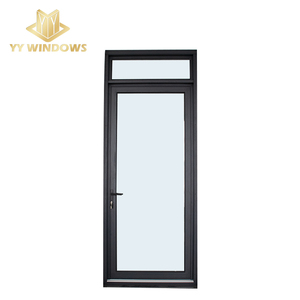
ISO & NFRC Hurricane Impact Glass Patio Casement Doors
Technical Specs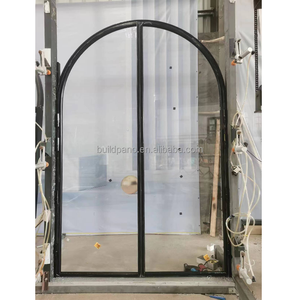
Factory Aluminum Grille Arched Soundproof Doors
Technical Specs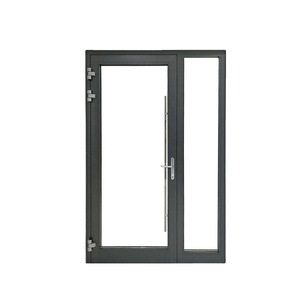
Superhouse Impact Residential Unequal Aluminum Doors
Technical Specs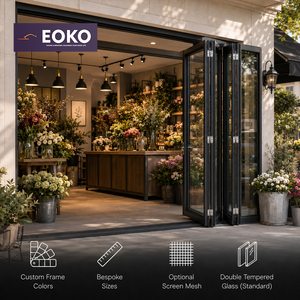
EOKO EN 14351-1 Heavy Duty Aluminum Bi-Fold Storefront Door
Technical Specs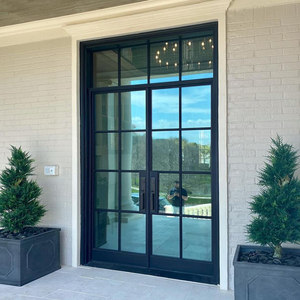
Crittall Style European Standard Swing Glass Doors
Technical Specs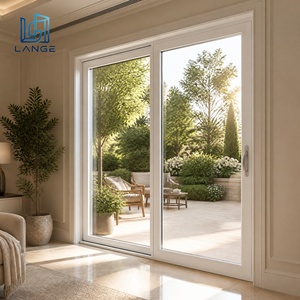
Security Thermal Break Villa Casement Entrance Door
Technical Specs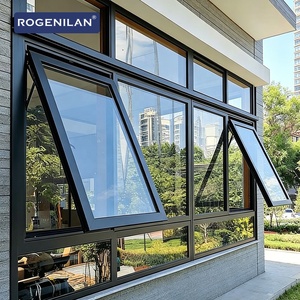
Australian AS2047 Double Glazed Aluminum Awning Systems
Technical Specs25+
Years Engineering Expertise
180,000m²
Production Infrastructure
600+
Skilled Workforce & Technicians
100+
Patents & Global Compliance Marks
Technical Whitepaper
Engineering Integrity of Modern Aluminium Jali Doors
Evaluating structural metallurgy, mechanical extrusion, CNC laser latticework, and multi-point atmospheric performance standards for international procurement.
Structural Alloy Grade & Tensile Resilience
Industrial aluminium jali (grille/mesh) frameworks demand superior structural rigidity over conventional decorative screens. DERCHI integrates architectural-grade 6063-T5 and 6061-T6 aluminum alloys, delivering yield strengths exceeding 160 MPa. Unlike generic cast iron or mild steel jali doors which suffer from oxidative decay, or timber fretwork prone to moisture swelling and termite degradation in tropical zones, engineered aluminum preserves complete dimensional equilibrium across decades of severe climate variance.
CNC Precision Laser Cutting & Die Casting
Modern aluminium jali doors combine laser precision profiling with heavy-gauge solid sheet fabrication. Incorporating micron-calibrated fiber laser systems, intricate geometric Islamic fretwork, traditional mashrabiya geometric lattices, and minimalist contemporary louvers are carved without micro-fracturing adjacent structural zones. Solid cast aluminum door leaves (thickness from 8mm to 15mm) deliver impenetrable forced-entry resistance without exhibiting unsightly surface weld beads.
Fluorocarbon & Qualicoat Surface Protection
Exposure to high-salinity coastal fronts and tropical UV degradation necessitates high-tier chemical pretreatment. Our production incorporates AkzoNobel powder coating and PVDF fluorocarbon coatings compliant with AAMA 2604/2605 requirements. Subjected to accelerated salt-spray testing beyond 3,000 hours, our profiles avoid blistering, chalking, or delamination, guaranteeing color fastness and structural anti-corrosion properties across South Asian, Middle Eastern, and Coastal global territories.
Industry Forecast
Future Procurement & Manufacturing Trends for Aluminium Jali
How architectural engineering, biometric IoT integration, and circular sustainability are reshaping the commercial door supply chain.
1. Hybridization with High-Performance Glass Systems
Global door buyers increasingly demand dual-envelope systems where the structural aluminum jali works in tandem with insulated glass units (IGU). Integrating double-glazed Low-E or laminated impact glazing behind the ornamental jali allows architectural ventilation without sacrificing acoustic isolation (Rw up to 42 dB) or thermal envelope efficiency (U-values < 1.8 W/m²K).
2. Smart Biometric Access & Multi-Point Concealment
Manual bolt locks are rapidly being replaced by embedded multi-point motorized locking channels within the door stile. Modern procurement favors doors with integrated 3D facial recognition, biometric fingerprint scanning, and Tuya/Zigbee smart-home gateways, embedded directly into CNC-milled structural frame cavities without compromising structural aesthetic flow.
3. Low-Carbon Circular Smelting & Thermal Barrier Cores
Governmental green building certifications (LEED v4.1, BREEAM) are penalizing cold-bridge conductive door profiles. Next-generation aluminium jali doors utilize polyamide (PA66 GF25) thermal breaks combined with secondary recycled aluminum billets, shrinking profile carbon footprints by up to 60% while optimizing life-cycle thermal insulation.
4. Procurement Trend Summary: Custom Factory-Direct Engineering vs. Intermediaries
The paradigm of sourcing standard modular doors via commercial brokers is declining. High-value international projects in India, the UAE, Australia, and North America mandate factory-direct OEM/ODM partnerships capable of supplying comprehensive CAD/BIM shop drawings, bespoke Vastu/custom proportion configurations, and rapid prototype validation to compress project commissioning cycles.
Enterprise Competence
Guangdong Dejiyoupin Manufacturing Superiority
Recognized among China's Top 10 High-End Architectural Door Brands, operating a vertically integrated manufacturing ecosystem in Foshan, Guangdong.
Massive Industrial Footprint
Over 180,000 square meters of intelligent production facilities equipped with computerized machining centers, precision CNC routers, and automatic continuous powder-coating extrusion lines.
Certified Global Benchmarks
Products tested and accredited to rigorous international criteria: ISO 9001 quality frameworks, Australian AS2047 cyclonic testing, European CE EN 14351-1, and UL fire classifications.
In-House Design & CAD Support
Over 30 proprietary industrial design and utility model patents. Dedicated architectural project engineers delivering complimentary CAD shop drawings tailored to regional structural codes.
Global Turnkey Logistics
Streamlined FOB/CIF maritime dispatch to primary worldwide seaports (Nhava Sheva, Mundra, Colombo, Karachi, Jebel Ali, Long Beach, Sydney) with reinforced ISPM-15 wooden crating.
Procurement Intelligence
Frequently Asked Questions for Door Importers & Contractors
Direct technical clarifications on alloy tolerances, finish durability, maritime packing, and bespoke architectural integration.
What is the structural difference between cast aluminum and CNC laser-cut aluminum jali?
Cast aluminum jali doors are created by pouring molten A380/A356 aluminum alloy into dedicated steel molds, producing dense 3D bas-relief architectural patterns up to 15mm thick with monumental security strength. CNC laser-cut jali uses high-pressure laser cutting on 5052 or 6061 alloy plates, delivering flat, modern, ultra-sharp geometric or Islamic fretwork suitable for contemporary minimalist frameworks.
How does an aluminium jali door endure coastal sea spray and monsoon conditions?
Unlike wrought iron or mild steel, high-purity aluminum builds a natural passivating aluminum oxide skin. Guangdong Dejiyoupin treats all profiles with multi-stage chemical etching, chromate-free conversion, and architectural-grade fluorocarbon (PVDF) or electrostatic powder coating. Combined with seamless automotive-grade EPDM gasket seals, the system repels driven rain and avoids galvanic corrosion.
Can you manufacture bespoke door heights, pivot configurations, and Vastu orientations?
Yes. Every production run is strictly made-to-order. Our engineering division produces detailed 2D/3D CAD shop drawings accounting for structural wall openings, floor recesses, concealed overhead pivot hardware, multi-leaf swing geometries, and Vastu/Feng Shui directional alignment specifications requested by principal designers.
How are the products crated and secured to prevent transit damage during ocean freight?
Finished doors undergo multi-layer surface taping with protective peel-off film, high-density polyethylene foam edge bumpers, and full enclosure inside heat-treated, fumigated solid plywood crates (non-coniferous timber compliant with international export quarantine standards). Heavy-duty crating ensures door surfaces remain scratch-free through international sea transit.
What documentation and test reports are provided for consultant/regulatory compliance?
We provide comprehensive quality dossiers including mill test certificates for aluminum raw materials, third-party wind-pressure and air/water tightness certificates (AS 2047 / AS 4420, CE EN 14351-1), UL fire endurance test documentation where specified, and factory internal QC dimensional inspection reports before release.
What is the standard production lead time for large-scale custom commercial consignments?
Standard OEM production spans 25 to 35 calendar days following client sign-off on shop drawings and deposit receipt. For complex customized architectural doors requiring custom casting dies, extruded profiles, or special PVDF color codes, production schedules typically span 35 to 45 calendar days.
Collaborate with China's Premier Aluminium Door Manufacturer
Direct architectural quotes, full CAD specification reviews, and factory-direct volume pricing for developers, builders, architects, and international importers.
Contact Us