Modern building enclosures demand dynamic fenestration components that combine uncompromised natural air circulation, micro-particulate and insect filtration, high-tensile forced entry prevention, and architectural aesthetic continuity. This technical procurement report outlines structural alloy standards, mesh metallurgy, and precision-manufactured aluminum mosquito net doors for global developers, general contractors, and fenestration distributors.
The operational longevity and protective envelope integrity of an aluminium insect screen door depend fundamentally on material composition, wire gauge tensile limits, surface pre-treatment, and mesh interlocking topology. Review the empirical metallurgical benchmark data below prior to issuing tender specifications.
Future Sourcing & Technological Trends in Insect Screen Fenestration
As international energy codes tighten, climate-induced vector activity increases, and biophilic open-air architecture surges in popularity, global procurement criteria for aluminium insect screen systems are shifting rapidly.
Zero-Threshold Barrier-Free Accessibility
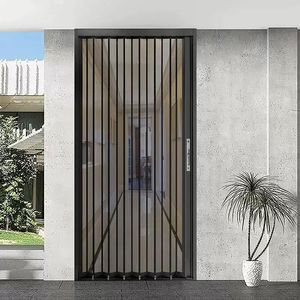
Commercial building codes and luxury universal design standards now mandate recessed floor channels or ultra-slim (<3mm) caterpillar tracks. Accordion pleated mosquito doors (plissé systems) featuring tracked tank-chain bottom guides completely eliminate tripping hazards while providing smooth mobility for wheelchairs, strollers, and high-traffic hospitality corridors without degrading insect exclusion seals.
Smart Automated IoT Integration
The integration of ultra-quiet 24V brushless DC tubular motors with intelligent home management systems (Zigbee 3.0, Matter, KNX) is becoming the standard for oversized luxury openings. Modern motorized sliding screens deploy wind-velocity sensors that automatically retract screens during gale conditions and radar motion detectors for hands-free residential and restaurant access.
Anti-Theft Diamond Mesh Synergy
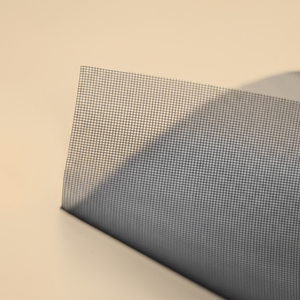
Developers are consolidating separate security grilles and fly screens into unified dual-function units. Utilizing 0.8mm to 1.0mm 304/316 woven stainless steel King Kong wire mesh clamped inside heavy-gauge aluminum profiles via patented mechanical wedge systems, these assemblies deliver Australian AS 5039 security resistance against crowbars while stopping 99.8% of tropical insect pests.
Passive Cooling & Low-Carbon Aluminum
With HVAC cooling loads accounting for up to 40% of building energy consumption in hot climates, developers utilize high-transmittance metal mosquito screens to maintain maximum cross-ventilation during non-peak diurnal hours. Verified procurement requires low-carbon primary aluminum billet melted with hydro-power, verified Environmental Product Declarations (EPDs), and recyclable PA66-GF25 thermal insulation barriers.
Anti-Microbial & Nano-Coated Hydrophobic Weaves
In humid Southeast Asian, South Asian, and Gulf coastal projects, traditional nylon or low-grade fiberglass screens rapidly accumulate fungal spores, airborne grease, and salt cake. Emerging export specifications mandate fluorocarbon hydrophobic surface treatments on metallic and PET screens that repel dirt wash-off under natural rainfall and inhibit bacterial biofilm propagation.
Modular Pre-Fabricated "Plug-and-Play" Kits
To reduce high jobsite labor costs across North America, Europe, and Australia, overseas buyers are increasingly importing knocked-down (CKD) or semi-assembled (SKD) aluminum screen cassettes. Precision CNC-machined corner cleats, pre-tensioned spring rollers, and snap-fit mounting sub-frames reduce onsite installation time from 3 hours to less than 25 minutes per aperture.
Operating at the epicenter of China's aluminum industrial cluster in Nanhai District, Foshan, our manufacturing complex serves commercial facade contractors, window fabricators, and national hardware distributors across 60+ countries.
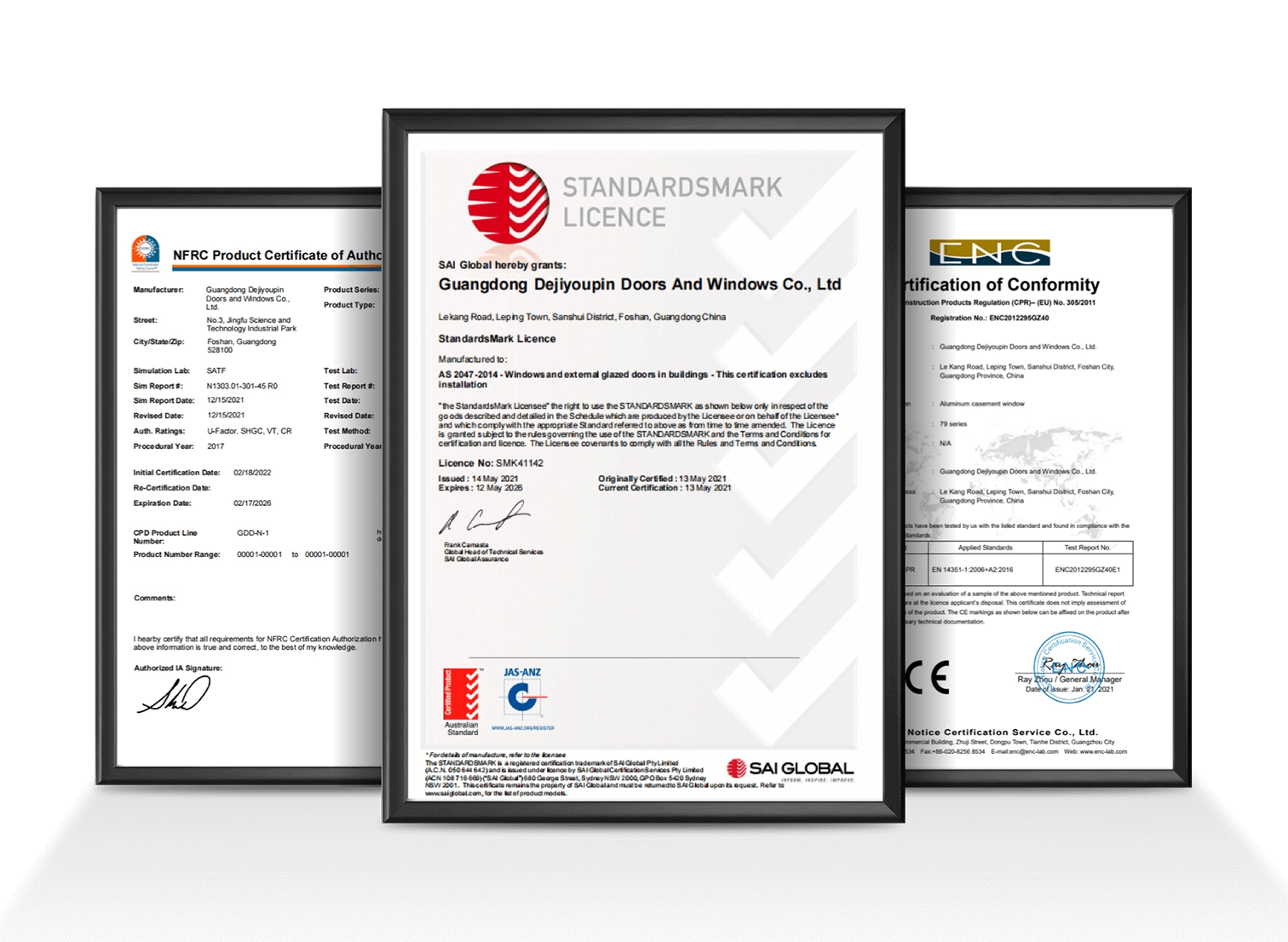
Independent laboratory test reports covering N6 cyclonic wind resistance, water penetration, and air infiltration.
Precision CAD/BIM
In-house fenestration engineers produce parametric shop drawings, structural calculations, and custom extrusion dies.
Export Packaging
Solid plywood fumigation-free crating, corner shock absorbers, and moisture-barrier desiccant packs for ocean transit.
Transparent Manufacturing
Factory-Floor Rigor: From Virgin Ingot to Finished Door
True quality assurance begins at the raw material phase. We avoid low-purity scrap aluminum, utilizing exclusively 99.7% virgin A00 grade aluminum ingots for all 6063 and 6061 billet extrusions.
1. Precision Extrusion
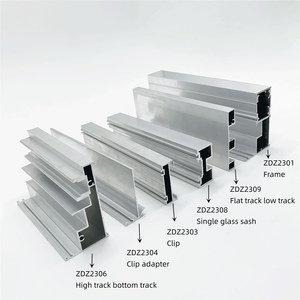
High-tonnage hydraulic presses extrude uniform wall profiles conforming strictly to GB/T 5237 and ASTM B221 tolerances.
2. Mechanical Testing
Mesh tension meters, Webster hardness testers, and knife-shear rigs verify physical resilience before shipment release.
3. Engineering Customization
Bespoke track integration, flush threshold millings, and architectural woodgrain transfer finishes matching project elevations.
Direct technical answers addressing structural engineering, material compliance, logistics, and pricing models for international procurement managers.
What is the structural difference between 6063-T5 and 6063-T6 aluminum extrusion profiles in mosquito net door frames?
While both temper designations utilize 6063 aluminum-magnesium-silicon wrought alloy, 6063-T5 undergoes rapid forced-air cooling after extrusion followed by artificial aging at ~175°C, yielding a typical tensile yield strength of 160 MPa and Webster hardness of 8–10. In contrast, 6063-T6 is solution heat-treated and water-quenched prior to artificial aging, achieving a tensile yield strength exceeding 210 MPa and Webster hardness of 12–14. For heavy patio sliding doors and large multi-fold accordion doors that experience dynamic wind buffeting, 6063-T6 provides substantially greater corner joint rigidity and screw-holding pullout strength.
Why is 316 marine-grade stainless steel wire mesh recommended over 304 for coastal installations?
AISI 304 contains 18% chromium and 8% nickel, which provides excellent resistance against freshwater and typical urban atmospheres. However, airborne sea-salt mist in coastal environments within 10 km of oceans introduces chloride ions that break down the passive chromium-oxide layer, causing micro-pitting and unsightly brown tea-staining within 12–24 months. AISI 316 incorporates 2.0% to 3.0% molybdenum, creating a fundamentally more resilient passive barrier that withstands continuous salt-spray exposure exceeding 3,000 hours in ASTM B117 testing without pitting or tensile decay.
How does the diamond mesh "King Kong" insect door pass security forced-entry standards like AS 5039 / AS 5041?
Standard fly screens rely on spline rubber cords forced into a frame channel, which pop out under moderate hand pressure. Security diamond mesh doors use heavy 0.8mm high-tensile stainless steel wire clamped into the aluminum extrusion perimeter using continuous structural PVC wedges and mechanical rivets spaced every 120mm. Under Australian Standard AS 5041 testing, this assembly withstands the Dynamic Impact Test (five repetitive 100J blunt impacts), the Jemmy Test (leveraged prying attempts), and the Knife Shear Test (three successive passes of a heavy utility blade without slicing open).
What mechanisms prevent accordion (plissé) pleated insect screens from de-tracking in strong cross-winds?
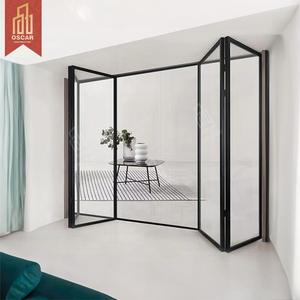
Quality pleated mosquito screen doors incorporate internal high-tensile Kevlar or Vectran tensioning cords threaded horizontally through each fold. These cords maintain geometric alignment across the height of the fabric pack. In high-performance architectural systems, the pleated screen edges are captive-locked within deep side channels and anchored to interlocking caterpillar track links along the floor, preventing wind gusts up to Beaufort Force 7 (50–61 km/h) from blowing the mesh out of its guides.
Can the aluminum profiles be customized to match existing European or American window RAL color palettes?
Yes. We utilize automated horizontal and vertical electrostatic powder coating lines certified to Qualicoat Class 1 and Class 2 standards, utilizing certified powder resins from AkzoNobel Interpon and PPG. Importers can specify any standard RAL Classic color code, matte or high-gloss finishes, sand-textured anti-scratch tactile coatings, or heat-transfer polyurethane woodgrain patterns that replicate Teak, Walnut, Golden Oak, or Mahogany with realistic tactile grain depth.
What is the minimum order quantity (MOQ) and production lead time for customized architectural project orders?
For standard anodized and powder-coated profiles with standard stock mesh configurations, our factory accepts sample and trial batch orders starting at 10 to 20 sets. For custom extrusion die developments (new profiles tailored to developer curtain wall systems), typical tooling lead time is 10 to 14 working days, followed by sample extrusion approval in 5 days, with bulk mass production completed within 20 to 25 calendar days. Standard project sizes (100–500 door sets) are produced in 18 to 22 working days.
How do you safeguard long-length aluminum door frame extrusions from warping or finish damage during sea freight?
Every profile section is individually wrapped in 0.05mm protective low-tack polyethylene film to prevent surface scuffing during handling. Bundles are wrapped in multi-layer water-resistant kraft paper or shrink PE wrap with heavy-duty corrugated board corner protectors. For complete door units and sensitive screen cassettes, items are packed in fumigation-free ISPM-15 compliant solid plywood crates, braced internally with timber battens and desiccant packs to prevent condensation and shipping rack distortion.
What incoterms and export documentation do you supply for customs clearance in the US, Europe, and Australia?
We routinely export under EXW, FOB (Foshan / Guangzhou / Shenzhen), CIF, CFR, and DDP commercial terms. For overseas customs entry, our documentation department provides certified Commercial Invoices, Packing Lists with precise carton-by-carton weight and cube breakdowns, Clean On Board Ocean Bills of Lading, Certificates of Origin (CO, Form E for ASEAN, Form A), factory test certificates, and compliance declarations for regional import duties.
Direct Factory Consultation
Download the 2025 Architectural Mesh Door Catalog & CAD Library
Request our comprehensive 120-page engineering guide featuring detailed aluminum extrusion die cross-sections, track installation details, hardware schedules, test laboratory reports, and wholesale price tiers.