Featured Aluminum Casement Doors & Architectural Enclosures
Fabricated using primary 6063-T5 architectural aluminum billets, high-density EPDM compression gaskets, and German multi-point hardware. Certified for global building compliance under CE, AS2047, NFRC, and ISO 9001 standards.
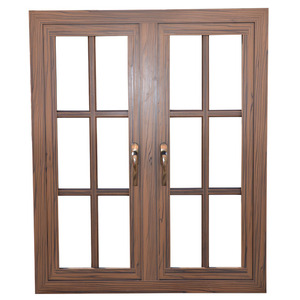
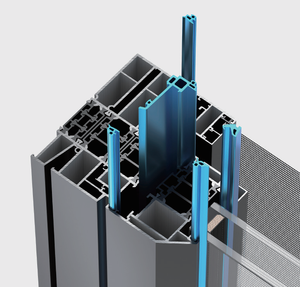
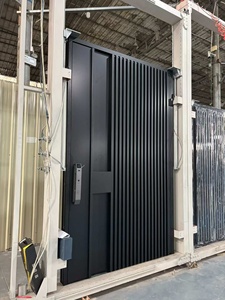
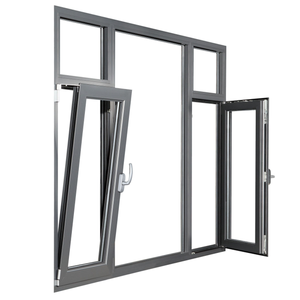
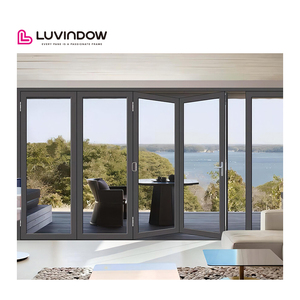
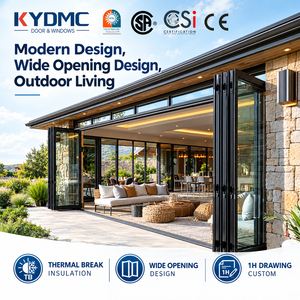
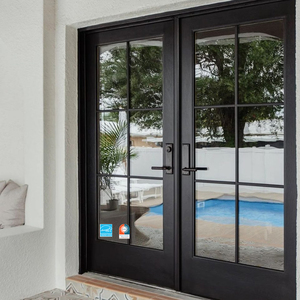
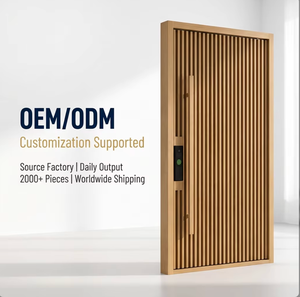
Executive Engineering Summary: Aluminum casement doors represent the pinnacle of fenestration design for moisture intrusion protection, air impermeability, and acoustic isolation. Unlike traditional sliding mechanisms that rely on brush seals, casement door sashes operate on compression mechanics—pressing an elastomeric gasket directly into the extruded aluminum frame jamb upon closure. This structural mechanism enables our systems to consistently achieve wind load resistance exceeding 5000 Pa (AS 2047 N6 rating) and water penetration thresholds beyond 600 Pa.
Why Global Tier-1 Contractors Partner with Guangdong Dejiyoupin (DERCHI)
Headquartered in Shishan Town, Foshan—the epicenter of global aluminum extrusion engineering—DERCHI integrates vertical production from precision raw billet melting to CNC five-axis milling and automated assembly lines.
Automated German CNC Milling
Utilizing high-precision automated milling centers (0.01mm tolerance), every lock mortise, drainage chamber, corner joint, and hinge pocket is machined seamlessly to eradicate site installation adjustments and air leaks.
Thermal & Acoustic Barrier Mastery
Featuring multidimensional Polyamide PA66 GF25 reinforced thermal breaks and multi-cavity chamber layouts. Combined with double or triple Low-E argon glass packs, systems realize U-factors as low as 1.2 W/m²K and STC sound insulation up to 45 dB.
Global Regulatory Approvals
Fully audited by third-party testing labs. We hold CE (EN 14351-1), AS 2047 (Australia Cyclonic N6), NFRC / AAMA (North America), UL 10C (Fire Endurance), and ISO 9001 certifications, streamlining building code approval worldwide.
Technical Performance Benchmark Matrix
Comparative specification analysis illustrating the engineering deltas between standard commercial extrusion models and DERCHI Extreme-Performance Architectural Series.
| Performance Vector | Conventional Market Entry Door | Standard Commercial Grade | DERCHI Architectural Casement Series |
|---|---|---|---|
| Aluminum Alloy / Temper | Recycled / 6063-T4 Commercial | Primary 6063-T5 Structural | Virgin A00 Ingot 6063-T6 / 6061 Aerospace Grade |
| Profile Wall Thickness | 1.2mm – 1.4mm | 1.6mm – 1.8mm | 2.0mm – 3.0mm Heavy Structural Wall |
| Thermal Insulation Strip | PVC or Basic PA66 (14.8mm) | PA66 GF25 Straight (24mm) | Technoform Multi-Chamber PA66 GF25 (34mm–54mm) |
| Thermal Transmittance (U-Value) | 3.5 – 4.2 W/m²K | 2.2 – 2.8 W/m²K | 1.1 – 1.4 W/m²K (Passive House Qualified) |
| Water Tightness Under Pressure | 150 Pa – 250 Pa | 300 Pa – 450 Pa | 700 Pa – 900 Pa Continuous Test Compliance |
| Wind Pressure Resistance | 1500 Pa (Serviceability) | 2500 Pa (AS2047 General) | 5000 Pa+ (Australian Cyclonic N6 / ASTM E330) |
| Hardware Duty & Life Cycle | Standard 10,000 cycles | 30,000 cycles | German Siegenia / GU / Roto 100,000+ Cycles (Grade 4) |
| Surface Coating Longevity | Standard Polyester (5-7 Years) | Qualicoat Class 1 (10-15 Years) | Qualicoat Class 2 & AkzoNobel Fluorocarbon PVDF (30+ Years) |
Aluminum Casement Door Sourcing Trends (2026–2030)
To mitigate commercial risk and capture long-term asset value, international procurement executives, developers, and architects must align door schedules with emerging material and digital developments.
Low-Carbon Recycled Billets
Global mandates (such as the EU Carbon Border Adjustment Mechanism) require verifiable Environmental Product Declarations (EPD). Modern procurement favors suppliers utilizing hydropower-smelted circular aluminum generating less than 4.0 kg CO2e per kg Al.
Super-Slim Architectural Sightlines
Architects demand maximum glazing areas. Structural engineering has evolved to conceal outer frames entirely inside drywall returns while retaining high moment-of-inertia values (Ix/Iy) via cold-rolled internal steel core reinforcements.
Integrated Biometrics & Mechatronics
Bespoke casement doors now integrate concealed 24V motorized multi-point locks, hidden wire bridges, and facial-recognition or biometric fingerprint access directly integrated into home automation protocols (KNX, Zigbee, Crestron).
Extreme Weather Hardening
Climate anomalies necessitate upgraded windstorm and flooding defenses. Heavy-duty sub-sills with concealed one-way check valves and structural silicone glazing (SSG) withstand super-typhoon winds and monsoon storm surges.
Architectural Detailing & Structural Fenestration Engineering
When evaluating high-performance aluminum casement doors from Chinese exporters, procurement managers must look beyond superficial aesthetics. The operational longevity of a heavy exterior door hinges upon three interconnected engineering pillars: Corner Joint Structural Rigidity, Gasket Elastic Recovery, and Thermal Barrier Load Transfer.
1. Corner Joint Mechanical Integrity: Rather than relying on simple screw-fixed cleat assemblies that sag under multi-pane glass deadweights, DERCHI utilizes crimped, cast-aluminum corner brackets injected with two-component German polyurethane adhesive (Henkel Puraflex). This structural bonding creates a monolithic, capillary-free corner joint that preserves square alignment during decades of cyclic opening stresses.
2. Continuous Isobaric Gasket Strategy: Air and rain tightness depend on the isobaric cavity principle. By positioning an oversized central vulcanized EPDM compression gasket directly in line with the polyamide thermal break, the drainage zone is isolated from the living space. Wind pressure entering the decompression chamber equalizes with outdoor air velocity, preventing rainwater from being driven through weep channels into interior subfloors.
3. Glass Load Distribution & Glazing Bridges: As triple-glazed insulating units (IGUs) push sash deadweights past 180 kg, proper setting blocks and glazing bridges become paramount. Our factory installs engineered glass wedges at 45-degree opposing vectors along the hinge and lock stiles, transferring gravity loads directly back into the structural hinge pivots without inducing torsional deflection in the aluminum profiles.
Frequently Asked Questions for B2B Sourcing & Export
Clear, definitive technical answers addressing container packaging, import tariffs, testing reports, custom shop drawings, and on-site alignment.
Launch Your Aluminum Casement Door Sourcing Tender
Connect directly with Guangdong Dejiyoupin's senior export engineering team. Send your structural elevations, door schedules, or architectural blueprints for complimentary CAD shop drawings, thermal calculations, and competitive FOB / CIF containerized pricing.