Precision-Engineered Architectural fenestration Systems
Manufactured under strict ISO 9001 and AS2047 quality control standards for residential estates, commercial healthcare complexes, and luxury high-rise retrofits.
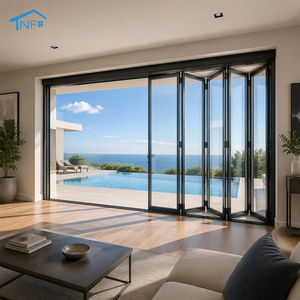
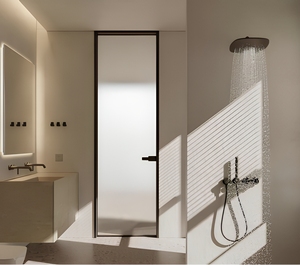
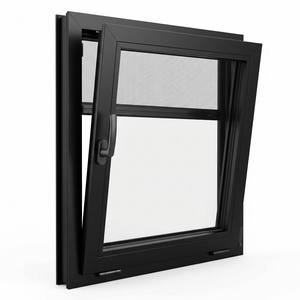
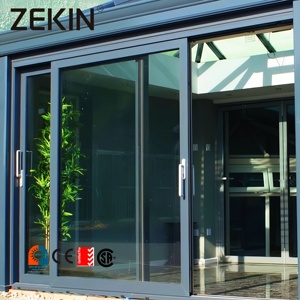
Engineering Superiority of Aluminum Clad Replacement Windows
A comprehensive examination of composite profile thermodynamics, structural integrity under high wind load, and modern architectural fenestration mechanics.
1. Composite Structural Hybridization: The Symbiosis of Timber & Extruded Aluminum
The global demand for high-efficiency retrofit fenestration has elevated aluminum-clad windows from a luxury architectural option to an engineering necessity in modern decarbonized envelopes. An aluminum-clad replacement window integrates an interior core—typically laminated solid timber such as Siberian Larch, White Oak, or finger-jointed pine—mechanically coupled with an exterior structural shell of 6063-T5 or 6063-T6 architectural grade aluminum alloy. This multi-material composition leverages the low thermal conductivity ($k \approx 0.13\text{ W/m}\cdot\text{K}$) and organic acoustic damping of wood on the building's interior, paired with the virtually maintenance-free, weather-impervious protection of exterior extruded aluminum ($k \approx 200\text{ W/m}\cdot\text{K}$).
To eliminate internal stress caused by the differential coefficients of linear thermal expansion ($\alpha$) between timber ($\alpha \approx 5 \times 10^{-6}\text{ /K}$) and aluminum ($\alpha \approx 23 \times 10^{-6}\text{ /K}$), tier-1 manufacturers in Foshan, China employ floating composite nylon/POM (polyoxymethylene) connecting clips. These sliding clips permit independent thermal expansion and contraction cycles across severe seasonal temperature gradients (-40°C to +80°C) without inducing frame bowing, seal rupturing, or air infiltration failure.
2. Thermal Break Engineering: Multi-Chamber Polyamide Technology
Standard architectural aluminum frames suffer from high thermal transmittance without engineered thermal barriers. In advanced aluminum-clad window manufacturing, low thermal conductivity polyamide insulating strips—specifically PA66 reinforced with 25% glass fiber (PA66 GF25)—are knurled, rolled, and mechanically locked into the aluminum extrusions. The thermal expansion coefficient of PA66 GF25 ($2.4 \times 10^{-5}\text{ /K}$) matches that of aluminum alloy profiles, ensuring that thermal cycling never degrades structural mechanical bond strength.
Furthermore, premier Chinese fabrication plants implement hollow multi-cavity thermal barriers integrated with polyolefin insulation core fillings (such as expanded Aerogel or rigid PUR foams). This advanced chambering restricts internal radiative heat transfer and convective air currents, reducing overall frame U-factors ($U_f$) down to an impressive $0.85\text{ to }1.1\text{ W/(m}^2\cdot\text{K)}$, easily satisfying international Passive House and North American NFRC Energy Star criteria.
3. Advanced Glazing Architecture: Acoustic Attenuation and Low-E Photometrics
An aluminum-clad replacement unit is only as resilient as its Insulated Glass Unit (IGU). In modern automated Chinese manufacturing centers, IGUs are constructed within dust-free cleanrooms utilizing structural dual-seal configurations: primary polyisobutylene (PIB) sealants for vapor blocking and secondary structural silicone or two-component polysulfide for mechanical elasticity. Units frequently incorporate warm-edge hybrid composite spacers (such as Technoform or Swisspacer) to eliminate perimeter thermal bridging and condensation frosting at the glass edge.
For high-rise coastal villas and dense urban environments, DERCHI fenestration profiles incorporate asymmetric acoustic laminated glass (e.g., 6mm Low-E tempered + 16A Argon gas filled + 4mm + 0.76mm acoustic PVB + 4mm clear). This setup achieves a Sound Transmission Class (STC) rating of 42 to 45 dB, neutralizing low-frequency transport noise while filtering out over 99% of harmful ultraviolet radiation.
Technical Performance Matrix: Clad Fenestration vs. Legacy Systems
| Performance Attribute | Aluminum Clad Wood (DERCHI) | Standard uPVC / Vinyl | Non-Thermal Aluminum | Solid Hardwood |
|---|---|---|---|---|
| Overall U-Factor (W/m²K) | 0.80 - 1.20 | 1.30 - 1.80 | 2.80 - 4.50 | 1.40 - 1.90 |
| Structural Wind Load (AS 2047) | Passed N6 (Serviceability 3000Pa) | N2 - N3 (1200Pa - 1500Pa) | N4 - N5 (2000Pa) | N3 - N4 (1500Pa) |
| Water Penetration Resistance | 600 Pa - 900 Pa | 300 Pa - 450 Pa | 400 Pa - 600 Pa | 300 Pa - 400 Pa |
| Air Infiltration Rate | < 0.05 L/s·m² (Grade 8) | 0.20 - 0.50 L/s·m² | 0.50 - 1.00 L/s·m² | 0.30 - 0.70 L/s·m² |
| Acoustic Attenuation (STC) | 40 - 46 dB | 32 - 36 dB | 28 - 33 dB | 34 - 38 dB |
| Service Life Expectancy | 40 - 50+ Years | 15 - 20 Years (UV brittle) | 25 - 30 Years (Corrodes) | 20 - 30 Years (Rot/termite risk) |
| Maintenance Overhead | Near Zero (Exterior PVDF/Fluorocarbon) | Moderate (Fading/Chalking) | Low to Moderate | High (Periodic restaining) |
Future Sourcing & Procurement Trends: 2025–2030
How global architectural standards, digital workflows, and carbon regulations are transforming how global developers and contractors source directly from Foshan factories.
1. Direct Digital BIM & CAD Integration
The days of standard catalogue ordering have been superseded by full BIM (Building Information Modeling) parametric interoperability. Leading China manufacturers accept Revit (.rvt) and IFC data files directly into five-axis CNC processing centers. This zero-error pipeline reduces pre-construction coordination timelines by up to 60%, allowing rapid turnaround of bespoke corner-locking profiles and site-measured retrofit dimensions.
2. Embodied Carbon & Green Aluminium
With cross-border environmental disclosures and tightening building energy regulations (such as EU CBAM and North American LEED v4.1), procurement teams require low-carbon extruded aluminum sourced via hydropower smelting. Chinese tier-1 factories are rapidly adopting closed-loop aluminum recycling and timber certified by the Forest Stewardship Council (FSC), delivering third-party Environmental Product Declarations (EPD).
3. Real-Time Remote Factory Auditing
Overseas project procurement directors no longer need to fly internationally for preliminary vetting. High-precision VR 360-degree immersive factory inspections, real-time live video dimensional inspections, and digital coordinate measuring machine (CMM) testing reports permit comprehensive remote verification of CNC tolerances, corner crimping tensile strength, and multi-point lock alignment.
Next-Generation Fenestration: What Evolves in 2026?
From concealed hardware ergonomics to intelligent climatic venting, explore how Chinese window technology has surpassed standard commercial specifications.
Ultra-Narrow Sightlines with Flush Exterior Planes
Architectural minimalism demands structural glass bonding with concealed sashes. Next-generation designs eliminate exposed framing on the outside, creating clean, all-glass aesthetics while protecting the inner wood core with coplanar, heavy-duty fluorocarbon-coated outer armor.
Intelligent Motorization & Smart Building Integration
Concealed German motorized operators (Siegenia, Roto, or in-house smart drives) wired directly into Zigbee or KNX automation networks. Automated micro-ventilation cycles automatically regulate indoor air quality (IAQ) and lock tight when barometric sensors detect wind-driven rain.
Vacuum Insulating Glass (VIG) Hybridization
By marrying an exterior low-E tempered pane with an internal micro-cavity vacuum glass panel ($0.15\text{mm}$ vacuum gap), overall window center-of-glass U-values reach down to $0.45\text{ W/(m}^2\cdot\text{K)}$. This thermal performance equals an insulated solid brick wall without increasing sash profile depth.
Extreme Saline & Coastal Surface Metallurgy
For seaside villas across Florida, Australia, and coastal South Asia, extrusions are treated with electrophoretic fluorocarbon coating or 70% Kynar 500 PVDF resins, tested for 3,000+ hours in continuous neutral salt spray chambers (ASTM B117) with zero surface blistering or pit corrosion.
Guangdong Dejiyoupin (DERCHI): Foshan's Premier Fenestration Manufacturing Hub
Headquartered in Shishan Town, Nanhai District, Foshan—the epicenter of China's premium aluminum fenestration ecosystem—DERCHI represents 25+ years of custom manufacturing excellence.
Massive Scale & Capacity
A sprawling 180,000 m² standardized industrial manufacturing campus equipped with German Elumatec CNC dual-head saws, corner crimping units, and automated curing lines, backed by 600+ skilled craftsmen.
International Certification
Fully tested and verified to Australian AS 2047, North American NFRC / AAMA, European CE, ISO 9001, and UL fire ratings. Over 100 patents and formal test reports ensure uncompromised compliance with local building codes.
Export Logistics & Engineering
Dedicated in-house structural engineers supply free CAD shop drawings, BIM models, and wind-load calculations. Products ship safely in reinforced fumigated plywood crates on FOB/CIF terms directly to global ports.
Frequently Asked Questions (FAQ) for Global Buyers
Direct answers to questions asked by foreign developers, architectural firms, window dealers, and general contractors sourcing replacement windows from China.
Q1: How does an aluminum-clad replacement window differ from an aluminum-clad timber window?
Replacement windows (or retrofit inserts) are engineered with specialized flange adapters, nailing fins, or flush retrofitting frame lips that slip directly into existing rough openings or preserved brick-mould perimeters. They maximize existing glass view areas while eliminating the need for destructive drywall or exterior stucco demolition.
Q2: What certifications are required when importing replacement windows to the USA, Canada, and Australia?
In the USA and Canada, building codes require NFRC thermal performance ratings (U-factor and SHGC) along with AAMA/WDMA/CSA 101/I.S.2/A440 structural and water-tightness certifications. In Australia and New Zealand, AS 2047 and AS 1288 certification is legally mandatory. DERCHI holds certified test reports covering all these target markets.
Q3: How do you prevent internal timber mold, wood rot, or decay inside the cladding cavity?
Proper engineering requires back-ventilation. DERCHI profiles incorporate built-in water drainage channels and 3mm expansion air gaps between the aluminum exterior skin and the wood core. This prevents capillary moisture buildup, condensation, or mold growth. Furthermore, our raw timber undergoes vacuum pressure impregnation with anti-fungal, water-repellent biological sealers.
Q4: Can custom hardware (e.g. German multi-point systems) and smart keyless locks be integrated?
Yes. Our CNC milling lines are calibrated for European standard hardware grooves (Euro-groove 16mm). We integrate original German Siegenia, Roto, Hoppe, or GU hardware assemblies. For sliding and entry systems, we offer integrated biometric fingerprint, PIN, and Zigbee/Wi-Fi smart locks with multipoint steel throw bolts.
Q5: What is the factory production lead time, and what packaging is used for ocean transit?
Standard custom architectural orders take 25 to 35 days from CAD shop drawing sign-off. High-volume commercial projects are scheduled in staged container shipments. Windows are protected with protective peel-off foil, high-density polyethylene edge protectors, moisture desiccant bags, and fully enclosed solid non-fumigation plywood crates for ocean shipping.
Q6: How are shop drawings and field measurements resolved remotely before production starts?
Our bilingual fenestration engineering department works directly with your architectural drawings, window schedules, and on-site rough opening measurements. We produce comprehensive 2D CAD cross-sections, anchorage point calculations, and 3D detail models for your formal review and approval before aluminum cutting begins.
Ready to Source Directly from China’s Leading Fenestration Factory?
Send your window schedule, architectural drawings, or renovation specifications to our engineering team for free CAD shop drawings, acoustic and thermal calculations, and factory-direct pricing.
Get a Quote