Factory Precision Portfolios
Featured Industrial & Architectural Door Systems
Engineered for outbuilding security, climate resilience, and high structural deflection tolerance. Direct OEM/ODM integration with precision aluminum hardware systems.
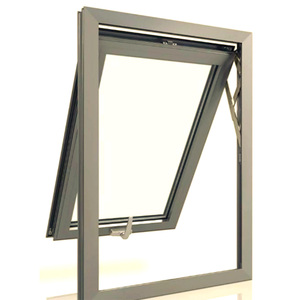
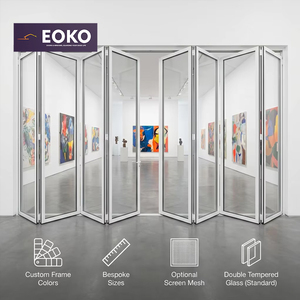
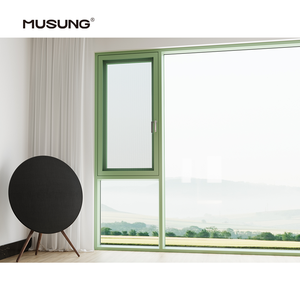
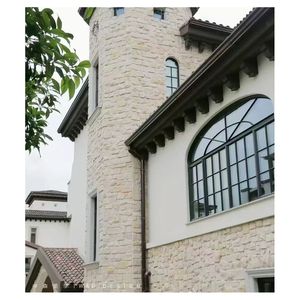
Engineering Metallurgy Whitepaper
Evaluating Industrial-Grade Aluminum Shed Doors: An Engineering Perspective
Why standard consumer-grade doors fail prematurely in industrial outbuildings, workshops, and commercial storage hubs, and how advanced metallurgy alters long-term lifecycle costs.
6063-T5 vs. 6063-T6 Extrusion Alloys
The structural integrity of a shed door relies on the cross-sectional moment of inertia. Top-tier Chinese extrusion facilities utilize primary aluminum billet over secondary recycled scrap, strictly tempering to 6063-T6 or 6061-T6 specifications. This increases yield strength to ≥170 MPa, preventing panel sag and frame torsion under differential wind load pressures.
Thermal-Break Separation Tech
Uninsulated metal sheds regularly experience interior surface condensation, leading to equipment rust and premature structural corrosion. Integrating Polyamide PA66 GF25 thermal struts breaks conductive heat paths, maintaining internal thermal stability while enhancing the acoustic damping performance of large utilitarian panels across wide climatic swings.
Electrophoretic & Fluorocarbon Coatings
Outbuilding shed doors endure unfiltered UV radiation and harsh atmospheric weathering. Implementing multi-stage fluorocarbon (PVDF) or high-grade architectural powder coatings complying with AAMA 2604/2605 certifications guarantees gloss retention and chalk resistance exceeding 3,000 salt-spray hours without delamination or microscopic pitting.
| Performance Parameter | Commercial Grade (Generic) | Industrial High-Spec (China Best Tier) | Validation / Standard Reference |
|---|---|---|---|
| Billet Material Composition | Recycled aluminum scraps with variable Fe/Si ratios | 100% Virgin 6063/6005 Primary Aluminum Ingot | ASTM B221 / GB/T 5237.1 |
| Minimum Profile Wall Thickness | 1.0 mm – 1.2 mm (prone to rail flexure) | 2.0 mm – 3.0 mm Reinforced Structural Webbing | AS 2047 / EN 12020-2 |
| Surface Protection System | Standard Mill Finish or Basic Paint (<15μm) | Dual-coat PVDF Fluorocarbon / AkzoNobel Powder (≥60μm) | AAMA 2605 / ISO 9227 (Salt Spray) |
| Weather Sealing System | Basic PVC brush strips or standard rubber | Co-extruded Multi-Lip EPDM + Santoprene Gaskets | ASTM E283 (Air Infiltration) |
| Hardware & Pivot Rating | Zinc-alloy surface hinges (5,000 cycles) | 304/316 Stainless Heavy-Duty Axles (100,000+ cycles) | ANSI/BHMA A156.1 / EN 1935 |
Strategic Sourcing Insight for Direct Buyers
Procuring aluminum outbuilding and shed doors directly from specialized Chinese industrial clusters (such as Foshan, Guangdong) provides critical margin leverage. By eliminating intermediary trading companies, enterprise procurers obtain customizable mill finishes, verified wall-thickness certifications, and CAD shop-drawing coordination directly from the manufacturing engineering department.
Procurement Forecasting
Future Sourcing & Technological Trends in Aluminum Doors
The industrial door manufacturing landscape is rapidly transitioning toward automated fabrication, intelligent access interfaces, and stringent low-carbon footprints.
Modular "Flat-Pack" Prefabrication
Ocean shipping rates reward maximum volumetric efficiency. Leading factories now manufacture pre-mortised, precision-mitred aluminum frames designed for fast on-site mechanical assembly with internal zinc-locking corner chevrons. This reduces freight cubic meters by up to 58% while maintaining structural rigidity.
IoT-Integrated Security & Access
Commercial outbuildings and security sheds are moving toward automated multipoint mortises integrated with biometric, RFID, and low-voltage access systems. Future-proof factories embed wire chases, recessed magnetic contact sensors, and drop-down acoustic seals straight off the CNC fabrication line.
Low-Carbon Circular Aluminum
Driven by international ESG audits and the EU Carbon Border Adjustment Mechanism (CBAM), top-tier Chinese manufacturers are implementing closed-loop hydroelectric-powered smelting, drastically cutting embodied carbon emissions while providing verified EPD (Environmental Product Declaration) certificates for green building approvals.
Factory Value Proposition
Why Top Global Contractors Source Directly From Our Base
Guangdong Dejiyoupin Doors and Windows Co., Ltd. (DERCHI) leverages complete vertical integration—from raw profile design to certified international testing standards.

Turnkey Solution Supply
Eliminate container dead space. Consolidate heavy entrance systems, shed doors, thermal casements, and accordion dividers under a single bill of lading from one facility.

Global Code Compliance
Certified against CE, ISO 9001, Australian AS 2047 cyclonic impact standards, and UL fire-rating requirements, backed by 30+ core design and mechanical patents.

Full CAD/BIM Customization
In-house architectural engineers produce millimeter-accurate structural shop drawings, custom mullion profiles, and sill detail solutions to match your tender specs.

Dedicated Technical Engineers
Direct engineering communication in fluent English, bridging timezone gaps and coordinating custom glass thickness, opening directions, and port-to-door CIF logistics.
Procurer Knowledge Base
Frequently Asked Questions by Industrial Sourcing Managers
Key legal, technical, and logistic insights into procuring aluminum shed doors and architectural fenestration directly from China.
What minimum aluminum wall thickness is required for heavy-duty shed and workshop doors?
+
For standard interior domestic doors, a 1.2 mm to 1.4 mm wall profile is typical. However, for industrial sheds, equipment enclosures, and agricultural outbuildings subjected to cyclonic gusts or high duty cycles, an architectural wall thickness of at least 1.8 mm to 2.5 mm is strictly recommended. This structural mass prevents racking, hinge drop, and windward frame deflection under peak positive and negative air pressures.
How does aluminum outperform steel or composite timber in shed door applications?
+
While mild steel offers high initial tensile strength, it inevitably rusts from the inside out in high-humidity or coastal regions once its primer coat is scratched. Timber doors absorb moisture, leading to seasonal swelling, deadbolt misalignment, rot, and termite attack. High-tensile 6063 aluminum alloys form a natural passivation layer, are impervious to bio-degradation, boast high strength-to-weight ratios, and maintain smooth roller operation over decades.
Can the factory manufacture custom rough-opening dimensions and non-standard thresholds?
+
Yes. As an authentic OEM/ODM extrusion and fabrication facility, every unit is built to project-specific rough opening measurements. Our technical department issues detailed CAD approval drawings prior to tooling or cutting. We routinely engineer low-profile wheelchair-accessible ADA ramps, recessed heavy equipment tracks, or raised step-over water sills engineered to withstand torrential monsoon rains.
How are large aluminum door frames packed to prevent maritime freight transit damage?
+
Export goods undergo a rigorous multi-tier packing protocol: First, profile surfaces receive a protective PE peel-off scratch film. Second, vulnerable corners are wrapped in high-density polyethylene (EPE) foam guards. Third, assembled panels or flat-pack bundles are encased in multi-wall corrugated cardboard and securely banded inside fully enclosed, fumigated ISPM-15 plywood crates. This eliminates flexure and friction wear during long ocean voyages and crane offloading.
What lead times and shipping terms (FOB/CIF/DDP) can buyers expect?
+
Standard prototype and shop drawing approval typically takes 3 to 5 business days. Profile extrusion, surface coating, CNC processing, assembly, and testing require approximately 20 to 30 days depending on order volume and anodizing/fluorocarbon queues. We provide international trade quotations on EXW, FOB, CIF, or door-to-door DDP terms, coordinating seamless sea-freight routing directly through major export terminals such as Guangzhou, Nansha, or Shenzhen.