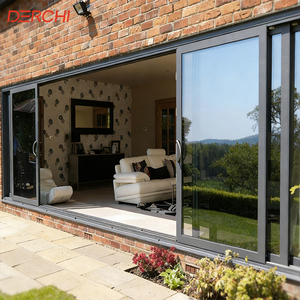
Featured Fenestration & Entry Systems
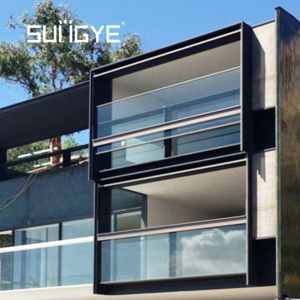
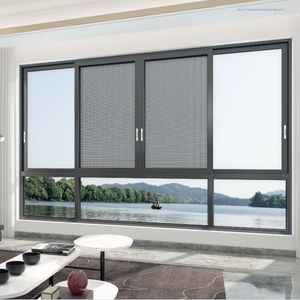
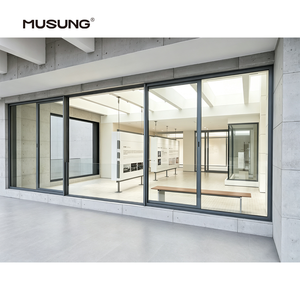
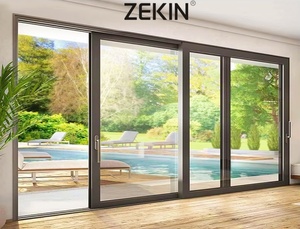
From vertical sliding and sash architectural windows to heavy-duty hurricane-rated impact sliders and pivot doors, our engineering portfolio is rigorously tailored for strict building codes worldwide.
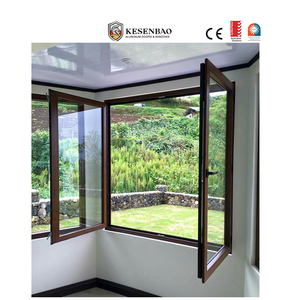
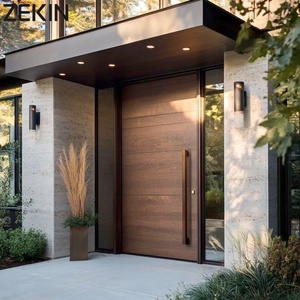
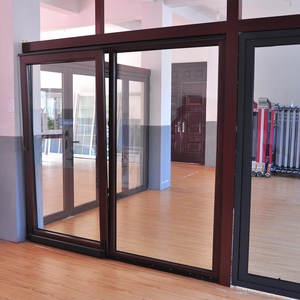
25+
Years Engineering Expertise
180,000m²
Foshan Mega Production Hub
600+
Skilled Craftsmen & Engineers
100+
Global Patents & Testing Certs
Why Global Specifiers Choose Our Vertical Fenestration
Vertical sliding windows (double-hung and single-hung sash designs) require stringent tolerance controls, counterbalance mechanisms, and heavy-duty weather seals that eliminate air leakage while preserving historic architectural beauty.
Aviation-Grade 6063-T6 Extrusions
Engineered exclusively with primary ingot billet extrusions boasting a minimum profile wall thickness of 1.4mm to 2.0mm. Resists deflection under extreme design wind pressure (DP up to 60+ PSF) and eliminates frame deformation over decades of constant operation.
Constant-Force Spiral Balances
Features precision-calibrated torsion spring and block-and-tackle balances rated for 50,000+ continuous cycles. Enables effortless, fingertip vertical sash glide with reliable stay-in-place sash positioning and full tilt-in cleaning functionality.
Iso-Baric Polyamide Thermal Break
Incorporates multi-cavity PA66 GF25 thermal struts that mechanically isolate the outdoor exterior frame from interior architectural living spaces, lowering overall window U-values down to 0.28 BTU/hr·ft²·°F (1.6 W/m²·K).
Dual-Barrier Fin-Pile Weatherseals
High-density polypropylene woven pile seals infused with central mylar barriers are deployed continuously across all vertical stiles, meeting rails, and sill pockets. Provides water penetration resistance up to 450 Pa under continuous cyclic spray test conditions.
Integrated Cam-Action Sash Locks
Die-cast zinc and stainless steel concealed multi-point sweep latches mechanically draw the upper and lower sash rails together when locked, creating a compression seal that shuts down drafts and provides certified anti-burglary forced entry resistance.
Architectural Surface Chemistry
Finished with AAMA 2604 / AAMA 2605 certified fluorocarbon PVDF resins or architectural powder coatings that endure 3,000+ hours of accelerated salt spray exposure, preserving finish integrity against extreme UV degradation and seaside saline winds.
Industry Technical Whitepaper: The Evolution of Aluminum Vertical Sliding Systems
Historically, the fenestration industry regarded the vertical sliding window (traditional sash window) as an architectural compromise—beloved for its timeless proportion in Georgian, Victorian, and American Colonial facades, yet notoriously vulnerable to thermal conductance, air infiltration, and sash friction failure. As global green building codes mandate tighter building envelopes under Title 24, ASHRAE 90.1, and the EU Energy Performance of Buildings Directive (EPBD), structural aluminum fenestration has undergone a profound re-engineering revolution.
Modern export-grade aluminum vertical sliding windows manufactured in Foshan integrate three breakthrough subsystems: advanced extruded polyamide thermal barriers that halt heat bridges, inverted constant-force block balances that compensate for triple-glazed glass package loads exceeding 45 kg per sash, and perimeter co-extruded EPDM and woven fin seals that achieve Class 4 air permeability tightness under EN 12207 standards.
| Performance Vector | Conventional Timber Sash | Standard Vinyl (uPVC) Slider | DERCHI Engineered Thermal Aluminum |
|---|---|---|---|
| Structural Deflection | Prone to seasonal swell & rot | High thermal expansion; sags over time | Zero creep; 6063-T6 rigidity across 3m+ openings |
| Thermal Insulation | Moderate (U ≈ 2.2 - 2.8) | Good (U ≈ 1.6 - 2.0) | Superior Thermal Break (U-value down to 1.4 W/m²K) |
| Sightline Profile | Heavy & wide (70mm - 95mm) | Bulky internal webs (65mm - 85mm) | Ultra-Slim Architectural Profile (38mm - 52mm) |
| Coastal Resistance | Requires bi-annual repainting | Chalking & discoloration under UV | Fluorocarbon PVDF; resists 3,000h salt spray |
Future Procurement Trends in Global Fenestration (2025–2030)
Procurement managers, commercial facade consultants, and master distributors across North America, Australia, and coastal developing economies are shifting procurement behaviors along three distinct strategic vectors:
1. Shift Toward Direct-from-Source Factory Integration: Escalating domestic fabrication costs in destination markets have triggered an institutional migration toward Tier-1 Chinese direct manufacturers. Procuring directly from a verified 180,000 m² automated production facility bypasses intermediate trading overhead, reduces per-unit costs by 32% to 45%, and affords direct engineering coordination on CAD shop drawings and BIM parametric models.
2. Mandatory Extreme Weather & Cyclone Certifications: Building codes in coastal Australia (AS 2047 cyclonic testing), South Florida (Miami-Dade / ASTM E1886/E1996 large missile impact), and monsoonal South Asia now mandate third-party validation for wind pressure resistance and water tightness. Vertical sliding systems must prove structural survival under cyclic wind pressures exceeding 4,000 Pa.
3. Hybrid Motorization & Hidden Tilt Mechanisms: The traditional manual latch is giving way to concealed motorized screw-drives compatible with smart building automation (KNX, Zigbee, BACnet) protocols, enabling automated night-purge ventilation while maintaining flush exterior glass facades.
Key Technical Trends in Vertical Sliding Window Engineering
Modern vertical sliding systems must solve the paradox of historic sash proportions coupled with ultra-heavy acoustic double and triple glazing units. High-spec projects demand laminated acoustic interlayer glass (e.g., 6mm + 1.52PVB + 6mm low-e), bringing glass weights up to 40 kg/m². Our engineering team overcomes this with heavy-gauge counterbalance torsion systems, low-friction Delrin roller guides, and structural silicone glazing (SSG) bonding techniques that ensure glass rigidity becomes an integral part of the window’s overall structural resistance.
Enterprise Capability
Guangdong Dejiyoupin Doors & Windows Co., Ltd. (DERCHI)
Headquartered in Shishan Town, Foshan—the heart of China's prime aluminum extrusion and fabrication industry—DERCHI has stood as an authoritative manufacturer and exporter for over 25 years. Operating across a sprawling 180,000 m² state-of-the-art intelligent manufacturing base staffed by 600+ skilled technicians, we bridge the gap between bespoke architectural customization and mass industrial export reliability.
Recognized among China's Top 10 fenestration and luxury door brands, our fully vertically integrated supply chain encompasses CAD profile tooling, automated CNC machining centers, precision glass tempering lines, and multi-stage testing laboratories.

Procurement Clarity
Frequently Asked Questions for Importers & Contractors
Get verified, direct answers regarding engineering limits, logistics security, international certification standards, and trade terms before commissioning your project.
What are the maximum manufactured dimensions for aluminum vertical sliding windows?
We manufacture custom vertical sliding sash units up to 1,800mm in width and 3,200mm in single-frame height. For oversized applications, our engineering team integrates tandem constant-force spiral balances and reinforced internal steel mullion stiffeners to withstand excessive wind loads without sash racking.
How do you guarantee watertightness in heavy monsoon and cyclone zones?
Our vertical sliding systems feature multi-chamber sill extrusions with internal baffled weep holes and one-way drainage valves. Combined with high-compression vulcanized EPDM gaskets and continuous pile fin seals, our assemblies are certified to resist water penetration up to 450 Pa under continuous AS 2047 and ASTM testing regimens.
Can you provide custom CAD shop drawings, calculations, and BIM models?
Yes. Every commercial order and custom villa project is supported by our dedicated team of 20+ facade engineers. We provide comprehensive elevation CAD drawings, structural wind load deflection calculations, glass thermal stress analyses, and Revit BIM parametric families prior to extrusion cutting.
How are fragile glass products packed for long-distance ocean freight?
Every window assembly is protected with electrostatic peel-off film, high-density polyethylene edge protectors, and encased in IPPC-certified fumigated plywood crates with internal foam cushioning. For full-container load (FCL) shipments, crates are strapped with heavy-duty steel tensile bands to prevent in-transit shifting.
What international test certificates and compliance reports do you offer?
Our product series are certified under CE (EN 14351-1), ISO 9001:2015, Australian Standard AS 2047 (N6 cyclonic rating), and North American NFRC thermal standards. Impact-resistant configurations meet ASTM E1886 and ASTM E1996 large-missile protocols with verified lab test documentation.
What is the standard production lead time and FOB/CIF shipping terms?
Standard lead time is 25 to 35 business days from final CAD shop drawing sign-off and deposit receipt. We ship on FOB, CIF, or DDP terms from Foshan, Guangzhou, and Shenzhen ports to major global destinations including the US, Canada, Australia, the Middle East, India, and Sri Lanka.
Partner with China's Premier Fenestration Engineering Exporter
Whether you require custom aluminum vertical sliding windows for a historic landmark restoration, cyclonic impact solutions for a luxury resort, or containerized shipments for multi-family residential developments, our engineers are ready to assist.
Inquire Now