Architectural Fenestration Systems & Certified Assemblies
High-performance thermal-break aluminum windows, cyclone-proof sliding systems, and commercial fire-rated barrier doors fabricated to global regulatory standards.
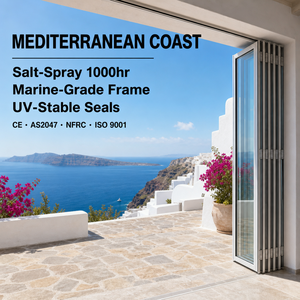
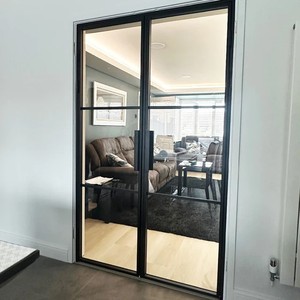
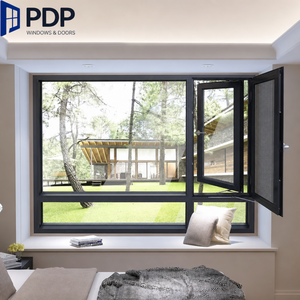
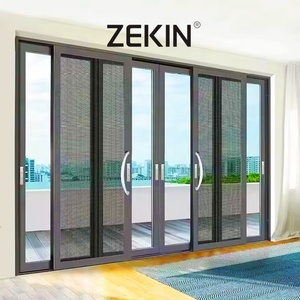
Industrial Leadership & Technical Capabilities
Operational excellence from Foshan, Guangdong—the world’s foremost epicentre of aluminum extrusion engineering and precision architectural fenestration.
Operating under the industrial umbrella of Guangdong Dejiyoupin Doors and Windows Co., Ltd. (DERCHI), our enterprise represents over a quarter-century of technical mastery in high-precision aluminum extrusion, polyamide thermal barrier assembly, and architectural facade engineering. Our manufacturing plant spans 180,000 square meters and houses fully automated multi-axis CNC machining centers, proprietary powder-coating lines, and robotic insulated glass units (IGU) assembly infrastructure. Serving residential, hospitality, and commercial infrastructure sectors across North America, Australia, Europe, and South Asia, we bridge the gap between bespoke architectural aesthetics and the uncompromising structural engineering required by international building codes.
Selecting an aluminum window manufacturer is not simply a price-discovery exercise; it is an audit of structural accountability. Substandard alloys, improper thermal bridging, or insufficient anodization depth inevitably yield frame deflection, seal failure, air infiltration, and catastrophic water ingress during cyclical weather events. At DERCHI, every window and door system utilizes prime architectural-grade 6063-T5 / 6063-T6 aluminum alloy, paired with PA66 GF25 techno-polymer thermal breaks and multi-point perimeter compression seals. Our finished fenestration profiles routinely exceed rigorous international certification requirements, including North American NFRC/AAMA ratings, Australian AS 2047 cyclonic testing, and European CE standards.
Certified Global Compliance
Exhaustively validated under CE, AS 2047, ISO 9001, and UL fire standards, with physical testing covering cyclic wind load, acoustic mitigation, and water penetrability.
Full-Cycle Engineering & BIM
Dedicated in-house drafting engineering squads provide complimentary parametric CAD shop drawings, structural wind-load calculations, and BIM assets for architects.
Direct OEM/ODM Manufacturing
Eliminate middleman trade-house surcharges. Sourcing direct from our Foshan facility provides consolidated shipments, traceable material mills, and single-source QA.
Dedicated Export Operations
Multilingual project engineers facilitate swift turnarounds, providing FOB, CIF, or DDP logistic solutions with reinforced steel-strapped crating tailored for transoceanic transit.
Future Procurement Trends in Architectural Fenestration
Strategic vectors reshaping global architectural specifications, building envelopes, and institutional sourcing for 2026–2030.
The global aluminum window and facade sector is experiencing a foundational pivot. Commercial procurement directors, real estate conglomerates, and custom homebuilders no longer evaluate fenestration solely as decorative enclosures. Stricter regional energy conservation mandates, escalating extreme weather severity, and rising smart building automation standards are forcing an evolution across fabrication floors. Sourcing partners must adapt to systemic shifts across metallurgical sustainability, microclimatic envelope insulation, and specialized structural glass engineering.
Ultra-Low U-Value & Passivhaus Assemblies
Regulatory frameworks across North America and Europe now penalize buildings with high thermal transmittance. Sourcing demands have shifted to multi-cavity polyamide breaks (PA66 GF25 >34mm), triple Low-E argon-filled IGUs with warm-edge composite spacers, pushing overall window U-values below 0.8 W/(m²·K).
Cyclonic Wind-Resistance & Impact Glazing
Due to severe macro-climatic shifts, coastal developments in Florida, the Caribbean, Southeast Asia, and Northern Australia mandate verified cyclic pressure resistance. Future orders prioritize monolithic structural interlayers (PVB / SentryGlas) with structural silicone perimeter bonding rated to exceed AS 2047 N6 conditions.
Minimalist Sightlines & Motorized Automation
High-end residential and hotel projects favor floor-to-ceiling panoramic fenestration with concealed sashes, ultra-slim stiles (<25mm), and heavy-weight hidden rollers. Concurrently, integration with building automation protocols (KNX, Zigbee) via concealed low-voltage servomotors is rapidly transitioning from a luxury option to standard tender specifications.
Product Engineering & Technological Evolution
A technical examination of metallurgical alloy selections, surface treatments, thermal acoustics, and longevity engineering.
1. Advanced Metallurgy & Structural Extrusion Profiling
The performance foundation of our fenestration portfolio begins with virgin 6063 architectural-grade billet extrusion, stabilized to T5 or T6 artificial aging criteria. Unlike secondary re-melt scrap aluminum which contains uncontrolled traces of iron, zinc, and silicon—often causing brittle failure under load—our virgin billets deliver guaranteed tensile strengths exceeding 205 MPa and yield strengths over 170 MPa. For high-wind exterior installations, wall thicknesses are calibrated strictly between 1.6mm and 3.0mm, preventing profile twisting during wind cycles or heavy thermal swings.
2. Advanced Surface Metallurgy: Fluorocarbon (PVDF) vs. Electrophoretic Anodizing
Windows installed in harsh coastal, industrial, or tropical environments demand rigorous defense against electrolytic oxidation and chalking. Our automated finishing lines deliver AAMA 2605-compliant fluorocarbon (PVDF) coatings containing a minimum of 70% Kynar 500 resin, providing an impenetrable chemical barrier against saline corrosion, acid precipitation, and intense ultraviolet radiation. Furthermore, our anodizing tanks achieve class-1 film depths exceeding 25 microns, while multi-stage wood-grain sublimation transfers authentic timber visuals onto termite-proof, fire-resistant aluminum profiles.
3. Multi-Chamber Thermal Insulation & Acoustic Barrier Physics
The traditional vulnerability of aluminum—its high natural thermal conductivity—is mitigated through our advanced multi-cavity thermal-bridge isolation technology. By mechanically crimping reinforced polyamide strips within internal and external profile extrusions, we interrupt heat conductivity entirely. When paired with high-performance acoustic laminated double or triple insulated glass units (utilizing asymmetric pane thickness combinations such as 6mm + 12Ar + 8mm), our windows reduce exterior urban ambient noise by up to 42 dB (Rw / STC ratings), establishing peaceful interiors adjacent to highways, flight paths, and dense urban centers.
Frequently Asked Procurement Questions (FAQ)
Critical operational, technical, and shipping inquiries addressed directly by our fenestration engineering desk.
What are the exact differences between thermal break and non-thermal break aluminum windows?
How does your factory verify compliance with American (AAMA/NFRC) and Australian (AS 2047) standards?
What glass configurations and coating technologies do you supply for large-scale projects?
How are bespoke custom dimensions, opening configurations, and hardware systems managed?
What protective packaging protocols do you implement to prevent freight damage during container transit?
What are the standard production lead times, and how do you handle international shipping logistics?
Ready to Engineer Your Project Fenestration?
Connect directly with our Foshan factory engineering desk for full CAD shop drawings, structural wind-load evaluations, and comprehensive commercial container quotations.
Inquire Now