Engineered Aluminium Alloy Window & Door Portfolio
From high-performance thermal break casements to panoramic sliding structures, all profiles utilize certified 6063-T5/T6 aviation-grade aluminum billets, multi-cavity barrier insulation, and German precision multi-point locking hardware.
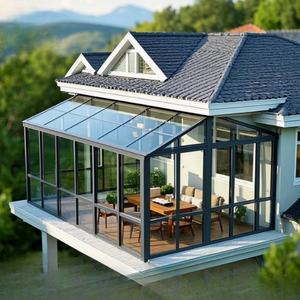
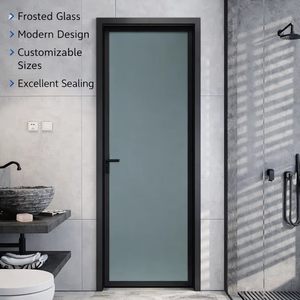
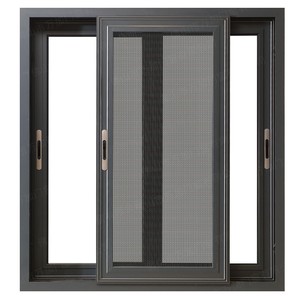
Strategic Procurement of Aluminium Alloy Windows: The China Manufacturing Advantage
In modern architectural fenestration, the choice of building envelope systems directly dictates energy performance indices (EUI), occupant acoustic comfort, structural resilience under extreme wind loads, and overall lifecycle cost. Sourcing aluminium windows directly from tier-1 Chinese manufacturers has transitioned from a pure cost-arbitrage model to an advanced technical collaboration strategy. Guangdong province—specifically the Foshan manufacturing hub—now concentrates over 40% of the world's high-precision aluminum extrusion, surface treatment, and automated CNC fenestration engineering lines.
Key Engineering Rule for Global Procurement: The structural durability of an architectural window system depends not only on frame thickness, but fundamentally on alloy purity (primary aluminum ingot vs. secondary scrap), polyamide 66 thermal barrier depth, glass edge spacer thermal conductivity, and the mechanical co-extrusion density of vulcanized EPDM gaskets.
1. Metallurgical Profiles: Why 6063-T5 vs. 6063-T6 Dictates Structural Integrity
Architectural aluminum alloys are dominated by the Al-Mg-Si (6000 series) matrix. Premier Chinese manufacturers such as Guangdong Dejiyoupin Doors and Windows Co., Ltd. (DERCHI) utilize 100% electrolytic virgin A00 aluminum ingots to extrude 6063 and 6061 profiles. The distinction between T5 and T6 temper cycles represents a critical procurement baseline for structural engineers:
6063-T5 is cooled rapidly from high temperature and artificially aged, achieving an ultimate tensile strength of ≥ 160 MPa and yield strength of ≥ 110 MPa. In contrast, 6063-T6 undergoes solution heat treatment followed by artificial aging, elevating the tensile strength to ≥ 205 MPa and yield strength to ≥ 180 MPa with a Webster hardness exceeding 12 HW. For multi-story curtain walls, oversized sliding panels (such as 3.5-meter patio sliders), and cyclone-prone coastal zones (Florida, Caribbean, South China Sea, Australian coastlines), specifying 6063-T6 frame members ensures zero permanent frame deflection under transient cyclonic gust pressures exceeding 4.5 kPa.
2. Thermal Break Mechanics: Technoform Polyamide PA66 GF25 Strips
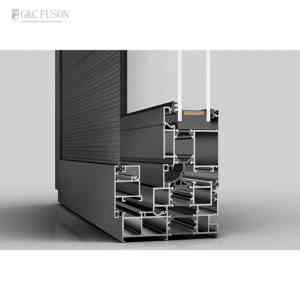
Aluminum exhibits an inherently high thermal conductivity of approximately 205 W/(m·K). Without an engineered thermal bridge, condensation and massive heat flux are inevitable. Chinese top-tier suppliers have completely phased out outdated polyurethane (pour-and-debridge) channels in favor of mechanical rolling assembly using German Technoform polyamide strips (PA66 reinforced with 25% transverse glass fiber). Glass fiber reinforcement matches aluminum's coefficient of linear thermal expansion (2.3 × 10⁻⁵ /K), preventing structural separation, shear rupture, or air leakage during seasonal temperature swings from -30°C to +60°C.
| System Type | Alloy & Wall Thickness | Thermal Barrier (PA66) | Glass Configuration | U-Value (W/m²·K) | Acoustic (Rw) | Applicable Codes |
|---|---|---|---|---|---|---|
| Thermal Break Casement | 6063-T6 / 1.8mm - 2.2mm | 24mm - 34mm Multicavity | 6Low-E + 12Ar + 6mm Tempered | 1.3 - 1.6 | 38 - 42 dB | CE EN 14351, AS 2047, NFRC |
| Hurricane Impact Casement | 6063-T6 / 2.5mm Heavy Section | 35.3mm Foam-Filled Core | 6 + 1.52PVB + 6 + 12Ar + 6Low-E | 1.2 - 1.4 | 42 - 46 dB | ASTM E1886/1996, TAS 201/202 |
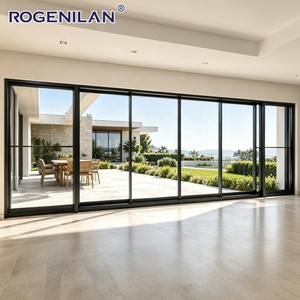
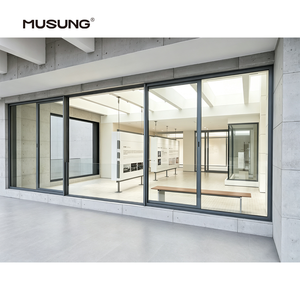
| Minimalist Panoramic Slider | 6061-T6 / 2.0mm - 3.0mm | Interlocking Polyamide | 8Low-E + 16Ar + 8mm Warm Edge | 1.4 - 1.8 | 36 - 40 dB | AS 2047, ISO 9001, CE |
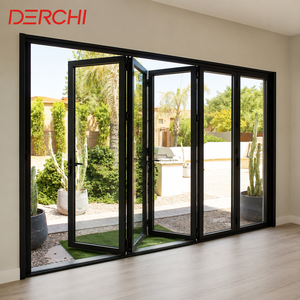
| Heavy-Duty Folding Patio | 6063-T5 / 2.0mm - 2.5mm | 20mm PA66 GF25 Barrier | 5Low-E + 14Ar + 5mm Tempered | 1.5 - 1.9 | 35 - 39 dB | AAMA/WDMA/CSA 101, CE |
3. Surface Treatment Engineering: PVDF Fluorocarbon vs. Qualicoat Class 2 Powder
Corrosion resistance is paramount for coastal and tropical installations. When importing from China, professional buyers should specify between three major surface finishing regimes:
1. Electrostatic Powder Coating: Utilizing Qualicoat Class 1 (standard exterior durability) or Class 2 (superdurable polyester powders like AkzoNobel or Tiger). Class 2 powders guarantee gloss retention and color stability for up to 15 years with minimal chalking.
2. Fluorocarbon PVDF Spraying (AAMA 2605): Featuring a minimum of 70% Kynar 500 or Hylar 5000 resin in 2-coat or 3-coat systems (primer, color coat, clear coat) with total dry film thickness ≥ 40 μm. This provides optimal resistance against ultraviolet radiation, acid rain, chemical pollutants, and industrial microclimates.
3. Deep Anodizing (Class I - 18 to 25 Microns): Providing an integral oxide film impervious to blistering, ideal for ultra-modern architectural aesthetics and saline offshore environments.
Guangdong Dejiyoupin Doors & Windows Co., Ltd. (DERCHI)
Recognized among China's Top 10 High-End Fenestration Manufacturers. Fully integrated research, robotic extrusion processing, double-glazed glass tempering, and certified testing under a single 180,000 m² campus in Foshan.

Automated Precision & Rigorous Quality Assurance
Our Foshan manufacturing headquarters employs German 5-axis CNC machining centers, automated elumatec corner-crimping units, and automated desiccant-filled insulating glass production lines. Every window sash undergoes four-point air-tightness, water penetration resistance, and structural deflection testing prior to crating.
With direct export operations supplying commercial multi-family towers, private villa compounds, luxury resorts, and government infrastructure across North America, Australia, Europe, the Middle East, and South Asia, DERCHI maintains a dedicated bilingual engineering department supporting project shop drawings (AutoCAD & Revit BIM), structural calculations, and compliance submittals.
Direct Manufacturer Pricing
Eliminate intermediary export brokers and middle trading commissions. Direct mill-to-project pricing with complete transparency on raw material surcharges and hardware bills of quantity.
Full Code Compliance
Our systems conform to international certifications: CE (Europe), AS 2047 (Australia), CSA (Canada), and Florida HVHZ hurricane criteria, verified by independent third-party laboratories.
Complete Custom Engineering
Tailor frame profiles, thermal barrier depths, opening typologies (tilt-and-turn, casement, pivot, bi-fold), glass interlayers (PVB, SentryGlas), and hardware finishes to architectural drawings.
Ocean-Worthy Steel Crating
Triple-barrier export protection: peelable protective surface film, dense corner foam bumpers, vacuum shrink wrapping, and fully enclosed fumigated plywood or steel shipping A-frames.
Global Procurement Trends in Architectural Fenestration
The global facade and fenestration industry is undergoing unprecedented technological transformation driven by carbon disclosure regulations, building envelope electrification, and extreme climate volatility.
1. Low Embodied Carbon & Circular Alloys
Institutional developers across North America and the EU now mandate Environmental Product Declarations (EPDs). Leading Chinese extruders are switching to hydro-powered electrolytic smelting, reducing embodied carbon from 16.8 kg CO₂/kg Al down to under 4.0 kg CO₂/kg Al, ensuring LEED v4.1 and BREEAM compliance for commercial towers.
2. Hyper-Insulated Passive House Systems
With global energy codes mandating near-zero energy building (NZEB) status, fenestration specs require system U-values below 0.8 W/(m²·K). Procurement is accelerating toward triple-pane Krypton/Argon-filled units, aerogel-infused frame thermal chambers, and warm-edge structural polymer spacers.
3. Smart Building BMS & Electrified Fenestration
Modern commercial and luxury villa windows are increasingly integrated into building management systems. High-torque concealed chain actuators, rain/wind meteorological sensors, micro-ventilation hardware, and electrochromic dynamic tint glass (EC) are becoming standardized procurement line items.
4. Extreme Meteorological Impact Resilience
Rising sea temperatures have expanded Category 4 and 5 hurricane zones. Window specifications now require cyclic wind pressure fatigue testing up to 9,000 cycles and large missile impact testing (9 lb 2x4 lumber fired at 50 ft/s) using Kuraray SentryGlas (SGP) ionoplast structural interlayers.
5. Digital Factory Twin & Remote VR Verification
Post-pandemic procurement protocols favor suppliers offering complete digital transparency. Through 360° VR factory audits, high-definition online FAT (Factory Acceptance Testing), and cloud-hosted batch inspection logs, overseas clients verify dimensional tolerances and glass sealant lines without overseas travel.
6. Turnkey Facade Envelope Consolidation
Developers are eliminating multi-vendor coordination risks by sourcing entire building fenestration packages—including casement windows, curtain walls, motorized louvers, exterior entrance doors, and glass balustrades—from a single tier-1 Chinese manufacturer, locking in matching profile colors and synchronized site deliveries.
Frequently Asked Questions: Sourcing Windows from China
Authoritative technical, commercial, and quality assurance answers for foreign purchasing managers, architects, and quantity surveyors.
How do tier-1 Chinese window manufacturers ensure compliance with Australian AS 2047, US NFRC, or European CE standards?
What are the exact glass specifications recommended for high-temperature and tropical coastal regions?
How does the factory prevent galvanic corrosion and frame damage during ocean transit?
What hardware brands are utilized, and what cycle life testing is performed?
What is the standard production lead time and typical order workflow from drawings to shipment?
Can DERCHI accommodate bespoke architectural shapes, curved frames, and super-sized glass panels?
Ready to Engineer Your Project Fenestration Package?
Send your window schedule, elevation CAD drawings, or tender specifications. Our senior facade engineering team will return comprehensive shop drawings, acoustic/thermal simulation data, and a mill-direct quotation within 24 hours.