Engineered Architectural Solutions for Global Envelopes
Discover export-grade thermal break profiles, cyclone-resistant structural glass, and customized luxury door configurations. Each system is calibrated for precision static load distribution, air-water tightness, and acoustic mitigation.
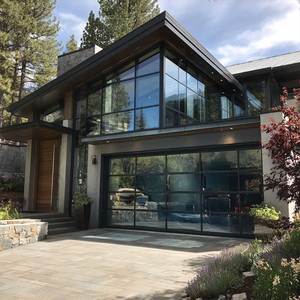
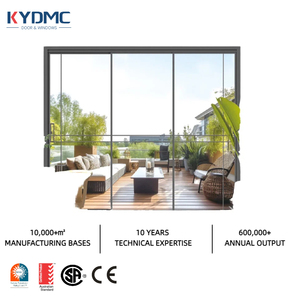
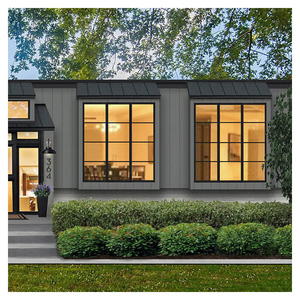
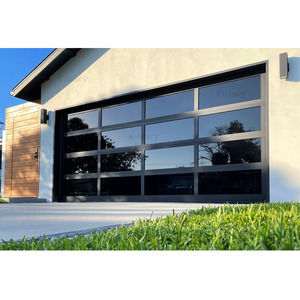
Future Procurement Trends in Architectural Fenestration
Analyzing structural evolution, thermal barrier mandates, and supply chain shifts redefining commercial and luxury residential building envelope specifications through 2030.
Polyamide Thermal Barriers & Passive House Compliance
International building efficiency regulations, such as ASHRAE 90.1, Title 24, and European EN ISO 10077-1 standards, are driving global developers away from non-broken aluminum toward multi-chambered polyamide 6.6 (PA66 GF25) thermal struts. Procurement managers now specify system U-values under 1.2 W/m²K, mandating warm-edge spacers and triple-glazed Low-E argon assemblies to prevent condensation in extreme climates.
Oversized Panoramic Sightlines with Structural Glass Integration
Contemporary architectural designs require expansive, unhindered structural views. Conventional extrusion profiles are being superseded by recessed outer frames, flush threshold drainage channels, and concealed multi-roller carriage systems capable of bearing single sash weights exceeding 800 kg. Direct structural silicone glazing transfers dynamic wind loads efficiently through heavy-wall 6063-T6 aluminum alloys.
Extreme Cyclone Resistance & AS 2047 Cyclic Load Testing
With escalating coastal storm intensities in North America, Australasia, and South Asia, major building contracts prioritize verified performance certificates over generic manufacturer datasheets. Demands for AS 2047 N6 deflection standards and ASTM E1886/E1996 hurricane missile impact tests require interlocked structural mullions, laminated SentryGlas® interlayers, and anti-lift heavy security hardware suites.
Technological Frontiers in Aluminum Alloy Fenestration
From raw 6063 billet smelting to automated robotic assembly lines, discover the manufacturing precision that separates export-tier building envelopes from standard local products.
Precision Metallurgy & 6063-T6 Extrusion Profiles
The core foundation of window structural integrity lies in alloy composition. By utilizing virgin A00 aluminum ingots rather than remelted scrap, modern precision extruders maintain strict tensile strengths exceeding 205 MPa and yield strengths above 180 MPa. Web thicknesses are maintained at 2.0mm to 3.0mm on structural members, ensuring non-deflecting performance under high dynamic wind pressures and severe seasonal thermal cycling.
Fluorocarbon (PVDF) & Marine-Grade Qualicoat Finishing
Fenestration installed in coastal zones faces continuous salt-spray exposure and UV degradation. Advanced automated vertical finishing facilities apply three-coat, two-bake 70% Kynar 500® PVDF fluorocarbon coatings or Qualicoat Class 2 certified architectural powder coats. These surface treatments resist chalking, color fading, and filiform corrosion for over 25 years in high-salinity marine atmospheres, matching AAMA 2605 requirements.
Multi-Point Micro-Sealing & Co-Extruded EPDM Gaskets
Water penetration failure during tropical storms stems from deficient frame corner joins and substandard weatherstripping. Modern high-tier assemblies feature injection-molded corner brackets filled with two-component polyurethane corner glue, complemented by continuous automotive-grade vulcanized EPDM gaskets. This forms three sequential sealing barriers that effectively block capillary water transfer under extreme positive air differentials.
B2B Procurement Guidelines for Global Project Stakeholders
Standardized evaluation parameters to optimize bills of quantities, eliminate communication errors, and ensure seamless customs clearance and structural compliance.
CAD/BIM Parameter Freezing
Before placing factory production deposits, ensure profile depth, structural glass pocket clearances, and anchor clip spacings are finalized. Structural deflection formulas (L/175 or L/240) must be simulated against local wind code standards.
- Verify structural wind load calculations (ASCE 7 / EN 1991).
- Confirm internal vs. external glazed replacement access.
- Check sub-frame compatibility with building perimeter membranes.
- Review structural water drainage slots and weep hole positions.
Hardware Component Quality Control
Hardware mechanisms determine daily operational life. Avoid generic unbranded hardware on heavy leaves. Ensure transmission gearboxes, concealed multi-point locking rods, and friction hinges utilize high-grade 304 or 316 stainless steel components.
- Specify cycle testing exceeding 50,000 continuous actions.
- Confirm corrosion resistance via 500-hour neutral salt-spray data.
- Evaluate handle spindle play and anti-false operation devices.
- Incorporate perimeter interlocks on panels over 2.4 meters.
Reinforced Crating & Transit Protection
Long ocean freight creates risk of frame scratching, glass delamination, and moisture corrosion inside shipping containers. Factory crating must incorporate protective film, shock-absorbing corner guards, and fully enclosed fumigated plywood crates.
- IPPC-stamped ISPM-15 compliant solid timber or plywood.
- Silica gel desiccants inserted inside vapor-barrier films.
- Steel strapping with edge protectors on heavy glass packs.
- Container loading diagrams designed to balance axle weights.
Guangdong Dejiyoupin Doors & Windows Co., Ltd. (DERCHI)
Recognized among China's Top 10 premium door and window manufacturing enterprises, Guangdong Dejiyoupin operates a state-of-the-art 180,000 m² smart production base located in Foshan's core industrial zone. With over 25 years of engineering experience and a specialized workforce of 600+ personnel, we integrate research, precision extrusion fabrication, tempered glass processing, and global logistics under one rigorous quality management umbrella.
Our export track record spans complex commercial and private estate developments across the United States, Canada, Australia, the Philippines, India, and the Middle East. By combining direct factory sourcing with comprehensive CAD engineering, we eliminate trading layer costs and deliver verified architectural building envelopes on time.

Single-Source Fabrication
Consolidate aluminum main entry doors, minimal sliding patio systems, structural curtain walls, and garage doors within a single factory container order to reduce logistics overhead.
In-House CAD/BIM Support
Our project engineers review architectural structural schedules, create tailored millimeter-precise CAD section details, and accommodate regional building code requirements without delay.
Global Logistics Delivery
Providing FOB, CIF, or DDU freight shipping to global gateways including Los Angeles, Vancouver, Sydney, Nhava Sheva, Dubai, and Manila with comprehensive customs export clearance.
Comprehensive Quality Reports
Every export production batch undergoes air infiltration, water penetration, and cyclic load testing, accompanied by formal mill test certificates and dimensional QA sign-offs.
Frequently Asked Procurement & Engineering Questions
Actionable answers to help commercial estimators, architects, and international importers navigate aluminum door and window sourcing from China.
Connect with Our Engineering & Estimation Department
Send your project schedule, CAD elevations, or custom extrusion requests to our Foshan engineering headquarters. We provide turnkey shop drawings, thermal calculations, and direct container shipping quotes within 24 hours.
Get a Quote