Engineered Aluminium Door & Window Systems
High-precision thermal break profiles, multi-cavity chambering, architectural anodizing, and multi-point security hardware engineered to meet CE, AS2047, and North American ASTM building codes.
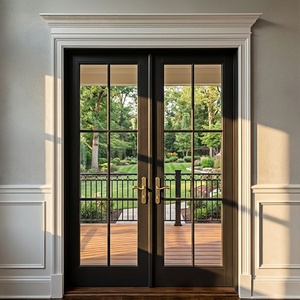 CE Certified
CE Certified Modern Single French Doors Black Power Coated Heat Insulation Aluminium Bedroom French Doors
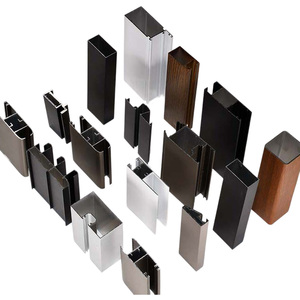 6000 Series Alloy
High Quality 6000 Series Aluminium Extrusion Profiles for Casement Sliding Windows and Doors with Cutting Service
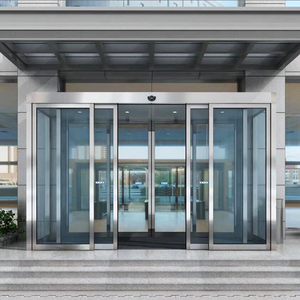 Auto Fire-Linkage
Fire Linkage Sliding Door Emergency Exit Door Fire Linked Panic Escape Auto Sliding Door Hospital Shopping Mall Airport
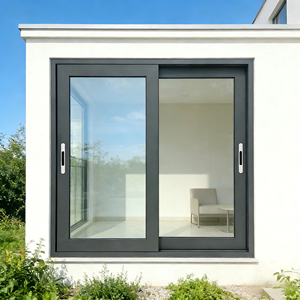 Double Glazed
Modern European Design Kitchen Double Glazed Aluminum Sash Windows Horizontal Sliding Window
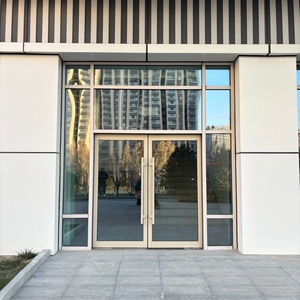 Heavy-Duty Entry
Commercial Front Entry Doors for Business Double Glazed Wind Proof Aluminum French Doors Exterior
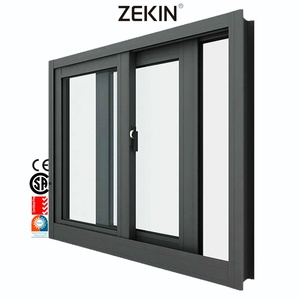 Acoustic Rated
ZEKIN Modern Aluminium Laminated Glass Window Blackout Sound Absorbing Sliding Windows Steel Frame For Master Bedrooms Living
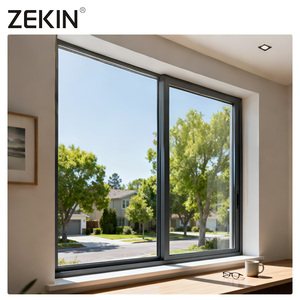 Hurricane Proof
ZEKIN Modern Custom Hurricane-Proof Window Double Glazed Doors And Windows For House Aluminum Sliding Window For Homes
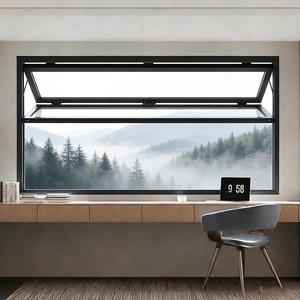 Vertical Folding
Modern Bifold Black Aluminum Alloy Tempered Double Glass Heat Insulation Accordion Vertical Folding Window
Structural Engineering, Alloy Metallurgy & Thermal Barrier Innovations
Modern architectural projects demand higher structural resistance, minimal frame sightlines, and superior thermodynamic containment. Sourcing from a premier Chinese manufacturer requires comprehensive insight into the structural metallurgy of 6000-series alloys, precise isobaric chamber designs, and thermal barrier engineering.
At our Guangdong production base (Guangdong Dejiyoupin Doors and Windows Co., Ltd. / DERCHI), primary extrusions utilize high-purity virgin billets of primary aluminium alloy 6063-T5 and structural grade 6061-T6. Using computer-controlled multi-stage aging ovens, tensile strength is consistently elevated beyond 240 MPa with a Webster hardness rating above 12 HW. This structural resilience guarantees that multi-panel, floor-to-ceiling sliding systems spanning up to 3.5 meters in height resist wind-induced sash deflection, maintaining airtight alignment under severe coastal cyclonic loads.
Thermal breaks represent the primary engineering defense against conductive energy transfer. While standard market alternatives rely on inferior poured-and-debridged polyurethane resins that degrade across severe thermal cycling, our industrial extrusion assemblies incorporate precision-inserted, fiberglass-reinforced Polyamide (PA66 GF25) strips. This barrier decouples interior and exterior metal skins, preventing condensation forming in sub-zero applications while drastically dropping overall fenestration U-factors below 1.4 W/m²K when combined with argon-gas low-emissivity (Low-E) insulating glass units (IGUs).
Advanced Technical Pillars & Quality Control
Precision-calibrated German Elumatec CNC milling centres, multi-layer fluorocarbon spray booths, and automated isobaric water-tightness testing chambers.
Isobaric Drainage & Air Sealing
Featuring dual-cavity internal pressure equalization and hidden cascade weep systems. Heavy monsoon rainfall discharges rapidly through calibrated drainage slots without counter-pressure water backflow or perimeter gasket degradation.
Impact & Acoustic Attenuation
Engineered for high-exposure building zones with laminated SentryGlas® interlayers and double/triple glazing options. Delivers sound transmission class (STC) ratings above 42dB while absorbing severe impact shock waves up to cyclonic Category 5.
Precision Bearing Bogies & Tracks
Integrated quad-roller bogie assemblies utilizing Swiss-grade surgical stainless steel bearings (SUS316) paired with high-molecular polymer wheels. Tested across 100,000 smooth sliding cycles supporting structural sash loads up to 450kg per panel.
Future Global Procurement Trends in Aluminium Glazing (2025–2030)
As commercial procurement practices evolve, procurement managers, architectural specifiers, and facade contractors are shifting towards high-accountability manufacturing partnerships in China. Several transformative structural trends dictate supply chain decision-making:
1. Decarbonization and Low-Carbon Recycled Extrusions: International building standards, including LEED v4.1 and BREEAM, increasingly enforce strict Embodied Carbon caps. Global purchasers require Environmental Product Declarations (EPDs) demonstrating that aluminium profiles are smelted via hydro-electric or renewable grid power, using closed-loop post-industrial scrap ratios exceeding 40% without compromising structural tensile integrity.
2. Direct-from-Factory Engineering Integration (Zero-Middleman Supply Chain): Traditional international trading firms introduce up to 25–40% markup while obfuscating technical communications. Modern procurement strategies utilize direct factory engagement with qualified engineering hubs like DERCHI. Direct access to in-house CAD/BIM facade drafting departments compresses shop drawing approval cycles from weeks to days, eliminating specification mismatches.
3. Monolithic Floor-to-Ceiling Ultra-Narrow Sightlines: Modern luxury residential architecture and premium hospitality resorts favor frameless panoramas. The market has embraced ultra-slim mullion interlocks measuring down to 18mm–24mm visible profile face. Achieving this requires structural pocket steel stiffeners inserted directly inside the hollow aluminium profiles to handle high wind shear across panoramic coastal elevations.
4. Automated BMS Building Linkage and Intelligent Glazing: Advanced sliding door systems are transitioning from manual hardware to integrated smart facade components. Incorporating brushless DC motors, concealed flush sensors, and electromagnetic safety locking enables seamless connection to centralized building management systems (BMS), including automated fire evacuation breakout systems.
Architectural Sliding Door & Window Specifications
Cross-comparative technical parameters across standard export grades versus DERCHI premium architectural grade.
| Performance Vector | Conventional Commercial Grade | DERCHI Engineered Architectural Grade | Compliance Standards |
|---|---|---|---|
| Alloy Composition | Secondary / Remelt 6063 Aluminum | 100% Primary Virgin Billet 6063-T5 / 6061-T6 | ASTM B221 / GB 5237 |
| Profile Wall Thickness | 1.2mm – 1.4mm (Residential code min) | 2.0mm – 3.2mm Heavy-Duty Multi-Cavity | AS 2047 / EN 12020 |
| Thermal Barrier Method | Poured Polyurethane (Degradation prone) | PA66 GF25 Polyamide Strips (German Technoform) | DIN 1725 / EN 14024 |
| Surface Coating Spec | Standard 1-Coat Powder (40–60μm) | AAMA 2605 3-Coat Fluorocarbon PVDF (80–110μm) | Qualicoat Class 3 / AAMA |
| Acoustic Rating (STC) | STC 28dB – 32dB (Single IGU) | STC 42dB – 48dB (Acoustic Laminated Double/Triple) | ISO 10140 / ASTM E90 |
| Water Tightness Under Wind | 250 Pa – 350 Pa (Prone to overflow) | 700 Pa – 1050 Pa (Dynamic Cascade Drainage) | EN 12208 / AS 4420 |
| Hardware Durability | 20,000 Slide Cycles (Zinc-alloy bearings) | 100,000+ Cycles (SUS316 Marine Grade Sealed Bogies) | EN 13126 / AAMA 902 |
Technology Development Roadmap: The Next Era of Aluminium Fenestration
The manufacturing paradigm within Foshan and Guangdong's specialized fenestration industrial belt has evolved from basic metal cutting to precision aerospace-adjacent production. This evolution centers on three primary manufacturing disciplines:
Automated CNC Micro-Milling & Corner Crimping: Traditional corner manufacturing that relied on mechanical screw corner stakes has been completely superseded by pneumatic four-head hydraulic injection crimpers. Internal cast aluminium corner cleats are embedded alongside dual-component expanding polyurethane sealants (Henkel structural adhesive). This ensures every 45-degree and 90-degree miter corner joint forms an impervious molecular weld, eliminating corner frame sagging and hairline water leaks over decades of operational life.
Advanced Surface Passivation & Super-Durable PVDF Finishes: Aluminium's natural corrosion resistance is substantially fortified through multi-stage pre-treatment wash baths utilizing zirconium passivation instead of toxic hexavalent chromium. Profile extrusions undergo electro-statically applied PVDF fluorocarbon coatings containing up to 70% Kynar 500 resin. The resulting finish resists chalking, color fading, and salt-fog degradation, passing rigorous 4,000-hour continuous salt spray tests (ASTM B117) essential for oceanfront resort villas and coastal installations.
Dynamic Barrier Gasketing (Continuous Cellular EPDM): Air filtration and water intrusion failures invariably originate from degraded seal gaskets. Leading Chinese factories have eliminated standard PVC or low-grade TPE seals in favor of peroxide-cured, closed-cell continuous EPDM synthetic rubber. Equipped with molded vulcanized corner boots, these seals resist UV radiation, ozone exposure, and temperature swings from -40°C to +120°C without permanent compression set, maintaining airtight envelope integrity.
Guangdong Dejiyoupin (DERCHI) Industrial Strength
Delivering premium engineering, comprehensive project management, and global certification compliance directly from China's fenestration capital.
180,000 m² Advanced Production Hub
Operating high-speed automated extrusion lines, computerized glass processing centers (tempering, argon sealing, laminating), and specialized assembly bays in Foshan, Guangdong.
Full International Code Compliance
Holding 8 major international testing certifications including CE (Europe), AS 2047 (Australia N6 cyclonic testing), ISO 9001, and UL fire-rated emergency exit compliance.
Dedicated Technical BIM & CAD Team
Our 40+ member in-house engineering team converts conceptual elevation drawings into shop CAD drawings, wind deflection structural calculations, and 3D installation layouts.
Ocean-Freight Armored Packaging
Every sash and frame is shielded with protective adhesive film, enclosed in heavy-duty pearl cotton foam corners, and crated inside fumigated, moisture-sealed steel-reinforced plywood cases.
Frequently Asked Questions for Global Buyers
Direct answers concerning lead times, shipping logistics, engineering customization, and commercial trade terms.
What are the standard lead times for custom sliding doors and windows?
Standard architectural extrusion systems in standard powder coatings (Black, Anodized Silver, Charcoal Grey) carry a fabrication lead time of 20 to 25 calendar days upon final shop drawing sign-off. Bespoke custom dies, customized fluorocarbon RAL colors, or complex motorized units typically require 30 to 38 calendar days, including rigorous pre-shipment mock-up assembly and cyclic testing.
How does the factory ensure glass safety and international building code compliance?
All glass units are processed in-house utilizing fully tempered safety glass bearing SGCC (ANSI Z97.1 USA), CE EN 12150 (Europe), and AS/NZS 2208 (Australia) certification stamps. For acoustic and hurricane-prone coastal regions, we supply autoclave-laminated glass configurations incorporating genuine Kuraray Trofolor® or SentryGlas® (SGP) structural interlayers with desiccant-filled dual warm-edge spacers.
Can our engineering team request bespoke profile dies or customized extrusion geometry?
Yes. As an integrated extruder and system fabricator, we regularly cut custom extrusion steel tooling dies based on client CAD/STEP files. Prototype tooling dies can be completed within 10 to 14 business days, followed by sample extrusion pull tests, metallurgical structural verification, and finish coating approvals prior to batch extrusion runs.
What incoterms, shipping routes, and container loading support do you offer?
We provide full B2B export flexibility under EXW, FOB (Foshan, Guangzhou, or Shenzhen ports), CIF, and DDP terms worldwide. Every order includes specialized 3D container loading optimization calculations to maximize space utilization in 40ft High Cube containers while eliminating movement during long-distance ocean voyages.
How are field installations and technical site tolerances managed overseas?
Every frame assembly is dry-fitted and marked with laser-etched alpha-numeric labels corresponding directly to site installation drawings. We provide comprehensive step-by-step engineering guides, hardware adjustment documentation, and English-speaking remote video support directly from factory installation engineers to assist local field installation crews.
What minimum order quantities (MOQ) apply for commercial projects?
For standard architectural profiles and catalog systems, our MOQ starts at just 50 square meters, allowing villa contractors and boutique multi-family developers to access direct factory pricing. For custom-milled extrusion dies or specialized curtain wall projects, custom MOQ thresholds are tailored directly to total extrusion billet tonnage requirements.
Ready to Source High-Performance Fenestration Direct From the Factory?
Connect with our senior facade engineering team today to review project schedules, request shop drawings, verify technical building code compliance, or obtain full engineering catalogs.
Get Catalog