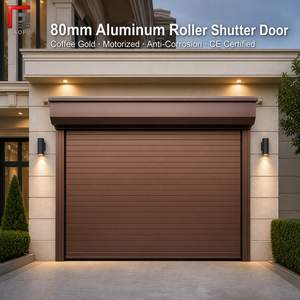
80mm Aluminium Roller Shutter Door Electric Rolling Shutter Low Headroom Compact Drum for Garage Retail Warehouse OEM
Compact internal torsion drum, ultra-low lintel requirement, continuous structural interlock design.
Manufactured from structural 6063-T5/T6 alloy profiles, equipped with micro-perforated aeration, high-density polyurethane thermal cores, and multi-point security tracking for commercial, residential, and severe-duty installations.
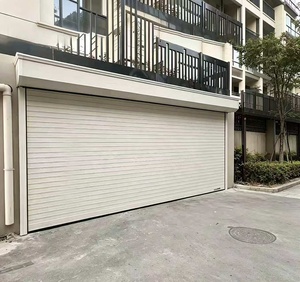
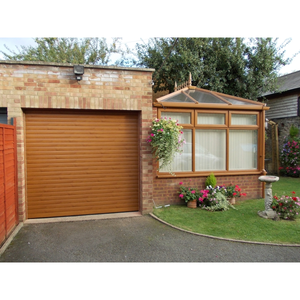
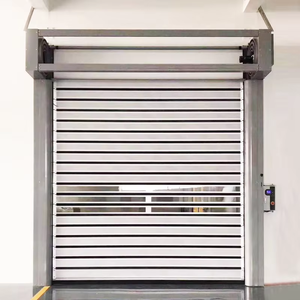
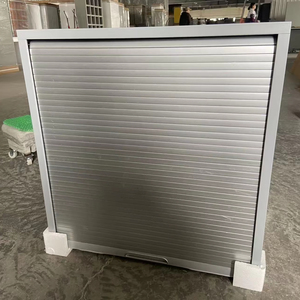
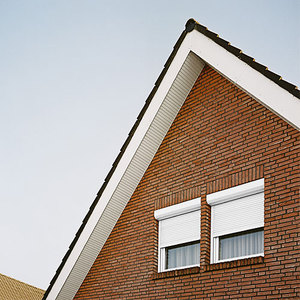
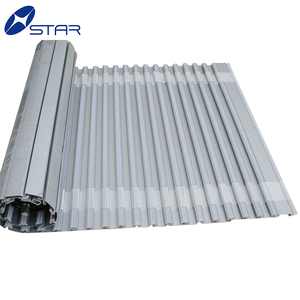
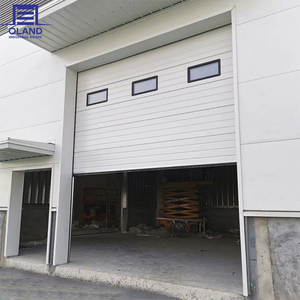
In modern architectural engineering and industrial facilities planning, the choice of dynamic perimeter closures has fundamentally shifted away from conventional multi-leaf swing gates and stamped steel assemblies toward high-tensile aluminium tambour doors. By leveraging 6063-T5 and 6063-T6 architectural-grade extruded aluminium alloys, modern Chinese manufacturers produce roll-formed and extruded slatted curtains that deliver superior strength-to-weight ratios, intrinsic electrochemical passivation against ambient corrosion, and millimetric dimensional accuracy. The mechanical anatomy of an extruded tambour profile relies on precision ball-and-socket interlocking hinges, eliminating continuous mechanical fasteners while enabling tight radial winding geometries that minimize headroom clearances in restricted overhead enclosures.
Technical Distinction: Extruded Slats vs. Roll-Formed Sheet — While lightweight furniture roll-ups use cold-rolled 0.4mm skins, heavy-duty architectural tambour curtains utilize extruded aluminum slat wall thicknesses ranging from 1.0mm to 2.5mm. This architectural grade allows multi-chamber insulation injection, integrated PVC/Santoprene dampening inserts, and certified wind-lock retainers capable of withstanding severe cyclonic positive and negative pressures up to AS 2047 and EN 12424 standards.
Thermal regulation remains an imperative metric in modern logistics centers, cold-chain hubs, and climate-controlled luxury garages. Dual-wall extruded tambour slats filled with high-density polyurethane (PU) or polyisocyanurate (PIR) cores effectively disrupt acoustic transmission and thermal bridging. When integrated with side guide brush strips and compressed EPDM rubber threshold gaskets, these systems achieve substantial reductions in air infiltration (compliant with EN 12426 Class 4) and provide verifiable acoustic attenuation values of up to 25 dB Rw, preventing vibrational resonance during high-frequency cycles.
| Engineering Attribute | Standard Commercial Tambour | Insulated Thermal Tambour | High-Velocity Typhoon Rated |
|---|---|---|---|
| Primary Slat Alloy | 6063-T5 Extruded Aluminum | Double-Wall 6063-T6 Composite | Reinforced Structural 6061-T6 / 6063-T6 |
| Profile Gauge | 1.0 mm – 1.4 mm | 1.2 mm outer / 1.0 mm inner | 1.8 mm – 2.5 mm Heavy Duty |
| Core Insulation | Hollow Air Chamber / Aeration | Polyurethane Foam (45-50 kg/m³) | Solid Extruded Interlock + PU Core |
| Wind Resistance Class | Class 2 (EN 12424, ~450 Pa) | Class 3 (~700 Pa) | Class 5 / Typhoon AS 2047 (>2400 Pa) |
| Surface Passivation | Qualicoat Powder / Anodized 15µm | AkzoNobel Interpon / Fluorocarbon | PVDF Triple-Coat Coastal Anti-Saline |
| Operational Duty Cycle | 30,000 Total Cycles | 50,000 Industrial Cycles | 100,000+ Spiral High-Speed Cycles |
Global architectural specifiers and general contractors are pivoting how building envelopes are sourced. Here are four dominant structural shifts dictating global procurement strategies.
Importers are demanding completely pre-punched, pre-slotted "Plug-and-Play" kit assemblies. By consolidating motor cassettes, side tracks, and matched wireless electronics inside standardized crates, field installation overhead is reduced by up to 40%.
Green building certifications (LEED, BREEAM) require documented low embodied carbon profiles. Tier-1 Chinese manufacturers now supply tambour profiles extruded with renewable hydropower energy and up to 30% recycled post-consumer aluminum scrap.
Procurement teams no longer accept static catalogs. Sourcing contracts now mandate real-time parametric Revit families and BIM library access with native wind-load calculations to accelerate structural engineering sign-offs in commercial projects.
Modern tambour operators incorporate encrypted RS485 and Zigbee protocols, permitting integrated BMS building management, remote diagnostics, automatic cycle monitoring, and preventive maintenance triggers via cloud gateways.
Continuous evolution in automation mechanics and metallurgical finishing ensures long-term operational durability and whisper-quiet performance.
By routing the aluminum curtain along a circular non-contact polyurethane spiral track, the metal slats never touch, rub, or scrape against each other during coil winding. This innovation eliminates surface scratches, dramatically reduces decibel emissions below 50dB, and permits continuous operating speeds up to 2.0 m/s for high-throughput logistics.
Standard architectural paint quickly degrades under intense solar radiation and high salinity. Advanced tambour lines employ automated horizontal multi-tank anodizing lines alongside Qualicoat Class 2 certified fluorocarbon (PVDF) powder systems, offering verified resistance exceeding 3,000 hours of continuous salt-spray testing for aggressive coastal environments.
Safety engineering has advanced from sluggish pneumatic bottom sensors to micro-optical through-beam infrared curtains integrated flush into the guide channels. Operating in tandem with torque-sensing brushless DC servo motors, the curtain instantly reverses without mechanical contact if any intrusion is detected, safeguarding pedestrians and equipment.
Operating as an elite manufacturing entity among China's Top 10 door and window brands, our comprehensive production complex consolidates aluminum extrusion, precision thermal break insertion, computerized powder coating lines, and automated assembly bays under rigorous ISO 9001 quality management.
By eliminating third-party trading intermediaries, international contractors, architectural specifiers, and distributors obtain direct engineering support, customized structural CAD shop drawings, and competitive factory-direct cost structures.

Key technical, logistic, and structural considerations for commercial procurement teams sourcing aluminium tambour doors from China.
Connect directly with our Foshan factory engineering team for complimentary CAD shop drawings, technical wind-load estimations, and project-tier pricing.
Inquire Now