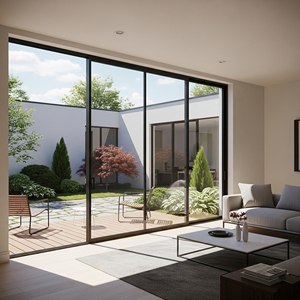
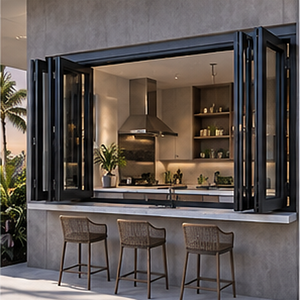
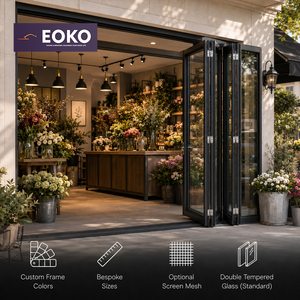
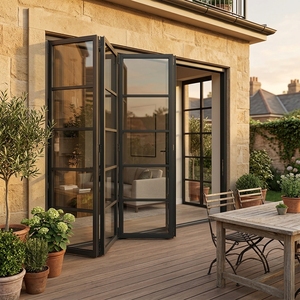
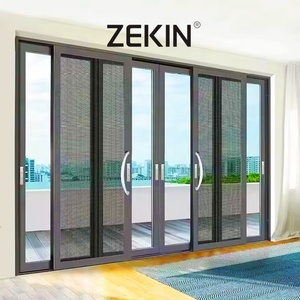
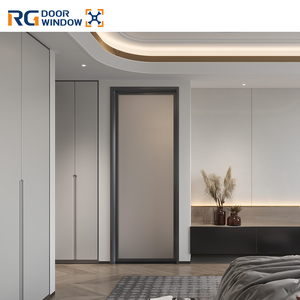
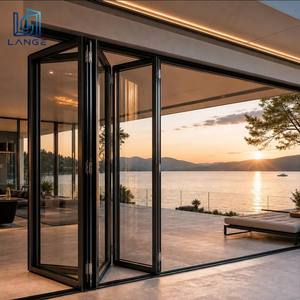
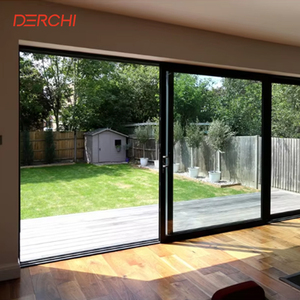
In contemporary architectural envelope design, the functional categorization of the "aluminum back door" has expanded beyond a secondary exit. Modern residential villas, coastal hospitality properties, and urban multi-family developments now treat the building perimeter back entrance as a primary line of environmental control, lifestyle integration, and structural security. Specifying aluminum over timber or vinyl has grown at an annualized rate of 7.4% across global markets, driven by superior lifecycle metrics, structural rigidity, and resistance to environmental fatigue.
1. Structural Performance & Material Science Specifications
The core advantage of high-end Chinese aluminum extrusion fenestration lies in the alloy formulation and thermal break engineering. Premium back door systems utilize primary architectural 6063-T6 or 6061-T6 aluminum alloys. To combat heat transfer in desert or humid environments, structural polyamides (PA66 GF25—polyamide reinforced with 25% glass fiber) separate interior and exterior profiles, preventing thermal bridging and surface condensation.
For exterior back doors subject to high cycling and wind loads, structural wall thickness must meet or exceed 2.0mm to 2.5mm for sliding and bi-folding frames, and up to 3.0mm for high-security swing entries. Surface finish integrity relies on high-durability fluorocarbon (PVDF) coating systems or Class I architectural powder coatings adhering to AAMA 2604/2605 parameters, ensuring colorfastness against high UV radiation and 3,000-hour neutral salt-spray corrosion resistance.
| Performance Parameter |
Standard Aluminum Back Door |
Architectural Thermal-Break System (DERCHI Spec) |
Procurement Compliance Standard |
| Thermal Transmittance (U-Value) |
3.5 – 5.0 W/(m²·K) |
1.1 – 1.8 W/(m²·K) (Triple Glazed Low-E) |
NFRC 100 / EN ISO 10077-1 |
| Water Penetration Resistance |
150 Pa – 250 Pa |
600 Pa – 900 Pa (Hurricane/Monsoon Grade) |
ASTM E331 / AS4420.5 |
| Acoustic Attenuation (STC / Rw) |
Rw 25 - 28 dB |
Rw 38 - 45 dB (Acoustic Interlayer Glass) |
ASTM E90 / ISO 717-1 |
| Structural Wind Load Deflection |
1200 Pa Serviceability |
Up to 4500 Pa (Design Pressure > 90 PSF) |
AS2047 / ASTM E330 |
| Operating Hardware Longevity |
25,000 Manual Cycles |
100,000+ Cycles (German Siegenia / Hoppe Gear) |
EN 13126 / AAMA 901 |
2. Future Global Procurement Trends (2025–2030)
Commercial developers and import traders are pivoting rapidly based on three emerging procurement dynamics:
- Consolidation of Supply Chain via "One-Stop Fenestration": Developers avoid procuring windows, main pivot doors, garage entries, and patio back doors from separate factories. Consolidating orders with an integrated 180,000 m² manufacturer simplifies container freight packing, ensures unified powder-coat color consistency, and harmonizes hardware keys.
- Demand for Ultra-Slim Sightlines with Extreme Load Capacity: Minimalist profiles with 16mm to 25mm visible vertical interlocks are supplanting traditional bulky frames. Sashes now feature floor-to-ceiling heights exceeding 3.5 meters, requiring specialized structural adhesive structural glazing (silicone structural glazing - SSG) techniques.
- Integrated Micro-Drainage and Zero-Barrier Thresholds: Universal accessibility standards (ADA-compliant) require back doors to feature flush transitions between the indoor living space and outdoor patio without sacrificing high-pressure water defense. Advanced sub-sill siphon systems and integrated catch-basins prevent backflow under severe coastal storms.
- Smart Home Automation & Biometric Protocol Integration: High-specification back doors feature integrated 24V DC brushless motorization, concealed wiring chases, and multi-point mortise smart locks that communicate via Zigbee, Matter, or BACnet systems with central building management platforms.
Direct Factory Engineering Insight:
"Overseas procurement failures frequently stem from underspecified glass deflection tolerances and inadequate anchoring under local cyclone wind loads. Guangdong Dejiyoupin Doors and Windows Co., Ltd. resolves this by auditing every export schedule with structural finite element analysis (FEA) before extrusion cutting begins."