Factory Engineered Aluminum & Glazing Systems
Browse our core architectural systems engineered for demanding structural loads, maximum sound insulation, and modern acoustic privacy.
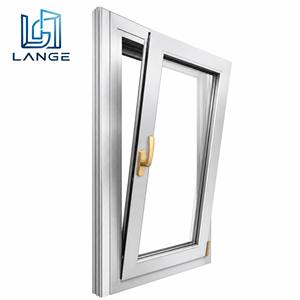
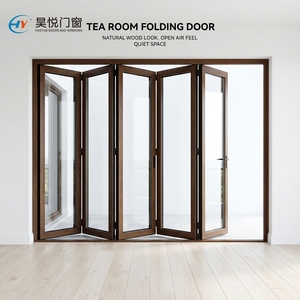
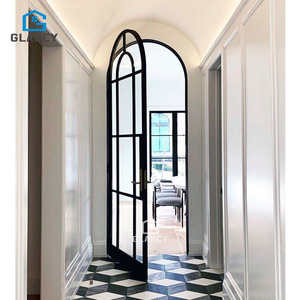
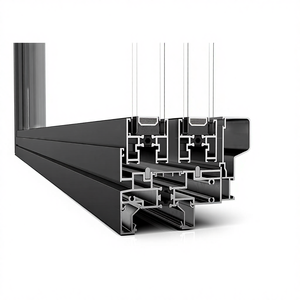

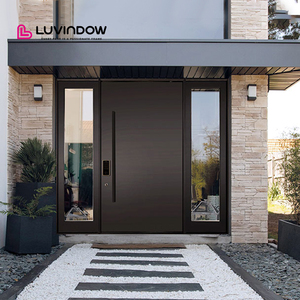
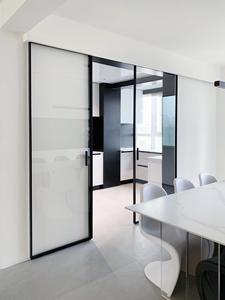
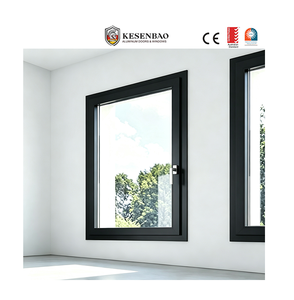
Engineering Aluminum Frosted Glass Doors for Longevity and Privacy
Modern architectural design requires entrance and interior partitioning systems to achieve an exacting balance between luminous transmittance, visual privacy, structural durability, and sound attenuation.
In high-density commercial fit-outs, executive boardrooms, healthcare facilities, and luxury residential projects, frosted glass doors framed by architectural aluminum profiles have emerged as the premier specification choice. Unlike traditional timber assemblies that are vulnerable to hygroscopic swelling, bacterial growth, and delamination, precision-extruded aluminum frames engineered with 6063-T5 or 6063-T6 magnesium-silicon alloy deliver unyielding structural equilibrium. When paired with advanced obscurity glass treatments—such as chemically etched satin glass, ceramic frit glazing, or smart PDLC switchable liquid-crystal films—these systems resolve the historic compromise between natural ambient daylighting and strict visual confidentiality.
As a leading Chinese manufacturer rooted in the Nanhai, Foshan industrial cluster, our engineering facility at Guangdong Dejiyoupin Doors and Windows Co., Ltd. (DERCHI) processes custom door assemblies backed by 25+ years of production expertise. Through state-of-the-art multi-axis CNC profile machining centers, automated robotic dual-component silicone sealing lines, and certified quality-control staging, we ensure that every square meter of architectural glazing adheres precisely to global structural building codes, including CE EN 14351-1, North American NFRC/AAMA, and Australian AS 2047 benchmarks.
Acid-Etched Satin Glass
Chemically treated using hydrofluoric acid solutions to create a permanent, satin-smooth micro-pitted surface that is naturally resistant to fingerprint marks, oils, and chemical cleaners.
Ceramic Frit Tempering
Mineral pigments silkscreened or digital-printed directly onto float glass and fused into the substrate during the 680°C furnace tempering cycle, yielding non-degrading opacity patterns.
Acoustic PVB Lamination
A dual-pane configuration bonded with 0.76mm to 1.52mm translucent frosted polyvinyl butyral interlayers, boosting structural impact safety while dampening ambient noise up to STC 42 dB.
Smart PDLC Switchable
Polymer Dispersed Liquid Crystal technology that alternates between frosted privacy and crystal transparency within 20 milliseconds under low-voltage AC electrical currents.
Glazing & Extrusion Performance Matrix
Engineered for commercial contractors, facade consultants, and quantity surveyors comparing glass obscurement mechanisms and framing thermal insulation.
| Glazing Specification Configuration | Visible Light Transmittance (VLT) | Haze Index (%) | Thermal Transmittance (U-Value) | Acoustic Attenuation (STC) | Primary Commercial Application |
|---|---|---|---|---|---|
| Single Pane 8mm Acid-Etched Tempered Monolithic Safety |
86% | 94.8% | 5.7 W/(m²·K) | 31 dB | Interior Office Partitions, Restroom Cubicles |
| Single Pane 10mm Ceramic Frit Frosted High Scratch Resist |
72% – 78% | 98.2% | 5.6 W/(m²·K) | 33 dB | Heavy-Traffic Hotel Bathrooms, Gym Enclosures |
| 6mm + 1.14mm Frosted PVB + 6mm Laminated High Impact Safety |
79% | 97.5% | 5.2 W/(m²·K) | 38 dB | Hospital Patient Rooms, Financial Interview Suites |
| 5mm Frosted + 12Ar + 5mm Low-E Double Insulated Thermal Break Profile |
64% | 96.0% | 1.6 W/(m²·K) | 39 dB | Exterior Balcony Entrances, Sunroom Access |
| 6mm Clear + 0.38 PDLC Film + 6mm Switchable Electronic Smart Glass |
Off: 58% / On: 82% | Off: 96% / On: 4% | 4.9 W/(m²·K) | 37 dB | C-Suite Executive Boardrooms, VIP Clinics |
| Heavy Architectural Triple Glazed Acoustic (6+12A+6+12A+6) Soundproof Luxury |
52% | 99.0% | 1.1 W/(m²·K) | 44 dB | Aviation Corridors, Luxury Coastal Villas |
Beyond optical metrics, the structural backbone of an industrial-grade frosted glass door lies in its aluminum alloy composition. Standard commercial door frames frequently suffer from micro-deflections when fitted with heavy double or triple-glazed units. At DERCHI, our profile extrusions are standardized on 6063-T6 aluminum billet featuring an ultimate tensile strength exceeding 205 MPa and yield strength beyond 170 MPa. Profile wall thicknesses strictly comply with a minimum 2.0mm to 3.0mm threshold on load-bearing mullions, avoiding the sag and misalignment common in consumer-grade lightweight hardware.
Guangdong Dejiyoupin (DERCHI): Integrated Production Scale
Founded in the heart of Foshan—the global epicentre of architectural aluminum processing—Guangdong Dejiyoupin Doors and Windows Co., Ltd. represents one of China's Top 10 certified window and door manufacturing enterprises.
Our expansive 180,000 square meter intelligent manufacturing park houses end-to-end processing: high-precision automated aluminum extrusion handling, CNC four-corner crimping, robotic sealant dispensing, and an ISO-compliant environmental testing laboratory. Supported by an elite team of 600+ master fabricators and precision engineers, we serve institutional developers, facade engineering firms, and high-end distributors across North America, Europe, Australia, the Middle East, and South Asia.
- Full compliance with AS 2047 N6 cyclonic structural pressure testing (up to 4500 Pa wind load resistance).
- Certified CE EN 14351-1, ISO 9001:2015, UL 10C fire classification, and NFRC thermal performance ratings.
- Over 30 patented structural profile configurations, including proprietary hidden drainage systems and acoustic thermal-barrier pockets.
- Dedicated in-house bilingual engineering teams producing custom CAD shop drawings, 3D BIM models, and structural calculation reports within 24 hours.


Future Procurement Trends in Architectural Frosted Glass Doors
Critical trends reshaping international project procurement, sustainability mandates, and factory-level component specifications over the next five years.
1. Low-Carbon Recycled Extrusions (Scope 3 ESG Mandates)
International commercial tenders now frequently require Environmental Product Declarations (EPD). The industry is pivoting to low-carbon primary aluminum smelted with hydroelectric power and high post-consumer recycled billet (Hydro CIRCAL or equivalent 75R scrap alloy), slashing embodied carbon from 16.8 kg CO2e/kg to under 4.0 kg CO2e/kg.
2. Ultra-Narrow Sightlines & Concealed Hardware
Architectural demand has transitioned rapidly from traditional 80mm bulky frames to minimalist 9.5mm to 16mm ultra-slim sightlines. Achieving this without forfeiting structural rigidity requires heavy-wall internal reinforcement chambers, concealed multi-pivot hinges supporting up to 400 kg sash weights, and perimeter magnetic gasket latches.
3. Prefabricated Unitized Pre-Hung Shipments
Rising job-site labor costs across Western and Middle Eastern markets have driven a shift from knock-down (KD) field assembly to factory-glazed, fully unitized pre-hung door packages. Units leave our Foshan facility with precision-adjusted locks, pre-drilled anchors, and pre-fitted EPDM gaskets, reducing on-site installation labor by over 65%.
4. Dynamic Hybrid Glazing (Acoustic + Antimicrobial)
Post-pandemic healthcare and hospitality sectors demand multi-functional frosted glass. Newer specifications combine acid-etched obscure finishes with titanium dioxide (TiO2) photocatalytic antimicrobial coatings and high-performance polyvinyl butyral interlayers to meet stringent hospital hygienic codes while retaining sound-dampening capabilities.
5. Digitalized BIM Integration & Real-Time QA Tracking
General contractors increasingly require parametric Revit/BIM assets directly from the extrusion factory during the schematic design phase. Our engineering department embeds complete thermal transmittance metrics, load parameters, and factory serial traceability data into each digital object to streamline project handover.
6. Direct Supply-Chain Disintermediation
Institutional developers are actively bypassing third-party trading entities in favor of direct collaboration with verified source manufacturers. Working directly with our factory-floor engineering desk secures factory-gate wholesale pricing, cuts out markups, guarantees design integrity, and shortens procurement cycles by 4 to 6 weeks.
Technological Breakthroughs in Aluminum Frosted Door Fabrication
A granular analysis of thermal-break isolation, high-durability surface finishes, and automated structural corner integrity.
1. Polyamide PA66 GF25 Multi-Cavity Thermal Barriers
Traditional non-thermal aluminum doors suffer from severe thermal bridging, provoking condensation along the internal frame edge that compromises frosted glass seals and breeds mildew. Our cutting-edge profiles integrate 25% glass-fiber reinforced polyamide (PA66 GF25) thermal strips arranged in multi-chamber geometric matrices. By decoupling exterior ambient temperatures from interior controlled zones, thermal transmittance through the frame is reduced from Uf > 6.5 W/(m²·K) to under Uf 1.8 W/(m²·K), completely eliminating internal profile sweating even in humid coastal or tropical environments.
2. Fluorocarbon (PVDF) & Super-Durable Architectural Powder Finishes
Coastal and high-salinity atmosphere testing demonstrates that standard decorative coatings blister within 24 to 36 months. At DERCHI, aluminum profiles receive pre-treatment via chrome-free chemical zirconium immersion, followed by electrostatically applied AkzoNobel or PPG 70% Kynar 500 / Hylar 5000 PVDF fluorocarbon coatings (or 25-micron Qualicoat Class 2 certified powders). This ensures over 3,000 hours of resistance to neutral salt spray testing (ASTM B117) with zero surface chalking, micro-cracking, or color fading over a certified 20-year operational life.
Corner Joinery: Laser-Precision Robotic Assembly
Ordinary fabricators rely on simple mechanical self-tapping screws at 90° butt joints, leading to frame racking and seal degradation under wind loading. Our production facility deploys 45° mitred cast-aluminum corner keys injected with German two-component polyurethane bonding adhesives.
Why Global Specifiers Source Directly from DERCHI
Eliminate supply intermediaries and secure engineered architectural doors manufactured under rigorous ISO 9001 and CE quality management.
180,000 m² Mega Facility
Operating dedicated extrusion fabrication, CNC routing, cleanroom glass assembly, and automated packaging halls under a single corporate roof in Foshan, China.
Third-Party Validated
Fully accredited with CE, AS 2047 cyclonic testing, ISO 9001, UL 10C fire classification, and over 30 structural utility and aesthetic design patents.
Bespoke CAD Engineering
Our in-house technical department provides complimentary CAD shop drawings, structural wind-load calculations, and Vastu or ADA architectural adjustments within 24 hours.
Direct Export Logistics
FOB, CIF, and DDP project quotations shipped to major global destinations with customized steel-reinforced A-frame crates and desiccant-controlled moisture protection.
Frequently Asked B2B Procurement Questions
Direct, engineering-backed answers addressing international certifications, structural tolerances, glass safety, freight protection, and project turnaround times.
What are the exact differences between acid-etched and sandblasted frosted glass? +
Which aluminum alloy specification is used for large-span doors? +
What glass safety standards and certifications apply to your export doors? +
How does your factory prevent glass breakage and moisture damage during sea transit? +
Can you produce custom opening dimensions, irregular arches, or Vastu layouts? +
What is the standard production lead time and Minimum Order Quantity (MOQ)? +
What hardware mechanisms and lock configurations are supplied? +
What warranties do you provide on profiles, glass, and hardware? +
Request Project Drawings, Specification Data & Factory-Direct Quotations
Collaborate directly with our Foshan engineering desk. Share your door schedule, rough opening sizes, or CAD elevations to receive itemized CIF/FOB pricing, glass acoustic calculation sheets, and comprehensive shop drawings within 24 hours.