Featured Commercial & Residential Exterior Aluminium Doors
Factory-direct architectural exterior systems precision-machined from 6063-T5/T6 structural alloys. Every unit is engineered with high-cycle European hardware, advanced continuous weather gaskets, and multi-cavity thermal break extrusions for overseas developers, general contractors, and fenestration distributors.
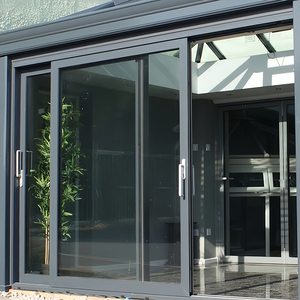
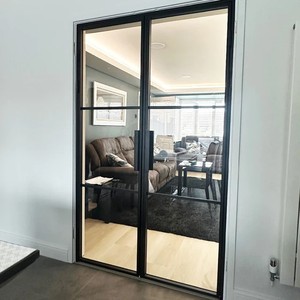
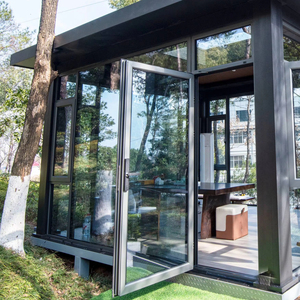
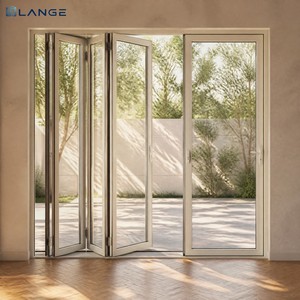
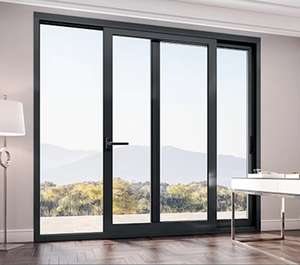
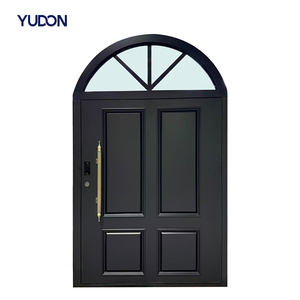
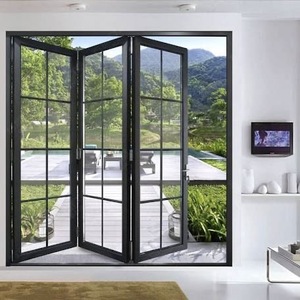
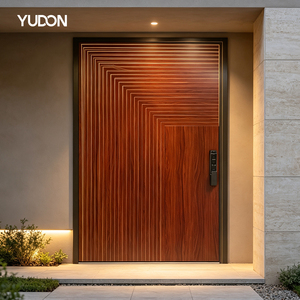
Why Global Fenestration Buyers Partner with Foshan DERCHI
As a tier-one architectural manufacturer operating directly out of Shishan Town, Nanhai District, Foshan—China's world-renowned aluminum extrusion capital—Guangdong Dejiyoupin Doors and Windows Co., Ltd. (DERCHI) delivers end-to-end metallurgical fabrication, structural engineering, and customized export solutions.
Global Code Compliance
Complete architectural third-party testing reports encompassing Australian AS 2047 N6 extreme cyclone standards, North American UL 10C positive pressure fire resistance, and European CE mechanical integrity ratings.
Direct Supply Chain Integration
From primary smelting quality verification to precision multi-axis CNC milling, thermal bar crimping, and AkzoNobel fluorocarbon electrostatic coating, we eliminate middleman markups and reduce lead times.
Parametric CAD/BIM Support
Our English-speaking engineering cell provides bespoke shop drawings, 3D parametric models, and wind-load deflection calculations within 48 hours to streamline architect approval and municipal permit filings.
Precision Export Crating
Engineered for long-distance container freight with shock-absorbing multi-layer foam edge guards, moisture-barrier vacuum poly film wrapping, and non-fumigation reinforced ISPM-15 plywood crates.

Foshan's Megawatt Industrial Capacity
Situated in the Shenke Chuangzhi Park, Shishan Town, DERCHI controls over 180,000 square meters of vertically integrated fabrication. Our equipment roster features automated 4-axis digital cutting centers, German automated milling spindles, and pneumatic corner crimping lines that maintain dimensional tolerances within ±0.5 mm across oversized heights up to 6,000 mm.
By maintaining localized stockpiles of virgin 6063-T6 aluminum billets, our export pipelines remain unaffected by seasonal domestic raw material spikes, assuring international wholesale clients consistent pricing matrices and reliable ocean-freight sailing windows.

Destructive, Environmental & Acoustic Testing
Every aluminum exterior door batch undergoes standardized stress evaluations. We subject our systems to high-pressure cyclic wind chambers up to 4,500 Pa (equivalent to Category 5 cyclonic events), salt spray corrosion testing chambers exceeding 3,000 continuous hours (AAMA 2605 compliant), and dual-chamber calibrated acoustic sound transmission loss measurements.
Whether deploying motorized slimline sliding facades in luxury high-rises or cast-aluminum security entry assemblies in exposed coastal villas, DERCHI supplies stamped factory calibration reports with full traceability down to the raw billet melt log.
Aluminium Outdoor Door Systems: Structural & Thermal Engineering
Specifying high-performance outdoor doors for residential, hospitality, and commercial envelopes requires a granular understanding of modern fenestration physics. Aluminum (specifically Al-Mg-Si wrought alloys) remains the unrivaled substrate for large-span openings due to its superior strength-to-weight ratio, linear thermal expansion stability, and non-combustible classification. However, raw material grade, thermal barrier architecture, glazing configuration, and surface treatment govern the boundary between a sub-par installation and a facade that survives fifty years of continuous environmental exposure.
1. Alloy Selection: 6063-T5 vs. 6063-T6 Structural Grade
In wholesale outdoor door manufacturing, profile strength is dictated by metallurgical temper. While standard residential interior frames employ 6063-T5 (providing yield strength around 145 MPa), heavy-duty exterior outdoor door leafs, motorized patio systems, and oversized pivot frames require 6063-T6 extrusion profiles, exhibiting a yield strength upwards of 214 MPa and ultimate tensile strength above 241 MPa. This metallurgical distinction prevents profile deflection under intense negative wind loads, ensuring that large glazed leaves—such as the OUNA patio slider or hurricane-rated pivot systems—slide and rotate smoothly without frame rack or air-seal breach.
2. Thermal Break Mechanics: Polyamide PA66 GF25 vs. Poured Polyurethane
Uninsulated aluminum exhibits high thermal conductivity (approximately 160 W/m·K). To meet international building standards (such as Title 24, ASHRAE 90.1, and European Passivhaus thresholds), DERCHI incorporates multi-chambered, glass-fiber reinforced polyamide strips (PA66 GF25). PA66 GF25 shares an identical coefficient of linear thermal expansion with aluminum (2.3 × 10⁻⁵ / °C), eliminating differential expansion shear failure between the inner and outer metal skins during acute temperature differentials (-30°C exterior to +24°C interior).
| Performance Metric | Standard Commercial Grade | DERCHI Architectural Heavy-Duty | Testing Standard |
|---|---|---|---|
| Alloy Metallurgy | 6063-T5 (Wall Thickness 1.4-1.6mm) | 6063-T6 Structural (Wall Thickness 2.0-3.2mm) | ASTM B221 / GB 5237 |
| Thermal Transmittance (U-Value) | 2.8 - 3.4 W/(m²·K) | 1.1 - 1.6 W/(m²·K) (Triple Low-E Argon) | ISO 10077-2 / NFRC 100 |
| Air Permeability | Class 2 (Q100 = 27 m³/h·m²) | Class 4 (Highest Tightness: < 3 m³/h·m²) | EN 12207 / AS 2047 |
| Water Penetration Resistance | 300 Pa (Static head) | 700 - 1,050 Pa (Submerged drained sill) | ASTM E331 / EN 12208 |
| Wind Load Resistance | 2,000 Pa (P1 Serviceability) | 4,500 Pa (N6 Cyclone Classification) | AS 4055 / ASTM E330 |
| Acoustic Attenuation | Rw 28 - 32 dB | Rw 42 - 46 dB (Laminated Acoustic Core) | ISO 140-3 / ASTM E90 |
| Surface Coating Longevity | Standard Powder (5-Year) | PVDF Fluorocarbon 3-Coat / Class 2 Anodizing (25-Year) | AAMA 2605 / Qualicoat |
3. Atmospheric Degradation & Coastal Corrosion Engineering
In exterior applications within 5 kilometers of coastlines, airborne sodium chloride and sulfur oxides accelerate pitting corrosion. Standard polyester electrostatic coatings degrade within 36 to 48 months under high UV radiation and maritime conditions. DERCHI standardizes on PVDF (polyvinylidene fluoride) fluoropolymer resin finishes containing 70% Kynar 500 / Hylar 5000 resins, certified to AAMA 2605 specifications. This coating resists chalking, chemical abrasion, and gloss loss across 3,000+ hours of continuous salt spray test exposure, rendering our outdoor doors maintenance-free in harsh climates from coastal Florida and the Caribbean to Southeast Asia and the Arabian Gulf.
Global Procurement Trends: What B2B Buyers Must Prepare For
Macroeconomic policies, environmental mandates, and digitalized site assembly are transforming how multinational developers, facade contractors, and door wholesalers procure architectural fenestration from China.
Low-Carbon Circular Aluminium Billets
With the European Union CBAM (Carbon Border Adjustment Mechanism) and global ESG standards taking effect, international project tenders increasingly require certified Environmental Product Declarations (EPD). DERCHI has transitioned primary melting sources to low-carbon hydroelectric aluminum billets, lowering embodied carbon from 16 kg CO2/kg Al to below 4.5 kg CO2/kg Al, insulating importers from carbon border penalties.
Unitized & Pre-Glazed Monoblock Framing
Skilled jobsite installation labor costs across North America, Australia, and Europe have escalated by 38% since 2021. Procuring fully pre-hung, factory-calibrated door monoblocks—complete with integral perimeter flashing fins, concealed sub-sills, and dry-glazed pre-shimmed panels—allows general contractors to install exterior leaves in under 45 minutes, dramatically lowering total installed costs.
SKD / CKD Modular Shipments
To combat volatile ocean freight tariffs and maximize container utilization, leading wholesale distributors are shifting from completely assembled (CBU) shipments to Semi-Knocked-Down (SKD) and Completely-Knocked-Down (CKD) logistics. By providing pre-machined profiles with quick-connect corner cleats and push-fit EPDM gaskets, DERCHI enables importers to load 3.2× more door units per 40ft HQ container.
Technological & Architectural Door Developments
Modern architectural movements require the harmonization of radical minimalist aesthetics with uncompromising security and automation.
Ultra-Narrow Interlocking Sightlines
The market demand for panoramic sightlines has reduced interlock mullion profiles from 80mm to under 20mm. Utilizing carbon-fiber reinforced internal profile cores, our systems maintain structural inertia (Ix) capable of withstanding extreme gale forces while maximizing natural daylight ratios up to 96% of the opening aperture.
Vacuum Insulated Glazing (VIG) & Warm-Edge
Next-generation outdoor door assemblies incorporate hybrid vacuum glazing units (VIG). With an 8.3mm profile thickness achieving a center-of-glass thermal value of U = 0.58 W/m²·K, doors shed significant profile depth and dead load weight, allowing oversized 4,000mm high sliding panels to move with fingertip pressure.
IoT Smart Access & Hidden Electro-Mechanics
Exterior entrances are no longer isolated manual elements. Modern villa and hotel systems utilize concealed in-frame brushless servo motors, 3D biometric fingerprint scanners, facial recognition cameras, and encrypted Zigbee/BACnet controllers that integrate seamlessly with master building automation systems.
Frequently Asked Questions for Wholesale B2B Importers
Direct answers addressing code certifications, container loading, structural safety, lead times, and customization protocols for professional procurement teams.
What international building code certifications do DERCHI aluminium outdoor doors satisfy?
How does DERCHI ensure corrosion resistance for outdoor doors installed in coastal or tropical environments?
What is the standard production lead time for full container load (FCL) orders?
Can you customize door dimensions to match non-standard architectural openings and Vastu/Feng Shui specifications?
How does DERCHI protect oversized glass and finished door leaves during maritime ocean shipping?
What warranty coverage is extended on structural frames, hardware, and insulated glass units?
What shipping terms (Incoterms) and payment methods do you support for international wholesale?
Can your engineering team assist with site installation guidance or project-specific CAD shop drawings?
Accelerate Your Architectural Door Procurement Today
Partner directly with Foshan's premier fenestration manufacturer. Connect with our senior engineering team to receive full structural specifications, custom CAD shop drawings, factory-direct wholesale pricing, and physical profile samples.