Engineered Aluminum Crittall & Glazing Door Portfolio
Explore our export-certified aluminum fenestration and Crittall-inspired interior/exterior door systems manufactured in Foshan, China. Fully configurable for luxury residential, boutique hospitality, and commercial building envelopes.
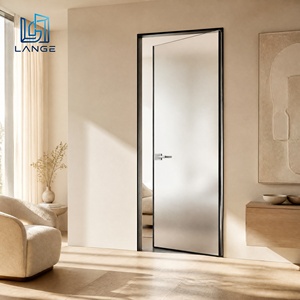
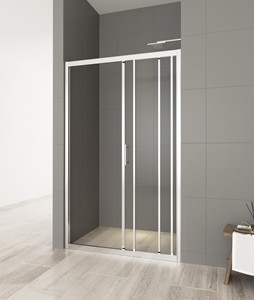
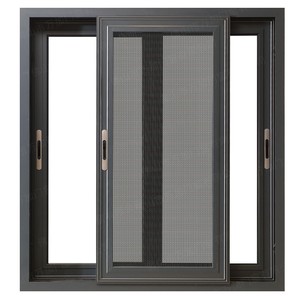
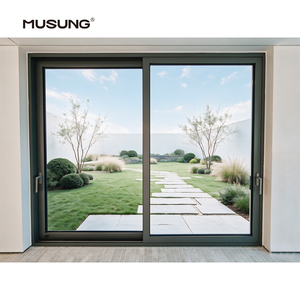
Technical Whitepaper: Sourcing Aluminum Crittall Doors Directly from Chinese Manufacturers
The global demand for Aluminum Crittall Doors—historically identified with hot-rolled steel fenestration pioneered in the late 19th century—has undergone a material renaissance. Contemporary architects, commercial procurement heads, and residential builders are systematically transitioning from traditional heavy ferrous metals to extruded 6063-T5/T6 structural aluminum alloys. This transformation is driven by three deterministic engineering factors: weight minimization without torsional fatigue, precision multi-cavity thermal break integration, and long-term surface passivation against atmospheric oxidation.
As a premier direct-manufacturing facility operating out of Foshan, Guangdong—China's primary industrial cluster for precision fenestration—our factory (Guangdong Dejiyoupin Doors and Windows Co., Ltd.) delivers architectural-grade Crittall screens, partitions, French pivot portals, and exterior glazed assemblies directly to international importers. With verified compliance across CE, ISO 9001, AS 2047, and UL benchmarks, this whitepaper evaluates structural parameters, emerging procurement paradigms, global supply chain navigation, and strategic technical advantages for volume wholesale buyers.
Material Transformation: Extruded Aluminum vs. Traditional Steel Profiles
While historic mild steel crittall profiles provide undeniable aesthetic value, their technical liabilities in high-salinity coastal, humid monsoon, and extreme thermal disparity environments represent recurring lifecycle costs. Untreated or site-welded steel suffers catastrophic galvanic and surface corrosion, requires structural floor reinforcements exceeding 45 kg/m², and creates intense thermal conduction paths that fail modern international building efficiency standards.
| Performance Metrics | Architectural Aluminum Crittall Systems | Traditional Hot-Rolled Steel Crittall |
|---|---|---|
| Structural Alloy / Spec | Aviation-Grade 6063-T6 Extruded Aluminum Alloy | Hot-Rolled W20 / W40 Structural Mild Steel |
| Profile Wall Thickness | 1.8 mm – 3.0 mm Multi-Cavity Reinforced | 3.0 mm – 5.0 mm Solid Section |
| Dead Weight Impact | Lightweight (Approx. 18 - 26 kg/m² glazed) | Extremely Heavy (Approx. 45 - 65 kg/m² glazed) |
| Thermal Conductivity (λ) | Insulated Polyamide PA66GF25 Strip (≤ 1.6 W/m²K) | Continuous Conduction Thermal Bridge (≥ 4.8 W/m²K) |
| Corrosion Resistance | Fluorocarbon (PVDF) / Qualicoat Marine Powder Coat | Susceptible to Rust; Requires Periodic Re-Painting |
| Acoustic Attenuation | Rw ≥ 38 dB (with Double Laminated Glazing) | Rw ≈ 28 - 32 dB (Limited Bead Depth) |
Future Sourcing & Procurement Trends (2025–2030)
Contractors, developers, and wholesale importers are reshaping their procurement matrices based on rapidly advancing structural standards and carbon offset protocols. Sourcing teams seeking higher profit margins and uncompromised build quality are leaning heavily toward Chinese direct-supply mechanisms that prioritize the following evolutionary shifts:
Thermal Break Decoupling
Strict energy conservation building codes (such as Title 24, Part L, and NCC) mandate maximum U-values that non-insulated metal cannot satisfy. The upcoming procurement baseline incorporates 24mm to 34mm multi-chambered polyamide strips embedded inside ultra-narrow 38mm sightlines.
Integrated Flush Fenestration
Developers are moving away from surface-mounted hinges toward heavy-duty 3D adjustable concealed pivot and pocket systems capable of supporting 250kg leaf weights while maintaining continuous 360-degree perimeter EPDM co-extruded airtightness gaskets.
BIM-Driven Custom Fabrication
Standard size catalogs are being superseded by modular CAD/BIM shop drawing integrations. Buyers demand digital twinning, customized glazing mullion spacing, acoustic interlayers, and pre-milled hardware slots straight off CNC 5-axis production benches.
Emerging Design & Technology Trends in Glazed Aluminum Doors
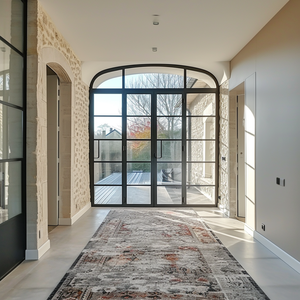
The traditional Crittall aesthetic—defined by crisp grid geometries and industrial black finishes—is expanding beyond static internal partitions. Forward-looking architectural specs integrate dynamic configurations:
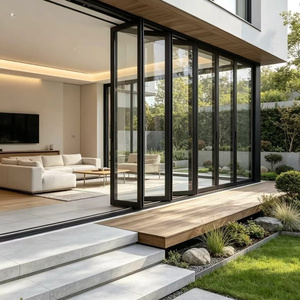
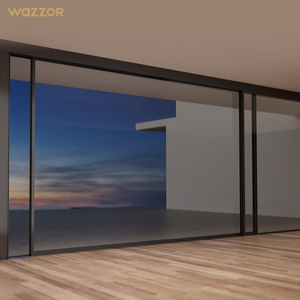
1. Ultra-Narrow Sightline Balcony Portals: Engineering breakthroughs in structural 6063-T6 aluminum allow sightlines as slender as 15mm to 20mm while passing rigorous wind pressure deflection tests (exceeding AS 2047 N6 and hurricane certifications). These assemblies allow expansive multi-panel sliding and bi-folding layouts that unite outdoor living with interior warmth.
2. Smart Access & Magnetic Mechanicals: Modern commercial and residential developments require clean aesthetic integration. High-end aluminum Crittall doors increasingly incorporate mortised fingerprint biometric locks, low-profile motorized actuators, and magnetic contact latches completely flush with the slimline profile.
3. Dynamic Acoustic Lamination: Leveraging specialized PVB and SGP interlayer matrices, double- and triple-glazed Crittall systems balance historical aesthetics with sound reduction ratings reaching Rw 42 dB, indispensable for hospitality suites, recording studios, and urban corporate conference rooms.
Enterprise Manufacturing Advantages & Global Competence
Guangdong Dejiyoupin Doors and Windows Co., Ltd. (DERCHI) stands at the pinnacle of China's structural fenestration manufacturing sector, providing tier-one export capabilities for global partners.
180,000 m² Production Base
Industrial capacity scaled across automated extrusion cutting, CNC milling, automated powder-coating lines, and climate-controlled glazing facilities staffed by 600+ personnel.
Direct Ex-Factory Economics
Bypassing intermediate export trading brokers provides our international clientele with unencumbered wholesale margins, direct engineering access, and stable freight scheduling.
Internationally Certified
Compliant with AS 2047, CE, ISO 9001, and UL fire standards. Over 100 patents and formal test reports ensure straightforward project approvals with local building authorities.
Export-Grade Sea Crating
Reinforced non-fumigation plywood crates, shock-absorbing corner wraps, desiccant liners, and fully customized ocean freight container loading ensure zero damage on site.
Frequently Asked Questions on Aluminum Crittall Sourcing
Direct technical answers addressing structural feasibility, global logistics, sample requests, and compliance standards.