Industrial B2B Manufacturing Whitepaper

China Wholesale Aluminum Hatch Doors Factories & Factory

The Definitive Engineering, Specification, and OEM/ODM Global Sourcing Guide for Roof Access, Marine Enclosures, Industrial Hatches & Architectural Systems

Engineered Factory Solutions

Featured Aluminum Hatch & Specialized Door Systems

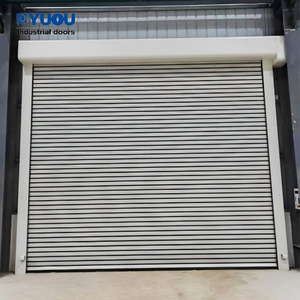
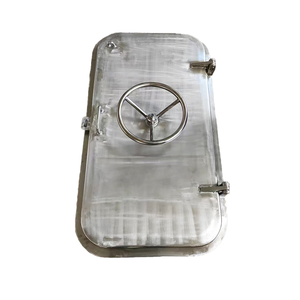
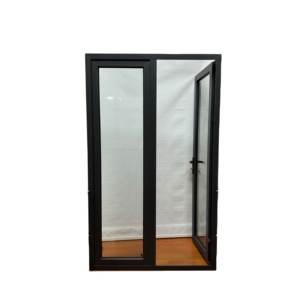
Direct-from-factory access systems fabricated in our Foshan extrusion facility. Engineered to exceed strict international standards for wind resistance, marine corrosion barrier, watertight integrity, and thermal isolation.

Enterprise Strength & Capacity

Scale, Automation, and Audited Quality

Operated by Guangdong Dejiyoupin Doors and Windows Co., Ltd. (DERCHI), our manufacturing infrastructure in Foshan, Guangdong provides global procurement managers with reliable lead times, full material traceabilities, and internationally accredited compliance.

25+
Years Manufacturing Experience
180,000m²
Integrated Production Base
600+
Specialized Technicians & Staff
100+
International Patents & Certs

In-House Extrusion & Die R&D

We control primary smelting, billet homogenization, and custom die extrusions using high-purity 6063, 6061, and 5083 alloys, eliminating raw material contamination.

Certified Testing Labs

Equipped with hydrostatic pressure chambers, air permeability chambers, 2,000-hour salt spray ASTM B117 testing, and cyclic mechanical fatigue rigs.

Full CAD/BIM Shop Drawings

Our 40-member engineering department delivers rapid 2D/3D fabrication models, Revit/BIM files, and structural calculation sheets within 24 to 48 hours.

Export Ocean Packaging

Reinforced IPPC fumigated plywood crates, corner impact dampeners, continuous polyolefin wrapping, and desiccant packs engineered for long-haul sea freight.

Engineering Whitepaper · Material Science

Alloy Chemistry, Extrusion Metallurgy, and Corrosion Defenses

Aluminum hatch doors operate in the most demanding architectural and industrial environments on earth. From roof access panels exposed to extreme solar thermal cycling to marine scuttles enduring salt-fog immersion and industrial cleanrooms subject to high-pressure sanitization, failure is never an option. Selecting the right aluminum alloy composition dictates the operational lifecycle of your installation.

At our Foshan production facility, raw billets are formulated in strict accordance with ASTM B221 and EN 755 standards. Standard architectural hatches leverage 6063-T5/T6, optimized for complex profile geometries, crisp corner tolerances, and smooth visual anodizing. When structural yield point is paramount—such as in blast-resistant floor access hatches or typhoon-prone coastal assemblies—our metallurgical engineers deploy 6061-T6, which delivers an ultimate tensile strength exceeding 310 MPa and yield strength over 276 MPa.

Marine Grade Performance: Why 5083-H116 is Non-Negotiable Offshore

For marine deck hatches and coastal installations prone to severe pitting corrosion, standard 6000-series alloys often fall victim to intergranular corrosion around weld heat-affected zones (HAZ). We utilize non-heat-treatable 5083-H116 / 5052-H32 aluminum-magnesium alloys. These alloys eliminate copper micro-segregations, offering unmatched passivation under ASTM G66 (ASSET) and ASTM G67 (NAMLT) exfoliation corrosion evaluations.

Surface passivations applied in our automated vertical coating lines include class-1 fluorocarbon PVDF (Kynar 500 / Hylar 5000) with a dry film thickness exceeding 40 microns, resisting 3,000 hours of continuous salt-spray exposure. Alternatively, our architectural hardcoat anodization provides an oxide layer up to 25 microns (AA-M10C22A44), producing exceptional surface hardness and resistance to airborne abrasives.
Hatch Door System Primary Alloy Spec Sealing Mechanism Structural Standard Thermal / Acoustic Value Common Applications
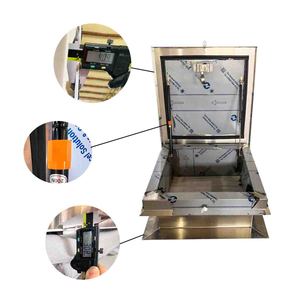
Industrial Roof Access Hatch 6063-T6 Extruded Frame (2.5-3.0mm) Continuous EPDM Bulb Gasket ASTM E330 / 150 kg/m² Live Load R-6 Polyiso Insulation (U=0.16) Commercial rooftops, utility plants, elevator shafts
Quick-Action Marine Deck Scuttle 5083-H116 Marine Plate & Extrusions Closed-cell Neoprene / Silicone Lip CCS / ABS / ISO 6042 Watertight Watertight up to 0.2 MPa (2 bar) Cargo ships, offshore oil rigs, naval vessels
Cleanroom High-Speed Hatch 6063-T5 Anodized + High-Grade PVC Integrated Double Lip Brush Seal EN 12424 Wind Class 2 / ISO 14644 Air permeability Class 3 (EN 12426) Pharmaceutical labs, food workshops, semiconductor fabs
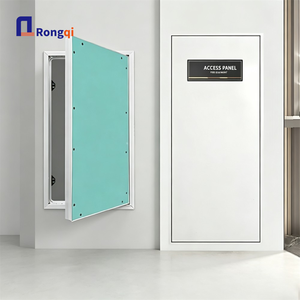
Flush Architectural Access Hatch 6063-T5 Mill Finish Frame (1.5-2.0mm) Friction Fit Acoustic Perimeter Seal ASTM C840 Ceilings & Partitions STC 32 Sound Transmission Class Hotels, commercial towers, drywall inspection
Heavy-Duty Entrance Access Hatch Cast Aluminum + 6061 Structural Core Double Multi-point Compression Wedge AS 2047 Cyclone / UL 10C Fire Option U-Value ≤ 1.4 W/(m²·K), STC 42 Luxury villas, secure substations, server vaults
Market Forecast · Strategic Sourcing

Future Procurement Trends for Aluminum Hatch Systems (2025–2030)

The global commercial construction and industrial infrastructure landscape is transitioning rapidly. Procurement teams and engineering consultants must evaluate these five macro developments when selecting an OEM/ODM manufacturing partner in China.

1. Decarbonized Low-Carbon Aluminum

International green building rating systems (LEED v4.1, BREEAM) and cross-border carbon regulations (EU CBAM) demand low-carbon embodied aluminum. Leading Chinese manufacturers are converting to hydro-powered primary smelters, achieving verified carbon footprints below 4.0 kg CO₂e per kg of finished aluminum alloy.

2. Smart Actuation & BMS Integration

Manual dogging and simple gas struts are rapidly being supplemented by 24V DC / 230V AC linear electric actuators. Modern industrial roof scuttles and smoke hatches interface directly with building automation protocols (BACnet, Modbus) for automated emergency smoke evacuation and remote status telemetry.

3. Modular Parametric Prefabrication

Site-fitted, custom-welded hatches are giving way to standardized modular curbing systems that click directly into pre-cast concrete curbs or structural steel roof deckings. Factory-assembled flashings and curb insulation drastically reduce on-site waterproofing errors and contractor labor costs.

Engineering Evolution · Technical Breakthroughs

Technological Innovations Driving Next-Generation Hatch Doors

Over the past decade, hatch door design has shifted from utilitarian sheet-metal bending to highly engineered multi-component systems. By integrating advanced thermodynamic breaks, precision gas-spring counterbalance mechanics, and flush co-planar architectural ergonomics, today's products fulfill both severe code requirements and sleek design standards.

Multi-Chamber Polyamide Thermal Breaks

Traditional metal access hatches suffered from severe thermal bridging, causing condensation on interior drywalls and high HVAC energy loss. Our latest roof and exterior access doors incorporate glass-fiber reinforced polyamide (PA66 GF25) thermal barrier strips, driving total U-factors down below 1.2 W/(m²·K) and preventing interior sweating in sub-zero climates.

Dual-Stage Counterbalance Dampening

Heavy industrial hatch covers weighing upwards of 80 kg present a major crushing hazard during wind gusts. Our factory employs calibrated nitrogen gas cylinders with internal hydraulic dampeners, guaranteeing single-handed operation under 15 kg of manual lifting force and zero slamming risk upon full closure.

CNC Co-Planar Hidden Perimeter Profiles

Architects increasingly demand complete visual disappearance of access panels inside luxury hospitality and high-end residential interiors. Our aluminum gypsum-inlay access doors utilize micro-extruded frames and spring-activated touch latches that achieve an invisible 1.5mm shadow gap flush with plasterboard surfaces.

Quality Assurance · E-E-A-T Framework

How to Audit an Aluminum Hatch Door Manufacturer in China

A systematic due diligence framework to protect international project timelines, guarantee structural integrity, and ensure zero customs delays when importing wholesale aluminum doors.

Step 1: Metallurgy

Mill Test Certificate (MTC)

Demand EN 10204 3.1 chemical analysis and tensile test certificates for every extrusion batch. Verify that scrap/secondary recycled aluminum has not been blended, which severely impairs tensile yield and corrosion resistance.

Step 2: Coating

Cross-Hatch Adhesion & Micron Depth

Inspect cross-hatch tape adhesion tests (ASTM D3359) and dry film thickness (DFT) gauges. High-saline coastal projects require Qualicoat Class 2 or AAMA 2605 specifications to eliminate peeling and chalking.

Step 3: Sealing

Water Ingress & Gasket Compression

Request factory hydrostatic testing or static pressure chamber water penetration testing according to ASTM E331. Check that corner gasket vulcanization or high-frequency welding is deployed rather than simple mitered cuts.

Step 4: Packaging

Drop-Test Proof Crating

Require solid plywood crating with internal high-density polyethylene (EPE) foam cushioning and moisture-absorbing silica gel bags. Marine shipping requires corner reinforcement against container shunting impacts.

Direct-from-Factory Engineering & B2B Pricing

By partnering with Guangdong Dejiyoupin Doors and Windows Co., Ltd. (DERCHI), you bypass intermediaries and collaborate directly with Foshan's premier door manufacturing team. Benefit from dedicated bilingual project managers, certified third-party testing, and custom OEM manufacturing.

CE Certified ISO 9001:2015 AS 2047 Cyclone Proof UL 10C Fire Resistance Foshan Cluster Direct
Procurement FAQ

Frequently Asked Questions by Commercial Buyers & Engineers

Straightforward technical answers to the most common questions raised by overseas contractors, architects, and procurement executives when importing aluminum hatch assemblies from China.

What is the optimal aluminum alloy choice between 6063, 6061, and 5083? +
The choice depends directly on the structural load and environmental corrosiveness. 6063-T5/T6 is the industry standard for architectural access panels, roof scuttles, and casement doors due to its superb extrusion fidelity, aesthetic anodizing capability, and adequate tensile strength. For high-traffic floor access doors, blast barriers, or commercial doors subjected to severe wind loads, 6061-T6 is specified for its significantly higher yield strength (276 MPa vs. 145 MPa for 6063). For ocean-going vessels, offshore platforms, and severe marine spray zones, 5083-H116 is mandatory because it is virtually immune to saltwater pitting and intergranular stress cracking.
Can you customize hatch doors to non-standard dimensions and architectural layouts? +
Yes. While standard roof hatch openings include 24x24", 28x28", 30x30", 36x30", and 36x36" (or metric equivalents 600x600mm, 900x900mm), over 65% of our production volume is completely customized. Our engineering team prepares parametric CAD shop drawings for custom structural curb heights, double-leaf oversized roof scuttles (up to 3000mm length), specialized stair-access inclinations, and custom curb pitches matching specific roof slope configurations.
How do you guarantee watertightness and weather integrity against typhoons? +
Watertightness is achieved through a multi-tier engineering strategy: (1) Seamless, robotically welded outer corner joints that eliminate mechanical fastener leakage points; (2) Continuously vulcanized EPDM or hollow silicone bulb compression gaskets with high memory retention under -40°C to +120°C; (3) Raised curb aprons with integrated self-flashing counter-curbs; and (4) Pressure-equalized drainage tracks. Our systems undergo testing under ASTM E331 and Australian AS 2047 static water penetration protocols up to 450 Pa with zero ingress.
What counterbalancing mechanisms are used for safe, ergonomic roof hatch opening? +
We engineer heavy-duty nitrogen gas struts equipped with internal hydraulic damping, calculated precisely according to cover weight, moment arm, and wind sail resistance. This guarantees that an access hatch weighing 60 to 100 kg can be smoothly opened with a single hand applying less than 135 N (approx. 13.7 kg) of lifting force. Furthermore, all units feature an automatic stainless steel hold-open arm that locks the cover firmly at 90 degrees to prevent accidental slamming caused by gusts of wind.
What international certifications and third-party test reports do you provide? +
Products fabricated by Guangdong Dejiyoupin Doors and Windows Co., Ltd. (DERCHI) hold CE compliance (EN 14351-1), ISO 9001:2015 quality management certification, Australian AS 2047 cyclone-rating approval, and optional UL 10C / NFPA 252 positive-pressure fire-rated test reports. Marine hatch door lines can be ordered with classification society inspections including CCS (China Classification Society), ABS, BV, or DNV.
What is the standard production lead time and typical container loading schedule? +
For standard catalog dimensions in standard powder-coated finishes, production lead time is typically 15 to 20 business days from shop drawing sign-off. For bespoke architectural sizes, thermal-break assemblies, or custom fluorocarbon anodized specs, lead times range from 25 to 35 business days. We support FOB, CIF, CFR, and DDP shipments, handling direct container loading from our Foshan industrial complex to major export hubs including Shenzhen (Yantian/Shekou) and Guangzhou (Nansha).
How do you protect high-finish aluminum doors from transit damage during long sea voyages? +
Every door undergoes a rigorous 4-layer packaging procedure: First, electrostatic protective film protects raw and coated aluminum profiles against micro-scratches. Second, corner edges are shielded with heavy-gauge corrugated impact bumpers. Third, the entire unit is enclosed in waterproof shrink wrap containing industrial-grade desiccant packets to prevent humidity hazing. Fourth, units are secured inside ISPM 15 compliant, fully enclosed plywood crates with structural base skids for safe forklift operation.
What warranty terms and remote technical installation support are provided? +
We back our structural aluminum profiles with a 10-year factory warranty against structural distortion and corrosion breakdown. Surface finishes (PVDF / Anodization) carry an 8 to 15-year weatherability warranty depending on coating class. Mechanical gas springs, hinges, and latches are warranted for 3 years. For overseas projects, our bilingual engineering team provides step-by-step 3D exploded assembly diagrams, video installation guides, and direct live video-conference commissioning assistance.