Featured Architectural Aluminum Door & Window Systems
Engineered alongside our custom ACP paneling systems, these 8 structural aluminum solutions demonstrate our manufacturing breadth across high-load curtain walls, acoustic villa entries, and hurricane-certified commercial apertures.
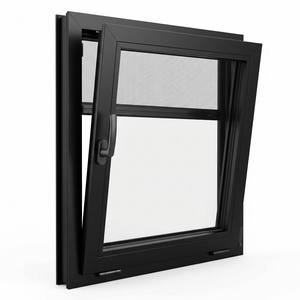
Premium Quality Eco Friendly High Strength Aluminum Invert Inside Window
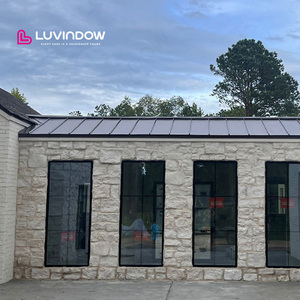
Slim Frame High Performance Aluminum Tilt Turn NFRC Certified Windows
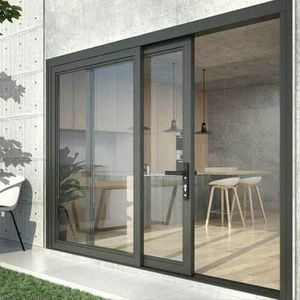
Customized Aluminium Double Tempered Glass Multi-Panel Sliding Doors
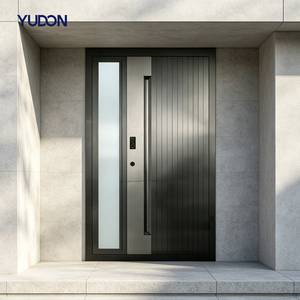
Luxury Aluminum Single Leaf Main Entrance Door with Video Intercom
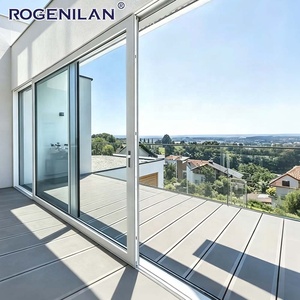
ROGENILAN Outdoor Storm Soundproof Double Glazed Sliding Patio Door
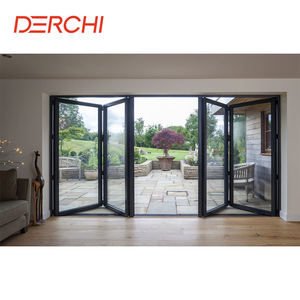
Hurricane Proof Balcony Double Tempered Glass Folding Bi-Fold Door
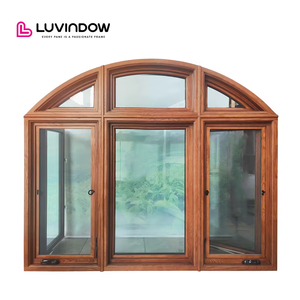
Etched Leaded Glass Aluminum-Clad Structural Beveled Profile Window
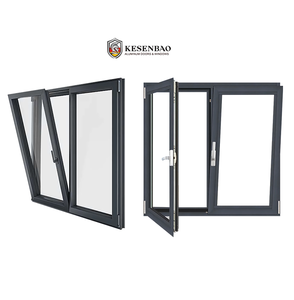
Modern Slim Aluminum Double Glazed Tilt & Turn Hotel Casement Windows
Anatomy of Industrial-Grade Aluminium Composite Panel (ACP) Doors
Unlike residential lightweight doors, commercial-spec OEM ACP doors fuse high-tensile 6063-T5 aluminum framing extrusions with multi-layered composite panel skins. Understand the metallurgical and core composite dynamics that define modern architectural door performance.
Substrate Framing & 6063-T5/T6 Alloys
Structural integrity begins with primary alloy extrusion. Our profiles undergo controlled artificial precipitation hardening to achieve yield strengths exceeding 160 MPa. Internal web reinforcement accommodates monumental heights up to 4,200 mm without risk of diagonal deflection.
ACP Skin Dynamics & Core Polyolefins
Our composite skins feature high-purity aluminum alloys (3003 or 5005 series) laminated to non-toxic low-density polyethylene (LDPE) or mineral-filled A2/B1 fire-rated cores under 180°C continuous thermal bonding. Delamination resistance surpasses 8.5 N/mm peel strength.
Surface Coating Fluoropolymers (PVDF / FEVE)
Standard polyester paints break down rapidly under aggressive UV radiation and marine chloride fog. We apply a minimum 3-coat Kynar 500® 70% PVDF resin system, achieving a dry film thickness over 32 microns, ensuring 20-year colorfastness (ΔE < 5) even in tropical climates.
OEM Aluminium ACP Doors vs. Conventional Architectural Doors
For project estimators, developers, and facade engineers, selecting the optimal exterior door substrate requires balancing structural self-weight, climate stability, acoustic decibel attenuation, and lifecycle ROI.
| Evaluation Parameter | Custom OEM Aluminium ACP Doors | Solid Cast Aluminum Doors | Engineered Hardwood Doors | Hollow Steel Security Doors |
|---|---|---|---|---|
| Structural Weight | Optimized (22–32 kg/m²) — Low hinge fatigue | Heavy (55–85 kg/m²) — Needs reinforced pivots | Medium-Heavy (40–60 kg/m²) | Heavy (45–65 kg/m²) — Prone to sag |
| Weather & Monsoon Stability | ✓ Zero Swelling Continuous EPDM compression | ✓ High Stability Impervious to rain | Swelling ≥ 4% under humidity > 80% | Rust risk at bottom threshold edges |
| Biological & Termite Immunity | ✓ 100% Inert No organic fibers | ✓ 100% Inert Full metal barrier | High vulnerability; requires biocidal chemical dip | ✓ 100% Inert |
| Thermal Transmittance (U-Value) | 1.3 – 1.8 W/m²·K (Thermal break cavity) | 2.6 – 3.4 W/m²·K (Rapid thermal conduction) | 1.8 – 2.2 W/m²·K (Natural insulative cell) | 2.8 – 3.6 W/m²·K (Cold bridging common) |
| Acoustic Isolation (Rw) | 34 – 42 dB (Multi-density composite core) | 32 – 38 dB | 28 – 34 dB | 29 – 35 dB |
| Maintenance Cycle | Periodic wash only (10+ yr zero re-coat) | Anodic cleaning every 3–5 yrs | Re-staining / sanding every 18–24 months | Touch-up painting against oxidation |
| Design & Color Versatility | Unlimited (PVDF, Metallic, Anodized, 3D Wood) | Carved reliefs, patinas, cast motifs | Limited to grain species & stains | Stamping, basic powder coat colors |
Future Sourcing & Engineering Trends in Aluminum ACP Fenestration
The global commercial and luxury residential building envelope is undergoing dramatic technological realignments. B2B importers, architects, and quantity surveyors must account for these four megatrends when issuing project tenders over the coming decade.
1. Low-Carbon Smelting & Closed-Loop Recycled Billet
International carbon border adjustments (such as the EU CBAM mechanism) are rapidly changing export compliance. Global tier-1 purchasers now mandate primary billets smelted using renewable hydropower or certified secondary scrap (≥65% recycled post-consumer aluminum alloy). Our foundry integration allows full chain-of-custody carbon footprint documentation for LEED and BREEAM Platinum certification targets.
2. Monolithic Pivot Geometry & Concealed Kinetic Engineering
Architectural demand has transitioned decisively from traditional butt-hinged residential leaves toward grand pivot entrance doors exceeding 1,800 mm in width and 3,500 mm in height. ACP sandwich construction reduces deadweight by 55% compared to cast iron or solid bronze, enabling heavy-duty self-closing hydraulic floor springs to deliver buttery-smooth, single-finger kinetic action without foundation deformation.
3. Smart Access Automation & Biometric Building Envelope Links
Modern entrance doors are no longer isolated mechanical barriers; they function as intelligent digital gateways. Future-facing OEM ACP doors embed concealed multi-conductor wiring harnesses through the thermal break cavity. This supports 3D face-recognition biometric scanners, micro-solenoid 7-point motorized mortise locks, and direct dry-contact integration into building automation systems (KNX, BACnet, and Crestron).
4. Parametric CNC V-Grooving & Seamless 3D Facades
Leading facade concepts blur the boundary between the opaque building skin and the movable entrance door. Through 5-axis industrial CNC routing, ACP panel skins are precision V-grooved on the backside (leaving 0.8mm of aluminum core intact) to wrap seamlessly around the perimeter sash without exposed fasteners or crude sheet-metal caps. This allows continuous flush cladding alignment across massive villa elevations.
Foshan Manufacturing Powerhouse Behind Global Landmarks
Guangdong Dejiyoupin Doors and Windows Co., Ltd. (DERCHI) stands among China's Top 10 fenestration manufacturers. Backed by a direct 180,000 m² production complex in Foshan's premier industrial corridor, we bridge the gap between bespoke architectural craft and industrial-scale OEM output.
Direct Factory Procurement with Zero Trading Middlemen
By unifying alloy extrusion, automated composite skin lamination, 5-axis CNC routing, automated powder-coating lines, and robotic testing cells under a single corporate umbrella, DERCHI eliminates trading-intermediary markups and communication bottlenecks. Every production lot is paired with material test certificates (MTC), dimensional scan reports, and pre-assembly video verification before ocean dispatch.
Our systems hold established market approvals across stringent global jurisdictions: AS 2047 N6 cyclonic testing in Australia, UL 10C 90-minute fire resistance ratings in the United States, alongside CE EN 14351-1 and ISO 9001:2015 factory oversight.

How We Execute High-Precision OEM / ODM Orders
Every export order flows through a validated 6-stage engineering process designed to eliminate on-site installation rework for commercial contractors, overseas developers, and luxury builders.
01. Parametric CAD & Structural Calculation
We review project elevations and develop full shop drawings in AutoCAD and BIM/Revit formats. Deadweight load distributions, wind pressure calculations (in accordance with ASTM E330 or EN 12210), and hinge deflection limits are mathematically verified before metal cutting.
02. CNC Profile Machining & V-Grooving
Extrusions are processed on automated dual-head Italian cutting centers with angular tolerances within ±0.1°. ACP skins undergo high-speed CNC flatbed routing to form precise lock cutouts, mortise pockets, and folded perimeter returns with no cracked edges or surface stress lines.
03. Automated Thermal Break Injection
For demanding climatic regions (desert heat in the Middle East or severe monsoons in South Asia), frames incorporate PA66 GF25 fiberglass-reinforced polyamide thermal barrier strips. Knurling and roll-crimping achieve shear strengths exceeding 45 N/mm, eliminating thermal conduction bridging.
04. Multi-Layer Vacuum Sandwich Lamination
Framing cavities and ACP skins are assembled using structural polyurethane two-part reactive adhesives under hydraulic vacuum pressing tables. Acoustic mineral wool or PIR foam cores are permanently consolidated, preventing internal drumming sounds during daily operation.
05. Full Pre-Hanging & Hardware Calibration
Every door leaf is hung in its mating subframe inside our testing station prior to packing. Locks, handles, hydraulic floor closers, and magnetic reed sensors are fully installed and operated through 50 test cycles to verify perimeter gap consistency (uniform 3.5mm ±0.5mm clearance).
06. Heavy-Duty Export Plywood Crating
To safeguard high-finish PVDF surfaces across multi-leg ocean transit, each unit is wrapped in 80-micron static cling PE film, surrounded by 20mm high-density EPE foam corner protectors, and sealed in fumigated ISPM-15 compliant solid plywood crates engineered for forklift safety.
Frequently Asked Questions by Importers, Architects & Engineers
Detailed technical and commercial answers addressing common engineering challenges in cross-border door procurement, port logistics, fire codes, and architectural specifications.
What are the key technical advantages of OEM Aluminium ACP doors over standard solid timber or hollow steel doors in tropical and coastal climates?
Custom OEM Aluminium ACP doors solve both challenges simultaneously. The structural frame is fabricated from high-grade 6063-T5 aluminum alloy treated with Kynar 500® PVDF fluorocarbon coatings that resist over 3,000 hours of continuous ASTM B117 salt spray. The core is an engineered mineral-filled or polyolefin composite that cannot absorb water vapor or harbor biological pests. Furthermore, aluminum composite doors maintain dimensional tolerances under thermal extremes from -30°C to +80°C without warping.
What international fire-rating certifications can your aluminum ACP door assemblies achieve?
- North American Standards: We supply assemblies tested in accordance with UL 10B / UL 10C and NFPA 252 for 60-minute and 90-minute positive pressure fire stream tests.
- European Standards: For commercial exit and stairwell boundaries, our mineral-core composite panels achieve EN 13501-1 Class A2-s1, d0 non-combustible ratings and EI30 / EI60 fire containment standards.
- Smoke & Draft Seals: Every fire-rated unit includes concealed perimeter intumescent graphite seals that expand up to 25 times their volume under elevated temperatures (>150°C) to seal out lethal toxic fumes.
Can DERCHI manufacture custom dimensions, oversized pivot leaves, and architectural Vastu configurations?
Before manufacturing commences, our design office provides comprehensive CAD shop drawings detailing profile sections, sub-sill flashing interfaces, and anchoring bolt spacings for architect sign-off.
What are your minimum order quantities (MOQ), commercial trade terms, and lead times for export containers?
- Custom Architectural Villas: MOQ starting from 1 complete door set or mixed window/door schedules.
- Commercial Development Projects: Volume pricing scales favorably for 20GP, 40GP, or 40HQ Full Container Load (FCL) shipments.
- Delivery Terms: We provide quotations on EXW, FOB (Guangzhou/Shenzhen/Foshan), CIF, or DDP (Delivered Duty Paid) terms directly to your job site or regional port of discharge including Nhava Sheva, Chennai, Karachi, Colombo, Singapore, Jebel Ali, Los Angeles, and Sydney.
- Lead Time: Standard fabrication requires 25 to 35 working days following CAD drawing and deposit confirmation.
How does DERCHI ensure acoustic comfort and thermal insulation within the ACP door core?
This multi-density assembly dampens vibrational resonance, achieving sound transmission class (STC) ratings between 34 dB and 42 dB, while delivering thermal U-values as low as 1.3 W/m²·K when paired with our thermal-break frame extrusions.
How are oversized doors packed to guarantee damage-free arrival during long-distance ocean voyages?
- Protective Surface Film: High-adhesion 80μm polyethylene scratch film protects all PVDF and anodized faces.
- Impact Absorbing Corners: Heavy-gauge molded EPE foam shields all 90° sash corners and delicate miters.
- Moisture Desiccant: Silica gel canisters are placed inside the moisture barrier wrap to counter condensation cycles inside shipping containers crossing the equator.
- Rigid Solid-Wood Crating: The complete unit is enclosed in custom-built 15mm plywood export crates supported by bottom skids for seamless mechanical forklift offloading at port and job sites.
Ready to Partner with China's Premier OEM Aluminum ACP Door Factory?
Connect with our English-speaking fenestration engineers today. Whether you have preliminary CAD architectural drawings, a project window & door schedule, or require custom aluminum composite panel specifications for a national development tender, our technical team provides rapid quotations and shop drawing reviews within 24 hours.