Engineered OEM Fenestration & Security Net Door Solutions
Modern commercial and high-end residential architectural projects require entrance systems that seamlessly synthesize uncompromising anti-burglary barrier performance, climate-responsive thermal break insulation, and refined aesthetic transparency. As an ISO 9001 and CE-certified Tier-1 manufacturer, our custom OEM aluminium net doors, screen-integrated casements, folding patio systems, and heavy-duty entrance pivot doors are manufactured using aircraft-grade 6063-T5/T6 alloy profiles combined with 0.8mm–1.0mm 304/316 marine-grade diamond mesh (King Kong mesh). Explore our factory-direct product range engineered for international procurement.
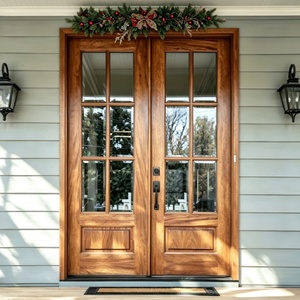
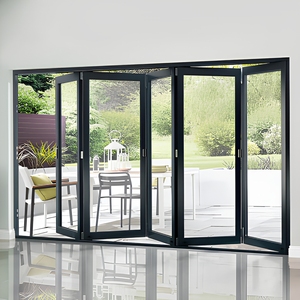
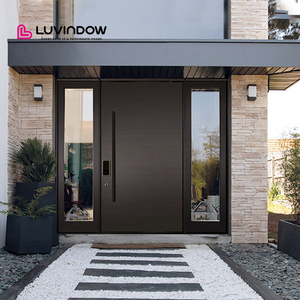
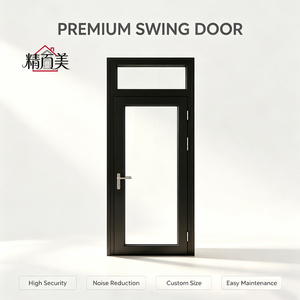
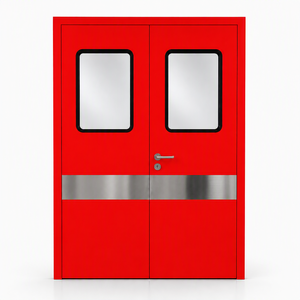
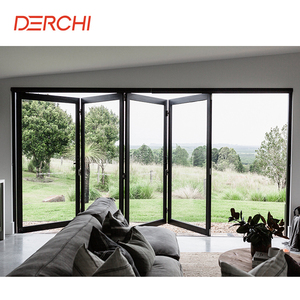
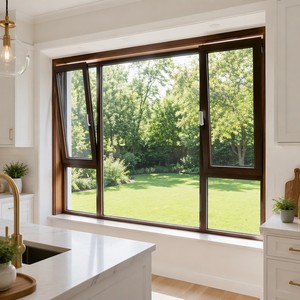
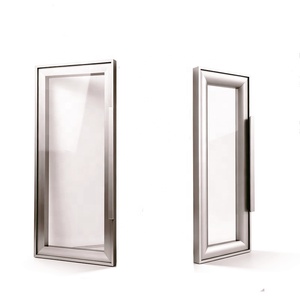
Engineering Anatomy of Industrial-Grade OEM Aluminium Net Doors
Unlike lightweight domestic flyscreens, commercial-grade OEM aluminium net doors operate as structural envelope barriers. Sourcing managers and facade engineers evaluate fenestration performance across four primary mechanical vectors: profile alloy integrity, mesh tensile yield strength, retention mechanical anchoring, and multi-point hardware synergy.
Extruded 6063-T5/T6 Alloy Architecture
Primary frame sashes are custom-extruded from primary aluminium billets with wall thicknesses ranging from 2.0mm to 3.5mm. Internal reinforcement ribs distribute wind loads during extreme cyclone and gale conditions, exceeding ASTM E330 structural deflection tolerances while preventing sash sag across expansive 3000mm+ elevations.
0.8mm–1.0mm 316 Marine Stainless Mesh
Woven from high-tensile AISI 316 marine-grade stainless wire with a minimum tensile rating of 900 MPa. Powder-coated with exterior-grade AkzoNobel or PPG electro-static finishes, our King Kong security mesh resists knife shears (AS 5041), jemmy attacks, and passes 3,000-hour neutral salt-spray testing according to ASTM B117 protocols.
Mechanical Clamp & Glue Wedge Locking
Traditional glue-only or screw-tapped screen meshes fail under repeated crowbar leverage. Our OEM systems integrate an internal patented dual-wedge compression bead system with corrosion-free PVC isolating liners, preventing galvanic metal interaction between the aluminium sash profile and the stainless steel mesh.
OEM Net Door Performance Matrix vs. Commodity Screens
A breakdown of critical fenestration parameters demonstrating why custom OEM manufactured aluminium security net doors outperform conventional residential insect screens.
| Engineering Criteria | DERCHI Custom OEM Net Doors | Standard Fabricated Net Doors | Commodity Insect Screens |
|---|---|---|---|
| Alloy Grade & Hardness | 6063-T6 / 6061-T6 (Webster Hardness ≥ 12) | Recycled Secondary Aluminium (Uncertified) | Thin Roll-Formed 6063-T4 (< 1.0mm) |
| Screen Mesh Infill | 0.8mm–1.0mm 304/316 High-Tensile Stainless Wire | 0.5mm 201 Stainless / Coated Carbon Wire | PVC-Coated Fiberglass / Polyester Yarn |
| Impact & Knife Shear Test | Passes AS 5039 / AS 5041 (Impact > 100 Joules) | Fails Repeated Crowbar Leverage | Zero Security Rating (Easily Slashed) |
| Thermal Barrier Option | PA66-GF25 Polyamide Thermal Break Available | Non-Thermal Solid Aluminum Profiles | Non-Thermal Lightweight Track |
| Salt-Spray Corrosion Resistance | 3,000+ Hours ASTM B117 Neutral Salt Spray | 400–600 Hours (Pitting Corrodes Welds) | Oxidizes rapidly in coastal environments |
| Locking System Integration | Concealed 3-to-7 Point Multi-Point Smart System | Single Throw Mortise Latch | Plastic Magnetic Catch / Friction Snib |
Future Procurement Trends for OEM Aluminium Net Doors (2025–2030)
The international fenestration procurement ecosystem is experiencing a generational shift. Institutional developers, hospitality builders, and volume importers are revising their tender documents based on evolving regional energy codes, lifecycle carbon metrics, and integrated security mandates.
BIM Integration & Parametric Sourcing
Global architecture firms now mandate native Revit/BIM 3D models with embedded thermal conductivity (U-factor), solar heat gain coefficients (SHGC), and lifecycle acoustic parameters. Custom OEM factories must provide automated parametric shop drawing pipelines that interface with general contractor schedules to eliminate on-site dimensional clashes.
Low-Carbon Billet Accountability
Driven by the European CBAM (Carbon Border Adjustment Mechanism) and North American green building credits (LEED v4.1), volume buyers are prioritizing OEM extruders using renewable hydro-electric power during smelt casting. Certified cradle-to-gate Environmental Product Declarations (EPD) are becoming prerequisite tender documentation.
Smart IoT Hardware Convergence
Mechanical cylinder locks are rapidly yielding to biometric fingerprint, facial recognition, and Zigbee/Matter-enabled multi-point locking gearboxes. Procurement specifications now demand built-in micro-switch sensors concealed within the aluminium net door stile, providing real-time perimeter breach monitoring without exterior wiring.
Multi-Tier Resilience Bundling
Instead of sourcing doors and screen systems from separate vendors, procurement teams favor single-source OEM suppliers who bundle double-glazed exterior sliding or pivot doors with integrated high-tensile net screens. This unified approach cuts freight consolidation costs by 35% and unifies cosmetic surface warranties.
Product Innovation: Where Aluminium Net Doors Are Heading
R&D investments across Guangdong Dejiyoupin's engineering laboratories focus on solving the historic friction between airflow maximization, weather sealing, and physical security. The modern aluminium net door is no longer a passive mesh sheet—it is an active facade sub-assembly.
Thermal Separation in Screen Stiles
Historically, metal security net doors acted as uninterrupted thermal bridges that transferred extreme exterior heat into conditioned indoor environments. Next-generation OEM designs incorporate dual polyamide PA66 thermal barriers directly into the net door profile frame, cutting total frame U-factors to under 1.8 W/m²K while eliminating condensation risk.
Concealed Continuous Hinge Pivots
Visible butt hinges create vulnerable attack points for crowbars and compromise clean minimalist aesthetics. Our advanced OEM engineering employs continuous 304 stainless steel geared piano hinges or concealed heavy-duty top-and-bottom pivot brackets capable of handling over 200,000 operational cycles without sash droop.
Electro-Static PVDF Surface Coatings
To combat tropical monsoon humidity and coastal marine airborne salts, standard polyester powder finishes are superseded by Qualicoat Class 2 certified fluoropolymer (PVDF) electrostatic coatings. These surface treatments withstand intense ultraviolet radiation, prevent chalking, and preserve surface color integrity across 20-year operational lifespans.
Direct-Factory Advantage: Foshan Fenestration Cluster
Operating as Guangdong Dejiyoupin Doors and Windows Co., Ltd. (DERCHI), our manufacturing campus is situated in Shishan Town, Nanhai District, Foshan—the epicenter of China's primary aluminium manufacturing industry. Sourcing direct from our production base eliminates trading intermediaries, shortens revision loops, and guarantees direct access to testing facilities.
- 180,000 m² Integrated Production Facility: In-house precision profile extrusion, CNC corner crimping, automated powder-coating lines, and robotic packaging lines.
- 600+ Skilled Technicians & In-House R&D Engineers: Full turnkey support including complimentary CAD shop drawings, structural wind-load calculations, and custom extrusion tooling development.
- Strict International Standard Certifications: Products rigorously verified and accredited to CE, ISO 9001, Australian AS 2047, and UL fire rating standards with 30+ design patents.
- Proven Global Export Experience: High-profile residential villas, commercial hotels, and institutional projects successfully delivered to the USA, Canada, Australia, the Middle East, India, Pakistan, Bangladesh, and Sri Lanka.

B2B Procurement & Custom OEM Technical FAQ
Essential engineering, compliance, logistics, and quality assurance answers compiled by our senior fenestration export directors to guide project managers through the OEM purchasing lifecycle.