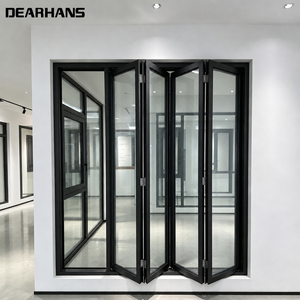
Bi-Fold System
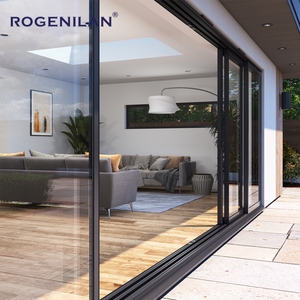
Explore our industrial-grade, thermal-break operable window units, awning vents, chain winders, and architectural sliding door systems manufactured under stringent ISO 9001 and AS2047 quality management.
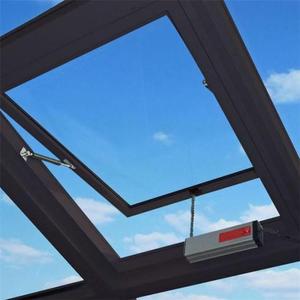
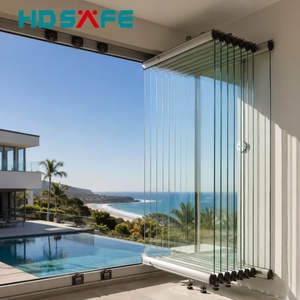
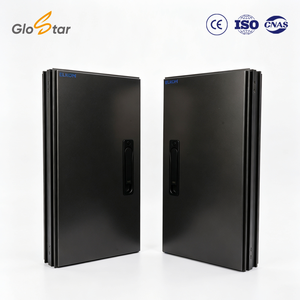
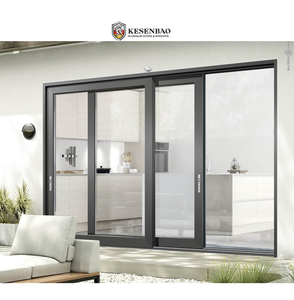
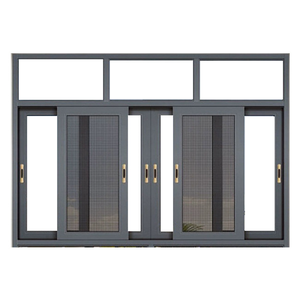
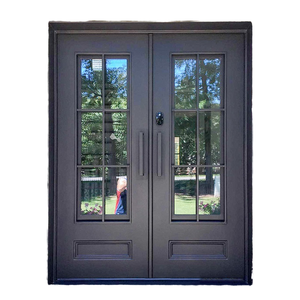
A rigorous teardown of rotary scissor arm kinematics, continuous multi-point peripheral latching, and extruded 6063-T6/T66 structural profiles.
In contemporary architectural engineering, the operable fenestration envelope serves as the vital boundary between interior atmospheric climate control and severe external meteorological volatility. Specifiers, façade consultants, and general contractors frequently mandate Custom OEM Aluminum Crank Out Windows (incorporating both projecting casement and top-hinged awning formats) because of their exceptional mechanical leverage. Unlike sliding or hung systems that rely solely on surface friction and pile weatherstripping, rotary gear crank-out configurations utilize a continuous mechanical pull-in compression vector. When the fold-away operator handle is actuated, high-ratio dual-arm worm drives draw the operable sash uniformly against multi-chambered co-extruded EPDM marine gaskets, virtually eliminating air infiltration and wind-driven water ingress even under severe structural pressures.
Fabricated using hardened die-cast zinc housing and high-tensile stainless steel scissor drive arms. Provides smooth 90-degree opening angles for comprehensive ventilation and effortless egress clearance with minimal operating torque.
Integrated multidirectional structural thermal breaks isolate interior and exterior aluminum chambers. Prevents thermal conductance, stops condensation formation in high-humidity zones, and delivers superior U-values down to 1.1 W/m²K.
Concealed tie-bar mechanisms synchronized along the sash stile distribute uniform closing loads onto sequential mushroom cams. Provides superior forced-entry resistance, tested to RC2/RC3 security benchmarks against prying.
| Performance Criterion | Testing Standard & Methodology | DERCHI OEM Baseline Specification | Engineering Compliance Impact |
|---|---|---|---|
| Air Infiltration Rate | ASTM E283 / EN 12207 | ≤ 0.05 L/(s·m²) at 300 Pa (Class 4) | Exceeds passive house infiltration criteria |
| Water Penetration Resistance | ASTM E331 / EN 12208 | No leakage up to 1,200 Pa test pressure | Rated for tropical monsoon downpours and typhoons |
| Structural Wind Load (Deflection) | ASTM E330 / AS 2047 N6 Cyclonic | Design Pressure: +4,500 Pa to -4,500 Pa | Suitable for coastal and high-rise curtain walls |
| Thermal Transmittance (U-Value) | NFRC 100 / EN ISO 10077-2 | 1.1 – 1.6 W/(m²·K) (Glazing dependent) | Significant HVAC cooling/heating reduction |
| Acoustic Attenuation | ASTM E90 / ISO 717-1 | Rw / STC 38 dB to 44 dB (Laminated IGU) | Urban transit and airport acoustic mitigation |
Market dynamics, architectural preferences, and regulatory decarbonization targets shaping the global procurement pipeline over the next decade.
Global developers and LEED AP consultants are mandating low-carbon primary aluminum billets refined via hydro-powered smelting. EPD (Environmental Product Declarations) verifying cradle-to-gate embodied carbon footprints will transition from optional bidding credentials into mandatory technical requirements across North America, Europe, and GCC markets.
The convergence of architectural aesthetics and building management systems (BMS) is shifting demand from external manual hand cranks to fully concealed linear micro-actuators. Windows will dynamically modulate open/close cycles based on interior VOC, humidity, and CO₂ metrics, featuring hidden inductive charging and automated weather override.
Integration of electrochromic solar-control coatings and photovoltaic BIPV (Building Integrated Photovoltaics) within operable crank-out sashes. The fenestration assembly functions not merely as a passive barrier, but as an active power-generating micro-facade that dynamically regulates solar heat gain coefficient (SHGC) from 0.09 to 0.45.
How advanced material science and digital fabrication are redefining operable aluminum envelope engineering.
Transitioning from standard commercial 6063-T5 to specialized 6060 and 6063-T66 alloys, yielding superior tensile yield strength (> 200 MPa) and supporting ultra-slim sightlines without structural flex under wind loading.
Adoption of 3-coat/3-bake AAMA 2605 certified polyvinylidene fluoride resin coatings, offering 30-year resistance against ultra-violet degradation, salt spray fog, and atmospheric pollutants in coastal environments.
Corner joints secured with hydraulically crimped structural aluminum corner brackets injected with two-part polyurethane corner matrix glue, eliminating sash diagonal sag and preserving watertight corner seals indefinitely.
Integrating next-gen tempered vacuum glazing units with 0.15mm micro-spacers, delivering center-of-glass U-values of 0.4 W/m²K within an ultra-thin 8.3mm profile, enabling slim sightlines with extreme thermal resistance.
Combining world-class production infrastructure in Foshan, Guangdong with deep engineering knowledge and international export compliance.
Our centralized manufacturing park houses profile extrusion tooling, automatic powder-coating and PVDF lines, automated IGU glass cutting, and CNC machining centers under one continuous QA umbrella.
DERCHI systems are tested and certified to CE, ISO 9001, AS 2047 (N6 Cyclonic Rating), and UL fire-rated specifications, reinforced by over 30 proprietary industrial design and technological utility patents.
Our multilingual structural engineering group provides complimentary CAD shop drawings, wind load calculations, thermal simulation modeling, and custom extrusion die design within 48 hours of project receipt.
Detailed technical, commercial, and logistical answers compiled for architects, façade consultants, and international buyers.
Send us your door and window schedule, architectural drawings, or technical performance specifications for factory-direct engineering analysis and rapid cost estimation.
Send an Inquiry