Architectural Whitepaper & OEM Sourcing Guide

Custom OEM Aluminum Hurricane Windows Manufacturers & Supplier

Engineered Fenestration Systems Certified for Extreme Wind Loadings, Large Missile Impact Resistance (ASTM E1886/E1996 & TAS 201-203), and Coastal Thermal Efficiency

Engineered Assemblies

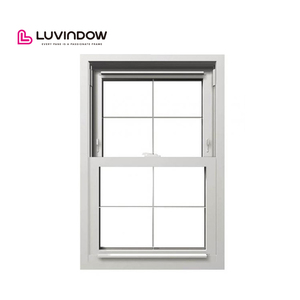
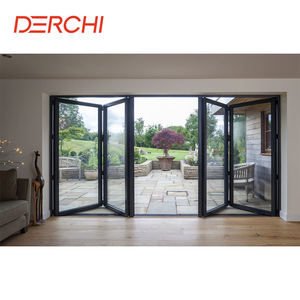
Featured Hurricane-Proof Architectural Fenestration

Factory-direct OEM & ODM solutions engineered for high-velocity hurricane zones (HVHZ), marine-grade coastal environments, and demanding architectural projects worldwide.

180,000m²
Production Footprint
25+ Yrs
OEM & ODM Precision
600+ Staff
Engineering Specialists
100+ Pat.
Global Certifications
Structural Dynamics

The Mechanics of Aluminum Hurricane Fenestration

Designing fenestration capable of withstanding Category 5 tropical cyclones requires a departure from standard architectural aluminum manufacturing. In a certified hurricane window system, the envelope must maintain structural integrity under two simultaneous thermodynamic and mechanical forces: cyclic wind pressure exceeding +100/-100 PSF and hyper-velocity projectile kinetic impact.

Our OEM engineering integrates custom-extruded primary alloy profiles (6063-T6 and 6061-T6) possessing minimum tensile yield strengths of 210 MPa. Profile wall thicknesses are reinforced to 2.0mm–3.5mm across critical structural mullions and jamb anchors. Internal multi-cavity chambers are engineered with structural polymer thermal breaks (polyamide PA66GF25 reinforced with 25% glass fiber) that equalize internal air cavity pressures, mitigating structural deflection under cyclic load reversals.

Engineering Rule: Kinetic Energy Dissipation

Under ASTM E1996 Large Missile testing (a 9-lb 2x4 timber projectile traveling at 50 ft/s), total impact energy equals approximately 350 foot-pounds. Glass fracture is anticipated; however, our SentryGlas (SGP) ionoplast interlayers maintain structural membrane tension without frame displacement throughout 9,000 post-impact pressure cycles.
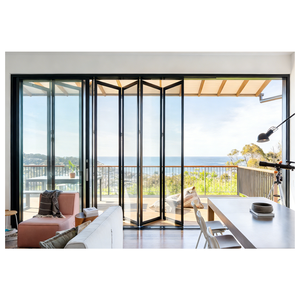
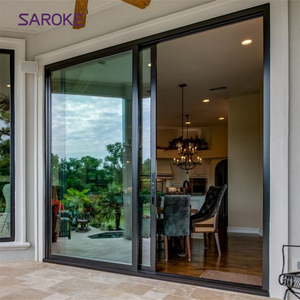
Certified Hurricane Window Impact Testing and Dynamic Load Verification

Interlayer Science: SGP vs. PVB

While standard polyvinyl butyral (PVB) delivers entry-level impact retention, SentryGlas (SGP) ionoplast interlayers are 5 times tougher and up to 100 times stiffer. In high-rise and HVHZ installations, SGP preserves structural diaphragm integrity post-breakage, resisting storm surge delamination and edge intrusion in coastal salt fogs.

Continuous Perimeter Fastening

Structural failure under cyclone events frequently initiates at frame perimeter anchor points. Our OEM shop drawings specify stainless steel 316 sleeve anchoring assemblies spaced within 100mm of corners and 300mm on-center, delivering continuous shear load transfer into structural concrete or reinforced steel framing.

Pressure-Equalized Weep Systems

During monsoon squalls, wind pressure forces standing water against fenestration sills. DERCHI incorporates pressure-equalized rain-screen chambers with internal EPDM non-return check valves. Dynamic exterior suction draws air in without permitting water backflow, rated up to 1050 Pa cyclic water test pressure.

CAD Shop Drawings and Custom OEM Window Engineering
Strategic Sourcing Analysis

Global Procurement Trends: Navigating Modern Facade Demands

B2B procurement paradigms for architectural fenestration are shifting rapidly. Commercial real estate developers, facade contractors, and tier-1 builders in North America, Australia, the Caribbean, and coastal Asia are no longer merely procuring off-the-shelf fenestration; they are commissioning fully bespoke, code-verified facade packages directly from integrated OEM manufacturers.

Key procurement vectors dominating upcoming specifications include:

  • Decarbonization & Low-Carbon Billet: Specifications now demand Environmental Product Declarations (EPD) and secondary remelt billet formulations reducing embodied CO₂ per metric ton of extruded profile to below 4.0 kg CO₂e/kg Al.
  • Unified Acoustic and Thermal Performance: Urban high-density coastal towers require U-factors below 0.28 BTU/h·ft²·°F coupled with Sound Transmission Class ratings over STC 40, requiring asymmetrical insulating laminated glazing configurations.
  • Direct-from-Source OEM Collaboration: Shortening the tier-1 supply chain allows developers to achieve 25%–35% direct capex savings while obtaining bespoke CAD shop drawings and mill-finish/PVDF customization in single-lot batch productions.
Engineering Specifications

OEM Structural Performance Verification Matrix

Standardized test metrics verified across independent testing laboratories (including NFRC, AAMA/WDMA/CSA 101/I.S.2/A440, and AS 2047 cyclonic protocols).

Product Series System Profile Wall Thickness Glazing Makeup Design Pressure (DP) Water Tightness Acoustic (STC) Target Compliance
DERCHI 120 Impact Casement 2.0mm - 2.5mm (6063-T6) 6mm Low-E + 12A + 6mm + 1.52 SGP + 6mm +85 / -85 PSF 1000 Pa (20.9 PSF) 42 dB ASTM E1886/1996, TAS 201/202/203
DERCHI 150 Heavy Lift & Slide 2.5mm - 3.0mm Structural 8mm Tempered + 16A + 6mm + 2.28 PVB + 6mm +75 / -75 PSF 750 Pa (15.7 PSF) 39 dB AS 2047 N6 Cyclonic, CE EN 14351-1
DERCHI 80 Top-Hung Architectural 1.8mm - 2.2mm Marine Grade 5mm Low-E + 9A + 5mm + 1.14 SGP + 5mm +65 / -65 PSF 700 Pa (14.6 PSF) 37 dB AAMA/WDMA/CSA 101, ISO 9001
DERCHI Minimalist Concertina Door 2.2mm - 3.2mm Structural 6mm + 1.52 PVB + 6mm Double Tempered +70 / -70 PSF 600 Pa (12.5 PSF) 38 dB UL Impact, Miami-Dade NOA protocols
DERCHI Commercial Glazed Curtain Wall 3.0mm - 4.5mm Heavy Multi-Cavity 8mm Reflective + 16Ar + 8mm + 2.28 SGP + 8mm +110 / -110 PSF 1200 Pa (25.1 PSF) 45 dB ASTM E330, AS/NZS 4284, NFRC
Enterprise Verification

Guangdong Dejiyoupin: Manufacturing Authority

Operating from our 180,000 square meter intelligent manufacturing park in Foshan, Guangdong—the core of global high-end architectural aluminum processing—DERCHI delivers full OEM/ODM precision to over 60 export destinations worldwide.

CE Certified
ISO 9001:2015
AS 2047 N6 Cyclonic
NFRC Energy Performance
UL Fire Rated
30+ Invention Patents
International Quality and Impact Fenestration Approvals
Get a Quote
DERCHI 180,000 sqm Intelligent Aluminum Window & Door Factory
Procurement Intelligence

B2B Procurement & Engineering FAQ

Technical solutions to primary regulatory, engineering, and logistics considerations encountered by international facade developers and procurement directors.

What specific impact standards and structural testing parameters do DERCHI hurricane windows satisfy?
Our systems are tested to rigorous international standards including ASTM E1886 (Standard Test Method for Performance of Exterior Windows by Missile and Cyclic Pressure Differentials) and ASTM E1996 (Standard Specification for Performance of Exterior Windows Impacted by Windborne Debris), supporting Large Missile Impact Level D and Level E ratings. Furthermore, assemblies comply with Florida Building Code protocols TAS 201 (Impact Test), TAS 202 (Static Air Pressure), and TAS 203 (Cyclic Wind Pressure Loading), alongside Australian Standard AS 2047 Cyclonic Region C & D requirements. Test reports with positive/negative pressure traces up to 9,000 cycles are available for project consultant review.
How does DERCHI ensure long-term corrosion resistance for coastal projects with marine atmospheres (C4/C5)?
For oceanic, beachfront, and high-salinity island installations, our aluminum extrusions receive either certified AAMA 2605 70% fluoropolymer resin coatings (PVDF / Kynar 500) or high-micron Class I architectural anodizing (25+ microns). All structural hinges, friction stays, internal sash screws, and anchor brackets are manufactured exclusively from marine-grade 304 or 316 stainless steel. This chemical configuration undergoes neutral salt-spray (ASTM B117) exposure validation exceeding 3,000 to 5,000 continuous hours without surface blister formation, pitting, or intergranular cracking.
Can OEM orders incorporate custom architectural profiles, extrusions, and radius curves?
Yes. With dedicated tooling centers in Foshan, DERCHI develops custom extrusion dies tailored to bespoke architectural schedules within 15–20 days. Our advanced 5-axis CNC machining centers facilitate custom frame junction geometries, custom-radius arch bending (as demonstrated in our Arch Folding Series), and integrated curtain-wall sub-framing. Our in-house engineering department generates comprehensive 2D CAD shop drawings, 3D BIM/Revit models, and structural calculation books (covering glass deflection ratios under L/175 limits) prior to tooling cut.
What is the lead time, shipping methodology, and damage mitigation protocol for oceanic freight?
Typical production lead times for standard OEM container loads range between 30 and 40 calendar days from shop drawing approval. For overseas ocean transit, windows and doors are protected with surface electrostatic PE films, reinforced corner guards, high-density polyethylene wrapping, and crated in fully enclosed, fumigated solid-timber cases with internal desiccants to prevent glass etching from condensation. Crates are engineered with integrated bottom forklift skids and container tethering anchor lugs, resulting in an in-transit structural zero-defect record under FOB, CIF, or DDP terms.
How are thermal insulation (U-factor/SHGC) and extreme wind loading balanced within one system?
Historically, heavy impact glass compromised thermal insulation due to single-laminate constructions. DERCHI resolves this through engineered hybrid IGU assemblies: an exterior tempered pane, a 16mm argon-filled warm-edge spacer chamber with low-conductivity polymer seals, and an interior laminated sandwich incorporating SGP or acoustic PVB. Coupled with our polyamide PA66GF25 multi-cavity thermal break frame profiles, our systems achieve overall system U-values as low as 0.24 BTU/h·ft²·°F (1.36 W/m²K) and Solar Heat Gain Coefficients (SHGC) tailored from 0.22 to 0.40 depending on regional climate demands.
What quality assurance protocols and factory acceptance testing (FAT) are available to buyers?
Every OEM production lot undergoes a 6-stage QA checkpoint: raw alloy spectrometer verification, extrusion powder coat thickness & cross-hatch adhesion checks, insulating glass dew point verification, dimensional tolerance calibration within ±1.0mm, and hardware cycling checks. For overseas procurement teams unable to visit our Foshan plant, we provide 360° VR remote factory verification, high-resolution pre-shipment video inspections, and welcome third-party technical audit agencies (such as SGS, TÜV, or Intertek) for on-site witness testing.

Initiate Your OEM Project Consultation

Connect directly with our engineering and estimating departments. Submit your structural schedules, opening elevations, or architectural tender packages for immediate preliminary review and mill-direct quotation.

Get a Quote