Architectural Fenestration Whitepaper

Custom OEM Aluminum Kitchen Windows Manufacturer & Factory

High-performance architectural pass-throughs, thermal-break sliding systems, and commercial bifold fenestration engineered to AS2047, NFRC, CE, and ISO 9001 global building standards.

180,000m²
Smart Production Base
25+ Years
OEM/ODM Engineering
30+
Patents & Certifications
600+
Skilled Craftsmen & Staff
Precision Engineering Showcase

Featured OEM Aluminum Kitchen Window Systems

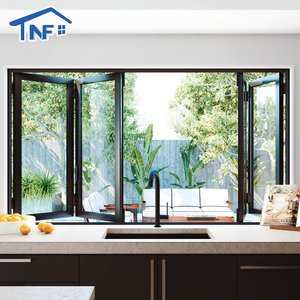
Designed specifically to withstand corrosive cooking oils, high ambient steam, extreme temperature deltas, and demanding indoor-outdoor serving scenarios. Fully customizable for luxury residences, hotel chains, and multi-family developments.
Technical Whitepaper Insight

Engineering Principles of Architectural Aluminum Kitchen Fenestration

Kitchen architectural envelopes face an aggressive micro-environment distinct from any other room in modern buildings. High grease vapors, persistent condensation from cooking, extreme thermal shifts from commercial ranges, and the imperative for cross-ventilation necessitate industrial-grade structural thresholds.

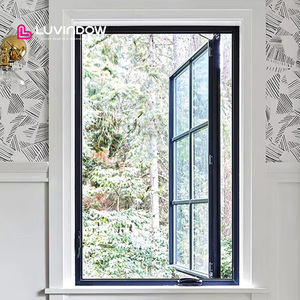
Ordinary residential window profiles frequently degrade prematurely in culinary sectors due to sub-standard alloys, inadequate anodizing thicknesses, and moisture entrapment along horizontal sill tracks. At our 180,000 m² Foshan extrusion and fabrication base, every OEM kitchen window is manufactured utilizing virgin 6063-T5 or 6063-T6 aerospace-grade aluminum billets. We enforce rigorous structural wall tolerances exceeding 1.6mm for casements and 2.0mm to 3.0mm for heavy-duty commercial pass-through systems, preventing frame deflection caused by high dead-load structural glass.

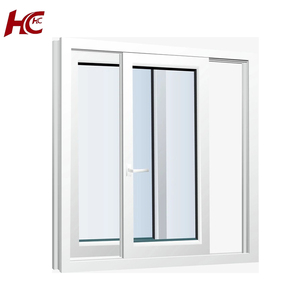
To eliminate the risk of condensation and mold formation—the primary adversary of clean-room prep spaces and luxury residential kitchens—we integrate structural polyamide PA66 glass fiber-reinforced thermal barriers. By physically isolating the interior and exterior aluminum profiles, our systems restrict the thermal bridge, achieving remarkable system U-Factors as low as 1.4 W/m²K (U-Factor 0.25 BTU/hr-sq ft) when paired with argon-filled, warm-edge spacer Low-E insulated glass units (IGU).

Performance Dimension OEM Custom 6063-T6 Aluminum (Our Standard) Generic UPVC / Vinyl Windows Standard Timber / Clad Frames
Structural Tensile Yield ≥ 160 MPa (Engineered for oversize spans) 35 - 45 MPa (Prone to creep & sagging) 40 - 70 MPa (Variable grain stability)
Grease & Oil Cleanability Superior (Fluorocarbon / AkzoNobel Powder) Porous surface absorbs cooking stains Absorptive varnish degrades rapidly
Moisture & Vapor Resistance 100% Impermeable; Zero swelling or rot High thermal movement; seal breakages High swell risk; rot, termites, & sticking
Acoustic Isolation (STC) STC 38 - 45 dB (Laminated Acoustic Glass) STC 28 - 32 dB STC 32 - 36 dB
Design Life Expectancy 40+ Years (Recyclable, zero maintenance) 10 - 15 Years (Chalking and UV embrittlement) 15 - 20 Years (Requires cyclic refinishing)
Strategic Sourcing Analysis

Future Sourcing & Procurement Trends (2025–2030)

Procurement heads, real estate REITs, and general contractors are re-evaluating supply chain resilience and ESG mandates. The market is shifting from commoditized catalog purchases toward engineered, direct-from-factory OEM customization.

Direct-to-Factory Disintermediation

Developers are aggressively bypassing middleman trading houses to eliminate 20-35% price markups. Direct collaboration with our Foshan manufacturing facility ensures end-to-end trace design ownership, precise CAD revision turnaround, and dedicated project engineering.

Certified Code Harmonization

Cross-border project tenders require stringent testing validation before site sign-off. Global procurement demands compliance with Australian AS2047, North American NFRC/AAMA, and European CE standards, backed by batch-tested mill certificates and third-party laboratory audits.

Indoor-Outdoor Fluid Living

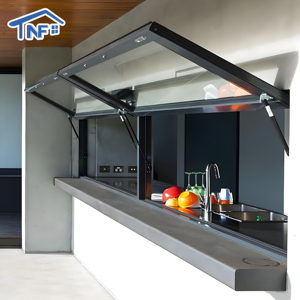
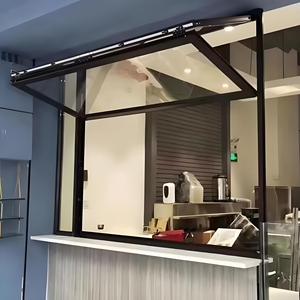
The rapid global ascent of alfresco dining in modern architectural floorplans has elevated the kitchen servery window from a functional aperture to a marquee aesthetic element. Gas strut push-outs and flush-track bifolds now dominate hospitality and luxury residential bid documents.

Innovation Roadmap

Technological Development Trends in Kitchen Fenestration

Next-generation fenestration integrates advanced pneumatics, automated environmental modulation, and surface nanotechnologies engineered for high-heat environments.

Concealed Nitrogen Pneumatics

Moving beyond external bulky hydraulic arms, next-gen servery windows utilize frame-integrated German marine-grade SUS316 gas struts, enabling effortless single-finger 90-degree opening angles with zero visible bracket clutter.

Anti-Oleophobic Nanocoatings

To resolve greasy kitchen residue build-up, our extrusion treatments now feature specialized AkzoNobel Interpon fluorocarbon powder systems and hydrophobic external glass coatings that disperse cooking aerosol droplets with standard water rinsing.

Smart Actuation & IAQ Integration

Automated motorized kitchen sash drives seamlessly communicate with commercial extraction hoods and indoor air quality (IAQ) sensors, deploying rapid micro-ventilation whenever VOC, moisture, or CO2 thresholds spike during intensive culinary prep.

DERCHI Dejiyoupin 180000m² Manufacturing Facility in Foshan
Enterprise Manufacturing Authority

Guangdong Dejiyoupin: Global Architectural Fenestration Powerhouse

Recognized among China's Top 10 premium architectural window and door brands, Guangdong Dejiyoupin Doors and Windows Co., Ltd. (DERCHI) operates a colossal 180,000 m² state-of-the-art production hub with over 600 full-time technical specialists in Foshan, China.

  • 25+ Years of Dedicated Export Mastery: Proven track record delivering verified fenestration packages across North America, Australia, the Middle East, and South Asia.
  • Uncompromising International Validation: Fully certified under CE, ISO 9001, AS2047 cyclonic impact, and UL fire-rating specifications with 30+ patented structural designs.
  • End-to-End OEM Customization: In-house tool-and-die profile extrusion, customized thermal breaks, automated CNC milling, and bespoke color finishes matching RAL, anodized, or fluorocarbon schedules.
  • Engineering-Led Sourcing: Complimentary CAD shop drawings, BIM parameter files, and professional static load calculation reports supplied for every architectural takeoff.
Get Catalog Direct factory supply • CIF/FOB Global Shipments
AS2047, CE, ISO9001, NFRC Fenestration Quality Certifications
Procurement Diligence

Frequently Asked Questions for OEM Fenestration Buyers

Key technical and commercial inquiries routinely resolved for architects, procurement directors, façade engineers, and commercial developers.

What are the minimum structural specifications for an exterior kitchen pass-through gas strut window? +
For safe, cantilevered operation without sagging or deflection, we engineer pass-through windows with high-tensile 6063-T6 aluminum profiles boasting a minimum wall thickness of 2.0mm to 2.5mm. We integrate dual commercial-grade SUS316 stainless-steel pneumatic gas struts calibrated explicitly to the weight of the double-glazed IGU (typically 5mm+12A+5mm or 6mm+16A+6mm tempered glass). Furthermore, our perimeter multi-point locking cams draw the sash tight against continuous co-extruded EPDM marine gaskets, ensuring absolute air and water impermeability when locked during severe weather.
How does your factory prevent thermal condensation along the window frame over kitchen sinks? +
Condensation occurs when moist, warm indoor cooking vapor strikes a cold, uninsulated metal frame. We resolve this by integrating structural polyamide PA66 fiberglass-reinforced thermal break strips (24mm to 34mm wide) into our aluminum extrusions. This divides the frame into distinct interior and exterior thermal zones. When specified alongside double or triple-glazed Low-E insulated glass filled with argon gas and warm-edge warm composite spacers, frame condensation is virtually eliminated, keeping interior sill zones dry, hygienic, and free of mildew.
Can you manufacture custom dimensions and color finishes to match project-specific schedules? +
Yes, 100% of our production is made-to-order. Our engineering division reviews your window schedule, elevations, and CAD drawings, producing shop drawings with verified tolerances. For architectural surface treatments, we offer AkzoNobel powder coating (with guarantees up to 20 years), electrodeposition anodizing, PVDF fluorocarbon coatings designed for extreme salt-spray marine environments, and high-definition thermal transfer Italian wood-grain finishes that match indoor kitchen cabinetry aesthetics.
What compliance certifications do your aluminum kitchen windows carry for Western import codes? +
Our products undergo full destructive, structural, and cyclical testing in NATA and third-party certified laboratories. We hold Australian AS2047 and AS1288 accreditation (rated through N6 Cyclonic pressures), North American NFRC and AAMA performance compliance certification for air infiltration, water resistance, and U-Factor thermal limits, European CE certifications, and ISO 9001 factory quality management compliance. Full test reports and batch-specific mill certificates are provided upon tender submission.
What packaging protocols protect large glass and finished powder coatings during sea freight? +
Every window unit undergoes a four-tier export packaging regimen: first, a protective peel-off film covers all exposed metal profiles; second, high-density polyethylene (EPE) foam edge-caps protect all four corners; third, units are hermetically wrapped in waterproof shrink-wrap; and fourth, units are palletized inside fully enclosed, fumigated solid-plywood crates with built-in forklift channels. Shock absorbers and desiccant silica gels are embedded to eliminate moisture damage and freight abrasion throughout extended ocean transit.
What is the standard production lead time and typical Minimum Order Quantity (MOQ)? +
Because we control the entire vertical fabrication process across our 180,000 m² facility, our standard lead time for bespoke architectural orders is approximately 25 to 35 business days following final CAD sign-off and deposit receipt. For ongoing residential and commercial construction tenders, our typical MOQ starts at 10 to 20 square meters (or standard custom house lots), and we scale effortlessly to support multi-container shipments for high-rise residential towers and resort complexes.

Transform Your Architectural Fenestration Sourcing

Partner directly with Guangdong Dejiyoupin (DERCHI). Access factory-direct wholesale pricing, complimentary CAD engineering review, and certified building compliance for your next project.

Get Catalog