Acoustic Break
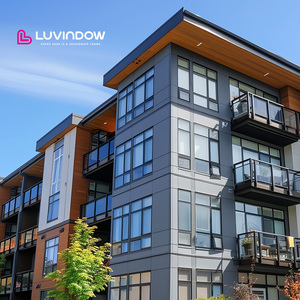
Designed, tested, and fabricated in our 180,000 m² smart factory to satisfy stringent North American, European, and Australian building safety performance standards.
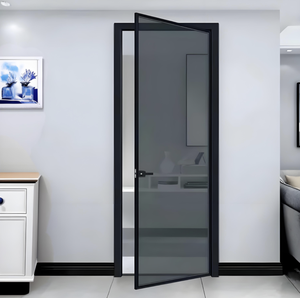
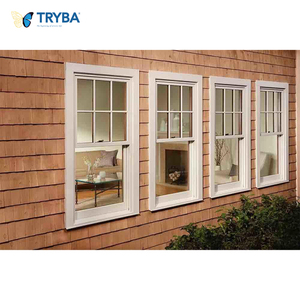
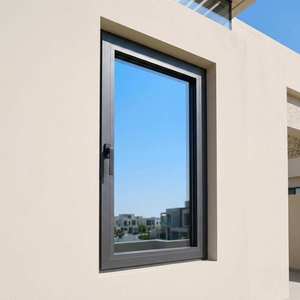
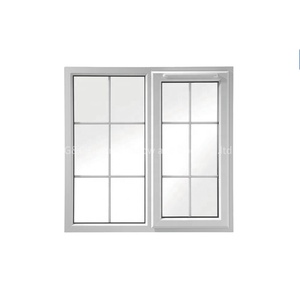
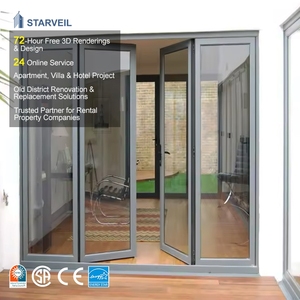
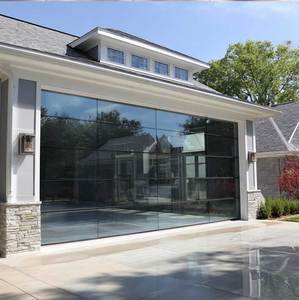
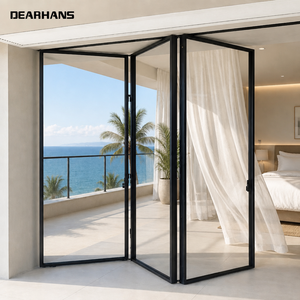
Aluminium-clad timber windows represent the pinnacle of composite fenestration technology: fusing the organic acoustic attenuation and low embodied carbon of multi-laminated timber on the interior with the weatherproof endurance of architectural-grade powder-coated aluminium profiles externally.
| Performance Vector | Architectural Parameter | Standard Metric Value | DERCHI Heavy-Duty Rating |
|---|---|---|---|
| Thermal Transmittance (U-Value) | EN ISO 10077-1 / NFRC 100 | 1.4 – 1.8 W/m²K | Uw ≤ 0.79 W/m²K (Passivhaus Standard) |
| Timber Integrity & Grain | FSC-Certified Grade-A Engineered Lamination | 2-Ply Softwood | 3 to 4-Ply Laminated Oak / Larch / Pine |
| Exterior Cladding Interface | Expansion-Compensated Nylon Clips | Rigid Direct Screwing | Patented Continuous Floating Clip Matrix |
| Acoustic Isolation (Rw) | ISO 717-1 Acoustic Testing | 32 – 35 dB | Rw 42 – 48 dB (Decibel Dampening) |
| Wind Load Resistance | AS 2047 / ASTM E330 Dynamic Pressure | Class 3 (1200 Pa) | N6 Serviceability (Over 4500 Pa) |
| Water Permeability | EN 12208 Hydrostatic Gradient | Class 7A (300 Pa) | Class 9A / E1200 (1200 Pa Dynamic) |
Wood and aluminium feature vastly divergent linear expansion coefficients. DERCHI applies floating composite POM clips that decouple the external 6063-T6 architectural envelope from internal structural timber, completely eliminating internal torsion, stress shearing, and seal cracking during seasonal fluctuations from -35°C to +45°C.
Our aluminum cladding integrates concealed gravity-fed weeping ports and continuous decompression cavities. Condensation is evacuated via engineered micro-gaps before touching moisture-sensitive timber coatings, avoiding wood rot, fungal decay, and adhesive delamination in sub-tropical, monsoon, and oceanic environments.
By implementing three-stage continuous EPDM foamed gaskets, welded frame corners, and specialized acoustic PVB interlayers, our fenestration systems achieve industrial-grade class 4 airtightness and class 9A water tightness under extreme cyclone and typhoon impact test criteria.
Fenestration sourcing is pivoting rapidly from cosmetic styling to quantifiable life-cycle metrics, embodied carbon verification, and smart micro-environmental envelope management.
International tenders now actively mandate Environmental Product Declarations (EPD). OEMs that deliver certified chain-of-custody FSC/PEFC timber merged with low-carbon hydro-smelted aluminium secure top ESG project approvals across commercial developments.
Procurement directors demand parametric digital twins with embedded manufacturing tolerances. DERCHI provides native Revit/IFC parametric data models that populate schedules directly into contractor BIM pipelines, compressing shop-drawing turnaround times by up to 60%.
High-end residential and commercial builds are increasingly specifying fully concealed actuators, magnetic state sensors, and electrochromic dynamic solar control glass directly connected to central Building Management Systems (BMS).
Driven by modern luxury architectural demands, timber-clad frames are adopting flush-mounted sashes and step-glazed outer panels that create expansive floor-to-ceiling glass faces without sacrificing core structural perimeter strength.
Operating across an integrated 180,000 m² advanced fenestration manufacturing base, DERCHI delivers precision fabrication, custom parametric profiles, and dependable logistics for landmark worldwide projects.
From preliminary structural analysis and thermodynamic finite element modeling to bespoke extruded aluminum tooling and 5-axis CNC timber machining, our in-house R&D center transforms architectural sketches into verified physical assets.
Our systems possess comprehensive CE, ISO 9001, AS 2047 (N6 cyclone rating), and UL Fire Door certifications. Each batch undergoes multi-chamber air/water infiltration, acoustic dampening, and cyclic wind loading before packaging.
Supplying major contractors throughout North America, Europe, Australia, and South Asia (India, Pakistan, Bangladesh, Sri Lanka). We arrange FOB/CIF freight directly to ports like Nhava Sheva, Mundra, and Karachi, packed in reinforced steel-bracketed crates.
Crucial commercial and technical clarifications for developers, architects, general contractors, and trade importers sourcing custom aluminum clad timber systems.
Access custom profile sections, acoustic and thermal test reports, BIM libraries, and commercial project quotations directly from our senior technical engineering desk.