High-Performance Aluminum Doors with Side Window Configurations
Engineered for luxury villas, commercial developments, and high-wind coastal environments. Explore our OEM/ODM systems built with certified 6063-T5/T6 structural alloys.
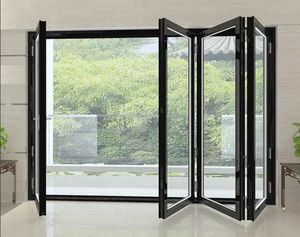
Aluminium Doors and Windows Luxury Insulated Tempered Glass Aluminum Profile Patio Sliding Folding Door
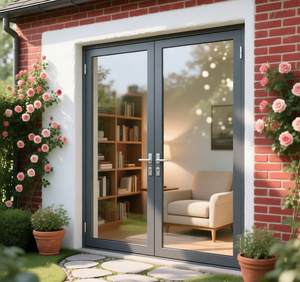
80 Series Modern Black Frame Aluminum Alloy Glass Doors For Residential Hurricane Resistant Waterproof
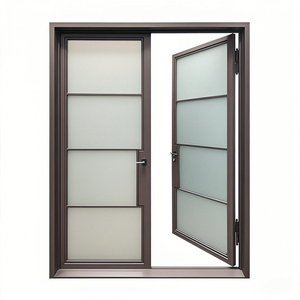
Villa Interior Aluminium Double Glazed French Door Luxury Hotel Garden Veranda Entrance Casement Door
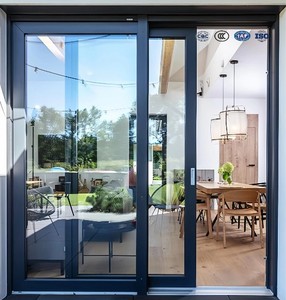
Modern Aluminum Alloy Sliding Windows And Doors with Tempered Glass Soundproof Exterior Use
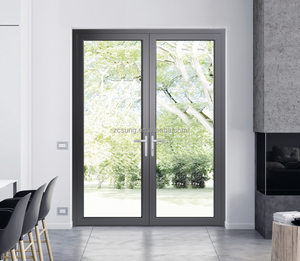
Manufacturer Custom Size Casement Entry Aluminium Doors with Tempered Glass Panel Soundproof Waterproof
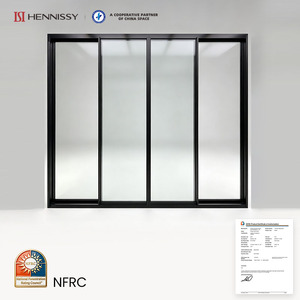
Modern NFRC Certified Thermal Break Aluminum Sliding Glass Door Low-E Double Glazed U-value 1.7
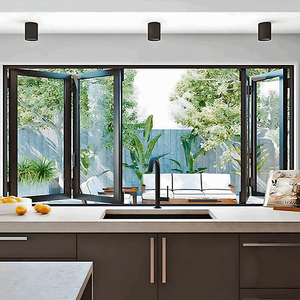
Aluminum Folding Window Commercial Tempered Glass Accordion Vertical Folding Modern Exterior Villa Bifold
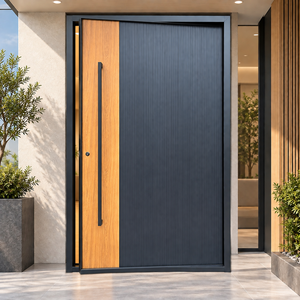
Modern Anti-Theft Swing Wood Grain Full Aluminum Entrance Door Houses Hotels Villa Main Entry
Why Tier-1 Developers & Glazing Contractors Partner With DERCHI
Operating a modernized 180,000 m² smart manufacturing ecosystem in Foshan, China. We bridge European fenestration physics with scalable OEM/ODM mass customization.
Monolithic Mullion Engineering
Reinforced vertical couplers engineered with heavy-gauge internal steel and structural aluminum sub-chambers, resisting positive/negative wind pressures up to 4500 Pa across extra-tall 3.5m+ entrance portals.
Stringent Global Certifications
DERCHI systems are fully tested and certified under CE (EN 14351-1), Australian AS 2047 (N6 Cyclonic rating), North American NFRC thermal standards, and UL fire-rated core assemblies.
Full CAD / BIM Shop Drawings
Dedicated project engineers deliver parametric BIM models and structural section shop drawings within 24-48 hours, detailing perimeter anchorage, expansion allowances, and sill drainage channels.
FOB/CIF Global Export Logistics
Direct ocean freight shipping to worldwide deep-water hubs including Nhava Sheva, Karachi, Colombo, Singapore, Jebel Ali, Rotterdam, and Los Angeles with reinforced heat-treated export crates.
Technical Architecture: Integrating Side Windows (Sidelights) into Aluminum Doors
Comprehensive fenestration analysis covering structural load deflection, thermal bridge continuity, and acoustic decoupling.
Modern architectural entry design increasingly demands grand openings that integrate high-transmittance side windows (sidelights) and overhead transoms with active door leafs. When combining a dynamic moving element (the door) with static glass panels (the sidelight) within a shared structural portal, fenestration engineers encounter severe mechanical shear stresses, uneven thermal expansion coefficients, and air/water infiltration vulnerabilities at the joint mullions.
1. Mullion Coupling & Deflection Physics
Traditional wood and lightweight vinyl assemblies fail prematurely because the dynamic impact of door slamming vibrates the adjoining glass frame, accelerating sealant degradation. DERCHI's proprietary heavy-duty couplers utilize extruded 6063-T6 aluminum alloys featuring multi-cavity chambers. Inside the primary structural mullion, internal shear pins and steel reinforcement bars provide torsional rigidity, isolating the sidelight glazing bead from repetitive dynamic operational forces.
| System Parameter | Standard Commercial Grade | DERCHI Heavy-Duty Architectural Grade | Test / Design Compliance Standard |
|---|---|---|---|
| Aluminum Profile Alloy & Temper | 6063-T5 (Wall thickness 1.4mm - 1.6mm) | 6063-T6 High-Strength (Wall thickness 2.0mm - 3.0mm) | ASTM B221 / GB 5237 |
| Thermal Barrier Technology | PVC / Low-spec Polyamide (14.8mm) | PA66GF25 Insulbar Polyamide (24mm - 34mm multi-chamber) | EN 14024 / DIN 52619 |
| Overall Thermal Transmittance (U-Value) | 2.8 - 3.5 W/m²·K (1.59 BTU/h·ft²·°F) | 1.3 - 1.7 W/m²·K (0.23 - 0.30 BTU/h·ft²·°F) | NFRC 100/200 / ISO 10077-1 |
| Acoustic Attenuation (Rw / STC) | STC 28 - 32 dB (Single laminate) | STC 42 - 46 dB (Acoustic laminated double/triple IGU) | ASTM E90 / ISO 717-1 |
| Maximum Structural Wind Load | 1800 Pa - 2400 Pa (Standard Residential) | Up to 4500 Pa (AS 2047 N6 Cyclonic / TAS 202 Impact) | ASTM E330 / AS 2047 |
| Water Tightness Under Dynamic Head | 300 Pa - 450 Pa | 700 Pa - 900 Pa (Equalized pressure cascade sill) | ASTM E331 / EN 12208 |
2. Thermal Break Alignment & Thermal Bridging Mitigation
A frequent flaw in low-cost OEM doors with side windows is the thermal short-circuit caused by misaligned insulating struts. If the thermal break strip of the door leaf does not align on an identical isothermal plane with the sidelight frame, an interior condensation gutter forms along the vertical mullion. DERCHI's custom-tooled profiles align European PA66GF25 structural polyamide struts across the entire jamb, mullion, and threshold matrix, ensuring continuous isothermal boundaries that prevent thermal bridging even under interior/exterior temperature deltas exceeding 50°C.
3. Dynamic Air-Water Cascading Drainage Architecture
In monsoon-prone and coastal zones, water leakage along door thresholds is catastrophic. DERCHI implements a three-tier pressure equalization cavity design. Heavy wind pressure drives external water into a pre-chamber where kinetic energy is dissipated; gravity drains the runoff via concealed one-way weep valves, while vulcanized continuous EPDM rubber gaskets maintain a hermetic airtight boundary against the door and sidelight sashes.
Emerging B2B Procurement Trends in Architectural Entrance Systems (2025–2030)
Strategic analysis for procurement directors, commercial contractors, and facade engineers sourcing next-generation fenestration.
1. Low-Carbon Recycled Aluminum Billets
Global environmental mandates (including EU CBAM and LEED v4.1 certification) are shifting demand toward fenestration certified with Low-Carbon Primary Aluminum (<4.0 kg CO₂/kg Al) and post-consumer recycled alloys. Sourcing from certified smelters reduces project Scope 3 embodied carbon footprint.
2. Smart Sidelight Privacy & IoT Access Control
The integration of Polymer Dispersed Liquid Crystal (PDLC) switchable smart glass into the side windows is accelerating. Coupled with biometric facial recognition and concealed magnetic multi-point latching concealed in the door jamb, entrance systems now operate as smart security nodes.
3. Ultra-Slim Sightline Engineering
Driven by minimalist architectural trends, visible aluminum sightlines at the door-to-sidelight coupling are reducing from 120mm+ down to 45mm-65mm without sacrificing structural load capability, achieved via concealed structural ribs and high-modulus structural silicones.
4. Passive House Envelope Performance
Energy codes in North America (IECC 2024) and Europe (EPBD) require entrance fenestration to approach Passive House standards (Uw ≤ 0.80 W/m²·K). This necessitates aerogel-insulated profile chambers, vacuum-insulated glass (VIG) sidelights, and triple thermal gaskets.
5. Modular Prefabrication & Site Plug-and-Play
High on-site skilled labor costs in overseas markets are pushing developers toward fully unitized OEM assemblies. Sidelights and active doors are pre-assembled, glazed, and laser-calibrated at the Foshan factory, reducing site installation schedules by over 60%.
Supplier Qualification Checklist: Evaluating China Aluminum Door Manufacturers
Critical audit points to verify engineering competence, raw material traceability, and export reliability.
Extrusion & Powder Coating Purity
Verify that the supplier uses 100% prime A00 aluminum ingots rather than remelted scrap aluminum. Surface finishes must adhere to Qualicoat Class 2 or AAMA 2605 specifications (fluorocarbon PVDF resin ≥ 70%), ensuring minimum 20-year color retention under severe UV exposure.
Corner Joint Jointing & Crimping Tech
Demand automated hydraulic 45-degree corner crimping with heavy cast corner brackets, injected with two-part polyurethane structural adhesive (epoxy glue). Inferior mechanical screw-only joining will sag, twist, and cause air leaks within 24 months of heavy operation.
Glazing Specification & Edge Seals
Ensure side window glass panels carry SGCC (USA), CE EN 12150, or AS/NZS 2208 certifications. Insulated glass must feature dual-seal perimeter technology: primary polyisobutylene (PIB) vapor barrier with secondary structural silicone, desiccant-filled warm-edge spacers.
Frequently Asked Questions on Sourcing Aluminum Doors with Side Windows
Authoritative technical answers to assist developers, general contractors, and fenestration importers.
What are the maximum structural dimensions for an aluminum pivot/hinged door with integrated side windows?
How do you guarantee air-tightness and water-tightness at the vertical mullion joint between door and sidelight?
Can the sidelight window be operable (casement or tilt-and-turn) or is it restricted to fixed glazing?
What anti-burglary / forced-entry ratings do DERCHI aluminum entrance door systems hold?
How does your factory prevent ocean freight corrosion and profile scratching during long sea voyages?
What is the standard OEM/ODM production lead time for custom architectural door schedules?
Launch Your Custom OEM/ODM Aluminum Door Project
Connect directly with DERCHI's senior fenestration engineers in Foshan. Send your door schedules, architectural CAD plans, or structural wind load specifications for a complimentary B2B quotation and engineering review.