Featured Commercial & Residential Fenestration Systems
From minimalist ultra-slim interior partitions to heavy-duty thermal-break exterior pivot gates, our Guangdong automated manufacturing facility designs, extrudes, tests, and ships bespoke architectural products directly to developers and contractors worldwide.
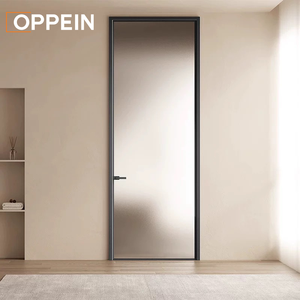
Modern Frosted Glass Interior Door Slim Aluminum Frame Privacy Door
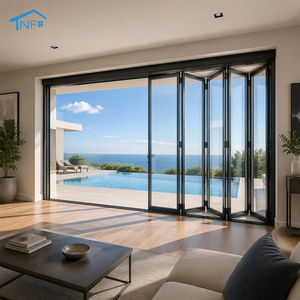
NF Patio Double Glass Exterior Accordion Folding Door Aluminium Bifold Doors
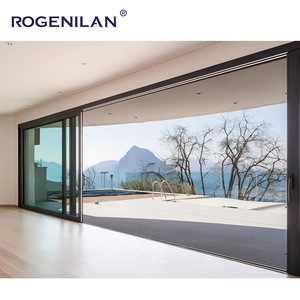
ROGENILAN Double Glazed Heavy Duty Lift and Sliding Patio Door
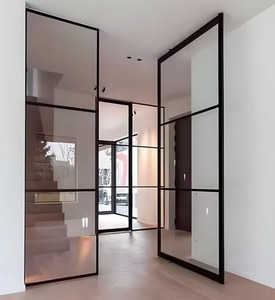
Aluminum Glass Pivot Door Modern Home Main Entrance Security Door
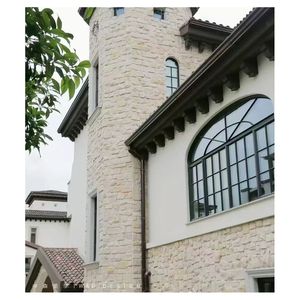
French Style Crittall Arched Grid Casement Windows for Luxury Villas
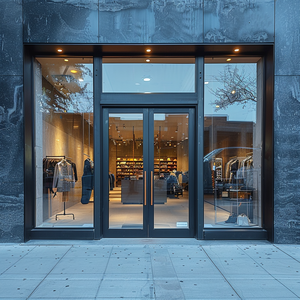
Commercial Doors Sliding System Aluminum Frame Storefront Door
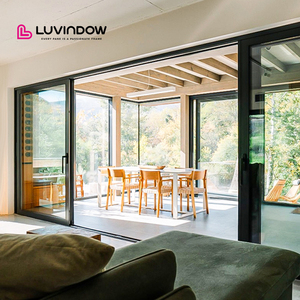
Thermal Break Aluminum Lift and Slide Door Triple Glazed Low-E Glass
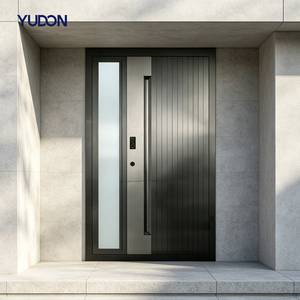
Luxury Aluminum Single Leaf Main Entrance Door with Video Intercom
Guangdong Dejiyoupin (DERCHI): Foshan Industrial Cluster Authority
Ranked consistently among China's Top 10 fenestration fabrication hubs, our 180,000 square meter integrated industrial complex delivers complete vertical synergy—from raw billet extrusion and fluorocarbon powder coating to multi-axis CNC fabrication and seismic testing.
Direct Source Engineering: Eliminating Intermediate Vulnerabilities
Unlike export traders and assembly-only workshops, DERCHI maintains total metallurgical and dimensional control over our 6063-T5 and 6063-T6 aluminum alloys. Every batch of primary ingot undergoes spectrometer chemical analysis prior to high-tonnage hydraulic extrusion, ensuring zero structural inclusions or molecular degradation that lead to frame twisting under extreme atmospheric loads.
Our localized supply chain located in Shishan Town, Nanhai District, Foshan enables agile lead times on custom dies, reducing tooling incubation from industry averages of 45 days down to just 14 business days. This allows architectural partners to prototype, validate, and scale customized profiles with zero geometric compromises.
- Certified Compliance: AS 2047 N6 cyclone-rated wind tests, ISO 9001 certified QA management, CE structural conformity, and UL 10C 90-minute fire-rated assemblies.
- Precision Surface Processing: In-house horizontal and vertical electrostatic powder coating lines running AkzoNobel Interpon D2525 and PPG fluorocarbon PVDF finishes (exceeding AAMA 2605 specifications).
- End-to-End BIM/CAD Prototyping: Dedicated structural calculation engineers generating complete shop drawings, finite element wind load analyses, and thermal deflection modeling free of charge.

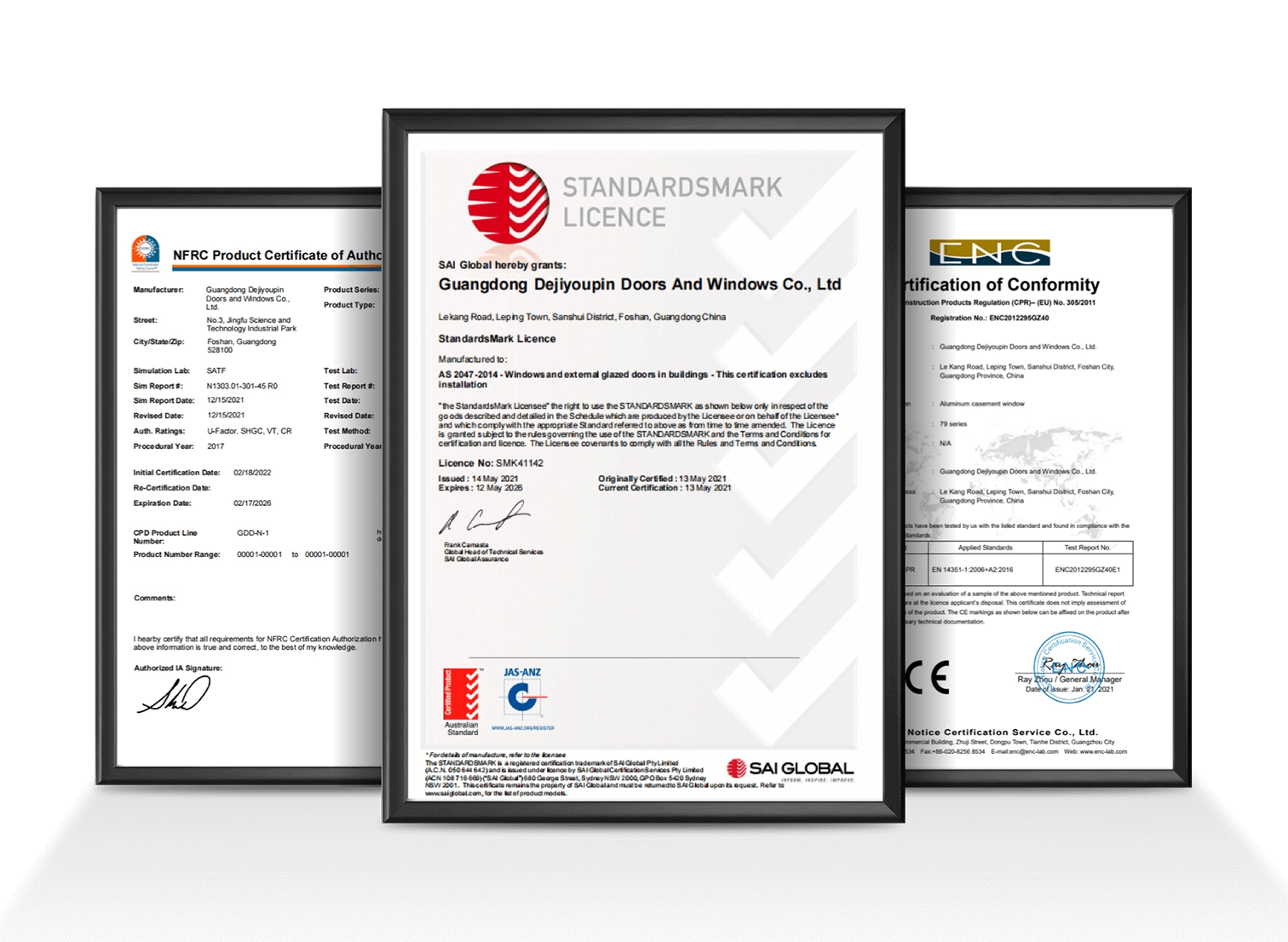
Rigorous Quality Assurance: From Chemical Assays to Pre-Assembly Dry Runs
Architectural failure at high elevations or severe coastal fronts is non-negotiable. To eliminate on-site rework for overseas developers, every single fenestration set completed under our OEM/ODM umbrella undergoes factory-floor mock assembly before packaging.
Our quality verification protocol spans three mandatory checkpoint phases:
- Raw Metallurgy & Polyamide Bar Tensile Verification: Checking PA66 GF25 thermal breaks for transverse tensile strength exceeding 120 N/mm.
- Hermetic Chamber Pressure Validation: Water penetration testing calibrated to dynamic wind gusts up to 700 Pa following ASTM E331 and EN 12208 criteria.
- Hardware Kinetic Durability Cycling: Concealed pivot hinges, roller assemblies, and multipoint locks cycle-tested to 100,000 rotations without bearing slop or sag.
Future B2B Procurement Trends in Commercial Aluminum Systems
Architectural envelope procurement is pivoting away from disconnected component buying toward high-performance system integration. Global supply chains in North America, Europe, Australia, and South Asia demand unprecedented sustainability metrics, cyclonic durability, and turnkey fabrication.
1. Decarbonization & Low-Carbon Recycled Billets
Regulatory mandates like the EU Carbon Border Adjustment Mechanism (CBAM) and US LEED v4.1 certification are altering procurement balance sheets. Modern commercial RFPs now mandate Environmental Product Declarations (EPDs). Sourcing from facilities capable of casting certified secondary or hydro-powered aluminum with carbon intensities below 4.0 kg CO2e per kg of primary billet is rapidly becoming the dominant tender qualification criterion.
2. Extreme Weather Resilience & AS 2047 N6 Standards
Intensifying climatic volatility has catalyzed stricter engineering standards across coastal hurricane corridors and monsoonal belts (Florida HVHZ, Northern Australia Region D, Coastal South Asia). Sourcing teams are phasing out generic residential sections in favor of heavy-wall extrusions (≥2.0mm to 3.0mm thickness) capable of sustaining design wind pressures surpassing 4500 Pa, with zero structural failure under cyclical loading.
3. Smart Architectural Automation & Concealed Hardware
The boundary between mechanical hardware and building automation has dissolved. Premier commercial developments prioritize factory-integrated automated multi-point electronic latching, motorized concealed lift-slide track systems, and flush-threshold pivot doors interfaced with centralized BMS (Building Management Systems) via biometric, RFID, and BACnet protocol networks without visible exterior raceways.
4. Single-Source Fenestration Envelope Consolidation
Developers are eliminating multi-vendor coordination failures by partnering directly with full-spectrum OEM factories that fabricate entrance pivot doors, sliding bifold facades, curtain walls, casement windows, and insulated garage gates under one contract. This consolidated model compresses container drayage costs, guarantees matching surface finishes, and aligns project delivery timetables.
5. Digital CAD/BIM Verification Prior to Extrusion
Physical trial-and-error during construction is being replaced by 3D digital twinned scheduling. Leading procurement managers require suppliers to deliver comprehensive IFC/Revit families that populate directly into architecture models, verifying threshold transitions, water table clearances, and perimeter expansion joints before cutting structural aluminum billets.
Engineering Metallurgy & Thermodynamics of High-Performance Systems
Designing durable architectural systems requires an exact synthesis of thermal break mechanics, alloy composition, surface passivation, and low-emissivity glass assembly.
Thermal Insulation: The Polyamide 66 Structural Barrier
Aluminum exhibits an intrinsic thermal conductivity of roughly 160 to 200 W/m·K. To prevent dramatic interior heat loss in sub-zero climates or intensive AC cooling drain in tropical regions, thermal decoupling is mandatory. DERCHI systems utilize glass fiber reinforced Polyamide 66 (PA66 GF25) thermal struts crimped between exterior and interior aluminum extrusions.
By engineering multi-chambered isolator cavities equipped with low-density expanded polyolefin foam inserts, we drop overall frame U-values (Uf) down to 1.3 W/m²·K. This system eradicates interior condensation, mitigates the "cold-wall effect," and significantly cuts the HVAC operational costs of commercial complexes.
Furthermore, because the linear thermal expansion coefficient of PA66 GF25 closely matches that of structural aluminum (2.3 × 10⁻⁵ K⁻¹), thermal stress cracking, frame delamination, and gasket shearing under diurnal temperature swings of ±40°C are eliminated.
Surface Chemistry: Fluorocarbon PVDF vs. Architectural Anodization
Atmospheric salinity in coastal projects quickly corrodes low-grade architectural finishes. Our manufacturing facility applies dual surface treatment pathways conforming strictly to AAMA 2604 and AAMA 2605 criteria:
1. Kynar 500 / Hylar 5000 PVDF Liquid Coatings: A continuous multi-coat fluoropolymer resin system baked at 230°C. Resists ultraviolet photodegradation, chalking, and industrial sulfur dioxide exposure, retaining 95% gloss retention over 20+ years of severe direct tropical sun.
2. Class I Architectural Hard Anodizing: An electrochemical conversion coating producing a controlled aluminum oxide surface film layer (≥25 microns thickness). Integrated with organic dye impregnations, this creates a diamond-hard exterior resistant to windborne sand abrasion and saltwater oxidation.
System Comparative Technical Matrix
| System Classification | Alloy & Temper | Thermal Barrier | Standard U-Value (Uw) | Water Tightness | Wind Load Resistance | Target Certifications |
|---|---|---|---|---|---|---|
| Ultra-Slim Interior Sliding Door | 6063-T5 (1.8mm) | Non-Thermal / Monolithic | 3.8 - 4.2 W/m²K | 150 Pa | 1200 Pa | CE / ISO 9001 |
| Heavy-Duty Lift & Slide Door | 6063-T6 (2.2mm) | PA66 GF25 24mm Strut | 1.4 - 1.8 W/m²K | 600 Pa | 3500 Pa | AS 2047 / NFRC |
| Passive House Casement Window | 6063-T6 (2.0mm) | Multi-Cavity PA66 35mm | 0.8 - 1.1 W/m²K | 900 Pa | 4500 Pa | CE / PassiveHouse |
| Monumental Pivot Entrance Door | 6060-T66 (3.0mm) | Thermal Break + Aero Core | 1.2 - 1.5 W/m²K | 450 Pa | 4000 Pa | UL 10C / CE / AS |
| Exterior Accordion Bifold System | 6063-T5 (2.5mm) | Dual PA66 GF25 Strut | 1.6 - 2.0 W/m²K | 500 Pa | 3000 Pa | AAMA / AS 2047 |
B2B Fenestration Procurement: Frequently Asked Questions
Clear, technically verified answers addressing structural engineering, tooling lead times, international freight, compliance documentation, and multi-unit project scaling.
What is your standard production lead time for custom OEM extrusion dies and volume batch runs?
How does DERCHI ensure thermal and acoustic performance compliance for strict local energy codes?
What structural alloy compositions and wall thicknesses are applied across high-rise window systems?
Can your facility fabricate oversized monumental pivot doors, and what hardware systems are utilized?
What export ocean packaging standards are used to protect heavy glass assemblies during maritime transit?
Are DERCHI fenestration products tested and certified for cyclonic coastal zones (AS 2047, Florida HVHZ)?
Can you customize finishes to match exact architect RAL color specifications and woodgrain textures?
What are the key differences between lift-and-slide systems versus conventional inline sliding doors?
How are project warranty claims and spare hardware components serviced internationally?
What specific engineering data must be submitted to obtain an accurate commercial project quote?
Partner Directly with Our Foshan Engineering Facility
Accelerate your project schedule, eliminate middleman markups, and protect structural performance with our turnkey OEM/ODM architectural systems. Our multilingual engineering team stands ready to review your schedules, build custom extrusion profiles, and output precise CAD mockups.