High-Performance Exterior Storm & Architectural Fenestration Systems
Explore our export-ready, structural-grade aluminum exterior storm window units, high-durability terrace sliders, and heavy-duty building envelope systems designed for rigorous weatherproofing.
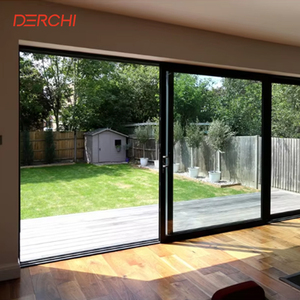
Residential House Sliding Panoramic Tempered Low-E Glass Storm Door
- Alloy Spec: 6063-T6 Extrusion
- Glazing Unit: Double Low-E Tempered
- Air Permeability: Class 4 (EN 12207)
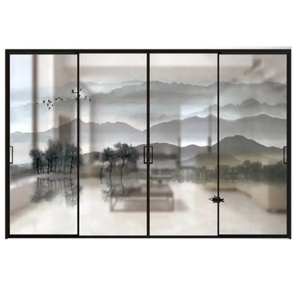
Aluminum Alloy Ultra-Narrow Sightline Secondary Frame Sliding System
- Sightline Width: 16mm Slim Interlock
- Surface Coating: Fluorocarbon PVDF
- Cycle Testing: 100,000 Openings
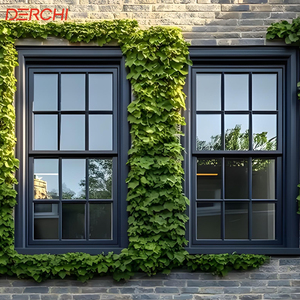
Commercial Double Hung Insulated Vertical Sliding Exterior Storm Window
- Wind Load: ASTM E330 4500 Pa
- Counterbalance: Spiral Tension System
- Acoustic Rating: STC 38 / OITC 32
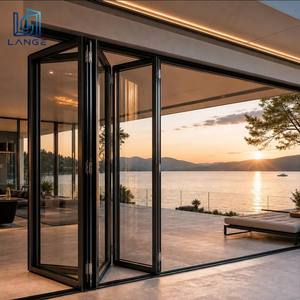
Soundproof Double-Glazed Multi-Slide Folding Exterior Storm Barrier
- Gasket Seal: Continuous EPDM Duo
- Thermal Barrier: Polyamide PA66 GF25
- Sound Attenuation: Rw = 42 dB
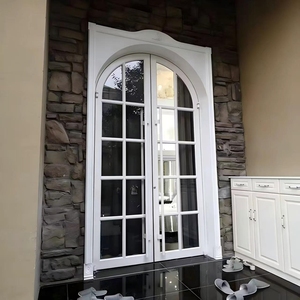
Commercial Aluminum Storefront Hurricane & Storm Impact Entrance System
- Frame Depth: 100mm Heavy Profile
- Water Penetration: 720 Pa (BS EN 12208)
- Corner Joint: Reinforced Hydraulic Crimp
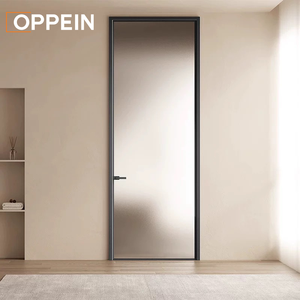
Architectural Slim-Frame Internal Storm-Tight Screen & Partition Unit
- Wall Thickness: 2.0mm High Rigidity
- Anodizing Grade: Qualanod Class 20
- Hardware: Concealed Multi-Point
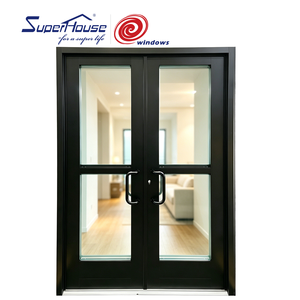
Superhouse Spec NFRC Double-Glass French Storm Envelope Door
- Thermal U-Factor: 1.4 W/m²K (NFRC 100)
- SHGC: 0.24 Optimized
- Locking System: 5-Point German Hardware
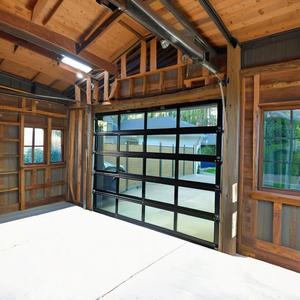
Reinforced Aluminum Storm-Resistant Glazed Facade & Garage Entry System
- Wind Resistance: AS/NZS 1170.2 Tier 5
- Safety System: Anti-Drop Auto Lock
- Panel Infills: Laminated Impact Glass
Engineering Physics: The Structural and Aerodynamic Integrity of Exterior Storm Windows
In commercial and high-density residential building envelopes, fenestration assemblies represent the most thermally vulnerable and structurally volatile aperture of an exterior wall system. An OEM/ODM aluminum exterior storm window is not merely an auxiliary weather flap; it is a meticulously calculated secondary envelope component functioning as an aerodynamic pressure equalizer, acoustical isolator, and thermal deceleration buffer. By shielding primary legacy fenestration from extreme windward mechanical stresses and cyclonic precipitation, precision-machined aluminum storm systems dramatically elevate overall building longevity while drastically curtailing building life-cycle carbon expenditure.
When secondary glazing systems are installed outside prime sashes, they construct an interstitial insulating air cavity (typically calibrated between 40mm and 90mm). This dead-air layer effectively arrests convective heat exchange, significantly dropping the overall Fenestration U-Factor from an unacceptable baseline of 5.8 W/(m²·K) down to below 1.6 W/(m²·K). Furthermore, when high-wind events induce dynamic fluctuating positive stagnation pressures on a facade, the aluminum storm sash takes the brunt of the kinetic energy, transferring structural loads directly to the rough structural masonry or steel subframe via engineered anchorage anchors rather than the vulnerable primary window frames.
From a metallurgical perspective, our OEM/ODM fabrication leverages high-tensile Alloy 6063-T5 and 6063-T6 architectural grade aluminum extrusions. These alloys feature exceptional yield strength (≥ 170 MPa), superior tensile capacity (≥ 215 MPa), and optimum extrudability for tight profile dimensional tolerances (conforming to EN 755-9 precision parameters). To counteract micro-fissuring and galvanic corrosion in coastal zones laden with sodium chloride aerosols, our extrusions undergo specialized chemical pretreatment (chromate-free zirconium passivations) followed by multi-layer fluorocarbon (PVDF) electrostatic baking or architectural-grade Qualicoat Class 2 powder coating systems.
Hydrostatic De-watering Logic
Engineered with dual-plane offset weep-holes combined with anti-reverse baffling membranes. This pressure-equalized rainscreen design neutralizes negative indoor pressure suction, draining wind-driven deluge at rates up to 300 mm/hour without internal spillover.
Multi-Tier Acoustic Damping
By decoupling the exterior sound wave vibration through dissimilar glazing thicknesses (e.g., 6mm exterior laminated storm glass paired with an air cavity and 5mm interior prime pane), our storm window assemblies attenuate traffic and ambient decibels by up to Rw 43 dB.
Kinetic Wind Load Absorption
Calculated structural inertia moments ($I_{xx}$ and $I_{yy}$) engineered to withstand gust velocities exceeding 250 km/h (Category 5 hurricane ratings). Sash deflection is kept strictly below L/175 according to international commercial facade codes.
Future Sourcing Trends for Architectural Storm Windows (2025–2030)
Procurement directors, general contractors, and overseas building material distributors face evolving building codes, carbon accounting standards, and geopolitical supply reconfigurations.
Strict Building Decarbonization Mandates
Municipal codes across North America and Europe (such as the revised EPBD and local building performance standards) penalize inefficient thermal envelopes. Institutional buyers are pivoting toward exterior storm windows as a low-disruption, high-ROI alternative to complete window tear-outs, achieving historical facade preservation while satisfying stringent net-zero operational carbon limits.
Consolidated OEM/ODM Direct Contracting
Middlemen and third-party import brokers are being bypassed. Enterprise developers and regional fenestration suppliers require direct factory engineering engagement. Direct OEM partnerships afford live CAD/BIM revisions, structural calculations signed by certified facade engineers, and custom die extrusions that integrate flawlessly with localized architectural opening details.
Resilience Against Super-Storm Frequency
As tropical depressions and coastal typhoons intensify in frequency across the Caribbean, the Gulf Coast, Oceania, and Southeast Asia, procurement schedules mandate verified cyclic water-tightness at continuous pressures beyond 700 Pa. Specifiers now request pre-shipment laboratory third-party hydrostatic certificates before container staging.
Next-Generation Technological Innovations in Aluminum Exterior Fenestration
Continuous investment in metallurgical chemistry, smart sealing kinematics, and precision robotics is redefining the threshold of secondary envelope performance.
Aerogel-Infused Thermal Breaks
Moving beyond conventional uninsulated hollow sections, modern storm window designs implement reinforced polyamide (PA66 GF25) thermal struts infused with nanoporous silica aerogels. This achieves a thermal conductivity value as low as $\lambda \le 0.018$ W/(m·K), virtually eliminating frame thermal bridging in extreme sub-zero continental climates.
Magnetron Sputtered Multi-Low-E Films
Integrating triple-silver Magnetron Sputtered Vacuum Deposition (MSVD) Low-E coatings directly into the storm sash glass. These ultra-thin metallic stacks selectively reflect long-wave infrared radiation while transmitting up to 74% visible light, striking a calibrated equilibrium between solar heat gain coefficient (SHGC) control and daylighting performance.
Robotic CNC Corner Crimping & Polyurethane Injections
Traditional mechanical screw corner fastening often loosens over years of wind racking. Modern manufacturing employs computerized 4-head hydraulic corner crimpers that inject two-component structural polyurethane adhesives into the miter joints, creating monolithic frame corners that eliminate water leakage and structural racking permanently.
Micro-Ventilated Moisture Balancing Valves
One primary historical flaw of field-installed storm windows is interstitial condensation that can decay internal prime woodwork. Advanced R&D incorporates smart hygroscopic membrane relief valves. These dynamic micro-perforated vapor membranes vent latent humidity when the interior cavity reaches elevated vapor pressure, preventing glass fogging while completely blocking exterior liquid ingress.
Guangdong Dejiyoupin Doors and Windows Co., Ltd. (DERCHI)
Headquartered in Foshan, Guangdong—the epicentre of global architectural aluminum manufacturing—Guangdong Dejiyoupin Doors and Windows Co., Ltd. (DERCHI) stands as one of China's top 10 premium architectural fenestration manufacturers. Operating across a sprawling 180,000 square meter industrial park powered by automated German tooling and over 600 veteran facade technicians, we deliver end-to-end bespoke OEM and ODM manufacturing solutions for prestigious residential, civic, and commercial building envelopes.
Our manufacturing ecosystem integrates full vertical engineering: from proprietary aluminum die casting, extrusion profile formulation, high-precision thermal strip insertion, multi-axis CNC profile milling, to robotic sealant application and environmental test laboratory validation. Every production run destined for export undergoes non-negotiable quality staging conforming to CE, ISO 9001, AS 2047 (N6 Cyclonic Rating), and UL Fire-Rated standard specifications.
✓ In-House BIM & CAD Design
Shop drawing delivery within 48 hours for precise architectural review.
✓ Turnkey Container Stacking
Fumigated export-grade wooden framing with shock-resistant moisture desiccant bags.

Frequently Asked Questions by Commercial Buyers & Importers
Comprehensive technical and commercial clarifications to accelerate your procurement workflow and minimize cross-border sourcing risks.
What are the key technical differences between custom OEM extrusion dies and standard catalog dies? +
How does your factory prevent coastal corrosion on storm windows shipped to extreme marine environments? +
What international testing standards and performance certifications back your window systems? +
What is the standard production lead time and logistics packaging procedure for overseas sea freight? +
Can you support customized structural glazing and varied glass package configurations? +
What documentation and support do you provide for project tenders and architectural approvals? +
Ready to Engineer Your Architectural Storm Window Solution?
Send us your architectural window schedules, rough opening measurements, or target performance specifications. Our commercial engineering team will analyze your requirements and deliver a comprehensive factory-direct quotation within 24 hours.