OEM/ODM Aluminum Replacement Windows Manufacturer & Factory
Industrial-Scale Custom Extrusion, Precision Thermal Break Fenestration Systems, and High-Performance Fenestration Engineering for Global Distributors, B2B Contractors, and Commercial Retrofits.
AS2047 N6 & NFRC Tested
ISO 9001 / CE Certified
180,000 m² Manufacturing Facility
Architectural Systems Catalog
High-Performance Replacement Windows & Fenestration Solutions
Engineered to exceed structural deflection, dynamic wind load, and thermal transmission thresholds. Browse our OEM/ODM product matrix configured for commercial retrofit and high-end residential deployment.
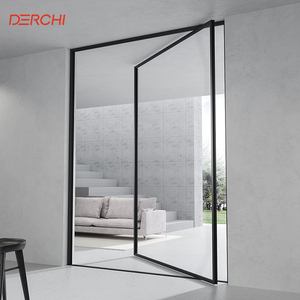
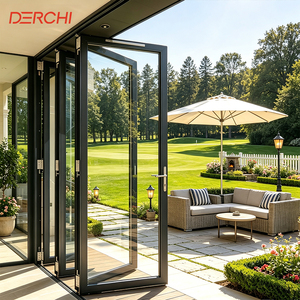
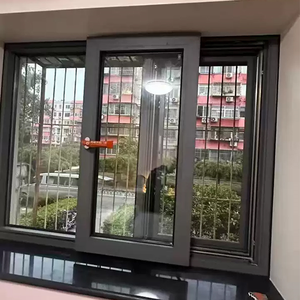
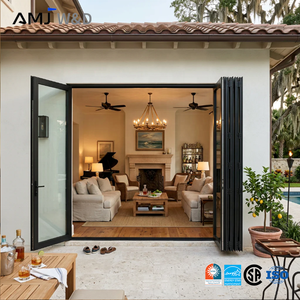
25+
Years Engineering Experience
180,000m²
Smart Manufacturing Base
600+
Technical & Production Staff
100+
Global Patents & Certifications
Technical Whitepaper
Advanced Aluminum Replacement Fenestration Engineering
Modern replacement fenestration requires a systemic balance between structural deflection limiters, thermal barrier chemistry, and architectural acoustic attenuation. Here is how DERCHI addresses mission-critical parameters.
Alloy Metallurgy: Primary 6063-T5/T6 Extrusions
Unlike budget manufacturers utilizing secondary re-melt scrap with high trace iron, DERCHI utilizes 100% virgin billet 6063-T5 and 6063-T6 aluminum alloys. This yields yield strengths surpassing 110-170 MPa, ensuring zero stress-fracture warping during oversized frame retrofits and coastal storm turbulence.
Thermal Barrier Chemistry: Polyamide PA66 GF25
Replacement windows often fail at condensation junctions. We integrate precision multidirectional polyamide strut barriers (PA66 reinforced with 25% glass fiber). This reduces thermal conductivity from aluminum’s native 160–200 W/(m·K) to composite assembly values below 1.6 W/(m²·K), aligning seamlessly with strict Energy Star U-Factor benchmarks.
Severe Dynamic Wind & Water Envelope Sealing
Our replacement frames feature continuous vulcanized EPDM isobaric triple-gasket circuits matched with staggered, hidden weep discharge pathways. Even under 4500 Pa dynamic gust pressures (compliant with AS2047 N6 cyclonic testing), zero pressurized water migration breaches internal sub-sills.

Enterprise Strength
Contact Us
Foshan Direct Manufacturing Powerhouse: Guangdong Dejiyoupin
Operating as a Top 10 fenestration brand headquartered in China's prime industrial manufacturing core (Nanhai District, Foshan), Guangdong Dejiyoupin Doors and Windows Co., Ltd. (DERCHI) combines end-to-end tooling, CNC cutting, automated glass bonding, and testing laboratories across a massive 180,000 m² footprint.
Full OEM/ODM CAD & 3D Prototyping
Direct B2B Pricing Without Trading Markups
NFRC, CE, AS2047, ISO9001 Compliance
Seaworthy Foam & Plywood Crate Packing
Industry Foresight
Future Procurement Trends in Architectural Aluminum Windows
Global commercial procurement mandates are pivoting dramatically. Leading real estate developers, contractors, and national distributors must calibrate their supply chains to satisfy evolving building codes and decarbonization directives.
Low-Carbon Embodied Billet Procurement
Global standards such as LEED v4.1 and EU CBAM are forcing importers to demand certified low-carbon recycled aluminum profiles. Future contracts will hinge on EPD (Environmental Product Declarations) certifying sub-4.0 kg CO2 per kg aluminum alloy smelting.
Ultra-Narrow Sightlines with Extreme Load Capacity
Architects are rejecting bulky 90mm profile sightlines in favor of 25mm–38mm minimalist frames. This trend requires precision structural silicone glazing (SSG) and structural alloy heat treatments that maintain deflection tolerances under cyclonic loading.
Smart Sensor & Motorized BMS Integration
Windows are no longer static elements. Replacement fenestration increasingly integrates concealed micro-actuators, automated tilt-and-turn drives, and IoT environmental sensors connected directly to Building Management Systems (BMS) for passive cooling optimization.
Procurement Knowledge Hub
Frequently Asked Questions for B2B Importers & Specifiers
Clear, unambiguous answers addressing lead times, certifications, structural performance, and custom OEM engineering parameters.
What are the key differences between replacement retrofit frames and new-construction nail-fin systems?
Replacement (retrofit) aluminum windows utilize block frames, flush fins, or Z-bar exterior renovation trims designed to slide directly into existing structural openings or deteriorated timber/steel sub-bucks without tearing apart exterior masonry, siding, or interior drywall. New construction frames incorporate integrated perimeter nail fins (set back 1" to 1-3/8") that must be anchored directly to exterior framing sheathing before exterior cladding is installed. As an OEM factory, DERCHI manufactures both extruded configurations custom-engineered to your regional architectural standards.
How does DERCHI ensure thermal compliance with North American NFRC and European CE/EN standards?
Thermal compliance is achieved through verified finite element simulations and physical chamber testing. We implement Technoform® polyamide PA66 GF25 thermal breaks ranging from 14.8mm up to 34mm widths, paired with triple-glazed insulated glass units (IGUs) filled with 90%+ Argon gas and warm-edge Swiss Warm Edge spacers. Frame designs achieve U-values down to 1.1–1.4 W/(m²·K), satisfying harsh climate Zone 7/8 benchmarks under NFRC 100/200 procedures.
Can your factory accommodate custom extrusions, custom RAL colors, and fluorocarbon (PVDF) finishes?
Yes. Our in-house tooling workshop can engineer, test, and extrude custom aluminum profile dies in 12–18 business days. For surface finishing, we offer AkzoNobel® electrostatic architectural powder coating (complying with AAMA 2604/2605), fluorocarbon PVDF 3-coat finishes for hyper-saline coastal developments, and electrolytic architectural anodizing up to 25 microns (Class I).
What are the Minimum Order Quantities (MOQ) and production lead times for container shipments?
For standard extrusion profiles and core color systems, our MOQ is flexible (typically starting at 30 m² for mixed-unit villa projects, or 1x20GP container for volume commercial projects). Production lead times for approved CAD shop drawings are 25–35 days. For proprietary custom OEM extrusion dies, add 10–14 days for die fabrication and sample sign-off.
How do you guarantee glass safety and prevent structural damage during intermodal ocean transit?
All glazing units utilize fully tempered safety glass adhering to ANSI Z97.1, EN 12150, or AS/NZS 2208 standards. Finished assemblies receive protective surface peel films, impact-absorbing foam edge protectors, waterproof plastic wrapping, and are sealed into fumigation-free solid plywood export crates reinforced with steel strapping. Each shipping container is engineered with internal bracing and anti-moisture desiccant packs to prevent transit scratching, racking, and condensation spotting.