Commercial Full-View
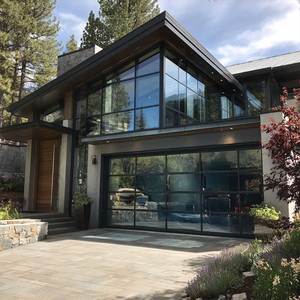
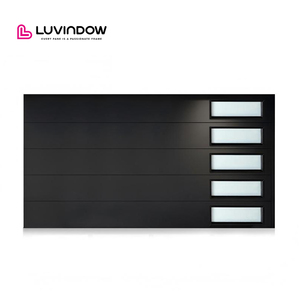
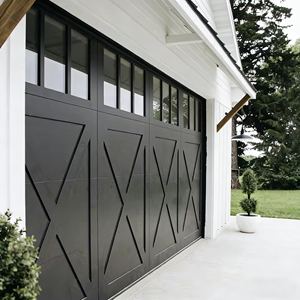
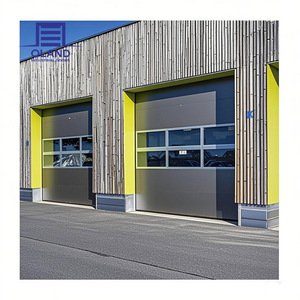
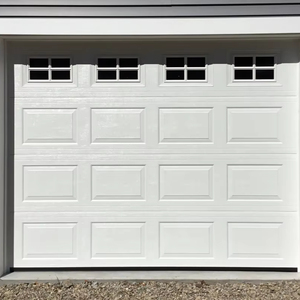
Sunnysky Full View Glass Sectional Overhead Door
- Frame: 6063-T6 Extruded Aluminum
- Glazing: Tempered / Laminated Double Glass
- Application: Showrooms, Fire Stations, Villas
Engineered for light luxury residential villas, distribution warehouses, automotive showrooms, and harsh maritime environments. Select a certified configuration below or request tailor-made OEM/ODM dimensional extrusions.
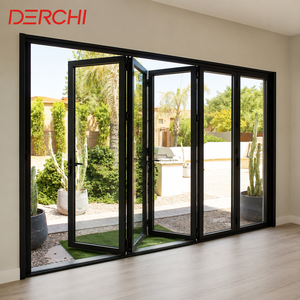
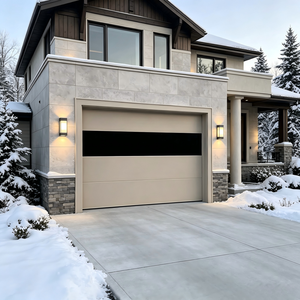
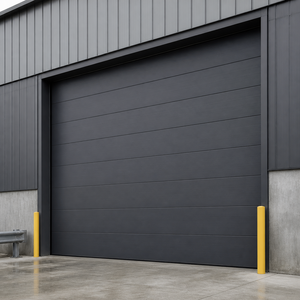
A comprehensive technical evaluation of 6063-T6 aluminum alloys, wind-load calculation methodology, thermal insulation barriers, and cyclic fatigue testing for commercial door specifiers.
In modern industrial and luxury residential architecture, the specification of overhead sectional doors has evolved past basic vehicular enclosures into rigorous structural building-envelope engineering. When sourcing through OEM/ODM channels, architectural specifiers, general contractors, and overseas volume distributors must balance high structural integrity, thermodynamic performance, long-term cyclic durability, and localized building code compliance. Aluminum alloys have overwhelmingly displaced rolled galvanized steel across premium and aggressive-environment installations due to their unique strength-to-weight ratio, native oxidation resistance, and superior precision during profile extrusion.
The foundation of a high-performance sectional panel relies on the alloy chemistry. Our manufacturing base strictly adheres to virgin ingot 6063-T6 aluminum alloy extrusions. Unlike remelted secondary scrap aluminum, 6063-T6 yields an ultimate tensile strength exceeding 205 MPa (29,700 psi) and a yield strength of at least 170 MPa (24,700 psi), paired with an elongation metric of 8% to 12%. This chemical purity ensures that deep hollow extrusion dies can formulate intricate pinch-resistant joint geometries (compliant with EN 12604 standards) without internal structural micro-fissures.
Furthermore, extruded aluminum profiles allow internal reinforcement web placement directly where mechanical stresses peak. Heavy commercial sectional panels encounter severe deadweight bending moments during horizontal track rest and intense shear loads during cycling. By extruding internal structural stiffener ribs into the panel hinge mounting plates, pull-out test values for self-tapping steel fasteners jump by over 42% compared to thin sheet-metal skins, effectively eliminating hinge detachment under high cycling frequencies.
Continuous fiberglass-reinforced polyamide thermal barriers mechanically crimped between outer and inner aluminum skins prevent heat bridges, drastically decreasing condensation and thermal conductance.
Automated continuous high-pressure injection fills panel cavities with 45-48 kg/m³ closed-cell PU or PIR foam, creating a cohesive composite panel capable of resisting extreme negative wind pressures.
Perimeter cold-weather EPDM tongue-and-groove gaskets paired with an oversized bottom dual-lip rubber boot absorb slab irregularities, achieving air permeability Class 3 under EN 12426.
For climate-controlled distribution logistics and high-end residential garages alike, overall heat transfer coefficient (U-value) calculation is mandatory for green building ratings like LEED v4.1 or BREEAM. Uninsulated single-skin aluminum panels possess high U-values (~5.8 W/m²K). By implementing our proprietary Thermal-Break Aluminum Composite Core (40mm to 50mm panel thickness), the thermal transmittance plummets to U ≤ 1.35 W/m²K (equivalent to R-16 insulation factor).
Wind loading represents the decisive structural failure criterion for wide-span overhead industrial doors. Under ASTM E330 and EN 12424 standards, wind force exerts uniform pressure perpendicular to the panel faces. Using beam-deflection formulas, maximum panel deflection must not exceed L/180 of the total clear opening span to prevent panel pull-out from the vertical guiding tracks:
| Door Width × Height (mm) | Wind Load Class (EN 12424) | Test Pressure (Pa / PSF) | Internal Strut Specification | Air Permeability (EN 12426) |
|---|---|---|---|---|
| 3000 × 2400 (Standard Residential) | Class 4 | 1000 Pa / 20.8 PSF | Standard Integrated Web Ribs | Class 3 (≤ 12 m³/m²h) |
| 5000 × 3000 (Oversized Villa / Commercial) | Class 4 | 1150 Pa / 24.0 PSF | External Continuous Aluminum Hat Strut | Class 3 (≤ 12 m³/m²h) |
| 6500 × 4500 (Heavy Logistics Bay) | Class 3 | 900 Pa / 18.8 PSF | Dual 80mm Structural Wind Trusses | Class 2 (≤ 24 m³/m²h) |
| 8000 × 5500 (Aircraft / Custom Industrial) | Class 2 / Class 3 Custom | 800 Pa / 16.7 PSF | Reinforced 120mm Box Truss System | Class 2 (≤ 24 m³/m²h) |
The mechanical heart of any overhead sectional door is its counterbalancing torsion spring assembly. Calculating spring torque accurately is what enables a 300kg commercial full-view glass door to be manually lifted with less than 150N (approx. 15 kg) of physical force during power outages. Our factory utilizes high-tensile oil-tempered ASTM A229 Class II spring wire, precision-wound on automated CNC coiling benches and shot-peened to relieve internal stress concentrations.
While baseline market exporters offer basic 10,000-cycle springs (failing in less than 3 years under moderate commercial operation), our OEM/ODM facility supplies engineered spring configurations delivering 25,000, 50,000, and 100,000 duty cycles. Every spring shaft is equipped with our patented Spring Break Safety Device (Anti-Drop System): in the catastrophic event of wire rupture, a spring-loaded pawl instantly engages the drive track teeth within 20mm of vertical descent, arresting door panel drop and preventing operational injuries or cargo crushing.
Market dynamics, supply-chain resilience, and specification changes reshaping how international wholesalers, architectural contractors, and distributors procure architectural doors.
Architects are replacing dark commercial facade openings with daylight-optimized full-view aluminum doors. Demand for smart switchable privacy glass and argon-filled double Low-E IGUs is surging across modern car dealerships, hospitality venues, and private contemporary garages.
Global import mandates (e.g., EU CBAM) demand audited Environmental Product Declarations (EPDs). Sourcing certified low-carbon hydroelectric-smelted aluminum profiles reduces Scope 3 embodied carbon footprint across commercial construction tenders.
Modern commercial docks require real-time industrial telemetry. Procurement schedules now mandate direct RS-485 / Modbus BMS integration, edge-monitored cycle counters, proactive maintenance alerts, and cloud-governed perimeter access control systems.
With increasing extreme storms across South Asia, North America, and coastal Australasia, specifiers are shunning cheap cold-rolled steel. Corrosion-proof anodized aluminum sectional doors certified to hurricane impact codes (TAS 201/202/203) are rapidly gaining market share.
Bespoke projects demand color consistency across curtain walls, main entry doors, and garage doors. Exporters equipped with vertical powder-coating lines offering 15-year micro-textured matte finishes and super-durable architectural PVDF colors are capturing premium margins.
Overseas labor costs have skyrocketed. Importers favor factories supplying pre-punched vertical tracks, pre-assembled spring counterbalances, pre-wired quick-connect motor plugs, and customized sea-freight steel-pallet bundling to trim jobsite labor hours by 40%.
How automation, micro-acoustic damping, laser surface texturing, and optical sensor arrays are redefining operational reliability.
The technological evolution of aluminum sectional overhead doors focuses heavily on active safety redundancy, silent operational kinematics, and surface nanotechnology. Historical installations were prone to track rattling, friction wear, thermal bridge failure, and motor cogging. Modern OEM/ODM engineering directly resolves these pain points through four foundational technological breakthroughs:
Replacing traditional stamped steel rollers, CNC-machined polyurethane-jacketed nylon ball bearings paired with continuous silicone-lubricated high-density polyethylene (HDPE) track liners reduce rolling friction noise by up to 18 dB.
Moving beyond single-point photocells, full-height multi-channel infrared light curtains project an invisible optical grid across the doorway opening, instantly stopping movement if broken without needing physical contact.
Surface treatments combining chemical anodization with electrophoretic organic polymer baking create a glass-like 25-micron barrier that resists over 3,000 hours of continuous ASTM B117 neutral salt spray exposure without pitting.
As an industry-leading manufacturer headquartered in China's prime aluminum extrusion hub—Foshan, Guangdong—Guangdong Dejiyoupin Doors and Windows Co., Ltd. (DERCHI) stands among China's Top 10 door and window brands. We combine end-to-end tooling, profile extrusion, surface treatment, thermal core assembly, and automated testing under one unified 180,000 m² manufacturing base.
Tour our 180,000 m² manufacturing plant, robotic aluminum cutting lines, automated PU foaming ovens, and destructive testing chambers in real time.
Schedule Factory Live AuditClear, direct answers for corporate buyers, commercial estimators, architectural distributors, and building contractors sourcing aluminum sectional door systems from China.