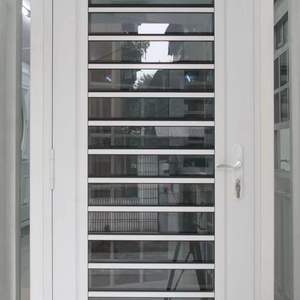
Engineered Fenestration Portfolio
Industrial & Architectural Louvered Door Systems
Factory-direct louvered door solutions engineered from architectural-grade 6063-T5/T6 aluminum alloys, precision CNC hardware integrations, and weather-resistant surface passivation.
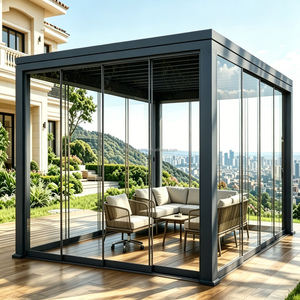
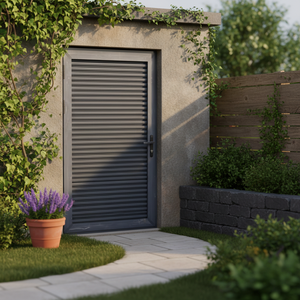
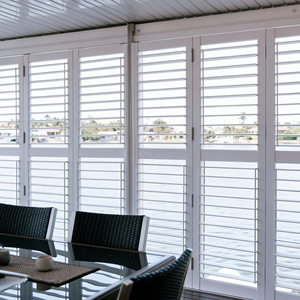
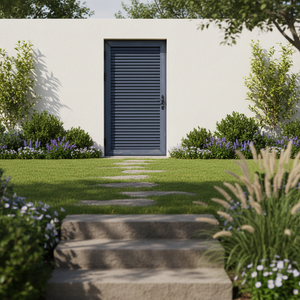
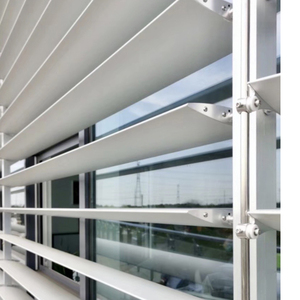
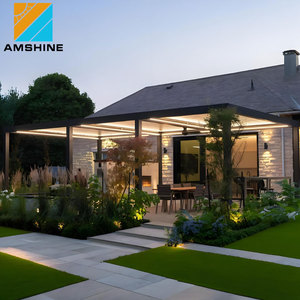
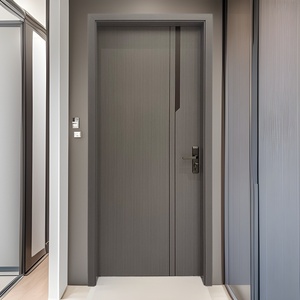
Procurement Engineering Whitepaper
Comparative Analysis of Top 10 Aluminium Louvre Door Manufacturers
Technical breakdown of material alloy composition, thermal break integration, surface anodization standards, and supply chain accountability across major industrial clusters.
1. The Evolution of Structural Louvre Engineering
Aluminium louvre doors have evolved from conventional secondary screening elements into primary building envelope barriers that demand rigorous performance qualifications. In contemporary commercial, hospitality, and high-end residential engineering, a louvre door is required to simultaneously provide structural air circulation, critical rain defence (monsoon compliance), aerodynamic pressure relief, solar shading, and forced-entry deterrence. Selecting from the world's leading manufacturers requires examining not merely visual styling, but profile wall thickness (minimum 2.0mm to 3.0mm architectural grade), extrusion alloy temper (6063-T5 vs. structural 6061-T6), and thermodynamic isolation.
European manufacturers such as Renson and Reynaers have historically established aerodynamic acoustic louvre standards, focusing on continuous acoustic blade absorption and automated Building Management System (BMS) inputs. Simultaneously, premier direct manufacturing clusters in Foshan, China—anchored by specialized enterprises like DERCHI (Guangdong Dejiyoupin Doors and Windows Co., Ltd.)—have bridged the gap between ultra-custom structural fabrication, architectural versatility, and commercial scalability. By integrating heavy-duty multi-point hardware, automated continuous thermal breaks (polyamide PA66 GF25), and dual-drainage extruded sub-sills, Foshan's premier production bases deliver international-standard fenestration with unmatched lead-time agility and direct engineering support.
| Manufacturer / Cluster Tier | Primary Material Standard | Wind Load & Deflection (Pa) | Water Penetration Threshold | Surface Treatment Durability | Best Application Profile |
|---|---|---|---|---|---|
| DERCHI (Foshan Direct Manufacturing) | Alloy 6063-T5/T6 with PA66 GF25 Thermal Break | AS 2047 N6 (up to 4500 Pa Cyclonic Resistance) | Class 9A / Drained Weep-Hole Sub-Sill Matrix | Qualicoat Class 2 Fluorocarbon (PVDF) / 25-Year Anti-Fade | Luxury Coastal Villas, High-End Hotels, Heavy Industrial Plants |
| Western European Manufacturers | EN AW-6060 / T66 Architectural Alloy | EN 12210 Class C5 (2000–3000 Pa) | EN 12208 Class E750 Watertightness | Seaside Grade Anodized (20-25 Microns) | High-Density Urban Passive Houses & Acoustic Acoustic Enclosures |
| North American Commercial Tier | ASTM B221 6063 Heavy Extrusion | ASTM E330 Structural Deflection Verified | AMCA 500-L Tested Wind-Driven Rain (50 psf) | AAMA 2605 100% Kynar 500 Coating | Substation Transformers, Mechanical Penthouses, Marine Facilities |
| Regional Asian Assemblers | Recycled or Non-Thermal 6063 Extrusions | Standard Residential (1000–1200 Pa) | Gravity Drainage / Face Slotted | Standard Powder Spray (6-8 Microns) | Low-Rise Interior Utility Closets & Garden Partitions |
2. Technical Factors Separating Tier-1 Manufacturers from Assemblers
Procurement directors and facade engineers evaluating bids from the top 10 manufacturing contenders must verify three non-negotiable engineering factors:
Blade Geometry and Aerodynamic Free Area: Poorly engineered louvre profiles induce high static pressure drop, choking ventilation in transformer vaults or generator rooms. Premium manufacturers design chevron, Z-type, and aerodynamic aerofoil blades that yield up to 55%-65% calibrated free area while blocking direct sightlines and driving 99% rain droplet separation.
Structural Gasketing and Vibration Dampening: Metal-to-metal blade chatter during high-velocity wind events is a pervasive defect in budget systems. Tier-1 manufacturers embed co-extruded EPDM or Santoprene micro-gaskets along the blade seating edges, eliminating harmonic acoustic resonance and ensuring an airtight seal when adjustable systems close completely.
Hardware Actuation Tolerance: For adjustable and rotatable louvered casement and bi-fold systems, internal driving linkage arms must be CNC-machined from 304 or 316 marine-grade stainless steel. Plastic gearboxes and stamped aluminum linkages fail under cyclic thermal expansion, leading to blade misalignment and operational binding.
Market Forecast & Architecture Roadmap
Future Sourcing & Technology Trends in Louvre Fenestration
How evolving net-zero mandates, bioclimatic facade design, and automation are transforming global architectural procurement through 2030.
IoT Motorization & Sensor Interactivity
Procurement schedules are shifting rapidly from manual lever actuation to hidden 24V linear actuators wired directly to KNX, Zigbee, or central BMS networks. Integrated wind, rain, and solar sensors dynamically adjust blade tilt to maximize passive air exchanges during cool hours while shutting down completely during sudden squalls.
Multi-Hazard Structural Envelope Resistance
With increasing coastal storm intensities, developers across South Asia, North America, and the Middle East require dual-rated assemblies. The emerging standard mandates AS 2047 Cyclonic N6 structural resistance, tested AMCA 500-L wind-driven rain rejection, and high-impact forced-entry multi-point deadbolts integrated within reinforced extruded outer frames.
Circular Aluminum & Low-Carbon Extrusions
Institutional developers face stringent ESG and LEED certification requirements. Sourcing specifications now penalize carbon-heavy smelting. Tier-1 manufacturers are deploying certified low-carbon primary billets smelted using renewable hydro-power, matched with non-toxic Qualicoat powder coatings carrying Zero-VOC declarations and Environmental Product Declarations (EPDs).
Enterprise Strength & Engineering Capacity
Factory-Direct Authority: Guangdong Dejiyoupin (DERCHI)
Backing your projects with China's top-tier fenestration manufacturing cluster: 25+ years of verified international execution, custom CAD engineering, and institutional testing.
180,000 m² Production Base
Operating out of Shishan Town, Nanhai District, Foshan—the epicenter of global aluminum extrusion—our facility houses automated double-miter saws, high-precision 4-axis CNC machining centers, and automated assembly bays supporting 600+ skilled personnel.
Bespoke CAD / BIM Engineering
Every louvered door is engineered to order. Our technical department provides structural shop drawings, wind-load calculation analyses, and custom extrusion tooling within 48 hours to match your exact wall rough openings and architectural elevations.
Accredited International Certifications
Backed by 8 major global certifications and over 30 technology patents. Our products hold CE compliance, ISO 9001 quality management verification, AS 2047 cyclonic performance reports, and UL-certified fire-rated assemblies for institutional safety.
Marine-Grade Export Logistics
Finished assemblies are protected with multi-layer surface film, shock-absorbing corner armor, and fully reinforced fumigated plywood export crates. Direct FOB/CIF ocean shipping connects Shishan to Mumbai, Karachi, Chittagong, Colombo, and American ports.
25+
Years Industrial Mastery
180k
m² Production Footprint
600+
Engineers & Technicians
30+
Proprietary Patents
Technical FAQ
Architectural Procurement Questions Answered
Critical structural, weather-tightness, and logistics questions commonly reviewed by developers, engineers, and import distributors.
Get CatalogWhat alloy specifications and profile wall thicknesses should be required for exterior louvered doors?
For commercial exterior applications, structural outer frame extrusions should maintain a minimum nominal wall thickness between 2.0mm and 2.5mm utilizing virgin architectural alloy 6063-T5 or 6063-T6. For louver blades spanning over 900mm in high-wind regions, blade thickness should not fall below 1.5mm to prevent deflection and flutter during storm conditions. Avoid recycled secondary aluminum alloys which possess micro-impurities that induce premature stress fractures and corrosion.
How do aluminium louvre doors prevent rain penetration during high-velocity storms?
Effective rain protection relies on two critical design features: blade geometry and pressure equalization drainage. High-performance models feature dual-hook chevron or baffle blades that force incoming airflow through abrupt directional shifts, separating heavy water droplets by inertia. Second, the door frame must integrate an internal drainage channel with forward-facing weep slots and baffled check-valves, discharging water safely outward before static wind pressure can push it across the interior threshold.
What is the difference between non-thermal and thermal break aluminium louvre doors?
Non-thermal louvered doors feature continuous metal extrusion frames. While physically strong, aluminum exhibits high thermal conductivity (approx. 160–200 W/m·K), causing rapid heat transfer and condensation when exterior temperatures exceed 40°C or drop below freezing. A thermal-break louvered door integrates precision-crimped fiberglass-reinforced polyamide strips (PA66 GF25) within the outer frame profiles, separating the exterior and interior aluminum faces to drastically cut U-values, eliminate sweat-condensation, and lower indoor HVAC loads.
Which surface finishes survive aggressive marine coastal environments?
For installations within 5 kilometers of ocean coastlines (such as Mumbai, Chennai, or the Caribbean), standard architectural powder coat degrades within 3 to 5 years under salt fog and high UV exposure. The engineering recommendation is either Class 2 Qualicoat Fluorocarbon (PVDF / Kynar 500) 2-coat or 3-coat spray finishes (tested to 3,000+ hours of continuous salt-spray exposure) or High-Grade Anodization exceeding 20-25 microns with sealed de-ionized hydration baths.
Can adjustable and motorized louvre systems integrate with building automation?
Yes. Modern adjustable louvered doors manufactured by DERCHI integrate concealed 24V DC synchronous linear motors enclosed within the jamb or transom profiles. These systems support dry-contact switches, 0-10V analog controllers, and digital fieldbus protocols (Modbus, KNX, RS-485). They can be programmed to open during fire alarm triggering for emergency smoke evacuation, or to track diurnal solar paths to maximize day-lighting while reducing cooling loads.
What information is required from the buyer to generate a production-ready quotation?
To produce an accurate quote and CAD shop drawing, our engineers require: (1) Rough opening dimensions (width x height x wall depth); (2) Desired typology (fixed louver, adjustable casement, bi-folding shutter, or sliding system); (3) Alloy and thermal break requirement; (4) Surface coating and color code (RAL specification or PVDF finish); (5) Hardware and lock specifications (e.g., standard multipoint, fire panic bar, or digital smart lock); and (6) Project delivery terms (FOB Port of Foshan/Shenzhen or CIF destination port).
Initiate Your Architectural Louvre Specification
Partner directly with an established engineering manufacturer. Receive free CAD design verification, structural testing calculations, and comprehensive price matrices for your project.