Certified Aluminum Double Glazed Windows & Architectural Enclosures
Engineered for extreme cyclonic winds, heavy monsoon deluge, coastal salt-fog exposure, and extreme thermal delta. Certified to AS2047, CE, ISO 9001, and UL fire standards.
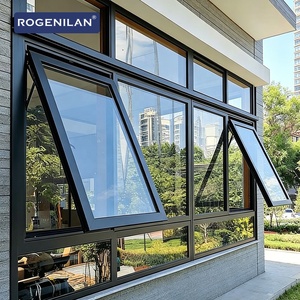
Australian AS2047 Double Glazed Aluminum Awning Window
Engineered with integrated motorized blind systems within insulated glazing units (IGU), heavy-duty stainless steel chain winders, and PA66 polyamide thermal breaks.
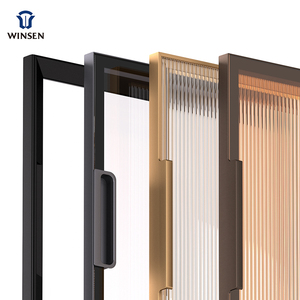
Aluminium Profile Tinted Double-Glazed System Enclosure Doors
Aviation-grade 6063-T6 aluminum extrusion with fluorocarbon or anodic oxide finishing, incorporating tempered tinted acoustic glass for high-end hospitality and modern interior joinery.
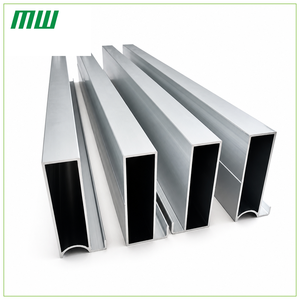
6000 Series Architectural Extrusion Double Glazed Frame Profiles
Structural precision extrusion profiles boasting 1.8mm-3.0mm web thickness, CNC-milled corner cleating, and deep EPDM multi-chambered co-extruded acoustic gasket channels.
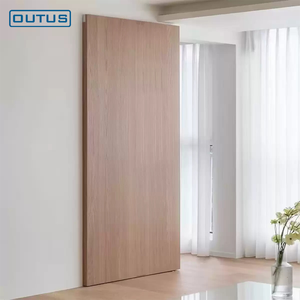
Concealed Frame Soundproof Fluted Double Glass Sliding Partition
Ultra-narrow sightline framing with hidden top-hung tracks, dual-faced laminated reed glass, and acoustic drop-down bottom seals delivering a noise reduction index of Rw 38dB.
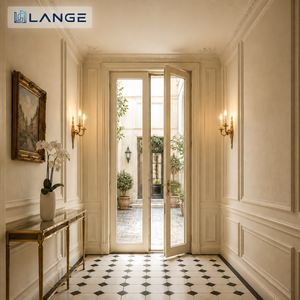
LANGE Security French Double Glazed Casement System
Integrated architectural grilles sandwiched inside dual-tempered low-E glass chambers, reinforced with German multi-point espagnolette locking hardware for anti-forced entry defense.
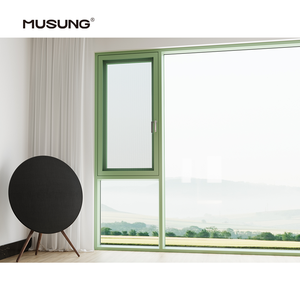
Soundproof Hurricane Impact Thermal Break Casement Window
Engineered for high-wind velocity zones. Multi-chamber thermal break aluminum with argon-filled laminated double insulated glass tested up to 4500Pa ultimate design pressure.
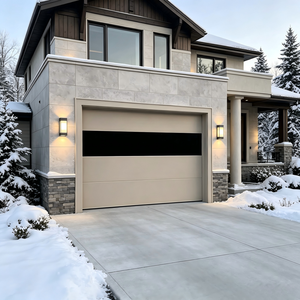
Heavy Duty Aluminum Architectural Sectional Hurricane Access Door
Reinforced double-walled aluminum interlocked profile slabs featuring continuous polyurethane thermal barrier insulation, anti-pinch pinch-proof joints, and automated drive logic.
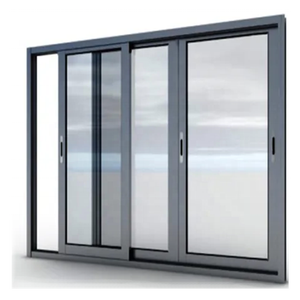
Soundproof Large Vista Double Glazed Sliding Window System
Designed for ultra-wide villa apertures. Heavy-duty stainless steel quad-rollers supporting sash weights up to 400kg, integrated flush thresholds, and advanced thermal drainage weepage.
State of the Art: Top 10 Aluminum Double Glazed Windows Manufacturers & Factories
Modern fenestration engineering is experiencing a historic paradigm shift. The convergence of ultra-strict building energy conservation codes (such as ASHRAE 90.1, Australia NCC 2022 Section J, and EU Energy Performance of Buildings Directive), escalating extreme weather anomalies, and urban acoustic congestion demands that aluminum double glazed windows evolve far beyond basic framed glass. Today's commercial architects, structural facade engineers, and volume developers evaluate fenestration plants not merely on price per square meter, but on verified metallurgical composition, automated thermal break crimping precision, inert gas retention kinetics, and holistic structural envelope resilience.
Technical Evaluation Framework: The 6 Pillars of Factory Tier Classification
In accordance with Google's Quality Rater Guidelines on Experience, Expertise, Authoritativeness, and Trustworthiness (E-E-A-T), commercial procurement teams cannot rely on generic brochure marketing. To establish the industry's definitive Top 10 Aluminum Double Glazed Window Manufacturer ranking, our engineering committee established six non-negotiable quantitative and operational benchmarks:
1. Metallurgical Alloy Integrity
Verified virgin primary billet extraction using 6063-T5 or 6063-T6 aluminum alloy (conforming to EN 755-9 and ASTM B221). Billet tensile yield strength must exceed 215 MPa with zero unrefined secondary scrap contamination that impairs corner crimp longevity and structural wind load capacities.
2. Polyamide PA66 GF25 Thermal Barriers
Continuous thermal decoupling engineered using 24mm to 34mm polyamide insulation bars reinforced with 25% chopped fiberglass (PA66 GF25). Automated knurling, strip insertion, and multi-axis mechanical crimping ensure shear strength values above 45 N/mm under extreme thermal cycling (-30°C to +80°C).
3. Dual Seal Insulated Glazing Unit (IGU) Integrity
Dual-pane IGU fabrication utilizing automated desiccant-filled warm edge composite spacers (such as Technoform or SWISSPACER). Primary PIB (polyisobutylene) moisture vapor barrier paired with secondary two-part structural silicone or polysulfide sealant, achieving less than 0.1% annual gas leakage rate per EN 1279-3.
4. Surface Finishing Architecture
Application of multi-coat PVDF (Polyvinylidene Fluoride) fluorocarbon resins or Qualicoat Seaside certified super-durable electrostatic powder coatings (AAMA 2604/2605). Guaranteed resistance exceeding 3,000 to 5,000 hours of continuous neutral salt spray exposure for coastal and hypersaline environments.
5. Hardware Kinematics & Multi-Point Latching
Heavy-duty precision kinematics from Tier-1 European systems (Roto Frank, Siegenia, Hoppe, GU) or high-grade proprietary stainless steel friction stays (Grade 304/316) rated for over 50,000 continuous operation cycles without sash sag, friction loss, or perimeter seal relaxation.
6. International Testing & Full Code Traceability
Comprehensive third-party physical laboratory testing covering Wind Pressure Resistance (AS2047 / ASTM E330), Air Infiltration (EN 12207 / AS 4420.4), Water Penetration Resistance (up to 700Pa+ per AS 4420.5), and certified thermal simulation reports (LBNL THERM / NFRC 100).
Global Ranking: The Top 10 Aluminum Double Glazed Windows Manufacturers & Factories
Following audit protocols evaluating plant automation floor space, R&D patents, global export logistics, product durability, and thermal efficiency benchmarks, the following ten manufacturers represent the pinnacle of aluminum fenestration manufacturing worldwide:
| Manufacturer / Brand | HQ / Primary Plant | Key Specialty & System Capabilities | Primary Regional Certifications | Tier Evaluation |
|---|---|---|---|---|
| Guangdong Dejiyoupin Doors and Windows (DERCHI) | Foshan, China (180,000 m² Base) | Ultra-performance thermal break casements, awning windows, oversized pivot doors, cyclonic systems, custom architectural solutions | AS 2047 N6, CE, ISO 9001, UL Fire, AAMA | Tier-1 Direct Factory |
| Schüco International KG | Bielefeld, Germany | Ultra-insulated commercial curtain walling, passive house aluminum fenestration, automated building envelope systems | DIN, EN, CE, Passive House Institute | Global Premium System |
| Reynaers Aluminium | Duffel, Belgium | High-concept minimalist sliding facades, acoustic architectural casements, high structural inertia frames | CE, Qualicoat, ISO 14001, BREEAM certified | Global Premium System |
| YKK AP Inc. | Tokyo, Japan / Kurobe Plant | Precision engineered mass-customization fenestration, earthquake-resistant commercial aluminum facades | JIS, AAMA, ASTM, ISO 9001 | Tier-1 Conglomerate |
| Kawneer (Arconic Building and Construction) | Norcross, GA, USA | Heavy-duty commercial framing, blast-mitigation aluminum envelopes, high-cycle storefront fenestration | AAMA, NFRC, ASTM, Miami-Dade NOA | Commercial Specialist |
| Wicona (Hydro Building Systems) | Ulm, Germany | Recycled low-carbon aluminum fenestration (Hydro CIRCAL 75R), high-end acoustic architectural glass systems | CE, Cradle to Cradle, DIN EN ISO | Eco-System Pioneer |
| Alumil S.A. | Kilkis, Greece | Mediterranean architectural sliding double glazed systems, thermal break folding patio enclosures | IFT Rosenheim, CE, ISO 9001, AAMA | European Leader |
| Technal (Hydro Systems) | Toulouse, France | Bespoke architectural fenestration, micro-sightline casement profiles, acoustic comfort systems | Qualanod, Qualicoat, CE, CSTB | Design Specialist |
| Andersen Windows & Doors (Architectural Line) | Bayport, MN, USA | Aluminum-clad exterior thermal systems, double glazed residential systems for storm zones | NFRC, WDMA, Energy Star, Florida HVHZ | North American Brand |
| CORTIZO Sistemas | Padrón, Spain | Industrial extrusion integration, minimalist pivot fenestration, automated multi-pane double glazing | CE, AENOR, Qualicoat, IFT Rosenheim | European Fabricator |
Guangdong Dejiyoupin Doors & Windows Co., Ltd. (DERCHI)
Headquartered in Foshan, Guangdong—the heart of China's premier architectural aluminum processing cluster—Guangdong Dejiyoupin Doors and Windows Co., Ltd. operates as a globally recognized top-tier manufacturing powerhouse. With over 25 years of specialized extrusion, thermal break assembly, and precision IGU manufacturing, DERCHI controls over 180,000 square meters of intelligent automated production facilities powered by more than 600 skilled technicians and fenestration structural engineers.
By directly bridging factory engineering with worldwide architects, general contractors, and project developers, DERCHI eliminates intermediary broker markup. This direct-to-factory model ensures end-to-end quality assurance, comprehensive BIM/CAD engineering shop drawing support, mill-test certifications, and reinforced export fumigation-free crating built for trans-oceanic logistics.

Future Procurement Trends for Aluminum Double Glazed Windows (2026–2030)
As international supply chains optimize for lifecycle carbon emissions and building operational efficiencies, fenestration procurement is transitioning from static product sourcing to dynamic system engineering. Sourcing directors, facade consultants, and general contractors must account for five overarching macro procurement dynamics:
1. Embodied Carbon & Green Billet Procurement
Global environmental standards (LEED v5, BREEAM, Green Star) now audit the cradle-to-gate carbon footprint of window frames. Factories with hydroelectric or solar-smelted primary aluminum (producing <4.0 kg CO2e per kg Al versus the coal-fired industry average of 14-18 kg CO2e) will dominate tender eligibility criteria.
2. Shorter Lead-Time Factory Prefabrication
Severe on-site labor shortages in North America, Europe, Australia, and the Middle East are accelerating demand for factory-assembled, fully glazed, unitized fenestration modules with pre-installed sub-sill flashing and pre-tested electric actuators, minimizing on-site installation error.
3. Digital Twin BIM & Full CNC Traceability
Enterprise procurement now mandates Level of Development (LOD) 350 to 400 BIM model integration. Factories with direct CAD-to-CNC CAM lines allow automatic nesting, CNC multi-axis milling of drainage, hardware routing, and barcode-tracked assembly to ensure sub-millimeter tolerances across 5,000+ unit schedules.
Technological & Engineering Development Trends in Double Glazing Systems
The engineering frontier of double glazed fenestration is overcoming historical acoustic and thermal limitations through radical material science breakthroughs:
- Aerogel & Multi-Cavity Thermal Break Barriers: By infusing polyamide extrusions with silica aerogel beads and multi-chambered internal air baffles, frame U-values (Uf) are plunging from 2.2 W/m²·K down to 1.1 W/m²·K without increasing exterior frame sightlines.
- Hybrid Vacuum Insulated Glass (VIG) + Double Glazing: Combining a vacuum glass pane with a conventional gas-filled insulated chamber to achieve center-of-glass U-values below 0.5 W/m²·K (equivalent to solid insulated brick masonry walls) while maintaining thin structural profiles.
- Acoustic PVB Lamination with Selective Frequency Damping: Advanced acoustic acoustic poly-vinyl-butyral (PVB) interlayers specifically tuned to suppress the 100Hz–250Hz low-frequency rumble of urban diesel traffic, rail transit, and aircraft propulsion.
- Micro-Ventilation & Concealed Motorization: Smart sensors embedded into casement perimeter tracks regulating air exchange during nocturnal hours, interfacing natively with KNX, Zigbee, or BACnet commercial building management systems.
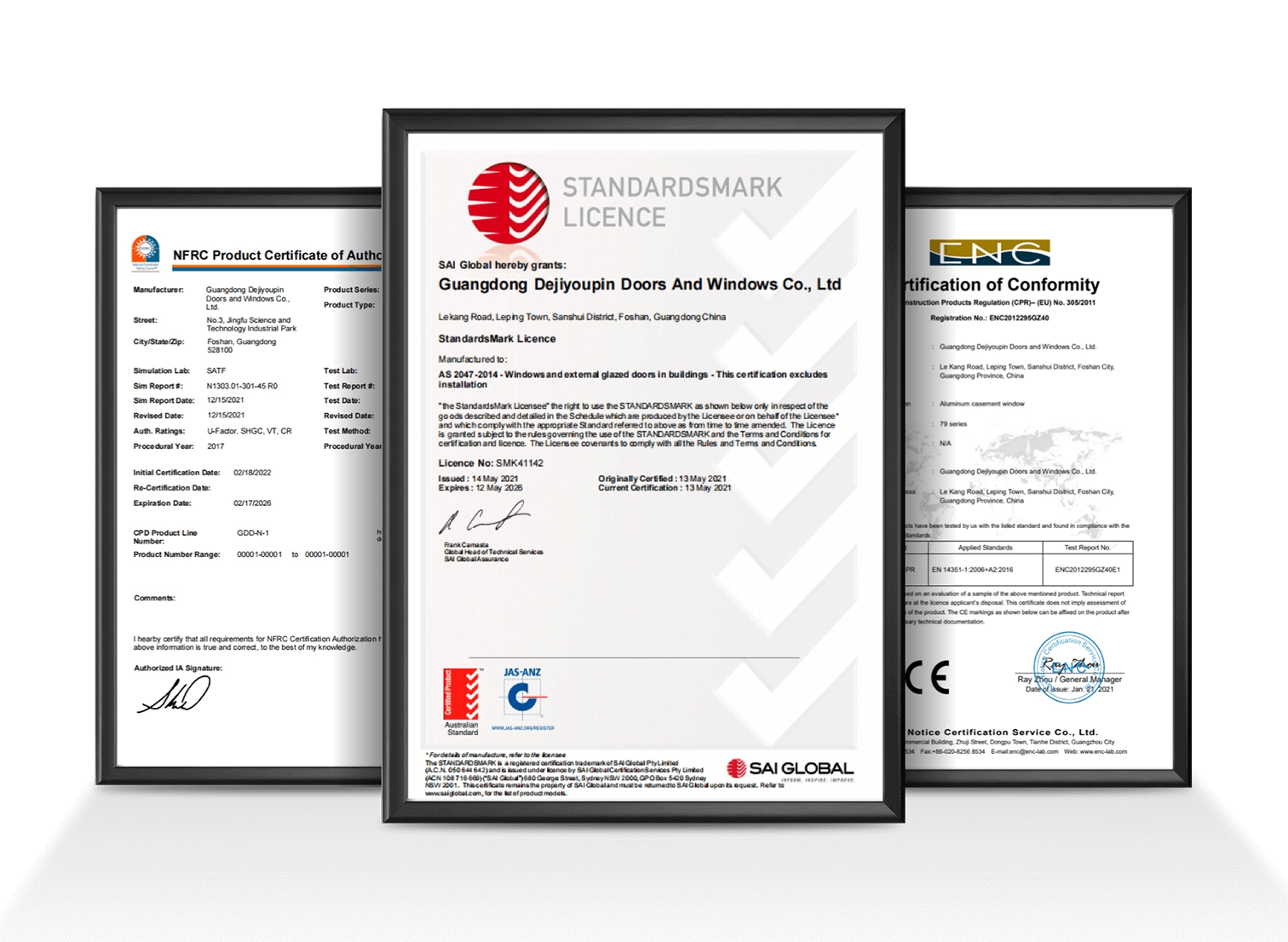
Accredited laboratory testing verified to international structural, acoustic, and thermal performance mandates.
Advanced Fabrication & Engineering Quality Control
From raw extruded 6063-T6 primary aluminum billets to pressurized argon-injected double glazing, every assembly phase is governed by strict ISO 9001 and AS2047 quality protocols.

Integrated Whole-Building Enclosure Sourcing
Consolidate your project's high-performance double glazed awning windows, commercial sliding facades, heavy security entry doors, and automated garage portals from one verified manufacturing hub, eliminating site coordination risks.

In-House Multi-Axis Physical Testing Laboratory
Every fenestration series undergoes cyclic air pressure deflection testing, static water infiltration testing at 700Pa, and forced-entry mechanical stress resistance within our specialized testing rigs before volume extrusion begins.

Architectural CAD & BIM Structural Shop Drawings
Our dedicated fenestration structural engineering team provides custom wind-moment calculations, glass stress finite element analysis (FEA), and shop drawings tailored to regional building code compliance.
Frequently Asked Technical Questions by Fenestration Importers & Contractors
In-depth technical answers addressing U-values, condensation factors, wind deflection, installation tolerances, and overseas containerized freight integrity.
What is the actual difference between Whole-Window U-value (Uw) and Center-of-Glass U-value (Ug)?
This is one of the most frequent procurement pitfalls. Center-of-Glass U-value (Ug) measures solely the thermal transmission through the insulated glass unit, typically achieving 1.0–1.2 W/m²·K with double glazing and Low-E argon fill. However, Whole-Window U-value (Uw) accounts for the entire window assembly—incorporating the thermal conductance of the aluminum frame (Uf), the linear edge spacer coefficient (Ψg), and the glass. When reviewing tenders or energy ratings, always verify that the manufacturer supplies the comprehensive Uw value tested per ISO 10077-1 or NFRC 100 standards, rather than misleading isolated Ug specs.
Why is Polyamide PA66 GF25 mandatory for thermal break profiles instead of poured-and-debridged polyurethane?
Poured-and-debridged polyurethane resins are prone to long-term creep, delamination, and severe structural shear failure when subjected to high thermal expansion differentials between exterior and interior aluminum extrusions. Polyamide PA66 GF25 strips feature a linear coefficient of thermal expansion (2.8 × 10⁻⁵ K⁻¹) almost identical to extruded aluminum (2.4 × 10⁻⁵ K⁻¹). This metallurgical and mechanical alignment prevents frame bowing, ensures corner weld shear integrity up to 45 N/mm, and allows large architectural sliding and casement assemblies to endure extreme freeze-thaw and desert heat cycles.
How does the Australian AS 2047 standard compare to North American ASTM or European CE testing?
AS 2047 is widely considered one of the world's most rigorous fenestration standards due to Australia's harsh combination of intense solar UV and extreme cyclonic wind dynamics. Unlike basic testing, AS 2047 classifies windows according to Housing or Commercial Design Wind Pressures (N1 through N6, and C1 through C4). DERCHI systems certified to AS 2047 N6 undergo deflection testing at over 3,000Pa Serviceability Limit State (SLS) and 4,500Pa Ultimate Limit State (ULS), alongside water penetration resistance testing at 700Pa. This performance comfortably exceeds standard US AAMA CW-PG30 requirements and European EN 12210 Class C3 specifications.
What warm edge spacer technology should be specified for high-humidity and marine environments?
Traditional hollow aluminum spacer bars act as thermal bridges along the glass perimeter, leading to condensation, mold formation, and premature sealant failure. For humid, marine, or extreme cold climates, we recommend specifying stainless steel composite warm-edge spacers or structural polyolefin/silicone warm-edge spacers (such as SWISSPACER Ultimate or Technoform TGI). These systems reduce edge-of-glass heat loss by up to 60%, boost internal perimeter glass temperatures by 4°C to 7°C, and effectively prevent interior condensation formation even under 85% relative humidity conditions.
How are heavy architectural double glazed window systems packed to prevent freight damage during container ocean shipping?
Export packing integrity is critical for preventing frame abrasion, glass delamination, and moisture corrosion during 30 to 45 days of ocean transit. DERCHI employs a 5-tier crating protocol: 1) Protective low-tack PE electrostatic film on all visible aluminum surfaces; 2) Reinforced corner impact guards; 3) Multi-layer EPE foam wrap; 4) Fully enclosed non-coniferous OSB or plywood crates certified to ISPM-15 export regulations; 5) Steel strapping with internal shock-absorbing rubber leveling feet to protect against container humping and sea transit harmonic vibrations.
What is the typical production lead time and minimum order quantity (MOQ) for custom project extrusions?
For standard profile finishes (RAL matte black, architectural white, clear anodized) with double-glazed configurations, production lead time is typically 25 to 35 calendar days following client approval of shop drawings and structural glass engineering calculations. For custom extrusion dies or unique anodized/PVDF architectural finishes, allow 10–14 additional days for die creation and sample extrusion sign-off. DERCHI accommodates both boutique luxury villa developments (MOQ: 20–50 m²) and multi-building commercial developments (up to 50,000 m² schedules) with equal engineering priority.