Architectural Fenestration Engineering Whitepaper

Top 10 Aluminum Open Window Manufacturers & Manufacturer Analysis

A B2B Strategic Sourcing Guide & Technical Evaluation: Thermal Efficiency, Structural Wind Loads, Global Manufacturing Capacities, and Future Procurement Standards.

Engineered Fenestration Systems

High-Performance Aluminum Open Window & Patio Portfolios

Explore commercial and luxury residential fenestration systems manufactured with precision CNC machining, structural thermal breaks, multi-point locking systems, and strict international building code compliance.
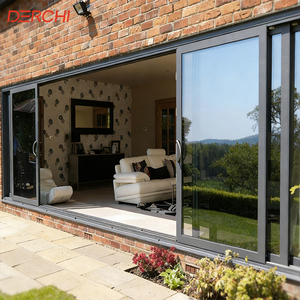
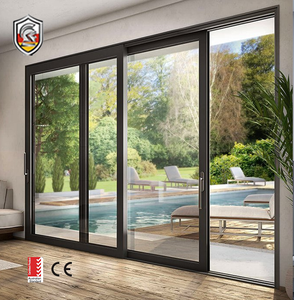
DERCHI Title 24 Aluminum Sliding Door Outdoor Hurricane Resistant Double Glazed
Energy Efficient · Title 24
Engineered with advanced thermal barriers and high-density EPDM compression gaskets to meet California Title 24 energy specifications and severe coastal storm ratings.
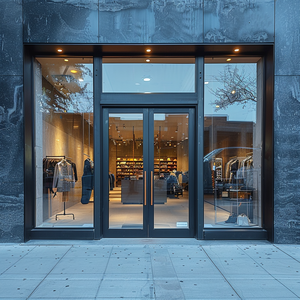
Commercial Store Front Door Aluminum Frame Tempered Glass Storefront Door
Commercial Architecture
Heavy-duty architectural 6063-T6 aluminum extrusion with 12mm monolithic tempered safety glass, designed for high-traffic retail entrances and business hubs.
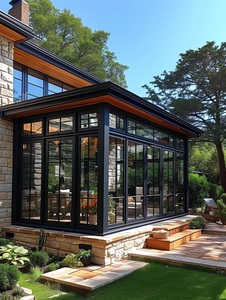
Double Glazed Aluminium Glass Sunroom Sliding Doors
Thermal Break Sunroom
Integrated polyamide PA66 thermal bridge design delivering exceptional U-values, ideal for four-season solariums, boutique hotels, and luxury enclosures.
Exterior Heavy Duty Double Glazed Sliding Door Aluminium Lift and Slide Glass Patio
Heavy-Duty Lift & Slide
German engineered lift-and-slide bogie wheel carriages supporting individual sash loads up to 400kg with effortless, whisper-quiet gliding performance.
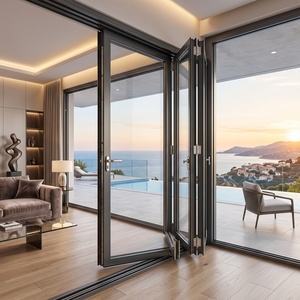
OEM Soundproof Aluminum Folding Windows for Sunrooms
Acoustic Isolation · Folding
Multi-leaf bi-fold sash configuration featuring multi-cavity acoustic profiles and argon-filled insulated glass units achieving STC sound attenuation over 38dB.
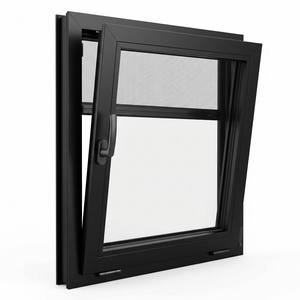
High Strength Aluminum Invert Inside Windows with Screen
Tilt & Turn / Invert Open
Dual-function tilt-and-turn engineering allowing micro-ventilation at top tilt or 90° inward open casement for rapid airflow, equipped with stainless flyscreens.
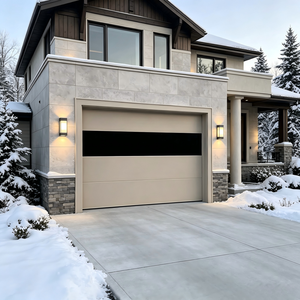
Heavy Duty Hurricane Proof Aluminum Garage Door
Hurricane Sectional Access
Interlocking reinforced aluminum alloy slats backed by high-density polyurethane insulation, engineered to withstand Category 5 hurricane wind pressures.
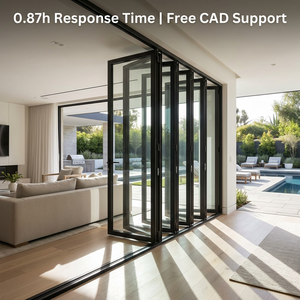
Hurricane Proof Coastal Aluminum Glass Folding Doors
Coastal Cyclone Defense
Marine-grade fluorocarbon surface treatment combined with laminated impact safety glazing to repel saline corrosion and wind-borne debris strikes.
25+
Years Industry Engineering
180,000m²
Global Production Base
600+
Skilled Manufacturing Staff
100+
Patents & Global Certifications
DERCHI Manufacturing Campus in Foshan, Guangdong
Direct Factory Advantage

Guangdong Dejiyoupin Doors and Windows Co., Ltd. (DERCHI)

Recognized across the global fenestration sector as a leading Top 10 Chinese high-end door and window brand, DERCHI operates an end-to-end manufacturing ecosystem in Shishan Town, Foshan. We integrate structural R&D, alloy extrusion processing, surface treatment, precision double-miter assembly, and international shipping under one roof.

  • Certified International Standards: Tested compliant with CE, ISO 9001, AS 2047 N6, and UL Fire Ratings for seamless project approvals.
  • Full CAD / BIM Engineering: Custom architectural shop drawings and static structural wind calculations provided at zero cost.
  • Turnkey Export Protection: Multi-layer PE protective film, foam edge guards, and solid fumigated plywood crates built for rough ocean logistics.
Inquire Now
Competitive Intelligence

Top 10 Global Aluminum Open Window Manufacturers: Engineering Evaluation

In-depth technical benchmarking for commercial developers, general contractors, and facade consultants navigating global supplier selection.

Manufacturer HQ / Operational Base Core System Specialization Thermal U-Value Range Certification Portfolio Key Competitive Strengths
1. DERCHI (Dejiyoupin) Foshan, China Custom Architectural Casement, Awning, Tilt & Turn 0.85 – 1.4 W/m²·K AS 2047 N6, CE, ISO 9001, UL High Agility Factory direct pricing, 180,000m² scale, custom OEM/ODM speed.
2. Schüco International Bielefeld, Germany Ultra-Low-U Commercial Building Envelopes 0.70 – 1.2 W/m²·K DIN, CE, LEED, Passive House Premium European Unrivaled European architectural brand prestige; higher capital cost.
3. Reynaers Aluminium Duffel, Belgium Minimalist Architectural Casements & Pivots 0.80 – 1.3 W/m²·K Qualicoat, CE, Cradle to Cradle Extensive digital BIM library, high sustainability scoring, precision hardware.
4. Kawneer (Arconic) Norcross, GA, USA Heavy Commercial Curtain Wall & Storefront Openers 1.10 – 1.8 W/m²·K AAMA, WDMA, CSA, NFRC Dominant North American commercial specifier presence, robust blast resistance.
5. YKK AP Tokyo, Japan Seismic-Resistant Commercial Systems 0.95 – 1.6 W/m²·K JIS, AAMA, ISO 14001 Precision Japanese manufacturing tolerances, high cycle durability.
6. Wicona (Hydro) Ulm, Germany Circal Recycled Aluminum Fenestration 0.75 – 1.3 W/m²·K Passive House, CE, EPD Low embodied carbon alloys (>75% post-consumer recycled aluminum).
7. Technal Toulouse, France Bespoke Urban Residential & Contemporary Openers 0.90 – 1.5 W/m²·K Qualanod, CE, ISO Refined European aesthetic profiles, concealed inward-tilting sash lines.
8. Alumil Kilkis, Greece Mediterranean Climatic & Bioclimatic Systems 0.95 – 1.6 W/m²·K IFT Rosenheim, CE Exceptional value in warm and coastal marine environments, wide panoramic frames.
9. Andersen Commercial Bayport, MN, USA Architectural Aluminum Clad Openers 1.10 – 1.7 W/m²·K WDMA, NFRC, Energy Star Comprehensive North American dealer network and retrofit market entrenchment.
10. Jeld-Wen Commercial Charlotte, NC, USA Multi-Family Commercial Aluminum Windows 1.20 – 1.9 W/m²·K AAMA, ISO 9001 Cost-effective standardized series for large mid-rise residential developments.

Structural Load Capacity & Deflection Limits

Under ASTM E330 and AS 2047 design standards, open windows installed in high-rise coastal facades must resist extreme cyclic positive and negative wind pressures. Premium manufacturers rely on 6063-T6 or 6005-T5 structural profiles with wall thicknesses of 1.8mm to 3.0mm.

Engineering Benchmark: Maximum structural deflection limited to L/175 or L/240 under 3500Pa – 4500Pa peak cyclonic gust loads.

Thermal Bridging & Polyamide Geometry

Solid aluminum profiles conduct heat at approximately 160 – 200 W/m·K. To comply with international green building codes, manufacturers must insert fiber-reinforced polyamide insulating bars (PA66 GF25) measuring 24mm to 34mm in depth, featuring multi-cavity chambers.

Thermal Target: Frame U-values reduced below 1.2 W/m²·K, preventing internal dew condensation.

Coating Longevity & Marine Air Integrity

Coastal and tropical microclimates accelerate pitting corrosion. Top-tier manufacturers apply 3-coat fluorocarbon PVDF coatings (AAMA 2605 compliant with >70% Kynar 500 resin) or Class 1 / Class 2 anodic oxidation with minimum 20µm thickness to prevent surface chalking.

Corrosion Testing: Salt spray resistance validated exceeding 3,000 to 4,000 continuous hours without adhesion failure.
Future Fenestration Outlook

Engineering and Design Trends Reshaping Aluminum Open Windows

Strategic analysis of emerging architectural demands, passive house integration, automated ventilation, and decarbonization mandates.

Concealed Hardware & Ultra-Slim Sightlines

Architects are driving demand for minimalist profiles where the opening casement sash is completely concealed behind the outer frame perimeter. Inward tilt-and-turn units now feature 180° invisible hinges capable of carrying 160kg sash weights while preserving completely flush wall sightlines.

Sightline reduction: Exposed aluminum borders reduced to under 45mm, optimizing visible glass area by up to 18%.

Smart Actuation & Biophilic Micro-Ventilation

Modern building management systems (BMS) are demanding automated chain-drive and spindle actuators concealed within the window frame profile. Integrated carbon dioxide and humidity sensors trigger autonomous micro-tilting of open sashes, enabling passive nighttime cooling without sacrificing physical security.

Energy reduction: Smart automated natural night-flushing reduces diurnal air conditioning cooling loads by 12% to 22%.

Decarbonized Aluminum & Circular Extrusions

With corporate carbon audits (Scope 3 emissions) influencing major tenders, the industry is transitioning toward low-carbon aluminum billets smelted using renewable hydroelectric or solar energy. Sourcing alloys with guaranteed certified carbon footprints (<4.0 kg CO2e per kg of primary aluminum) is becoming an essential tender requirement.

Carbon compliance: Sourcing verified through ISO 14025 Environmental Product Declarations (EPD).
Strategic Sourcing Insights

Next-Generation B2B Fenestration Procurement Strategies

How developers, importers, and general contractors mitigate tariff volatility, avoid delivery delays, and manage project cash flow.

Factory-Direct Sourcing vs. Intermediary Trading

Traditional procurement through multiple domestic distribution layers adds 30% to 50% in markups. Modern general contractors interface directly with tier-1 export factories in manufacturing hubs like Foshan, securing direct technical dialogue with engineering shop floor directors and eliminating margin bloat.

Financial Impact: Direct manufacturer partnerships yield 25% to 35% material savings on multi-unit commercial packages.

BIM-Integrated Fabrication & Parametric Sizing

Procurement delays predominantly stem from site-measurement discrepancies and manual shop drawing revisions. Leading developers mandate BIM-compatible Revit families from manufacturers. Parametric window data feeds straight into factory CNC twin-head precision cutting centers, eliminating dimension errors.

Timeline Optimization: Eliminates on-site re-fabrication claims, reducing punch-list resolution schedules by up to 40%.

FOB/CIF Port Logistics & Heavy Export Crating

Maritime fenestration procurement requires defensive packaging engineering. High sea humidity, container sweat, and rough transit vibrations destroy unprotected glass assemblies. Demanding procurement contracts require reinforced closed-crate plywood framing with internal desiccant bags and vacuum wrapping.

Risk Management: Zero-breakage protocols backed by comprehensive marine cargo all-risk insurance coverage.
Procurement Due Diligence

Frequently Asked Questions: Sourcing Aluminum Open Windows

Direct technical answers to the most critical compliance, performance, logistics, and engineering questions asked by project buyers.

1. What thermal break standards distinguish premium aluminum casement windows from substandard systems?
Premium systems utilize mechanically crimped Polyamide PA66 with 25% fiberglass reinforcement (PA66 GF25). This composite matches the coefficient of thermal expansion of aluminum alloy, preventing delamination and air leakage during severe seasonal temperature swings (-30°C to +70°C). Substandard manufacturers frequently substitute inferior PVC or low-grade recycled plastics that warp, embrittle under UV exposure, and fail structural air-tightness tests within 24 to 36 months. High-performance casements also incorporate hollow chambers within the polyamide strip and multi-tiered EPDM central sealing gaskets to achieve overall U-values well below 1.4 W/m²·K.
2. How do powder coating, PVDF fluorocarbon, and anodizing compare in coastal marine environments?
For projects situated within 5 kilometers of coastlines (such as Mumbai, Karachi, Miami, or Sydney), standard architectural powder coatings (AAMA 2603) deteriorate rapidly due to airborne salt salts and continuous ultraviolet radiation. Specifiers should mandate either 3-coat PVDF fluorocarbon coatings conforming to AAMA 2605 (>70% polyvinylidene fluoride resin) or Class 1 Architectural Anodizing (minimum 18-25 micron oxide layer conforming to Qualanod standards). PVDF provides superior chalk resistance, color retention, and chemical inertia against salt spray, easily passing 4,000 hours in neutral salt spray (ASTM B117) testing.
3. What structural testing protocols validate compliance with AS 2047 N6 and hurricane impact standards?
Compliance with Australian Standard AS 2047 rating N6 (designed for cyclonic regions) or ASTM E1886/E1996 hurricane codes requires three successive physical laboratory test phases: First, deflection testing where the assembly is subjected to positive and negative design pressure (up to 4,500 Pascals) with span deflection strictly limited to L/175. Second, dynamic water penetration resistance testing at minimum 450Pa to 700Pa. Third, cyclic wind fatigue and missile impact testing, where a 9-pound 2x4 timber projectile is launched at 50 ft/s (15 m/s) directly against the window sash and corner joints without creating penetration breaches that exceed allowable airflow limits.
4. How does DERCHI ensure corner joint structural stability and long-term water-tightness?
DERCHI employs heavy cast aluminum internal corner chevrons (cleats) secured through high-precision pneumatic corner-crimping machinery. Prior to mechanical crimping, our automated adhesive injection process injects German two-component polyurethane corner joint sealant (corner adhesive) into the extrusion hollow. This creates a monolithic, bonded barrier that prevents mitre separation, diagonal sash racking under wind loads, and capillary water ingress. Furthermore, sashes feature concealed drainage channels with anti-backflow baffles to vent moisture away from interior spaces even under torrential rainstorms.
5. What are the typical lead times, Minimum Order Quantities (MOQ), and shipping protocols for international projects?
For standard extrusion colors (such as matt black, dark bronze, anodized silver, or traffic white), DERCHI maintains an agile turnaround of 25 to 35 calendar days from signed CAD shop drawing approval. Fully custom fluorocarbon shades, dual-color extrusions, or complex curved profiles require approximately 35 to 45 days. Our flexible production lines support orders from single luxury villa custom packages (MOQ starting at 20m²) up to full 40-foot HQ containerized commercial hotel projects. Cargo is protected with static-free surface film, foam corner buffers, corrugated wraps, and fumigated international shipping crates loaded with internal crane tie-downs.
6. How can commercial developers balance oversized glass spans with strict local energy codes (e.g., Title 24, IECC)?
Balancing expansive unobstructed glazing with energy codes like California Title 24 or the International Energy Conservation Code (IECC) requires an integrated glass and frame approach. DERCHI pairs deep thermal-break aluminum profiles with insulated glass units (IGUs) incorporating double-silver or triple-silver low-emissivity (Low-E) coatings, 90%+ filled argon gas cavities, and warm-edge composite spacers (such as Technoform or Swisspacer). This combination suppresses Solar Heat Gain Coefficients (SHGC) to 0.22 – 0.28 while preserving high Visible Light Transmittance (VLT > 65%), delivering compliant building envelope U-factors without requiring dark, tinted glass.
7. What hardware specifications are recommended for heavy open window sash stabilization?
Open window sashes (casement, awning, and hopper) experience heavy torsional stress from wind turbulence. We engineer our window series utilizing heavy-gauge 304 or 316 marine-grade stainless steel four-bar friction hinges (stays) capable of sustaining dead loads up to 120kg. For locking security and compression, our multipoint transmission gearboxes (espagnolettes) drive roller cams into zinc-alloy keeps around all four sides of the perimeter. This multi-point perimeter clamping mechanism compresses the secondary and tertiary EPDM seals uniformly, securing air tightness class 4 (EN 12207) and eliminating sash rattle during sustained high winds.
8. Can DERCHI accommodate bespoke architectural CAD shop drawings and cultural preferences (e.g., Vastu Shastra dimensions)?
Yes, 100% of DERCHI orders are manufactured to exact dimensional requirements. Our senior engineering department generates complete 2D/3D CAD shop drawings, connection detail elevations, and floor anchor sections prior to production. For clients throughout India and South Asia designing according to Vastu Shastra or regional architectural layout doctrines, opening orientations, specific millimeter daylight clear dimensions, and even threshold flush details are precisely incorporated into the fabrication schedules without compromising system performance or warranties.
Verified Quality Assurance

International Certifications & Third-Party Testing

Every window and door profile leaving our Foshan manufacturing facility is backed by accredited laboratory reports, ensuring straightforward submission to municipal building inspectors and engineering consultants.

CE, ISO 9001, AS 2047, and UL Certification Marks

Plan Your Architectural Fenestration Package With Factory Engineers

Whether you require tender pricing for a commercial hotel facade, custom casements for a luxury villa development, or technical submittal packages for code approval, our bilingual engineering team is available for real-time technical review.

Inquire Now