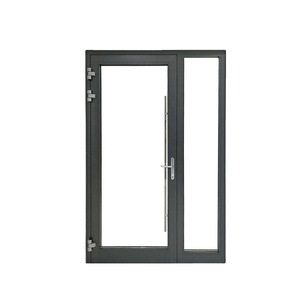
Engineered Aluminum Wood Finish & Architectural Door Systems
Tested against international cyclonic, thermal, and impact benchmarks, our product catalog blends biological wood grain aesthetics with structural alloy performance.
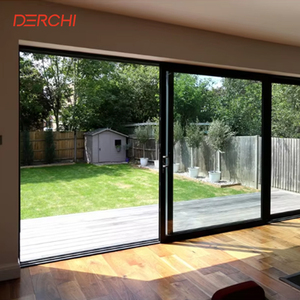
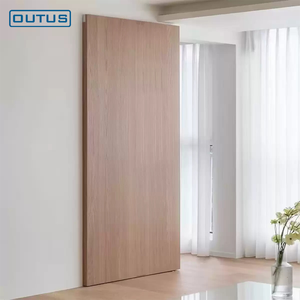
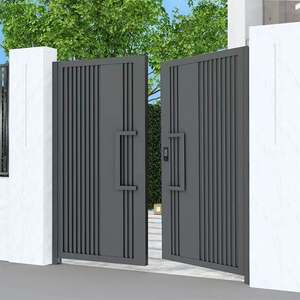
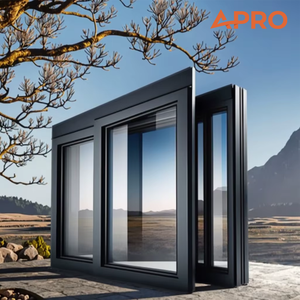
25+
Years of Production Mastery
180,000m²
Intelligent Manufacturing Base
100+
International Patents & Certs
600+
Technical Workforce & Engineers
Global Sourcing Whitepaper: Navigating the Top 10 Aluminum Wood Finish Door Exporters
The global construction sector's push toward sustainable, biophilic design while requiring fire protection and rot resistance has driven structural aluminum doors with faux-wood aesthetics into focus. Modern wood-effect architectural fenestration eliminates the operational vulnerabilities of organic timber—such as moisture rot, subterranean termite colonization, ultraviolet delamination, and cyclic hygroscopic expansion—without sacrificing architectural aesthetics.
Evaluating the Top 10 Aluminum Wood Finish Door Exporter & Exporters requires looking beyond surface finish catalogs. Procurement directors, facade engineers, and volume importers require verification across four core metrics: alloy chemical integrity (6063-T5 vs. 6063-T6), finish technology (Decoral vacuum thermo-diffusion versus mechanical PVDF lamination), polyamide thermal-break insulation (PA66GF25 structural barriers), and mechanical hardware ratings under cycle-testing.
"Architectural wood-grain sublimation transfers organic dyes at high vacuum and elevated temperatures (200°C), fusing inks directly into an electrostatic polyurethane powder coating. This prevents bubbling, cracking, or edge peeling under high coastal UV and cyclical humidity."
Technical Benchmark Comparison: Wood Finish Transfer vs. Alternative Profiles
| Evaluation Parameter | Vacuum Wood Grain Sublimation | Exterior PVC/PVDF Foil Wrap | Traditional Solid Hardwood |
|---|---|---|---|
| Base Substrate | Extruded 6063-T5/T6 Aluminum Alloy | Extruded Aluminum or UPVC Profile | Teak, Oak, Mahogany, Meranti |
| UV & Weathering Lifespan | 15–25 Years (AAMA 2604/2605 compliant) | 7–12 Years (Risk of edge lifting) | 3–5 Years (Requires regular refinishing) |
| Dimensional Stability | Zero thermal expansion deflection (<0.1%) | Low to Medium (Dependent on core substrate) | High Expansion / Contraction (>3.5%) |
| Fire Classification | Class A / Non-Combustible (EN 13501-1) | Class B/C (Prone to smoke toxicity) | Class D / Combustible Core |
| Biological Attack | Termite, borer, and fungus immune | Immune (Potential adhesive rot) | Susceptible to severe termite infestation |
Structural Engineering Advantages: Guangdong Dejiyoupin Doors and Windows Co., Ltd. (DERCHI)
Originating within the Foshan industrial cluster, Guangdong Dejiyoupin Doors and Windows Co., Ltd. (DERCHI) operates one of the sector's largest production footprints: a 180,000 m² modern manufacturing hub with an integrated technical workforce exceeding 600 specialists. Our automated extrusion and finishing lines provide strict control over wall thickness, alloy temper, and sublimation curing cycles.
Certified Alloy Metallography
We source primary A00 aluminum ingots to extrude precision 6063-T5/T6 architectural profiles. Wall thicknesses exceed national standards (2.0mm to 3.0mm structural thresholds), preventing wind deflections up to AS 2047 N6 cyclone levels.
Thermal & Acoustic Barrier Systems
Integrated PA66GF25 fiberglass-reinforced polyamide thermal breaks minimize thermal conductivity through frame perimeters. Paired with argon-filled low-E insulated glass units, DERCHI doors achieve low U-values and Sound Transmission Class (STC) ratings up to 42 dB.
3D Grain Depth & Tactile Texture
By pairing polyurethane electrostatic base coats with Italian vacuum transfer films, we replicate real wood surfaces including Burmese Teak, American Walnut, Golden Oak, and Brazilian Rosewood, backed by Qualicoat Seaside performance credentials.
Future Procurement Trends in Architectural Door Systems
Cross-border fenestration procurement is moving away from generic off-the-shelf doors toward custom-engineered, project-specific systems. When sourcing aluminum wood-finish doors, trade buyers are focusing on three main technical developments:
Oversized Architect-Specified Pivots
Modern residential and commercial entrances increasingly specify floor-to-ceiling pivot structures exceeding 3.5 meters in height and 2.0 meters in width. These systems require specialized German concealed pivot hardware and integrated counter-weight balancers capable of handling panel masses exceeding 450 kilograms.
Integrated Building Automation Systems (BAM)
Traditional mechanical deadbolts are giving way to integrated smart access hardware: motorized multi-point latches, biometric scanning, 3D facial recognition, and dry-contact inputs compatible with KNX, Control4, and Crestron building automation networks.
Monsoon-Proof Sub-Sill Engineering
To withstand extreme storm patterns in coastal and monsoon regions (India, Bangladesh, Florida, the Caribbean), frames now integrate concealed drainage channels and continuous vulcanized EPDM compression gaskets, preventing moisture intrusion under dynamic wind pressures up to 600 Pa.
Critical Pitfalls to Avoid When Sourcing from Asian Exporters
Sourcing metal fenestration overseas requires clear technical specifications. Misaligned expectations can lead to structural failures, customs hold-ups, or costly site modifications:
1. Recycled Scrap Ingot (Secondary Billet) Usage: Low-cost suppliers may cut costs by using recycled scrap scrap aluminum instead of primary A00 ingots. This can lead to internal structural voids, uneven wall thicknesses, and premature micro-fracturing along hinge-bearing lines.
2. Inadequate Powder Coating Film Thickness: A wood-grain pattern requires a solid primer base. If the electrostatic base coat falls below 60–80 microns, atmospheric moisture can penetrate the matrix, causing blistering and filiform corrosion in coastal installations.
3. Missing Thermal-Break Shear Resistance Data: Inserting low-grade PVC strips instead of glass-fiber-reinforced PA66GF25 can cause profiles to de-crimp under cyclic sun exposure, leading to structural failures and door binding issues.
Frequently Asked Questions: Global Sourcing & Engineering
How does aluminum wood finish compare to natural timber in coastal or monsoon environments? +
Natural timber absorbs airborne moisture, leading to grain swelling, structural warping, rot, and paint breakdown. Wood-finish aluminum profiles feature zero water absorption, complete termite immunity, and use fluorocarbon or polyurethane sublimation coatings that resist saltwater spray, humidity, and intense ultraviolet exposure.
What certifications should overseas buyers look for in aluminum doors? +
Core quality and safety standards include ISO 9001 factory production control, CE marking for European markets (EN 14351-1), AS 2047 and AS 1288 for Australian cyclonic wind and glazing standards, and UL / NFPA ratings for fire-door assemblies. DERCHI's systems hold full third-party test reports across these major regulatory bodies.
Can custom architectural designs and specific wood-grain patterns be matched from project renderings? +
Yes. Our in-house engineering team works directly from architect DWG/DXF files, elevations, and render schedules. We can provide custom wood-grain transfer samples (matching natural teak, walnut, oak, mahogany, or charcoal cedar) alongside CAD shop drawings covering custom structural profiles, transoms, and sidelights.
How are oversized entry doors packed to prevent transit damage during long sea voyages? +
Every door undergoes a three-stage packing process: first, a low-tack protective film is applied over the powder-coated profile; second, edge guards and corner caps are fitted; and third, the entire assembly is secured inside a fully enclosed, fumigated wooden shipping crate. This protects products from vibration, shifting, and humidity over ocean transit lines.
Plan Your Architectural Entrance Strategy
Partner directly with Guangdong Dejiyoupin Doors and Windows Co., Ltd. for factory-direct engineering, fast shop drawing turnaround, and certified quality control for high-end residential, hotel, and commercial projects worldwide.