Premier China Aluminium Openable Door & Window Systems
Explore our flagship structural aluminium systems, hurricane-rated casements, thermal break tilt-and-turn units, and heavy-duty commercial openable doors crafted to meet stringent global architectural codes.
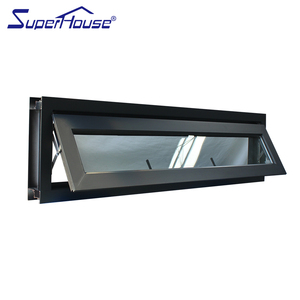
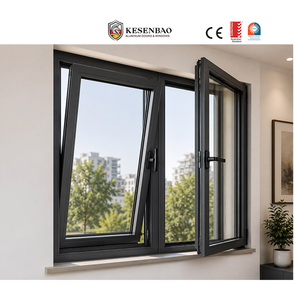
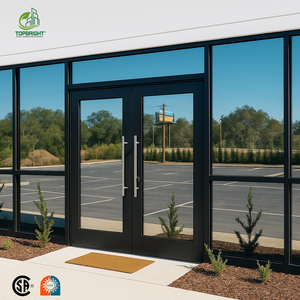
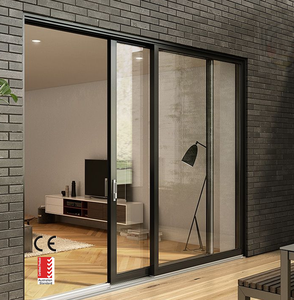
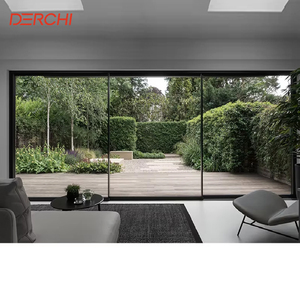
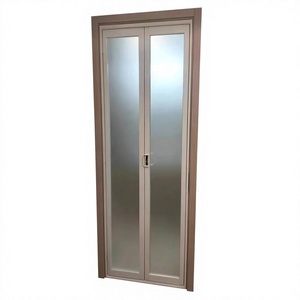
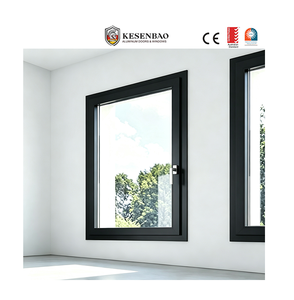
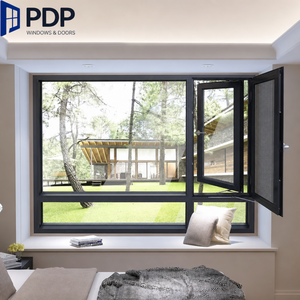
Guangdong Dejiyoupin (DERCHI): Industrial Scale & Manufacturing Rigor
Operating from Foshan, Guangdong—the epicenter of global architectural aluminum manufacturing—DERCHI sets the industry standard for high-performance openable door engineering, bespoke extrusions, and certified international export compliance.
Vertically Integrated Extrusion
From raw ingot casting and 6063-T5/T6 billet homogenization to precision multi-cavity profile extrusion, DERCHI controls metallurgical purity, structural wall thickness (up to 3.0mm), and dimensional tolerances exceeding European EN 12020 standards.
Global Testing & Certification
Our openable door and window systems undergo rigorous third-party testing. DERCHI products comply fully with Florida Miami-Dade hurricane impact tests (TAS 201/202/203), Australian AS 2047, NFRC energy ratings, CE EN 14351-1, and UL fire resistance benchmarks.
Advanced Surface Engineering
We operate automated Swiss Gema powder coating lines, AkzoNobel fluorocarbon (PVDF) 3-coat spraying stations, and Italian thermal-sublimation wood-grain transfer systems, guaranteeing 25+ years of anti-fading, anti-corrosion, and salt-spray resistance.
Engineering Architecture of China Aluminium Openable Doors
An authoritative technical analysis detailing alloy selection, thermal break mechanics, acoustic dampening, hardware load-bearing parameters, and structural wind resistance.
Executive Industry Insight
The global shift toward high-efficiency building envelopes has redefined requirements for openable door systems. Modern architects and B2B buyers no longer evaluate doors solely on aesthetic merits; performance metrics—such as thermal transmittance (U-factor ≤ 1.2 W/m²K), air infiltration (Class 4 according to EN 12207), sound reduction (Rw ≥ 42 dB), and forced-entry resistance (RC3)—now dictate procurement specs.
1. Metallurgical Science & Structural Profile Geometry
The foundation of any high-performance openable door (hinged, casement, tilt-and-turn, or pivot) lies in profile metallurgy. Premium Chinese manufacturers like DERCHI utilize 6063-T5 and 6063-T6 architectural aluminium alloys. T6 tempering provides a tensile strength exceeding 205 MPa and yield strength above 170 MPa, essential for supporting heavy triple-glazed units in large-format openable doors.
Modern openable door profile designs feature multi-cavity extrusion chambers. By strategically positioning internal webs, engineers optimize the profile's moment of inertia ($I_x$ and $I_y$), preventing structural deflection under cyclic wind pressures up to 5,000 Pa (equivalent to Category 5 hurricanes).
2. Thermal Break Innovation: PA66GF25 Polyamide Strips vs. Standard PVC
Non-thermal break aluminium profiles inherently suffer from high thermal conductivity ($k \approx 200 \text{ W/m}\cdot\text{K}$). To overcome this energy loss, DERCHI integrates continuous PA66GF25 (Polyamide 66 reinforced with 25% fiberglass) thermal insulation strips into "broken bridge" openable door frames.
- Coefficient of Thermal Expansion: PA66GF25 matches aluminium's expansion coefficient ($2.3 \times 10^{-5} /\text{K}$), ensuring structural stability across extreme temperature fluctuations (-40°C to +80°C) without delamination.
- Multi-Chamber Thermal Barriers: Advanced openable door profiles utilize 24mm to 39mm wide multi-cavity polyamide strips infused with low-density aerogel or expanded polyethylene (EPE) foam, driving overall door U-values down to passive house standards ($U_d \le 0.8-1.0 \text{ W/m}²\text{K}$).
3. Performance Comparison: Aluminium Openable Doors vs. Alternative Materials
| Performance Vector | Thermal Break Aluminium Openable Door | uPVC Openable Door | Solid Timber Door | Standard Steel Security Door |
|---|---|---|---|---|
| Structural Lifespan | 40+ Years (Zero Warping) | 15-20 Years (UV Degradation) | 15-25 Years (Requires Sealing) | 20-30 Years (Rust Risk) |
| Frame Sightlines & Profile Depth | Ultra-Slim (Heavy Load Capacity) | Bulky & Thick Profiles | Moderate to Heavy | Heavy / Industrial |
| Weather & Water Tightness | Class 9A (600 Pa) EPDM Sealing | Moderate Sealing | Expands/Swells in Moisture | Susceptible to Seal Decay |
| Acoustic Insulation (Rw) | Up to 45 dB (With Acoustic Glass) | 32 - 38 dB | 28 - 35 dB | 30 - 36 dB |
| Fire Safety Rating | Class A Non-Combustible Frame | Self-Extinguishing (Melts) | Combustible (Requires Treatment) | High Fire Resistance |
| Maintenance Overhead | Extremely Low (Wipe Clean) | Low | High (Repainting/Varnishing) | Moderate (Anti-Rust Coating) |
4. Hardware Engineering, Multi-Point Locking & Sealing Mechanics
An openable door is only as reliable as its hardware matrix. High-end China aluminium openable doors integrate European C-groove profiles designed for seamless integration with German hardware systems such as Siegenia, Hoppe, GU, Sobinco, and Giesse.
To guarantee weather tightness, DERCHI employs continuous, seamless-molded EPDM (Ethylene Propylene Diene Monomer) gasket seals with vulcanized corner joints. When the openable handle operates, multi-point mushroom head cams engage hardened steel keepers around the perimeter frame, achieving equalized compression against double or triple rubber weather-strips.
Future Procurement Trends in Aluminium Openable Doors
Key technological shifts shaping global architectural specifications, ESG sustainability criteria, and commercial procurement strategies for developers, architects, and importers.
1. Smart Building Integration
Next-generation openable doors feature fully concealed electronic actuators, motorized multi-point locks, biometrics (facial recognition, fingerprint), and integration with central Building Management Systems (BMS) for smart climate control and automated ventilation.
2. Low-Carbon Recycled Alloys
With global carbon tax frameworks (such as EU CBAM) taking effect, procurement strategies prioritize aluminium produced using hydropower and recycled post-consumer scrap (>75% recycled billet), reducing embodied carbon footprint down to < 4.0 kg CO2/kg Al.
3. Minimalist Ultra-Slim Sightlines
Demand for floor-to-ceiling panoramic openable doors with concealed hinges and frame profiles under 25mm visible width continues to accelerate in luxury residential and hospitality sectors, placing higher demands on alloy structural rigidity.
DERCHI Quality Inspection & Export Sourcing Workflow
How we eliminate procurement risks for international buyers through standardized engineering drawing approvals, strict in-line QA testing, and sea-freight protective packaging.
Step 1: CAD/BIM Shop Drawings
Free engineering evaluation and detailed shop drawing generation matching structural openings, glass load calculations, hardware schedules, and regional wind-load requirements.
Step 2: Precision CNC Milling
Profile cutting and hardware slotting are executed on 5-axis German CNC machining centers, guaranteeing corner joint assembly tolerance within < 0.1mm.
Step 3: Four-Stage Quality QA
In-house laboratory verification of coating thickness, cross-hatch adhesion, corner burst strength, water spray tightness, and air leakage prior to packing.
Step 4: Heavy Export Crating
Multi-layer protection: protective film, foam edge guards, moisture-barrier vacuum wrapping, and fully enclosed fumigated wooden crates tailored for long-distance container sea shipping.
Frequently Asked Questions for B2B Importers & Specifiers
Comprehensive engineering and commercial answers addressing common sourcing queries regarding China aluminium openable doors and factory capabilities.