B2B White Paper & Direct Sourcing Guide

Top China Aluminum Cellar Doors Manufacturers & Exporter

Architectural-grade thermal barrier systems, condensation-free wine enclosures, and heavy-duty stormproof subterranean access doors engineered for global commercial developers and luxury residential projects.

Engineered Door Series

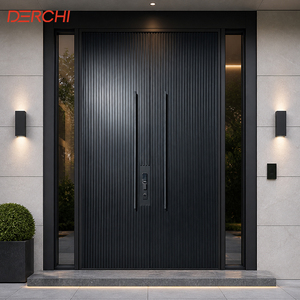
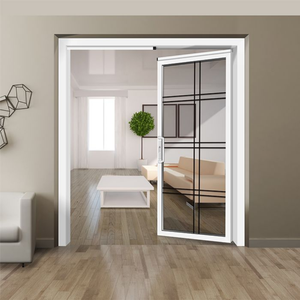
Featured Aluminum Cellar Doors & Architectural Enclosures

Precision-machined from 6063-T5 and 6063-T6 architectural alloys with dual-chamber polyamide (PA66) thermal breaks, multi-point compression seals, and argon-charged tempered low-E double glazing.

Send an Inquiry
180,000+
m² Modern Factory Base
25+
Years Manufacturing Mastery
100+
Global Patents & Testing Certs
600+
Specialist Engineers & Technicians
Engineering White Paper

Engineering Architecture: Managing Humidity, Thermal Bridges & Air Seals

Unlike standard exterior patio doors or interior partition systems, architectural wine cellar doors and exterior subterranean hatch doors must operate reliably under persistent vapor pressure differences and harsh temperature differentials without bowing, condensation, or air leakage.

Information Gain Insight: The primary failure mode of cheap cellar doors is condensation dripping onto delicate corks or causing microbial mold on timber jambs. Sourcing from certified Chinese manufacturers utilizing multi-chamber extruded 6063-T6 aluminum combined with continuous 24mm to 34mm polyamide PA66 thermal barriers neutralizes the Dew Point isotherm line, ensuring dry, conditioned, and energy-conserving cellar atmospheres.

Thermodynamic Isotherm Stabilization

Precision engineering positions the internal polyamide barrier along the neutral thermal axis. This prevents the "bimetallic curling effect" where stark delta-T differences (12°C cellar interior vs. 38°C ambient exterior) cause door leaves to warp and bind against the frame.

U-Factor down to 1.1 W/m²K

Continuous Vulcanized EPDM Hermetic Seals

Triple automotive-grade closed-cell EPDM perimeter gaskets maintain uniform compression across all four corners. This completely restricts ambient convective airflow, maintaining target relative humidity (RH 55%–70%) within climate-controlled wine repositories.

Air Permeability Class 4 (EN 12207)

Warm-Edge Argon Insulated Glazing Units

Double and triple laminated IGUs feature stainless steel or composite warm-edge spacers, filled with 90% dry argon gas. Glass panes utilize magnetron-sputtered soft-coat Low-E layers that reflect 99.2% of damaging ultraviolet (UV) radiation while providing transparent viewing.

UV Blocking Efficiency 99.2%
Technical Benchmarking

Engineering Specification Comparison Matrix

Compare how our precision-manufactured Chinese aluminum cellar entrance systems outperform standard commercial doors and traditional solid timber variants.

Performance Dimension DERCHI Heavy Aluminum Cellar Door Standard Commercial Glazed Door Traditional Hardwood Cellar Door
Alloy & Wall Thickness 6063-T5 / T6 High-Tensile (2.0mm - 3.0mm) 1.2mm - 1.4mm Standard Aluminum Solid Oak/Mahogany (45mm - 55mm)
Thermal Insulation (U-Value) 1.1 – 1.6 W/m²·K (Thermally Broken) 3.2 – 4.5 W/m²·K (Non-Thermal) 1.8 – 2.4 W/m²·K (Degrades over time)
Moisture & Rot Resistance 100% Rot-proof, Zero Mold Propagation Rot-proof, condensation prone High risk of rot, swelling & warping
Air Infiltration Rating < 0.1 m³/(h·m) @ 100Pa (Airtight) 0.8 - 1.5 m³/(h·m) (Leaky perimeter) 0.5 - 1.2 m³/(h·m) (Shifts seasonally)
Locking Security Grade Multi-Point Concealed Deadbolt / RC3 Certified Single Latch / Deadbolt Single Mortise Lockset
Maintenance Lifecycle 30+ Years with Zero Re-finishing Needed 10–15 Years Requires regular sealing/varnishing every 2 yrs
Send an Inquiry
Industry Market Intelligence

Future Trends in Aluminum Cellar Door Procurement (2025–2030)

Strategic market shifts are transforming how developers, general contractors, and project architects specify, procure, and integrate subterranean cellar access doors and premium display wine rooms.

Ultra-Narrow Sightlines & Concealed Hardware

Modern interior architectural designs demand frameless aesthetics. Global buyers increasingly specify stiles with profiles as narrow as 18mm to 25mm, utilizing hidden overhead pivot closers, magnetic latching systems, and subterranean recessed tracks that eliminate floor trip hazards.

Smart IoT Integration & Biometric Vault Controls

High-value private collections require secure access logging. The latest procurement requests integrate smart access systems: biometric fingerprint sensors, 3D facial recognition, motorized solenoid multipoint locks, and Zigbee/KNX-compatible sensors that warn owners if humidity boundaries are breached.

Electrochromic "Smart Switchable" Privacy Glass

Commercial hospitality venues and high-end villas are adopting PDLC (Polymer Dispersed Liquid Crystal) double glazing. With the touch of a switch or automated sensor, the cellar door instantly transitions from crystal-clear transparent viewing to opaque frost, protecting light-sensitive vintages from photo-oxidation.

Extreme Weather & Flood Proofing Sub-Basements

Climate instability has dramatically driven up demand for exterior cellar hatch doors rated for flash-flood defense. Sourcing trends prioritize doors with tested hydrostatic pressure thresholds, hydraulic gas-strut assists for heavy storm hatches, and corrosion-resistant marine fluorocarbon coatings.

Enterprise Authority & Reliability

DERCHI (Guangdong Dejiyoupin): China's Benchmark Door Manufacturer

Ranked among China's Top 10 doors and windows manufacturers, Guangdong Dejiyoupin Doors and Windows Co., Ltd. delivers direct factory engineering, strict ISO quality governance, and documented compliance for global exporters and importers.

Aerial view of DERCHI manufacturing facility in Foshan
Foshan Mega Production Facility
180,000 m² automated production base in Nanhai District, Foshan, Guangdong

25+ Years of Export Excellence to Strict Global Jurisdictions

Sourcing cellar doors directly from our Foshan facility cuts out intermediary broker fees, gives your design team access to free custom CAD/BIM shop drawings, and guarantees full compliance with North American (AAMA/WDMA/CSA), European (CE / EN), and Australian (AS 2047) standards.

  • Automated German CNC Milling: High-precision machining centers guarantee 0.05mm tolerances for hinges, concealed multipoint lockboxes, and corner joints.
  • Complete Testing Laboratory: On-site pressure chambers test air infiltration, water penetration up to 600Pa, wind load resistance up to 5000Pa, and cyclic endurance.
  • Integrated Surface Finishing: In-house horizontal and vertical powder coating lines certified by Qualicoat and AkzoNobel ensure 30-year resistance to fading and oxidation.
  • Heavy Sea Freight Export Crating: Custom plywood wooden crates with waterproof vapor barrier wraps, corner edge protectors, and desiccants to prevent transit corrosion.

Internationally Audited & Certified

Backed by 8 major global certifications including CE, ISO 9001, AS 2047, and UL fire ratings with over 30 proprietary design patents.

DERCHI international certifications
Sourcing Clarity

Frequently Asked Questions for B2B Importers

Get direct technical and commercial answers regarding manufacturing lead times, customization limits, thermal ratings, and export logistics.

Send an Inquiry
Why choose aluminum over solid wood or carbon steel for wine cellar doors? +
Solid wood naturally expands and contracts according to seasonal humidity shifts, leading to air leaks, warped frames, sticking locks, and mold proliferation in damp environments. Carbon steel, while structurally strong, rusts quickly under continuous cellar condensation and is extremely heavy. Thermally broken 6063 aluminum alloy never rusts, is 100% immune to termite and mold degradation, maintains sub-millimeter tolerances over decades, and provides higher thermal performance when engineered with continuous polyamide PA66 breaks.
How do your aluminum cellar doors prevent glass surface condensation? +
Condensation occurs when the glass or frame surface temperature drops below the ambient dew point temperature. Our factory prevents this by pairing double or triple glazed insulated units (IGU) with argon gas fills and Low-E selective coatings, combined with warm-edge composite spacers (rather than conductive aluminum spacers). Furthermore, our door frames utilize dual-cavity thermal break extrusions, keeping exterior aluminum profile temperatures decoupled from the chilled cellar interior.
Can your factory accommodate custom CAD drawings, unusual opening sizes, and specific sill designs? +
Yes, 100% of our production is made-to-measure. Our in-house technical department of senior facade engineers provides complimentary 2D shop CAD drawings and 3D BIM models within 24–48 hours of receiving your door schedule. We can configure flush barrier-free thresholds, ADA-compliant sills, dropped automatic drop-down bottom seals, custom decorative muntin grid patterns, and oversized heights up to 4,000mm.
What are the typical production lead times and FOB/CIF shipping arrangements? +
Standard custom manufacturing lead time is 20 to 30 days after shop drawing approval and deposit receipt. For rapid project schedules, expedited cycles can be coordinated. We offer comprehensive trade terms: FOB (Guangzhou, Shenzhen, Foshan), CIF, or CFR to major global sea hubs (e.g., Long Beach, Rotterdam, Dubai, Nhava Sheva, Sydney, Singapore). Each door is packaged in multi-layered bubble film, corner protectors, and heavy export fumigated wooden crates suitable for sea freight.
What certifications and test reports do you supply to clear local building inspections? +
DERCHI products are tested and documented under international frameworks including CE (EN 14351-1), ISO 9001 quality management, Australian AS 2047 / AS 1288 standards, and North American NFRC/AAMA thermal and impact criteria, alongside UL fire-rating testing documentation. Certified test reports are made available to project architects, structural consultants, and building control certifiers prior to dispatch.
What minimum information is needed to obtain a fast and accurate factory quotation? +
To furnish a rapid line-item quotation, please share: (1) Rough opening dimensions (Width × Height × Wall Thickness); (2) Desired opening configuration (Hinged single/double, sliding, pivot, or slide-and-swing); (3) Glazing preference (Double Low-E, acoustic laminated, or frosted smart glass); (4) Surface finish/color code (e.g., Anodized Black, Bronze, RAL powder coat, or realistic wood-grain transfer); and (5) Destination port or project delivery location.
Start Your Direct Factory Cellar Door Order Today

Whether you are an architect designing a luxury residential wine showcase, a developer retrofitting commercial subterranean access hatches, or an importer expanding your premium door catalog, our engineering team in Foshan is ready to assist with CAD shop drawings, structural validation, and competitive direct factory pricing.