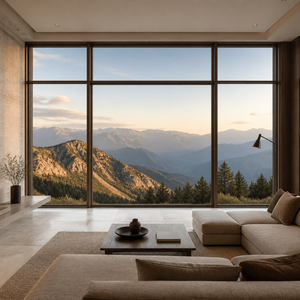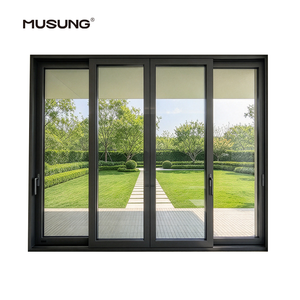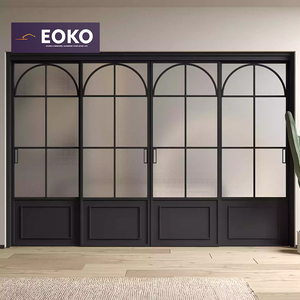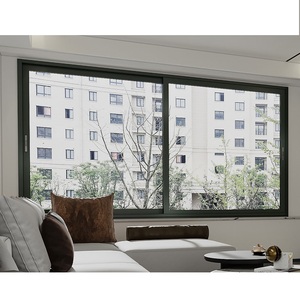
Architectural Fenestration Whitepaper & B2B Export Guide

Top China Aluminum Wood Door Manufacturer & Exporter

Engineering Grade Composite Fenestration Systems: Certified Structural Aluminum Armor Combined with FSC Sustainable Kiln-Dried Hardwoods for Global Residential, Commercial, and Passive House Envelopes.

Precision Engineered Fenestration

Featured Aluminum & Composite Architectural Systems

Explore our primary portfolio of thermal-break aluminum and wood-clad fenestration systems manufactured in Foshan, China. Tested to CE, AAMA, AS2047, and ISO 9001 quality frameworks.

180,000m²
Production Footprint
Intelligent fabrication facility in Foshan industrial corridor.
25+ Yrs
Export Metallurgy
Supplying North America, Europe, Australia & South Asia.
0.79Uw
Thermal Performance
Passive-house certified composite configurations (W/m²·K).
100+
Global Patents & Certs
Tested to CE, ISO 9001, AS2047, and AAMA specifications.
Structural Science & Material Synergy

The Mechanics of Aluminum-Wood Composite Fenestration

In high-end architectural envelope design, standard monolithic materials inevitably present compromises: all-aluminum profiles offer unmatched structural rigidity and weather endurance but suffer from severe thermal conductivity, while solid timber provides organic beauty and natural insulative warmth but remains prone to cyclical hygroscopic warping, UV bleaching, and microbiological deterioration. As a pioneer China Aluminum Wood Door Manufacturer & Exporter, our manufacturing philosophy unites these complementary elements via decoupled composite engineering.

The system relies on an exterior structural skeleton extruded from prime 6063-T6 or 6060-T66 virgin aluminum alloy, shielded by fluorocarbon PVDF or architectural-grade 25-micron anodization, bonded mechanically to a furniture-grade, kiln-dried solid timber interior core (FAS White Oak, European Larch, Burmese Teak, or American Black Walnut). Critical to the long-term integrity of the door is the floating clip-connection matrix: because aluminum has a thermal expansion coefficient of roughly 23 × 10⁻⁶ /K whereas natural wood expands tangentially across grain fibers at wildly divergent rates, direct mechanical adhesion results in internal shearing stress. Our German-patented sliding clip fasteners accommodate differential thermal kinetic expansion across temperature fluctuations from -35°C to +75°C without warping, buckling, or joint compromise.

DERCHI Manufacturing Base in Foshan, China
Automated CNC extrusion processing lines inside our 180,000 m² Foshan fabrication campus.

Decoupled Thermal Barrier (PA66-GF25) Engineering

Thermal Bridging accounts for up to 38% of residential heating and cooling energy loss through conventional fenestration. Our composite door frames incorporate structural polyamide insulation struts reinforced with 25% transverse glass fiber (Technoform PA66-GF25). These multi-chambered thermal barriers physically isolate the external aluminum weather shield from the interior timber casing, pushing frame thermal conductivity down to Uf ≤ 1.1 W/m²·K.

Combined with continuous vulcanized triple-lip EPDM weatherstripping gaskets and silicone-injected vulcanized corner vulcanizations, the system establishes an airtight, hydrostatic envelope capable of stopping driving monsoon precipitation up to 1050 Pa while achieving laboratory sound attenuation indices of STC 42 to 48 dB against intrusive urban frequency pollution.

Comparative Fenestration Matrix: Aluminum-Wood vs. Conventional Systems

Rigorous performance benchmarking against commercial fenestration benchmarks in accordance with EN 14351-1, ASTM E283/E331, and AS 2047 protocols.

Performance Vector Aluminum-Wood Composite Standard Thermal Aluminum Solid Natural Timber UPVC / Vinyl Profiles
Thermal Transmittance (Uw) 0.79 – 1.2 W/m²·K 1.6 – 2.4 W/m²·K 1.3 – 1.8 W/m²·K 1.4 – 1.9 W/m²·K
Structural Wind Load (ASTM E330) Design Load > 5000 Pa (N6) 4000 – 4800 Pa 2200 – 3000 Pa 1800 – 2400 Pa
Acoustic Attenuation (STC) 42 – 48 dB (Triple Laminated) 32 – 38 dB 35 – 40 dB 28 – 34 dB
Weather Shield Lifespan 50+ Years (Zero Rot) 30 – 40 Years 10 – 15 Years (Repaint cycles) 15 – 20 Years (UV chalking)
Interior Aesthetic Value Authentic Kiln-Dried Hardwood Cold Powdered Metal Face Authentic Grain (High upkeep) Synthetic Plastic Film
Hygroscopic Warping Risk 0% (Mechanically Decoupled) 0% High (Swelling, Sticking) Moderate (Thermal Sagging)
Bespoke Typology Matrix

Engineered Product Typologies for Global Procurement

Our factory configures four core architectural systems tuned to distinct climate profiles, spanning tropical coastal humidity, desert solar radiation, and sub-zero continental freezes.

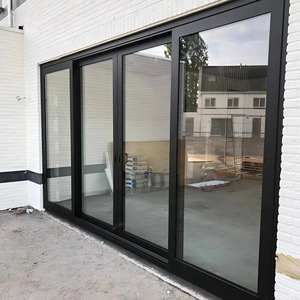
Monumental Lift & Slide Systems

Engineered for seamless indoor-outdoor architectural transitions in luxury villas and penthouses. Utilizes German Siegenia or Hautau lift-and-slide hardware carriages capable of elevating and translating panels up to 450 kg with fingertip effort.

  • Max single panel size: 3500mm (W) × 3800mm (H)
  • Threshold: Low-profile barrier-free flush ADA rail
  • Glazing: 6mm+16Ar+6mm+16Ar+6mm Low-E tempered

Oversized Pivot Entrance Doors

The premier choice for grand residential facades. Built with internal reinforced steel stabilizing bars, dual thermal-break aluminum chassis, and heavy-duty concealed floor spring mechanisms carrying up to 600 kg.

  • Smart Integration: Biometric & 3D Face Recognition
  • Acoustic Auto-Drop Gasket Seal at bottom line
  • Finish: Carved 3D Cast Aluminum with Interior Teak

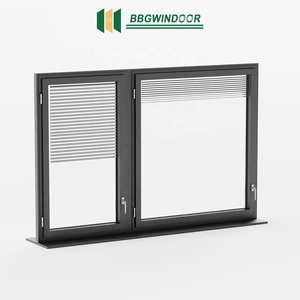
Passive House Tilt-Turn & Casement

Dual-function perimeter compression doors featuring multi-point locking cams that pull the sash hermetically into the frame upon latching. Ideal for cold climates requiring ultra-tight building envelope certification.

  • Thermal Rating: Passive-House Certified Uw 0.79 W/m²·K
  • Hardware: Siegenia Titan AF Multi-Locking Cams
  • Air Tightness: German DIN EN 12207 Class 4 standard
Market Forecasting & Supply Chain Shift

Future Procurement Trends for Aluminum Wood Doors (2025–2030)

Strategic fenestration sourcing is evolving beyond aesthetic choice. Developers, general contractors, and tier-1 procurement agencies are adjusting criteria under tightening climate policies, carbon taxes, and architectural shifts.

1. Embodied Carbon & EPD Auditing

International developers under LEED v4.1 and BREEAM certifications demand Environmental Product Declarations (EPDs). Sourcing certified sustainable lumber (FSC/PEFC) fused with low-carbon hydro-smelted aluminum profiles lowers structural Scope 3 carbon expenditure by up to 42% compared to synthetic PVC alternatives.

2. Jumbo Monumental Glass & Narrow Sightlines

The modern luxury residential market is prioritizing floor-to-ceiling glass expanses exceeding 3.5 meters in unbraced height. Procurement specifications demand higher structural moment of inertia (Ix value) in outer aluminum flanges while maintaining visible interlock mullions under 35mm.

3. Mechatronic Smart Lock Integration

Mechanical keyways are rapidly becoming secondary. Modern entry portals require integrated European multipoint motorized gearboxes (GU Secury Automatic, KFV Genius) that link seamlessly with Crestron, Control4, and KNX smart building management automation platforms.

4. Extreme Climatological Resilience

With intensified tropical typhoon seasons and coastal salinity threats, procurement bids specify cyclone testing compliance (AS/NZS 2047 N6, Florida Miami-Dade NOA hurricane impact approvals) and marine-grade fluorocarbon C5-M anti-corrosion classifications.

Advanced Manufacturing Standards

State-of-the-Art Production & Timber Processing Engineering

Guangdong Dejiyoupin Doors and Windows Co., Ltd. (DERCHI) operates one of China's most sophisticated architectural envelope manufacturing clusters in Shishan, Foshan, spanning 180,000 square meters.

Precision woodworking for aluminum-wood doors requires rigorous humidity stabilization. Imported timber logs undergo 35-day computer-controlled vacuum drying to bring internal equilibrium moisture content precisely down to 8%–12%, matching the interior climatization standards of target export zones and eliminating latent shrinkage or seasonal cracking.

The internal timber sections are milled on high-speed German 5-axis CNC machining centers (Weinig and Homag) utilizing mortise-and-tenon and dowel bonding, coated with eco-friendly German Remmers waterborne wood preservative primers and microporous elastic polyurethane topcoats that let the wood breathe while repelling internal moisture and condensation.

DERCHI International Certifications and Testing Laboratory
Full laboratory physical testing rigs for air permeability, water tightness, and structural deflection.

End-to-End BIM & CAD Engineering

Our 35+ on-staff facade engineers produce parametric Revit / BIM models, structural wind deflection calculations, and comprehensive CAD shop drawings within 48 hours for architectural submittals and tender approval.

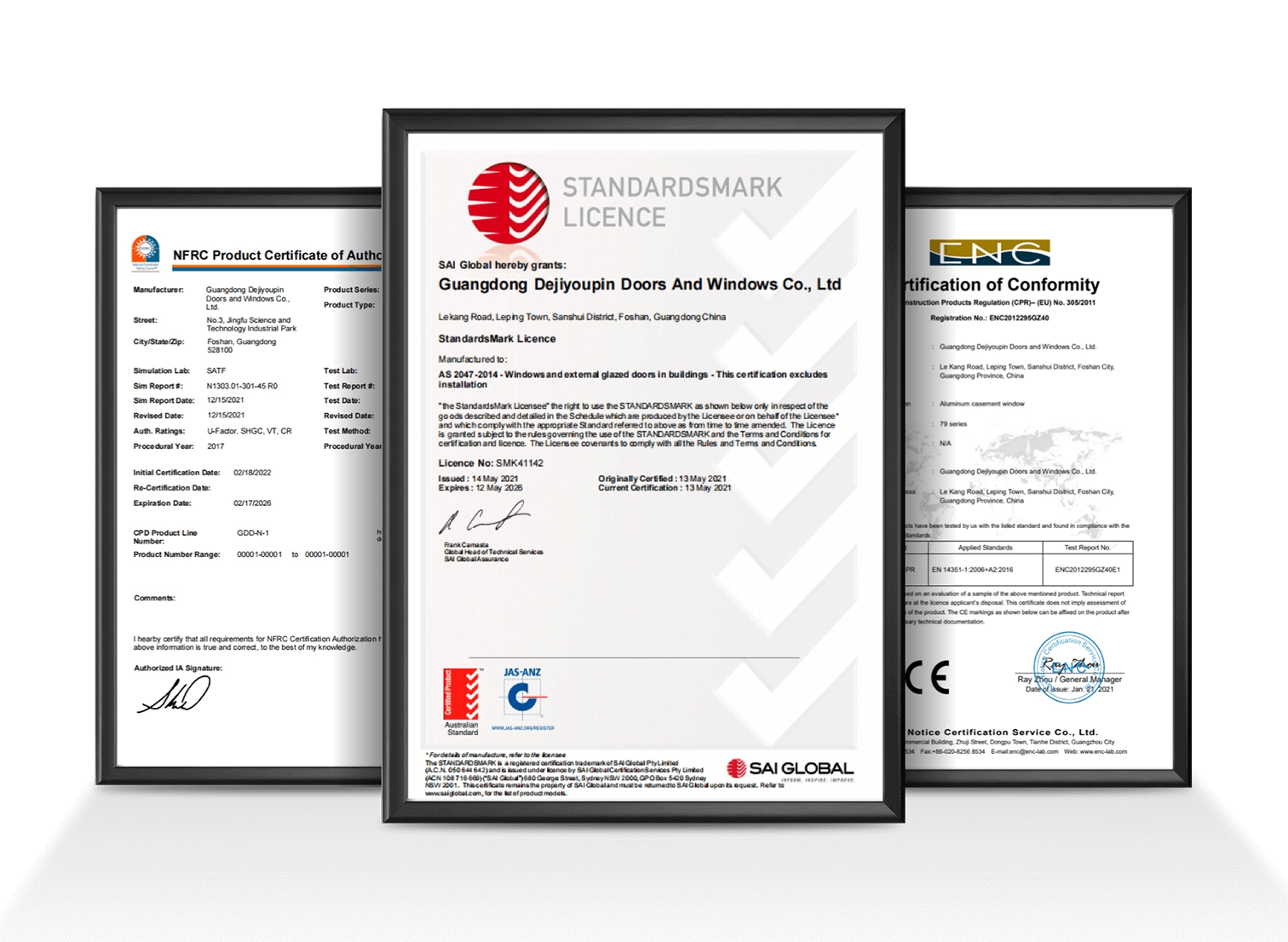
Certified Testing Validation

Products are backed by accredited physical laboratory test certifications including CE EN 14351-1, ISO 9001 quality management, AS 2047 N6 Australian cyclonic wind ratings, and UL fire resistance certification.

Export Logistics & Packing Protection

Every shipment is enclosed in multi-layer shockproof PE foam, heavy corrugated edge guards, and custom non-fumigation reinforced plywood crates with industrial desiccant packs to prevent transit damage and moisture buildup during long sea voyages.

Procurement Due Diligence

Frequently Asked Questions for Sourcing Aluminum Wood Doors

In-depth technical answers addressing manufacturing tolerances, weather sealing, customization, and export supply chain logistics for B2B buyers.

1. How does your composite engineering prevent the solid wood interior from cracking under varied humidity?
We prevent timber movement via three structural engineering protocols: First, raw lumber undergoes automated dry kiln cycling to stabilize equilibrium moisture between 8% and 12%. Second, the timber is laminated in triple-ply finger-jointed blocks with opposing grain alignments, neutralizing dimensional warping stresses. Third, the wood frame connects to the exterior aluminum frame via patented nylon sliding clips (Roto/Savio systems), leaving a 5mm expansion channel. This physical decoupling allows the aluminum to expand in blazing exterior heat without imparting tensile or shear stress to the interior timber.
2. What surface coatings are applied to exterior aluminum profiles for coastal and high-salinity regions?
For coastal deployments (such as Goa, Mumbai, Florida, Sydney, or the Arabian Gulf), we apply fluorocarbon PVDF (polyvinylidene fluoride) architectural coatings conforming to AAMA 2605 specifications (containing 70% Kynar 500 resin) or 25-micron class-1 architectural anodization. These finishes are salt-spray tested for 4,000+ hours in ASTM B117 salt fog chambers, resisting chloride pitting, chalking, color fading, and blistering under harsh ultraviolet sunlight.
3. What is the typical factory production lead time and FOB/CIF shipping protocol for export containers?
Custom engineered aluminum-wood doors have a standard factory production lead time of 28 to 35 calendar days following client approval of CAD shop drawings and hardware configurations. We ship full container loads (20GP, 40HQ) and LCL consolidations from major ports including Shenzhen (Yantian/Shekou) and Guangzhou (Nansha). Direct ocean transits take approximately 12–18 days to South Asian hubs (Nhava Sheva, Colombo, Karachi), 18–24 days to Europe (Rotterdam, Hamburg), and 20–28 days to the US West Coast (Long Beach). All commercial documentation includes Bill of Lading, Packing Lists, Certificates of Origin, and Mill Test Certificates.
4. Can you manufacture custom door configurations based on regional cultural or architectural requirements (e.g., Vastu)?
Yes. As a pure custom-order manufacturer, 100% of our production is fabricated to exact architectural shop dimensions. We routinely accommodate regional preferences such as Vastu Shastra dimensional auspiciousness (specifying custom clear opening widths, heights, and inward clockwise opening geometries), custom transom top arches, sidelights with integrated motorized privacy blinds, and decorative laser-engraved cast aluminum motifs matched with custom wood grain stains.
5. What thermal and acoustic glass configurations do you install in your exterior door systems?
We configure dual-glazed and triple-glazed insulated glass units (IGUs) incorporating tempered glass from world-class suppliers like CSG or Xinyi. Standard setups feature 6mm Low-E + 16mm Argon gas cavity + 6mm clear tempered glass with warm-edge composite Technoform spacers. For ultra-quiet acoustic criteria near airports or arterial highways, we incorporate 0.76mm or 1.52mm acoustic PVB laminated exterior panes, dampening vibrational acoustic resonance and delivering sound insulation indices up to STC 45 dB.
6. What warranties and remote installation assistance do you provide to global contractors and developers?
We provide a 10-year comprehensive structural warranty on all aluminum extrusion assemblies, a 5-year warranty on timber coatings, and a 5-year warranty on mechanical hardware and glazing seals. Every door ships with pre-drilled anchors, coded assembly tags, hardware templates, and 3D step-by-step CAD installation manuals. Our English-speaking fenestration engineers provide direct video-conference on-site installation walkthroughs and structural anchoring audits for project teams.

Request an Architectural Spec & Commercial Quotation

Partner directly with Guangdong Dejiyoupin (DERCHI) to cut intermediary trading markups, access factory-direct pricing, and receive precise CAD shop drawings for your upcoming villa, resort, or commercial project.

FOB / CIF Quotations Available • Fast 48-Hour CAD Drawing Turnaround • Certified Testing Documentation