Featured Commercial & Residential Fenestration Systems
Direct-from-factory architectural systems engineered for structural rigidity, hurricane-level wind load resistance, superior acoustic attenuation, and certified thermodynamic performance.
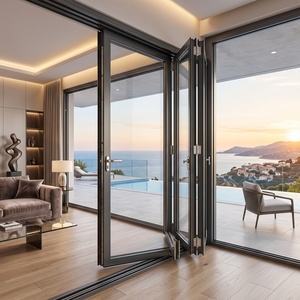
Engineering Integrity of Modern Aluminium Awning Window Systems
A deep-dive technical overview of thermodynamic breaks, wind-load calculations, water ingress resistance, and acoustic dampening mechanisms for structural fenestration specifiers.
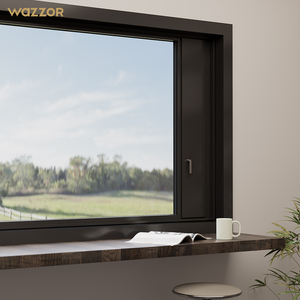
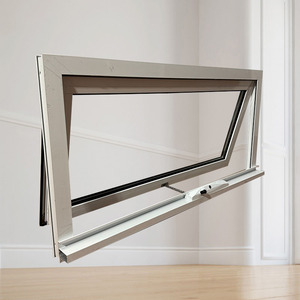
In contemporary architectural design, the building envelope is no longer viewed as a static barrier; it is an active mechanical and thermal diaphragm responsible for indoor environmental quality (IEQ), energy optimization, and life-safety compliance. Top-tier aluminium awning windows (top-hung, outward-projecting fenestration units) occupy a critical space within this discipline. Hinged at the top of the sash and swinging outward from the bottom via manual or motorized chain winders, these systems permit natural aerodynamic ventilation while creating an impermeable barrier against overhead rainfall.
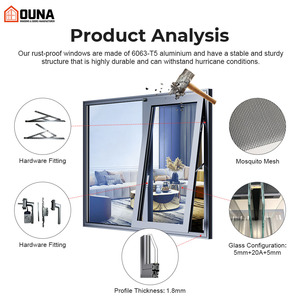
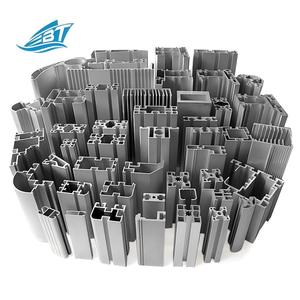
However, the mechanical performance of an awning window relies entirely on the precision engineering of its primary aluminum extrusion profiles, thermal barrier compounds, and compression gasket geometries. Raw 6063-T5 or 6063-T6 architectural-grade aluminum alloys deliver the required tensile yield strength (exceeding 160 MPa) to resist significant wind pressures, but require sophisticated thermal break integration—predominantly multi-cavity polyamide (PA66 GF25) extrusion bars reinforced with 25% glass fiber—to prevent thermal bridging across climate zones.
Isothermal Optimization
Multi-chambered polyamide profiles with low U-values (down to 1.1 W/m²K) drastically eliminate thermal bridging, preventing interior surface condensation in humid tropical or severe cold climates.
Continuous Perimeter Compression
Utilizing high-elasticity automotive-grade EPDM dual/triple weatherstripping gaskets. When the multi-point cam or winder hardware engages, positive pressure seals every perimeter millimeter against air infiltration.
Dynamic Water Management
Engineered pressure-equalized rain-screen chambers with internal cascade weep hole routings ensure that even under severe 700 Pa cyclonic driving rains, interior moisture ingress remains zero.
For structural engineers evaluating projects in hurricane-prone zones, coastal cities, and high-density urban corridors, awning systems provide a measurable advantage over conventional sliding sash configurations. Sliding units invariably require brush seals to facilitate track movement, which degrades air-tightness and water-tightness under dynamic gust loading. Conversely, awning windows utilize negative wind pressure to draw the sash more firmly into the frame perimeter, creating an auto-sealing phenomenon that satisfies high-level international certifications such as AS 2047 (N6 Cyclonic rating), ASTM E330, and CE EN 14351-1 standards.
Global Procurement & Product Evolution Trends (2026–2030)
Analyzing technological shifts, regulatory mandates, and supply-chain adaptations shaping the future of architectural fenestration procurement.
1. Vacuum Insulated Glazing (VIG) Integration
The fenestration industry is transitioning from conventional double-argon glazing to ultra-thin Vacuum Insulated Glazing. With thermal center-of-glass ratings reaching Ug ≤ 0.45 W/m²K in an 8.3mm profile, architects can specify narrower sash profiles without compromising strict net-zero thermal envelope targets.
2. Concealed Automation & Smart BMS Integration
Bulk procurement contracts for commercial complexes and luxury high-rises increasingly specify concealed 24V DC micro-chain actuators embedded directly inside the aluminum profile frame. These actuators link to building management systems (BMS), closing automatically upon rain sensor triggers or opening for night-purge thermal management.
3. Ultra-Slim Sightline Minimalist Profiles
Visual minimalism is pushing profile engineering toward narrower external sightlines without sacrificing structural moment of inertia (Ix/Iy). Advanced 6000-series alloy formulations and structurally glazed sash architectures deliver expansive daylighting apertures with hidden top-hung hardware.
4. Circular Economy & Low-Carbon Aluminum
Enterprise procurement teams across North America, Europe, and Australasia now mandate Environmental Product Declarations (EPDs). Sourcing from factories utilizing hydro-powered smelters and post-consumer recycled aluminum scraps (yielding less than 4.0 kg CO2e per kg Al) has transitioned from an option to a strict tender qualification criterion.
5. Stringent Acoustic Isolation in Megacities
Rapid urban densification has made acoustic envelope performance paramount. Procurement specs require awning windows paired with multi-layer acoustic PVB or SentryGlas laminates and asymmetric glazing thicknesses (e.g., 6mm + 12Ar + 8.76mm acoustic laminated), achieving verified sound transmission losses above Rw + Ctr ≥ 42 dB.
6. Factory-Direct Modular Crating & BIM Delivery
International sourcing requires digital de-risking. Tier-1 manufacturers provide Revit/BIM family models during early project stages and utilize custom barcoded fumigation-free plywood crates, ensuring exact installation sequence coordination and seamless logistics through international container handling ports.
Guangdong Dejiyoupin Doors and Windows Co., Ltd. (DERCHI)
Ranked among China's Top 10 premium door and window manufacturers, operating 180,000 square meters of vertically integrated fabrication, testing, and engineering facilities in Foshan, Guangdong.

180,000m² Production Base
Our expansive industrial complex in Shishan Town, Nanhai District, Foshan, combines computerized CNC profile machining, thermal break crimping, glass lamination, and automated assembly line lines under unified quality control.

International Testing & Certifications
Certified to international standards including CE, ISO 9001, AS 2047 (N6 Cyclonic Rating), and UL fire standards. Backed by 8 international quality marks and over 30 structural and appearance design patents.

Bespoke CAD & Engineering Support
Our in-house design office provides full shop drawings, static wind load calculations, mullion structural deflection modeling, and BIM family components to eliminate errors between architectural plans and on-site framing.

Full-Spectrum System Sourcing
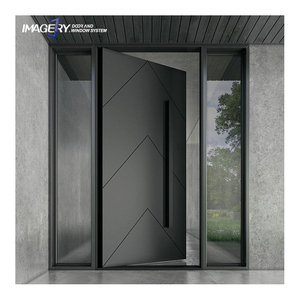
Streamline logistics by procuring thermal break awning windows, oversized hurricane impact pivot doors, cast aluminum entrance portals, curtain walls, and automatic garage doors from a single verifiable manufacturing source.
Frequently Asked Sourcing & Engineering Questions
Direct answers addressing technical specifications, port logistics, custom sizing tolerances, and certification compliance for procurement managers.
Q1: How does an aluminium awning window perform against heavy rain compared to casements?
Awning windows inherently provide superior weather protection during active rainfall because the sash hinges at the top and slopes downward and outward. This creates a natural umbrella canopy over the opening, allowing fresh air circulation while repelling falling water. Under high driving wind conditions, the multi-point lock compresses the bottom and side continuous EPDM seals directly against the internal aluminum frame rebate, delivering water tightness test pressures up to 600–700 Pa (AS 2047 compliant).
Q2: What are the standard lead times for custom-dimensioned commercial awning orders?
Standard fabrication lead times run between 25 and 35 working days following final client sign-off on shop drawings and hardware finishes. Complex architectural configurations requiring specialty glass configurations (such as curved panes, vacuum insulated units, or electrochromic switchable glass) typically average 35 to 45 days. Production schedules align with container shipment cutoffs to minimize warehouse dwell times.
Q3: Which surface treatments are recommended for severe coastal or high-salinity air?
For coastal projects situated within 1 to 5 kilometers of the shoreline, standard 15-micron anodizing or basic powder coatings are insufficient. We recommend either architectural-grade PVDF (fluorocarbon) three-coat finishes with a dry film thickness exceeding 40 microns, or Qualicoat Class 2 certified super-durable powder coatings. These treatments resist salt-fog degradation, UV chalking, and blistering for more than 20 years.
Q4: Can DERCHI accommodate third-party factory quality inspections prior to crating?
Yes. We welcome third-party inspection firms (including SGS, TÜV, Bureau Veritas, or client-appointed engineering representatives) to conduct on-site factory quality audits. Our facility includes dedicated testing chambers where inspectors can independently verify diagonal dimension tolerances, coating thickness, glass safety markings, seal compression, and mechanical chain winder smooth cycle operations before export container sealing.
Q5: What shipping terms and export ports are supported for overseas shipments?
We routinely deliver on FOB, CFR, CIF, and DDP terms, shipping primarily through major southern China maritime gateways such as Nansha (Guangzhou), Yantian/Shekou (Shenzhen), and Sanshan (Foshan). Cargo is securely packed in reinforced wooden skeleton crates with protective corner buffers, shrink wrap, and desiccant bags engineered to withstand multi-week oceanic freight transit without physical abrasion or moisture oxidation.
Q6: How do chain winders resist forced entry and wind-induced sash vibration?
Our heavy-duty stainless steel chain winders utilize precision internal reduction gears with self-locking mechanisms. When an awning sash is wound outward, the gearbox locks in position against positive or negative buffeting wind forces, preventing sash flutter. Furthermore, integrated multi-point locking side latches mechanically clamp the corners of the window into hardened steel keepers, effectively deterring pry-bar intrusion attempts.
Partner with an Established Fenestration Manufacturer
Whether you require tender-ready architectural CAD shop drawings, acoustic laboratory certificates, or factory-direct volume container pricing, our engineering team is at your service.