Featured Architectural Systems & Heavy-Duty Structural Fenestration
Manufactured under strict ISO 9001 and AS 2047 parameters, our engineered entrance systems, rolling grilles, sliding facades, and commercial profiles deliver verified thermal, acoustic, and wind-load performance.
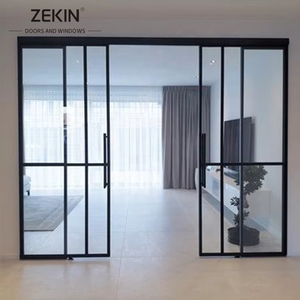
Modern Slim Frame Aluminum Grill SDL Sliding Patio Door
- 6063-T6 Slim Sightline Profile
- Multi-Point Deadbolt Security
- Ultra-Quiet Stainless Bottom Track
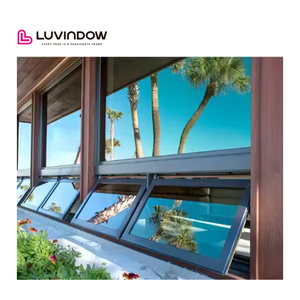
Thermal Break Aluminum Awning & Folding Window
- Polyamide PA66 Thermal Isolation
- Dual EPDM Air-Compression Seal
- Tested for Tropical Cyclone Loads
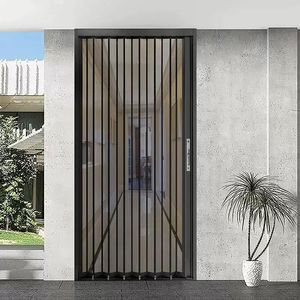
Anti-Theft Diamond Mesh Aluminum Alloy Folding Door
- 304 Marine Stainless Diamond Weave
- Integrated Anti-Pry Interlocking Stile
- Dual Ventilation & Intrusion Defense
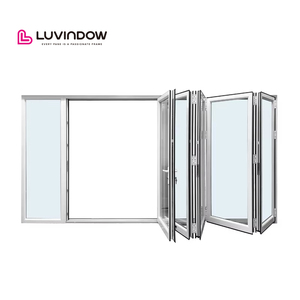
Eco Thermal Invisible Slide Aluminum Folding Villa Doors
- Heavy-Duty Top-Hung Carrier Wheels
- Flush Sill Design with Internal Drain
- Thermal Efficiency U-Factor < 1.8
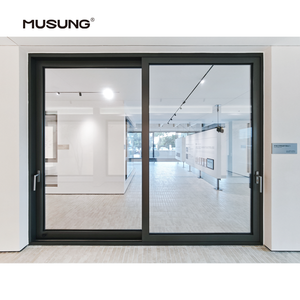
Commercial Heavy Duty Lift & Slide Patio Glass Door
- 400kg Sash Load Hydraulic Lift System
- Acoustic Attenuation Rating Rw 38dB
- Perimeter Gasket Pressure Locking
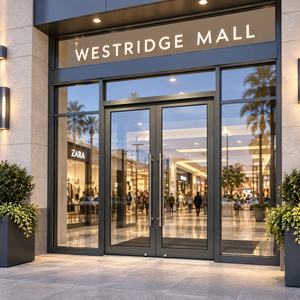
Commercial Office & Retail Front Aluminum Spring Door
- 500,000 Cycle Floor Spring Rating
- High-Strength Extruded Corner Cleats
- Panic Hardware & Access Control Ready
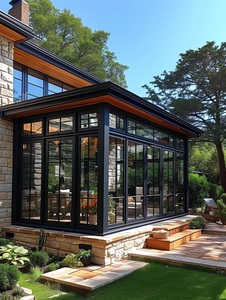
Heat Insulated Double Glazed Hotel Sunroom Sliding Door
- Low-E Double Tempered Argon Units
- Fluorocarbon Coating Anti-UV Finish
- Superior Air-Tightness Class 4
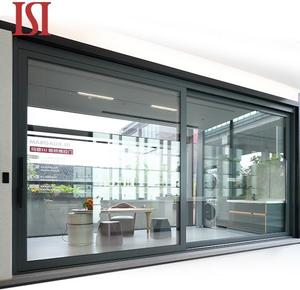
Custom French Style Aluminum Door with Smart Biometric Lock
- Biometric Semiconductor Sensor
- Aesthetic Classic Architectural Muntins
- Multi-Directional Hook Bolt System
The Definitive Engineering & Procurement Whitepaper: Evaluating Aluminium Roller Door Manufacturers
Specifying high-performance aluminium roller shutters and industrial roller doors for large-span logistics hubs, coastal residential enclosures, retail storefronts, and aerospace hangars requires rigorous scrutiny beyond surface aesthetics.
In the contemporary B2B fenestration market, aluminium roller doors have decisively supplanted conventional galvanised sheet steel systems. The physical imperative is clear: high-tensile 6063-T5 and 6063-T6 architectural aluminium alloys deliver an exceptional strength-to-weight ratio, native self-passivating anti-corrosion properties, and advanced extruded curtain design possibilities. However, the international procurement landscape is plagued with extreme variance in structural wall thicknesses, thermal polyurethane filling densities, barrel deflection tolerances, and motor duty cycles.
This technical whitepaper provides MEP consultants, structural engineers, procurement managers, and commercial developers with the quantitative metrics, mechanical calculations, and factory auditing criteria required to source premium, zero-defect rolling door assemblies directly from top-tier Chinese manufacturing clusters.
1. Curtain Slat Metallurgy & Structural Mechanics
The foundation of any industrial or architectural rolling door is the profile cross-section of the interlocking slats. High-volume, low-tier fabricators frequently utilize re-melted scrap billets with excessive iron and zinc impurities, leading to catastrophic intergranular corrosion and stress-cracking under repetitive flexing. In contrast, verified Tier-1 manufacturers adhere to primary A00 virgin ingot standards extruded through automated multi-stage presses.
Curtains are predominantly engineered in two functional configurations:
- Double-Skin Polyurethane Insulated Slats: Formed through continuous roll-forming or precision extrusion with a core injection of high-density CFC-free polyurethane foam (50 kg/m³ to 60 kg/m³). This creates a structural composite matrix delivering acoustic isolation up to Rw 25dB and thermal transmittance values of U ≤ 1.8 W/(m²·K).
- Heavy-Duty Extruded Monolithic Hollow Slats: Featuring profile wall gauges from 1.2 mm to 3.5 mm with internal multi-chamber stiffening ribs. These slats are specified where physical intrusion defense (Class RC3 to RC4 according to EN 1627) and massive wind-deflection limits are mandatory.
2. Wind-Load Deflection Dynamics (AS 2047 & ASTM E330 Compliance)
When engineering oversized openings exceeding 6.0 meters in span, roller doors function as massive structural membranes exposed to static and dynamic pressure differentials. According to Australian Standard AS 2047 (Serviceability and Ultimate Limit State wind pressures) and international equivalents (EN 12424 Class 4/5), barrel deflection and curtain disengagement from vertical guide tracks represent the primary failure modes.
Top trusted manufacturers neutralize this hazard through three patented mechanical innovations:
- Structural Wind-Endlocks: Cast ductile iron or heavy forged aluminum hooks riveted to alternating slat ends that physically interlock into the steel/aluminum guide rail lip when positive or negative wind pressures induce outward bowing.
- Finite Element Optimized Guide Profiles: Guide rails extruded with structural wall thicknesses exceeding 3.0 mm, fitted with co-extruded Santoprene brush seals that prevent wind-driven blow-out while damping resonant vibrations.
- Engineered Barrel Shaft Sizing: Counter-deflection dead-axle or live-shaft systems calculated so that under maximum curtain weight and wind pressure, shaft deflection never exceeds 1/400th of the clear opening width (L/400).
Engineering Matrix: Aluminium Roller Door Systems vs. Alternatives
Comparative structural, thermal, and lifecycle analysis for commercial facility managers and design-build contractors.
| Performance Metric | Extruded Architectural Aluminium | Insulated PU Core Aluminium | Galvanised Cold-Rolled Steel | High-Speed Spiral Aluminium |
|---|---|---|---|---|
| Structural Alloy / Spec | Alloy 6063-T6 / 6082-T6 | 0.5-0.8mm Shell + 55kg/m³ PU | DX51D+Z275 Galvanised Coil | Extruded Double Wall AlMgSi |
| Linear Slat Weight | 8.5 – 14.5 kg/m² | 6.0 – 9.5 kg/m² | 12.5 – 22.0 kg/m² | 10.0 – 16.0 kg/m² |
| Corrosion Half-Life (ISO 9227) | > 3,000 hrs Salt-Spray | > 2,500 hrs Salt-Spray | 400 – 800 hrs (Rust Prone) | > 3,000 hrs Salt-Spray |
| Thermal Transmittance (U-Value) | 4.5 – 5.8 W/(m²·K) | 1.5 – 2.2 W/(m²·K) | 5.5 – 6.5 W/(m²·K) | 2.2 – 3.2 W/(m²·K) |
| Operating Speed Range | 0.15 – 0.25 m/s | 0.15 – 0.30 m/s | 0.10 – 0.18 m/s | 1.0 – 2.5 m/s (High Speed) |
| Maintenance Cycle (B10) | 50,000 – 100,000 cycles | 30,000 – 60,000 cycles | 20,000 – 40,000 cycles | 200,000+ cycles |
| Architectural Aesthetics | Qualicoat Powder / Anodized | Smooth / Stucco Polyester | Industrial Rough / Painted | Metallic Polished / Powdered |
Global Procurement & Manufacturing Trends (2025–2030)
Emerging supply chain realities, ESG mandates, and mechanical evolutions reshaping wholesale door importing.
Low-Carbon Recycled Alloys
Global cross-border carbon border adjustment mechanisms (such as EU CBAM) are compelling Tier-1 factories to transition to recycled hydro-powered aluminium billets with certified Environmental Product Declarations (EPD), dropping embodied carbon below 4.0 kg CO2e per kg of finished profile.
Intelligent DC Inverter Drives
Traditional AC asynchronous motors are being phased out in favour of permanent-magnet brushless DC (BLDC) servo motors. Integrated frequency converters deliver soft-start and soft-stop kinetics, prolonging mechanical gear life by 300% and seamlessly communicating via RS485 and Modbus BMS protocols.
Hybrid Micro-Perforated Curtains
High-end retail and commercial parking spaces increasingly require high-security physical deterrence alongside passive natural ventilation. Precision micro-perforated CNC slats provide up to 38% free airflow area while blocking insect and debris ingress without sacrificing curtain rigidity.
Modular Cassette Pre-Assembly
To slash sky-high site installation labor in North America, Europe, and Australia, leading Chinese OEM factories deliver fully pre-wired, pre-tensioned modular cassette systems. The roller barrel, motor, safety brake, and internal guide sections ship unified, dropping field erection times by over 45%.
Surface Chemistry & Anti-Corrosion
Industrial doors installed within 5 km of marine coastlines require superior finishing. Authentic manufacturers deploy Class 2 Qualicoat architectural powder coatings with super-durable resin bases (minimum 60–80 micron film thickness) or hard-anodizing exceeding 25 microns (Qualanod certified). This guarantees the curtain survives 3,000+ hours of continuous neutral salt spray (ASTM B117) and intense solar UV radiation without chalking, flaking, or micro-cracking.
Autonomous Safety Kinematics
Operational safety on motorized doors is governed strictly by EN 12453, EN 12604, and UL 325. Verified assemblies incorporate wireless pneumatic or optoelectronic safety bottoms that instantly detect obstacles upon 5 mm of compression, reversing downward travel in less than 150 milliseconds. Integrated inertial anti-drop safety brakes arrest the curtain within 100 mm if the drive motor gearbox experiences mechanical decoupling.
Thermal Decoupling & Lintel Sealing
The weakest link in roller door installations is the expansive perimeter gap around the overhead coil hood and jambs. Advanced engineering incorporates full perimeter nylon brush seals paired with thermal-break hood fascia boxes. Dual continuous neoprene rubber flaps seal directly against the curved face of the rolling barrel, mitigating convective drafts and reducing building HVAC energy loss by up to 28%.
Industrial Manufacturing Prowess: Guangdong Dejiyoupin Doors & Windows Co., Ltd. (DERCHI)
Recognised consistently among China's Top 10 fenestration and door manufacturing leaders, our expansive production hub operates directly out of Foshan, Guangdong — the world's most advanced architectural aluminium fabrication ecosystem. We provide international project teams, commercial distributors, and villa developers with completely verified, single-source manufacturing accountability.
Eliminating intermediaries, our vertically integrated plant controls every stage: raw billet testing, multi-ton automated extrusion presses, precision CNC laser cutting, automated continuous polyurethane foaming injection lines, and multi-point robotic welding. Every custom assembly undergoes rigorous pre-shipment dry runs and mechanical torque testing before packing.

The Professional Importer's Factory Audit Protocol: 5 Mandatory Verification Checks
Before releasing deposits to any overseas rolling door factory, demand verified documentation across these 5 technical checkpoints to guarantee project compliance and protect your investment:
B2B Procurement & Engineering FAQ: Technical Answers for Global Sourcing
Clear, authoritative guidance addressing structural engineering specifications, port logistics, custom tooling, and building code compliances.