Engineered Architectural Solutions: Windows, Doors & Specialized Openings
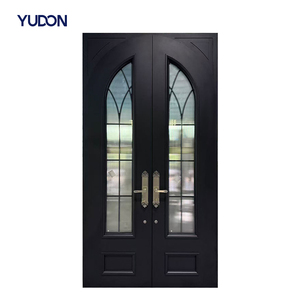
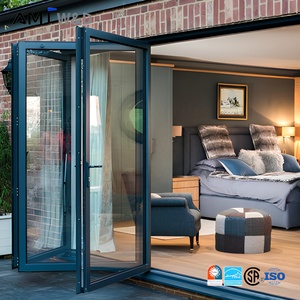
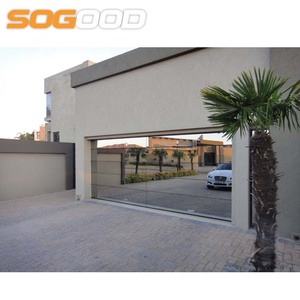
High-load vertical sliders, multi-axis bi-folding partitions, automated electric lift fenestration, and fortified entrance systems rigorously fabricated in our 180,000 m² smart plant.
The Structural Renaissance of Aluminium Sash Fenestration
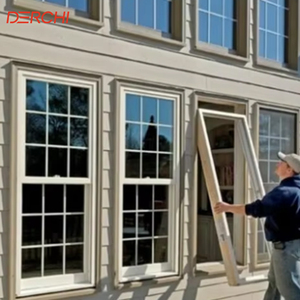
How modern primary alloy extrusion, polyamide multi-cavity thermal barriers, and precision spiral balancing have transformed vertical sliding sash windows into high-performance architectural systems.
Traditional vertical sliding sash windows—long celebrated for their historical elegance in Georgian, Victorian, and American Colonial architecture—frequently suffered from severe structural shortcomings when fabricated from timber or unreinforced vinyl (uPVC). These legacy materials inevitably subjected building operators to swollen frames, mechanical jamming, air infiltration, wood-rot, and catastrophic thermal bridging. In modern commercial and luxury residential envelopes, extruded 6063-T5 and 6063-T6 architectural aluminium has fundamentally revolutionized this vertical fenestration category. Engineered aluminium sash systems combine slender, ultra-crisp sightlines with unmatched mechanical stability, permitting vast glass apertures that effortlessly sustain high cyclic wind pressures without frame deflection.
As one of China's Top 10 fenestration and door brands operating out of the Shishan industrial cluster in Foshan, Guangdong, Guangdong Dejiyoupin Doors and Windows Co., Ltd. (DERCHI) has re-engineered the classic sash architecture. Utilizing CNC four-point extrusion crimping, multi-stage fluorocarbon (PVDF) surface treatments, and advanced thermal-barrier integration, our aluminium vertical sliding windows meet and exceed the stringent demands of international building codes, including Australian Standard AS 2047 (rated to N6 extreme cyclone zones), North American AAMA/WDMA/CSA standards, and European CE standards. Sourcing directly from an established Tier-1 manufacturer eliminates trading intermediary overheads while conferring full design freedom, certified shop drawings, and guaranteed metallurgical purity.
Anatomy of an Export-Grade Aluminium Sash Window
Examine the internal mechanical components, balance mechanisms, and acoustic-thermal barriers that separate commercial-grade systems from ordinary residential fabrications.
PA66 GF25 Polyamide Thermal Barriers
Unlike cheap resin pouring or PVC insulators, we press 25% glass-fiber reinforced polyamide (PA66 GF25) thermal strips into internal and external aluminium extrusions. This achieves U-values down to 1.4 W/m²K, entirely arresting winter thermal bridging and scorching summer heat penetration.
Precision Constant-Force Balances
Engineered with calibrated stainless steel torsion spiral balances and heavy-duty constant-force coil springs. Heavy double or triple insulated glazing units weighing in excess of 65 kg can be lifted with a whisper-quiet operating force under 15 Newtons, retaining position at any height.
Multi-Chamber EPDM Compression Sealing
Continuous closed-cell vulcanized EPDM gaskets engineered with co-extruded finned weatherstripping around interlock rails. This air-barrier design guarantees air permeability ratings under 0.1 m³/(h·m) and watertightness exceeding 700 Pa against wind-driven torrential monsoon downpours.

End-to-End Control Over Extrusion, Machining & Export Assembly
As an internationally acknowledged manufacturer, DERCHI operates high-precision automated CNC cutting lines, multi-axis milling routers, automated gasket insertion machines, and automated silicone structural glazing units.
- Primary Billets Exclusively: 100% virgin 6063-T5 aluminium ingots, eliminating scrap inclusions that cause pitting, micro-cracks, and structural fatigue.
- Autonomous Anodizing & Fluorocarbon Lines: 25-micron architectural powder coats (AkzoNobel & Tiger) and 3-coat PVDF resistant to UV chalking and seaside salt spray.
- In-House Test Chamber: Wind pressure, air permeability, dynamic water penetration, and cyclic mechanical testing calibrated to AS/NZS 4420 and ASTM E283/E330/E331.
- Heavy Sea Freight Packaging: High-density polyethylene protective film, shock-absorbing corner guards, waterproof wrap, and fumigated reinforced plywood crates.
Procurement & Technology Trends Shaping the Industry (2025-2030)
For property developers, international general contractors, and procurement heads: these are the defining specifications driving institutional fenestration tenders.
Electric Remote & Smart Home BMS
The transition toward motorized vertical lift sash systems integrated with Zigbee, RS485, and KNX building automation. Concealed ultra-quiet 24V DC tubular actuators allow hands-free ventilation, automatic rain-sensor closing, and centralized hotel BMS management.
Ultra-Narrow Sightlines & Concealed Sash
Architectural minimalism dictates maximizing visual daylight transmission (VLT). Novel sash designs embed the vertical frame inside outer perimeter structural pockets, narrowing the interlock mullion to a featherlight 28mm while providing superior glass-to-frame ratios.
Decarbonization & Low-Carbon Aluminium
Strict ESG and green building standards (LEED, BREEAM, Green Star) demand audited Environmental Product Declarations (EPD). Hydro-powered green aluminium billets combined with warm-edge TPA spacers significantly minimize the building's upfront embodied carbon.
Cyclone-Proof & Bullet-Resistant Glazing
With climate volatility and stringent coastal regulations across Florida, the Caribbean, the South China Sea, and South Asia, demand has surged for hurricane-impact vertical sliding windows integrated with 1.52mm/2.28mm SentryGlas (SGP) laminated glass.
Empirical Benchmark: DERCHI vs. Generic Export vs. uPVC Systems
Rigorous engineering performance metrics derived from laboratory tests under Australian (AS 2047), European (EN 14351), and American (AAMA 101) standards.
| Evaluation Parameter | DERCHI Heavy Commercial Aluminium | Generic Exporter (Commodity Grade) | Standard uPVC Sash Window |
|---|---|---|---|
| Alloy Metallurgy & Wall Thickness | 6063-T6 Primary (2.0mm – 3.0mm) | Recycled Blend (1.2mm – 1.4mm) | Polyvinyl Chloride + Thin Steel Core |
| Design Wind Load (Ultimate Strength) | 4500 Pa+ (AS 2047 N6 Cyclone Pass) | 1500 Pa – 2000 Pa | 1200 Pa (Prone to plastic deflection) |
| Water Penetration Resistance | 700 Pa (Sub-sill drained channel) | 250 Pa – 300 Pa | 200 Pa – 300 Pa |
| Thermal Insulation (U-Value) | 1.4 – 1.8 W/m²K (Polyamide Break) | 3.8 – 4.5 W/m²K (Non-thermal) | 1.6 – 2.0 W/m²K |
| Acoustic Attenuation (Rw / STC) | Rw 42 dB (Acoustic laminated DGU) | Rw 28 dB – 30 dB | Rw 30 dB – 32 dB |
| Operational Balance Lifespan | 50,000+ Cycles (Tested Class 5) | 10,000 Cycles (Cording snap risk) | 15,000 Cycles (Spiral binding) |
| UV Degradation & Termite Immunity | 100% Termite Proof & Zero UV Chalk | Surface chalking within 3 years | Discoloration & brittle microcracks |
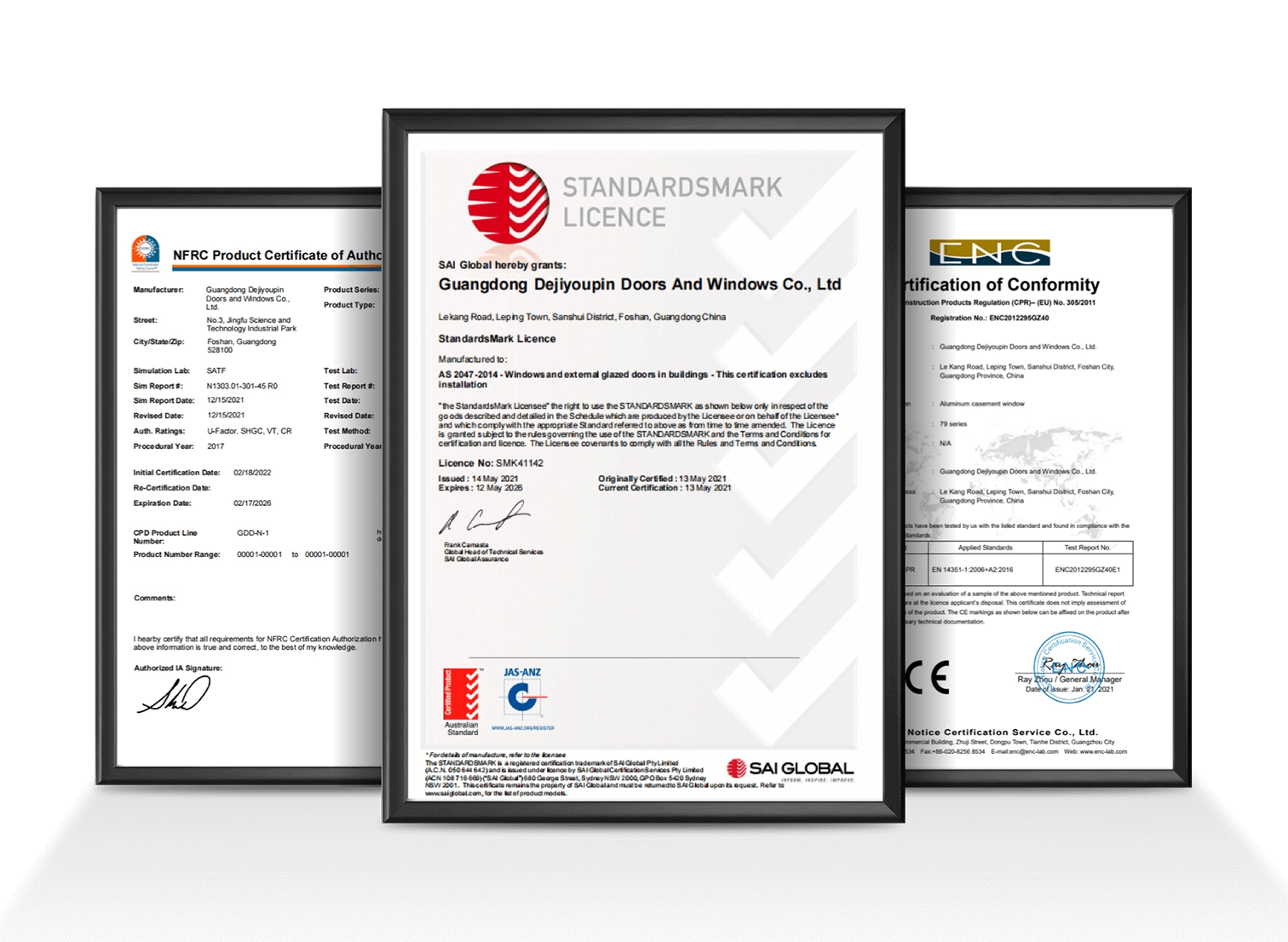
Global Code Compliance & Third-Party Testing
Global façade engineers and corporate project managers cannot rely on verbal assurances. DERCHI maintains a dedicated quality assurance center backed by the world's most rigorous certification registries.
Our architectural systems have undergone full physical cyclic testing for cyclonic wind pressures, dynamic water ingress, acoustic isolation, and forced entry security. When specifying DERCHI, you receive accredited NATA-certified laboratory reports, full CAD shop drawings with finite element stress analyses, and detailed thermal simulation reports ready for municipal building approvals.

Frequently Asked Questions for Project Specifiers & Importers
Clear, direct, and unvarnished engineering answers covering custom extrusion, balance mechanics, seaworthy packaging, and architectural site integration.
Q1: How does an aluminium vertical sash handle thermal expansion in extreme climates?
Aluminium possesses a linear thermal expansion coefficient of approximately 23 × 10⁻⁶ /K. Over a 3.0-meter tall window in climates ranging from -10°C to +45°C, thermal expansion equates to roughly 3.8mm. DERCHI accounts for this by integrating calibrated perimeter expansion pockets, sliding interlocking joints lined with high-elasticity EPDM, and floating glass stop blocks, ensuring that sashes slide freely without binding throughout extreme seasonal swings.
Q2: What balancing hardware mechanisms do you engineer for oversized vertical sliders?
For light-to-medium sashes (under 30 kg), we deploy adjustable stainless steel spiral balances that allow tension calibration on-site. For heavy commercial sashes fitted with double or triple insulated acoustic glass (30 kg to 85 kg), we integrate precision constant-force spring coils (Caldwell or equivalent Tier-1 mechanisms). For grand-format apertures over 85 kg, we implement hidden DC intelligent electric motorized jacks with built-in anti-pinch sensors.
Q3: Can DERCHI accommodate non-standard sizes, arched heads, and Vastu / Feng Shui dimensions?
Yes. Every order is 100% custom engineered from mill billets. Our structural engineering department produces parametric CAD shop drawings and 3D BIM models for sign-off. We easily fabricate segmented or true-radius arched sash windows, custom Georgian bar (colonial grid) layouts, acoustic stepped glass, and dimensionally auspicious openings mapped to exact client specifications.
Q4: How does DERCHI ensure sea-freight containers arrive with zero glass breakage or frame scratching?
Every window frame is protected with 80-micron static surface film. Glass surfaces are cushioned with self-adhesive cork isolation pads. Units are completely enveloped in shock-absorbent closed-cell polyethylene foam, encased in heavy-gauge corrugated cartons, and then locked into treated, fumigated full-enclosure plywood crates with internal steel strapping. In over 25 years of shipping to 60+ countries, our shipping claim rate is under 0.2%.
Q5: What are the Incoterms and port-handling protocols for our project destination?
We regularly quote on FOB Foshan / Guangzhou / Shenzhen, as well as CIF, CFR, or DDU / DDP terms to all primary world ports, including Nhava Sheva (JNPT), Mundra, Chennai, Karachi, Chittagong, Colombo, Sydney, Melbourne, Los Angeles, and Dubai. We provide complete documentation suites: commercial invoice, packing list, certificate of origin, Bill of Lading, and certified factory test reports for swift customs clearance.
Q6: What is the factory production lead-time and sample prototyping process?
Standard production lead time is 25 to 35 business days following final CAD drawing approval and glass specification sign-off. For bespoke large-scale commercial developments, we can fabricate functional full-scale mock-up samples for laboratory air/water/structural testing or architect inspection prior to containerized mass production.
Connect Directly with Our Façade Engineering Desk
Accelerate your project schedule with direct factory pricing, parametric CAD shop drawings, and certified performance documentation. Get in touch with our bilingual engineering team right now.