Engineering Whitepaper & B2B Directory
Top Trusted Aluminum Glazed Windows Manufacturers & Factories
Global procurement specifications, thermodynamic envelope innovations, and OEM/ODM engineering guidelines for architects, facade contractors, and high-volume project developers.
Precision Engineered Fenestration
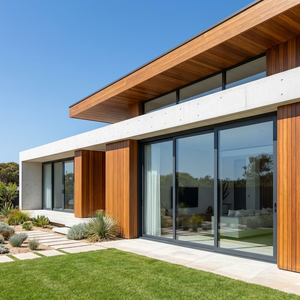
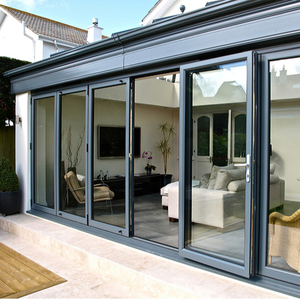
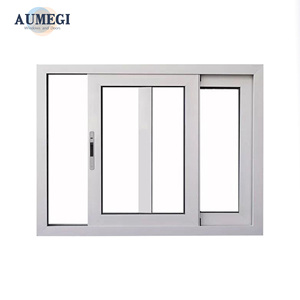
High-Performance Glazed Windows & Architectural Doors
Direct manufacturing lines engineered to meet stringent AS2047, NFRC, CE, and Florida Hurricane impact requirements. Select a system below to review technical schematics or obtain customized project quotes.
Primary 6063-T5 Billet Precision
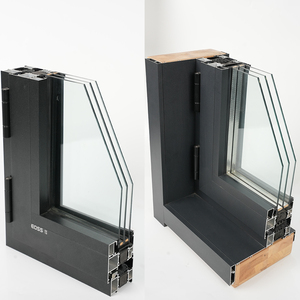
We refuse recycled scrap scrap ingots. Our extrusion lines strictly process pure primary architectural 6063-T5 aluminum alloys, securing higher tensile strength, flawless anodizing surfaces, and superior deflection resistance under severe gale loads.
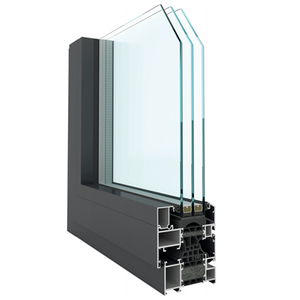
Technoform PA66 Thermal Struts
Thermal breaks utilize high-durability German Technoform polyamide (PA66GF25) reinforced with 25% short glass fibers. This preserves thermal co-efficiency, eliminates interior frame condensation, and resists long-term thermal expansion warping.
Hermetic Dual-Sealed IGUs
Double and triple glazed units are assembled in climate-controlled clean rooms with molecular sieve desiccant, automated butyl primary seals, and structural silicone secondary seals filled with 90%+ Argon gas for thermal decay prevention.
Turnkey Pre-Glazed Fitment
Frames, multi-point locks, frictionless tandem rollers, and perimeter EPDM co-extruded gaskets undergo 100% dry-fit validation prior to sea-worthy crating. Minimizes on-site contractor adjustment errors and speeds exterior building envelope enclosure.
Market Dynamics & Engineering R&D
The Evolution of Modern Glazed Fenestration Systems
A technical assessment of building codes, thermodynamic physics, and material science shaping modern exterior building envelopes.
From Cold Hollow Sections to Polyamide Isothermal Barriers
First-generation architectural aluminum windows relied on non-insulated hollow sections that acted as energetic conduits, precipitating rampant indoor thermal transfer, interior framing frost, and HVAC energy bleed. The industry's definitive watershed arrived with Polyamide Structural Struts mechanically crimped between separate internal and external extruded profiles.
By splitting the aluminum profile into two thermally distinct components, modern systems interrupt conductive paths. When coupled with warm-edge composite glass spacers and warm-air gas matrices (Argon/Krypton), overall system overall heat transfer coefficients (U-Values) have drastically plummeted from an inefficient 5.8 W/m²K down to ultra-low Passive House thresholds of Uf ≤ 1.1 W/m²K.
Multi-Cavity Acoustic Damping & Extreme Atmospheric Sealing
Urban density and extreme meteorological volatility require structural profiles capable of resisting both cyclical wind loading and intense acoustic intrusion. Historical brush-pile sweeps have been systematically replaced by continuous, vulcanized automotive-grade EPDM gaskets equipped with vulcanized molded corner splices.
Simultaneously, the integration of asymmetrically paired laminated sound-control acoustic glass membranes (PVB or SentryGlas) allows modern aluminum glazed systems to easily attenuate low-frequency vehicular and aviation noise, posting Sound Transmission Class ratings surpassing STC 42-45 dB. Hydrostatic weep-hole baffles safeguard against 900 Pa driving-rain monsoons and coastal cyclone events.
Strategic Sourcing 2026-2030
Future Global Procurement Trends
How institutional property developers, general contractors, and facade consultants optimize supply chains and de-risk cross-border procurement.
Ultra-Narrow Sightlines & Concealed Hardware
Architects are standardizing ultra-minimalist interlocks (under 20mm visible width) and concealed tilt-turn casement hinges. B2B procurement is increasingly shifting to suppliers with specialized heavy-duty extrusion tooling capable of carrying up to 400kg moving glass sashes without visible frame clutter or torsional sag.
Embodied Carbon & Low-Carbon Billets
Driven by strict LEED v4.1 and European CBAM carbon border compliance, commercial procurement schedules demand Environmental Product Declarations (EPDs). Sourcing teams favor integrated manufacturers whose aluminum billet extrusion is certified hydro-powered, containing measurable post-consumer closed-loop recycled alloy content.
Smart Building & Motorized Envelope Integration
Standalone fenestration has given way to IoT-enabled motorized facades. High-end residential and hotel projects procure casement and sliding mechanisms pre-wired with brushless 24V linear actuators, concealed magnetic lock sensors, and BACnet/KNX home automation integration for automated night-purge convective ventilation.
Procurement Due Diligence
Frequently Asked Technical & Sourcing Questions
Essential engineering clarifications for procurement officers, quantity surveyors, and structural facade designers.
What are the key technical differences between 6063-T5 and 6063-T6 aluminum alloys for windows?
Both originate from magnesium-silicon aluminum formulations, but the difference lies in post-extrusion heat treatment. 6063-T5 is rapidly air-quenched and artificially aged, producing an ultimate tensile strength around 150-160 MPa, which provides ideal surface finish quality for architectural anodizing and powder coating. 6063-T6 undergoes rigorous water quenching before precipitation hardening, boosting tensile yield strength up to 205 MPa. While T6 provides superior deflection resistance for large structural curtain wall spans, T5 remains the global fenestration benchmark due to its balanced strength and superior corner-crimp ductility.
How does Polyamide (PA66) thermal break compare against Polyurethane (Pour & Debridge)?
Polyurethane 'pour and debridge' methods fill a single aluminum cavity with liquid polymer and mill away the base. While economical, resin-filled profiles exhibit vastly different thermal expansion coefficients relative to surrounding aluminum, creating delamination risks over 10-15 year hot-cold cycles. By comparison, Polyamide strips (PA66 GF25) incorporate 25% chopped structural glass fibers, matching aluminum's exact linear expansion coefficient (2.3 x 10^-5 K^-1). Mechanical crimping provides superior shear rigidity, enables complex multi-chamber profiles, and facilitates distinct dual-color interior/exterior powder coating.
What criteria determine water penetration performance under AS2047 and ASTM standards?
Water tightness is measured by spraying water continuously at 3.0 L/m²·min while subjecting the external face to escalating positive differential air pressure (tested up to 450 Pa - 700 Pa for residential, and 1000+ Pa for cyclonic installations). Compliance mandates that no water penetrates the interior threshold. Top manufacturers achieve this via unyielding multi-chambered sub-sills with integrated gravity check-valves, offset weep channels, and the "rainscreen principle" where dynamic air pressures equalize within an internal drainage chamber.
How are oversized pre-glazed panels protected against seal failure during ocean freight?
Ocean transit subjects insulated glass units to barometric shifts, prolonged humidity, and continuous dynamic container racking. Our crating integrates capillary tubes for high-altitude shipments to equalize pressure and prevent pane implosion/explosion. Units are padded with high-density EVA corner caps, vacuum-sealed with humidity desiccant sacks, and secured inside steel-reinforced, fully fumigated plywood crates. The glass edges sit upon isolated neoprene setting blocks to prevent glass-to-aluminum contact during ocean swell vibrations.
Why is Low-E soft coat preferred over hard coat in double-glazed envelope systems?
Hard coat (pyrolytic) applies tin oxide directly to hot float glass, providing mechanical toughness but moderate emissivity (~0.15) and noticeable color tinting. Soft coat (sputtered / MSVD) applies microscopic silver and dielectric layers in a multi-stage vacuum chamber. Soft coat delivers exceptional low emissivity (down to 0.02), superior solar heat gain coefficient (SHGC) customization, and higher visible light transmittance (VLT). Because soft coat is hermetically sealed facing inside the insulated Argon spacer chamber (Surface #2 or #3), it is fully shielded from oxidation.
What documentation should developers demand before issuing project sign-off?
Essential documentation packets include: 1) Certified Laboratory Test Reports (AS2047, NFRC, or EN 14351-1 for air, water, and structural deflection); 2) Mill Material Traceability Certificates for 6063-T5 chemical composition; 3) Finish Warranty Documentation (Qualicoat Class 2 or AAMA 2604/2605 verification for powder coat/fluorocarbon); 4) Desiccant and seal batch reports showing gas retention rates over 90%; 5) Structural calculation sheets signed by a registered facade engineer confirming anchor bracket wind load capacities.