Engineered Architectural Screen & Entrance Collections
Precision-machined aluminium profiles integrated with security-woven wire meshes and heavy-duty hardware systems, custom manufactured for residential compounds, coastal retreats, and institutional developments.
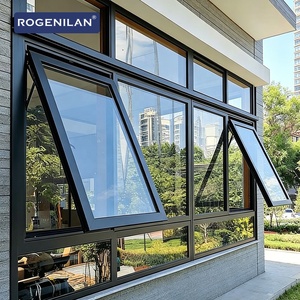
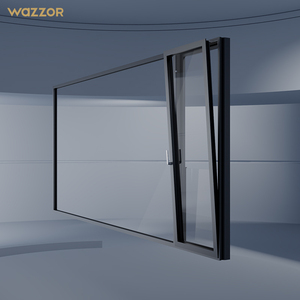
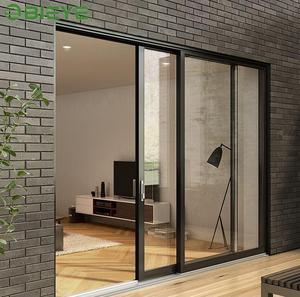
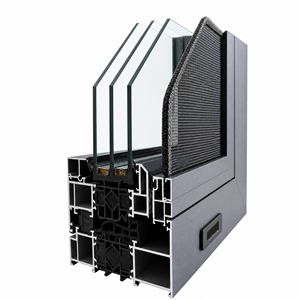
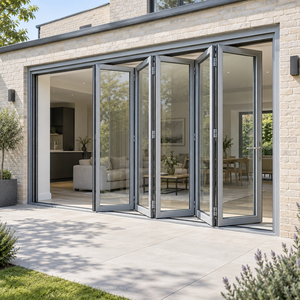
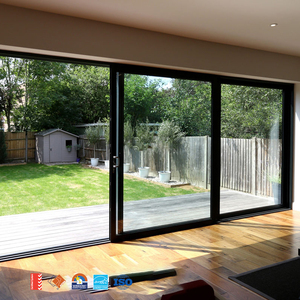
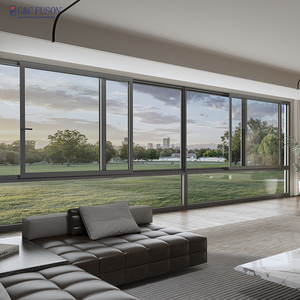
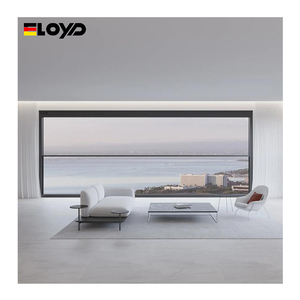
Industrial Landscape: Evaluating Aluminium Mesh Door Factories in Egypt
Contractors, developers, and facade consultants searching for reliable aluminium mesh door factories & factory setups in Egypt frequently navigate an operational divide. On one side stands local tier-2 assembly fabricators scattered across Tenth of Ramadan City, 6th of October Industrial Zones, and Borg El Arab. While these operations offer quick turnaround times for low-duty sliding screen panels, they frequently exhibit technical vulnerabilities: profile thickness variance, inadequate electrostatic powder coating micron depths, and basic fiberglass insect screens that degrade under Egypt's intense UV radiation index.
Conversely, modern architectural master plans necessitate international-standard system doors. These demand extruded primary alloy profiles (6063-T5/T6), precision thermal break barriers (polyamide PA66 reinforced with 25% glass fiber), and woven 304 or 316 marine-grade stainless steel security mesh clamped with insulated pressure retention gaskets. Meeting this spec threshold requires tier-1 industrial manufacturing infrastructure—integrating automated CNC double-head profile machining, pneumatic mesh stretching tables, multi-point deadlock hardware milling, and Qualicoat-certified architectural surface finishing.
Localized Application Scenarios in Egypt's Microclimates
Deploying aluminium mesh doors within the Egyptian geographic matrix requires an acute understanding of dual extreme climatic factors: hyper-arid desert dusting combined with extreme diurnal thermal fluctuations, and aggressive coastal saline marine saturation. Standard screen doors systematically fail under these localized physical stresses.
New Cairo & Sheikh Zayed Compounds
Gated standalone villas and penthouses face significant desert sand intrusion from seasonal Khamaseen windstorms. Heavy-duty 0.8mm–1.0mm woven security mesh functions as a high-volume particulate filter, preventing sand accumulation while allowing natural thermal dissipation during evening drops.
North Coast (Sahel) Coastal Fronts
Beachfront properties in Sidi Abdel Rahman and Ras El Hekma confront continuous salt spray, high relative humidity, and heavy UV exposure. Standard metals oxidize rapidly. We implement high-tensile 316 stainless steel wire mesh paired with Qualicoat Class 2 architectural fluorocarbon powder coating.
New Administrative Capital (NAC) Projects
Governmental complexes, high-density residential towers, and corporate headquarters demand certified fire retardancy, intruder resistance ratings (RC2/RC3), and seamless integration into automated building management systems (BMS) with electric concealed multi-point latching.
Material Engineering: Security Screen vs. Conventional Insect Screens
A major issue in Egyptian procurement is treating architectural security mesh doors identically to lightweight wire fly screens. The engineering differences between basic fly screens and structural aluminium security mesh doors are substantial:
| Performance Vector | Local Assembler Fly Screen | DERCHI High-Tensile Security Mesh System | Architectural Consequence |
|---|---|---|---|
| Aluminium Frame Alloy | Recycled scrap blend / 1.0mm wall thickness | Primary 6063-T6 / 2.0mm–3.0mm wall profile | Resists frame sagging and structural torsion over spans >2.8m. |
| Mesh Composition | PVC-coated fiberglass or untreated 201 wire | 0.8mm–1.0mm SUS316 Marine-Grade High-Tensile Stainless | Knife-shear resistant, bulletproof-rated, impervious to salt rust. |
| Surface Protection | Generic industrial enamel paint (<40 microns) | AkzoNobel / Tiger Drylac Fluorocarbon (>80 microns) | Resists 3,000+ hours salt spray test (ASTM B117); zero chalking. |
| Mesh Retention Engineering | Rubber spline pushed into an open channel | Patented mechanical screw-clamp + PVC wedge insulator | Prevents galvanic corrosion between steel and aluminium; withstands kick-ins. |
| Locking Mechanism | Single mechanical tongue latch | Hook-bolt 3-point or 5-point European security deadlock | Full structural anchorage against forced pry-bar ingress. |
Emerging Architectural Trends in the Egyptian Market
The Egyptian fenestration market is advancing rapidly away from outdated white-lacquered sliding profiles with insect netting. Four primary architectural specifications now dominate high-end tenders:
Oversized Pivot Screen Doors
Architects designing modern villas in Sheikh Zayed favor monumental entrance configurations. Floor-to-ceiling pivot mesh screen systems exceeding 3.5 meters in height utilize hydraulic damped ground-pivot hinges capable of carrying 400kg+ loads safely.
Concealed Flush Thresholds
Indoor-outdoor spatial continuity is paramount in North Coast chalets. Multi-track sliding mesh systems are integrated with barrier-free, submerged drain channels that flush completely with finished marble or porcelain floor elevations.
Solar Glare & UV Mitigation
Micro-aperture woven security screens offer an unheralded physical advantage: reducing solar heat gain coefficients (SHGC) by up to 32% and cutting direct solar glare without completely blocking outward optic clarity.
Smart Biometric Integration
Eliminating physical key management, modern villa compounds in Katameya Heights and SODIC developments specify motorized smart mesh doors featuring 3D facial recognition, mobile Bluetooth integration, and automated closure timers.

Guangdong Dejiyoupin Doors and Windows Co., Ltd. (DERCHI)
Ranked among China’s Top 10 High-End Architectural Door & Window manufacturers, DERCHI operates as a trusted industrial supply chain partner for major construction, hotel, and luxury residential projects worldwide.
- 180,000 m² Mega Industrial Base: Fully integrated precision extrusion processing, automated CNC cutting lines, and dedicated assembly hangars.
- 600+ Skilled Specialists: Dedicated technical support, structural shop drawing engineering, and rigorous multi-stage quality control.
- Internationally Tested & Certified: Rigorously compliant with AS2047 N6 cyclone standards, CE certification, ISO 9001, and UL Fire Ratings.
- Direct Port Shipping to Egypt: CIF and FOB logistics structured directly to Alexandria Port, Port Said, and Sokhna Port with export-reinforced sea freight crating.
Frequently Asked Questions by Egyptian Importers & Contractors
Key technical, regulatory, and logistics directives for ordering factory-direct architectural door systems into Egypt.