Export Portfolio · Iberia Market
Engineered Casement & Fenestration Systems
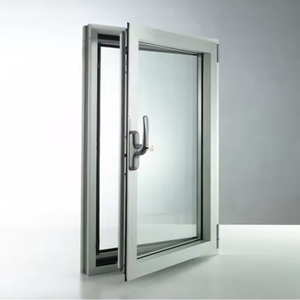
Precision-extruded architectural assemblies tailored for Mediterranean, Continental, and Cantabrian building envelopes with advanced thermal-break profiles and multi-point security hardware.
Technical Whitepaper · Iberian Standards
Engineering Aluminum Casement Doors for the Spanish Climate Zones (CTE DB-HE)
Spain presents one of the most microclimatically diverse architectural environments in the European Union. Under the statutory framework of the Código Técnico de la Edificación (CTE), specifically the Basic Document on Energy Saving (DB-HE) and Noise Protection (DB-HR), structural building envelopes cannot rely on generic fenestration profiles. From the humid, marine-saline atmosphere of the Mediterranean coast (Valencia, Alicante, the Balearic Islands) to the extreme seasonal thermal deltas of the Meseta Central (Madrid, Castilla-La Mancha) and the severe wind-driven rain loads of the Atlantic/Cantabrian coast (Galicia, Asturias, Basque Country), aluminum casement doors must satisfy rigorous physical performance criteria.
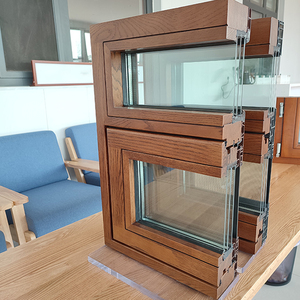
As an established global manufacturer and primary exporter to Spain, our architectural casement systems are developed with multi-chamber thermal breaks utilizing fiberglass-reinforced polyamide strips (PA66 GF25) up to 34mm in depth. This structural configuration isolates the exterior extruded 6063-T6 aluminum profile from the internal chassis, lowering overall thermal transmittance (U_w values down to 1.1 W/m²K). This ensures compliance with climate zones α through E defined in CTE DB-HE Table 3.1.1.a, mitigating winter condensation risks and dramatically lowering solar heat gain coefficients (SHGC/g-value) during intense Iberian summers.
CTE DB-HE Thermal Transmittance
Certified low thermal conductivities satisfying strict energy renovation directives for Spanish Zones C, D, and E (Madrid, Burgos, Zaragoza) requiring U_w values ≤ 1.6 W/m²K.
Qualicoat Seaside Anti-Corrosion
Fluorocarbon and architectural powder coatings resisting corrosive marine salt-fog air along the Costa del Sol and Costa Blanca, tested beyond 1,000 salt-spray hours without filiform decay.
UNE-EN 12207 Class 4 Air Permeability
Continuous vulcanized EPDM compression perimeter gaskets providing complete hermetic tightness against high wind pressures along the windy Biscay littoral and Strait of Gibraltar.
Acoustic Attenuation (CTE DB-HR) and Structural Air Permeability
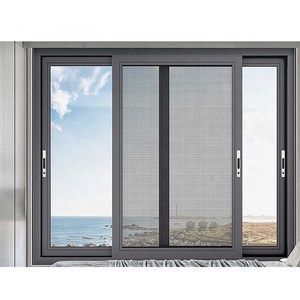
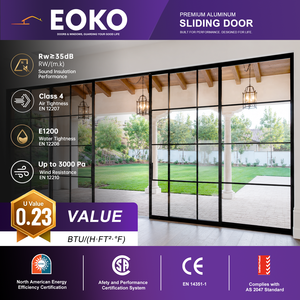
In dense Spanish urban centers—such as the Ensanche of Barcelona or Madrid's Gran Vía arterial—ambient urban traffic and pedestrian noise demand severe acoustic decoupling. Our casement doors achieve acoustic dampening ratings ranging from Rw 38 dB to 44 dB through unequal-thickness acoustic PVB laminated insulating glass units (e.g., 6+16Ar+4+4.2 acoustic laminate). Unlike sliding systems which inherently suffer peripheral brush seal leakage, our casement doors employ all-around perimeter compression locking, driven by multi-point European groove gearboxes. This continuous pressure seal ensures Class 4 air permeability and Class E900 water tightness under stringent UNE-EN 12208 standards.
Regional Architectural Implementation
Application Scenarios Across Spain
Tailoring profile depths, glazing build-ups, and locking mechanics to match the precise environmental exposures and zoning laws of Iberian developments.
Coastal Mediterranean Luxury Villas
Deployments across Marbella, Mallorca, and Ibiza require expansive door heights (up to 3.2m) combined with extreme resistance to marine salt mist. Our thermally broken aluminum casement swing doors feature marine-grade Qualicoat Seaside surface treatments, fully concealed heavy-duty hinges capable of supporting 300kg sash weights, and solar control Low-E glass that blocks ambient Mediterranean solar radiation while preserving panoramic views.
Marbella · Costa Brava · Balearic IslandsHistoric Urban Renovations (Casco Antiguo)
Projects throughout central Madrid, Seville, and Valencia must navigate municipal historical heritage commissions. We provide ultra-slim sightline casement profiles with simulated putty lines and integrated architraves that replicate traditional 19th-century Spanish wrought-iron or timber joinery aesthetics while integrating triple-glazed acoustic attenuation to eliminate urban street noise.
Madrid Centro · Ciutat Vella · Sevilla HistóricaHigh-Footfall Hospitality & Commercial Enclosures
Resorts in the Canary Islands, golf clubhouses in Andalusia, and contemporary boutique hotels demand reinforced commercial casement entrance doors. Designed with barrier-free, low-profile thresholds conforming to Spanish accessibility mandates (CTE DB-SUA), reinforced panic hardware, and high-cycle European hardware certified for over 200,000 opening cycles without hinge sag.
Tenerife · Benidorm · Costa del Sol ResortsMarket Intelligence
Emerging Fenestration Trends in the Spanish Construction Sector
The Spanish architectural and building envelope sector is currently experiencing a profound paradigm shift driven by legislative mandates, sustainability goals, and evolving aesthetic preferences:
1. The Transition to Near-Zero Energy Buildings (nZEB / Passivhaus)
With Royal Decree 732/2019 tightening the CTE DB-HE limits, newly constructed and deeply retrofitted Spanish residences must approach near-zero energy consumption. Architects are moving away from traditional cold-chassis aluminum profiles toward multi-chambered, warm-edge spacer thermal casements capable of achieving whole-assembly thermal transmittances (U_w) below 1.2 W/m²K. Dual-action casement systems that offer both tilt-and-turn (oscilobatiente) and swing functionalities dominate project tenders because they provide micro-ventilation without compromising airtightness.
2. Minimalist Architectural Sightlines with Maximum Daylight Penetration
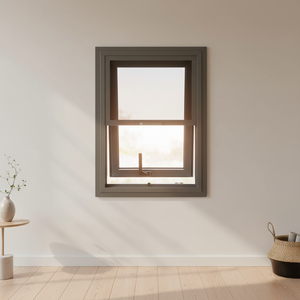
Contemporary residential architecture in urban and coastal Spain heavily favors concealed sash systems (hoja oculta). By hiding the operable door sash behind the outer frame profile, the visible frame face is reduced to under 70mm. This delivers a uniform exterior appearance between fixed and operable glazing, enhancing modern design aesthetics and maximizing natural daylighting—a crucial factor in luxury Iberian development.
3. Next-Generation Sustainable Metallurgy: Low-Carbon Recycled Aluminum
In accordance with the European Green Deal and the Spanish National Integrated Energy and Climate Plan (PNIEC), developers and specifiers are mandating verifiable Environmental Product Declarations (EPD). Modern aluminum casement systems are increasingly fabricated using post-industrial recycled billets smelted with renewable hydro-electric power, reducing the carbon footprint to less than 4.0 kg CO2 per kg of extruded aluminum—positioning suppliers for LEED and BREEAM ES certifications.
Manufacturing Leadership
Why Spanish Importers & Contractors Partner With Us
Eliminating intermediaries to deliver precision-machined, customized architectural fenestration directly from our Foshan production cluster to your project site.
Factory-Direct Pricing
By sourcing directly from our 180,000 m² Foshan fabrication hub, Spanish distributors and general contractors bypass European trade distributor markups, achieving substantial cost reductions without compromising on dimensional accuracy or alloy specifications.
Comprehensive EU Testing
All casement door assemblies comply with the Construction Products Regulation (CPR 305/2011/EU) and carry full CE markings under EN 14351-1. Complete test reports for air permeability, water tightness, and structural wind resistance are ready for site inspection.
Bespoke Architectural CAD/BIM
Our dedicated engineering department provides bilingual shop drawings, thermal simulation reports, and detailed structural anchoring details tailored to local construction practices, including thermal breaks, brick cavity reveals, and exterior insulation systems (SATE).
Reinforced Maritime Logistics
Every shipment is protected by peelable surface films, high-density corner buffers, and seaworthy fumigated steel-reinforced timber crates. We provide reliable CIF, FOB, and DDP shipping directly to major Spanish container hubs including Valencia, Barcelona, and Algeciras.
Procurement Intelligence
Frequently Asked Questions by Spanish Specifiers
Answers to key questions regarding technical compliance, customs clearance, surface coatings, and thermal parameters for importing to Spain.
Do your aluminum casement doors fulfill the thermal requirements of the Spanish CTE DB-HE? +
Yes. Our multi-chamber thermal break casement doors feature high-density polyamide isolation strips (up to 34mm) that restrict overall thermal transmittance (U_w) to between 1.1 and 1.6 W/m²K depending on the selected glass specification. This comfortably satisfies the maximum U-value thresholds established by the Spanish Código Técnico de la Edificación (CTE DB-HE) across all climatic zones (α, A, B, C, D, and E), making them suitable for both residential renovations and new nZEB builds.
What surface treatments prevent coastal filiform corrosion along the Spanish coastlines? +
For coastal deployments (e.g., Costa Brava, Costa Blanca, Costa del Sol, and the Balearic/Canary Islands), we apply specialized architectural powder coatings certified to Qualicoat Class 2 / Seaside standards or high-performance PVDF (fluorocarbon) finishes. These treatments incorporate an enhanced chemical pre-treatment process (acid etching) that eliminates surface contaminants, successfully resisting salt-laden humidity and preventing filiform corrosion under continuous ASTM B117 salt spray exposure for over 3,000 hours.
Are test reports and CE markings provided for Spanish building control (Dirección Facultativa)? +
Every manufactured batch is delivered with complete technical compliance documentation, including CE Declaration of Performance (DoP) under EN 14351-1:2006+A2:2016, ISO 9001 quality certificates, and independent laboratory test certificates detailing air permeability (UNE-EN 12207), water tightness (UNE-EN 12208), wind load resistance (UNE-EN 12210), and acoustic insulation performance (UNE-EN ISO 10140-2) required by the Spanish project architect and technical inspection bodies (OCT).
How do you handle shipping logistics, customs, and port delivery to Spain? +
We provide structured international commercial terms (Incoterms 2020) including CIF and CFR to major Spanish container ports such as Port of Valencia, Port of Barcelona, Algeciras, and Bilbao. We supply complete export documentation—commercial invoices, certified packing lists, bills of lading, and EUR.1 / Certificates of Origin—to streamline customs clearance with your freight agent. Complete DDP (Delivered Duty Paid) door-to-jobsite handling can also be arranged upon request.
Can European-standard smart locks and custom ironmongery be integrated into your profiles? +
Our door systems utilize standard European-groove (Euro-groove) hardware channels. This allows flexible integration of premium European ironmongery and multipoint security systems (such as Siegenia, Roto, or G-U), as well as smart home access peripherals—including biometric fingerprint scanners, digital PIN keypads, and motorized multi-point locks operating on standard European 24V automation protocols.
Ready to Discuss Your Project in Spain?
Submit your architectural elevations, opening schedules, or tender documents. Our engineering team will return comprehensive shop drawings, thermal calculations, and factory-direct commercial estimates within 24 hours.