High-Performance Aluminum Swing & Fenestration Assemblies
Engineered for high structural stability, heavy-load hardware integration, and multi-barrier airtightness tailored to harsh continental climate applications.
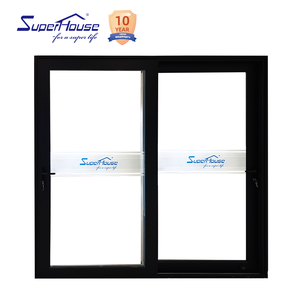


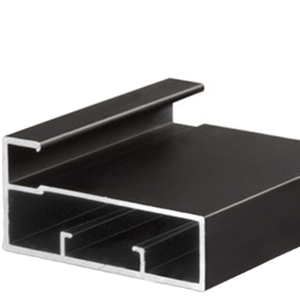
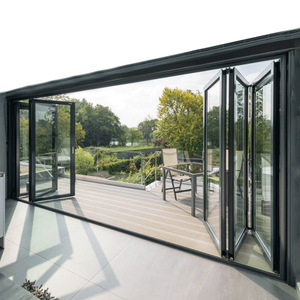

Architectural Fenestration in Moscow: The Thermal & Structural Imperative
Procuring aluminum swing windows for the Moscow metropolitan region and the wider Moscow Oblast requires a sophisticated understanding of localized microclimates and rigorous federal building regulations. Moscow falls within Climate Zone II (Moderate Cold), characterized by long, sub-zero winters where temperatures routinely drop below -25°C, coupled with significant temperature deltas between indoor conditioned environments and exterior conditions exceeding 45°C. Under these severe environmental conditions, non-thermally broken or standard commercial aluminum systems suffer from catastrophic thermal bridging, internal dew-point condensation, frost formation, and severe energy loss.
For modern premium developments—particularly luxury private villas along the Rublyovo-Uspenskoye and Novorizhskoye corridors, as well as class-A commercial towers in the Presnensky District (Moscow City)—specifiers consistently demand Uw values approaching 0.8 to 1.0 W/(m²·K). Achieving this level of thermal efficiency with an aluminum swing (casement or tilt-and-turn) window requires a structural frame profile depth of 75mm to 90mm, incorporating multi-cavity polyamide (PA66 GF25) thermal insulation bars of 34mm to 54mm depth, reinforced with cellular polyolefin foam insulation cores.
Comparative Glazing and Thermal Profiles for Moscow Climate Zones
The glass unit constitutes over 75% of the total window aperture. For Moscow installations, double-chambered (triple-glazed) insulated glass units (IGUs) are mandatory. The standard configuration leverages outer and inner Low-E soft-coatings (such as double silver magnetron sputtering), argon gas filling at a 90% concentration, and warm-edge composite spacers (e.g., Swisspacer Ultimate or Technoform) that mitigate the edge-seal thermal bridge.
| Profile System Configuration | Thermal Break Width | Glass Unit Build (IGU) | Uw Rating (W/m²·K) | GOST 21519 Class | Applicable Moscow Scenario |
|---|---|---|---|---|---|
| DERCHI Arctic-75 Swing | 34mm Multi-Cavity PA66 | 40mm Triple Glazed (4LowE-14Ar-4-14Ar-4LowE) | 1.15 W/(m²·K) | Class 1 (R₀ ≥ 0.80) | Urban Residential & High-Rise Apartments |
| DERCHI Nordic-85 Tilt-Turn | 42mm Cellular Core PA66 | 48mm Triple Glazed (6LowE-16Ar-4-16Ar-6LowE) | 0.92 W/(m²·K) | Class 1+ Superior | Luxury Suburban Cottages (Novaya Moskva) |
| DERCHI Passive-95 Heavy Casement | 54mm Aerogel Infused | 54mm Krypton-filled Acoustic Laminate | 0.78 W/(m²·K) | Passive Standard | Energy-Positive Estates & Embassies |
| Commercial Facade Swing Sash | 28mm Standard PA66 | 32mm Double Low-E Toughened | 1.38 W/(m²·K) | Class 2 (R₀ 0.65-0.75) | Ventilated Facades & Retail Podiums |
Localized Application Scenarios Across Moscow
From prestigious private estates in Moscow Oblast to urban infill restorations along the Garden Ring, our aluminum swing systems meet precise structural and aesthetic requirements.
Novaya Moskva Luxury Cottages & Dachas
Private architectural residences in Barvikha, Zhukovka, and Millennium Park demand floor-to-ceiling panoramic swing doors and outward-opening casements capable of handling massive wind loads without sash deflection. Our hidden-hinge tilt-turn assemblies maintain pristine sightlines while ensuring zero air leakage during winter blizzards.
Central Administrative Okrug (CAO) Renovations
Historical conservation projects near Tverskaya, Arbat, and Zamoskvorechye require fenestration that mirrors historical Crittall-style or classical wood-proportioned sightlines while fulfilling modern acoustic standards. Our slim-profile steel-look thermally broken swing series delivers Rw 44dB noise dampening against central street traffic.
High-Rise Mixed-Use & Curtain Wall Infill
For modern commercial skyscrapers and high-rise developments along the Third Transport Ring, window systems must withstand gust pressures exceeding 1,200 Pa. Integrated inward-opening swing sashes equipped with multi-point perimeter gearboxes guarantee structural integrity and fail-safe water tightness up to 600 Pa test pressure.
Moscow Market Dynamics: Modern Trends in Aluminum Fenestration
The fenestration sector in Moscow is undergoing a massive structural transformation. Driven by stringent sustainability targets, evolving architectural aesthetics, and changing global trade partnerships, the market has pivoted rapidly from standard PVC joinery toward high-precision structural aluminum. Key macroeconomic and architectural trends include:
1. Substitution of Western European Profiles by Tier-1 Chinese Extrusions
Historically dominated by German profile suppliers such as Schüco, Reynaers, and Wicona, the Moscow fenestration landscape has undergone significant supply chain re-engineering. Developers and Tier-1 general contractors have turned directly to leading Chinese manufacturing giants that offer equivalent or superior metallurgical purity (primary 6063-T6 aluminum alloy billet), advanced surface coatings, and fully customized fabrication at predictable pricing and reliable shipping cycles.
2. The "Warm Aluminum" Paradigm Replacing Rigid PVC
In mid-to-high-tier residential segments across Moscow, PVC profiles are increasingly disfavored for large-format apertures due to thermal expansion discrepancies and plastic sag in variable weather. Modern "Warm Aluminum" (aluminum with expansive polyamide thermal barriers) exhibits virtually zero thermal deformation across temperatures ranging from -40°C to +80°C, permitting sash dimensions exceeding 1.2m in width and 2.8m in height without compromising seal compression.
3. Integration of Multi-Functional Glazing with Micro-Ventilation Hardware
Moscow building standards require continuous air exchange even during severe winter months when full window openings cause catastrophic heat loss. High-end swing windows now incorporate specialized tilt-turn hardware with micro-slit ventilation positions (2-4mm sash clearance), preventing drafts while maintaining fresh air exchange. Furthermore, heated glass technologies (conductive glass panels that dissolve exterior snow build-up and eliminate cold radiation) are increasingly specified for luxury cottages.
Manufacturing Authority: Guangdong Dejiyoupin (DERCHI)
Recognized among China's Top 10 premium architectural door and window manufacturers, Guangdong Dejiyoupin Doors and Windows Co., Ltd. (DERCHI) operates from an expansive industrial cluster in Foshan, Guangdong. Backed by 25+ years of engineering heritage, our facilities offer Russian developers, architects, and importers the production capacity, precision, and certification required for mission-critical developments.
180,000 m² Mega Production Base
Equipped with fully automated 5-axis CNC profile machining centers, robotic corner-crimping cells, and high-capacity dual-component sealant extrusion lines. We guarantee structural tolerance within ±0.5mm across all sash and frame joints.
Global Testing & Rigorous Compliance
Validated by CE, ISO 9001, AS 2047, and UL certifications, supported by more than 30 proprietary design and mechanical patents. Our fenestration solutions easily satisfy EAC conformity assessments and GOST structural load requirements.
Bespoke Engineering & Export Packaging
In-house structural engineering teams produce complete shop drawings, BIM models, and structural calculation reports. Products are packed in reinforced, moisture-sealed export-grade sea/rail crates engineered for multimodal Trans-Siberian freight handling.
Frequently Asked Questions by Moscow Buyers
Essential guidance on logistics, GOST compliance, severe-cold thermal engineering, and cross-border project management.
How do DERCHI aluminum swing windows prevent condensation and ice formation during severe Moscow winters (-30°C)?
What documentation and test reports are provided for Russian GOST & EAC certification?
Can you manufacture large-format swing sashes suitable for contemporary minimalist villa designs?
What is the standard shipping lead time and logistics route from Foshan to Moscow?
How are profile finishes protected against harsh road salts, industrial smog, and freeze-thaw cycles?
What technical assistance is offered during the CAD shop drawing and site installation stages?
Plan Your Next Moscow Facade or Villa Project
Connect directly with our export engineering department to receive precise CAD proposals, thermal transmittance calculations, and competitive OEM factory pricing for your upcoming residential or commercial development.
Get a Quote