Custom Engineered Glazing & Entrance Systems
Manufactured in strict adherence to South Korea’s stringent KS F 3117 window standards and KS F 2278 thermal transmittance requirements. Featuring PA66 nylon thermal break barriers, dual/triple Low-E tempered glass, and heavy-duty hardware systems.
Engineering for South Korea’s Dual Climate Extremes
The Korean Peninsula presents one of East Asia’s most demanding architectural challenges. The building envelope must confront sub-zero Siberian anticylonic freezing conditions during winter in northern regions like Gangwon-do and Seoul (Central 1 and Central 2 climatic zones), contrasted with torrential summer monsoons (Jangma) and recurring super-typhoons in Busan, Ulsan, and Jeju Island.
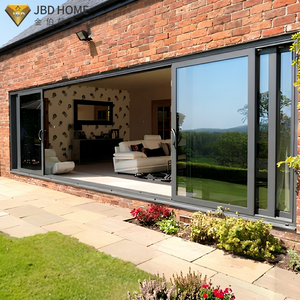
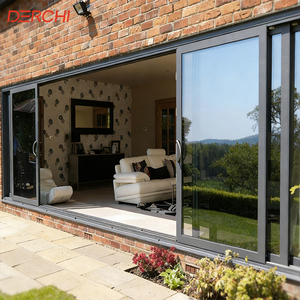
Our custom OEM aluminum sliding doors with integrated windows utilize a multi-chambered thermal barrier profile coupled with 25% glass fiber reinforced Polyamide (PA66 GF25) techno-bars. When engineered with argon-gas-filled triple Low-E insulated glazing units (IGUs) and continuous EPDM compression gaskets, our sliding door systems eliminate convection loops, meeting KS F 2278 thermal transmittance and KS F 2292 airtightness Class 1 criteria.

Engineered for Korea's Diverse Construction Landscape
From high-density Seoul metropolitan high-rises to rugged coastal villa estates in Jeju, our OEM sliding doors are customized to regional building requirements.
High-Rise Apartments (Apatu Complex Balconies)
In high-density apartment complexes across Incheon, Bundang, and Songdo, high wind pressures at elevated altitudes require extreme structural inertia. Our reinforced 6063-T6 aluminum mullions resist structural deflection up to 4500 Pa, with multi-point perimeter locks preventing whistle noise under high-velocity wind conditions.
Luxury Coastal Villas (Jeju Island & Haeundae)
Jeju and coastal Busan face marine salt aerosols, heavy moisture, and cyclonic rainfall. We employ Qualicoat Class 2 certified architectural powder coatings and 25-micron anodic oxidation treatments that withstand 3,000 hours of neutral salt spray testing without pitting corrosion or surface peeling.
Suburban Housing Complexes (Gyeonggi-do Townhouses)
Korean suburban developments prioritize seamless transitions between living rooms and outdoor decks. Our slim-sightline lift-and-slide doors feature embedded flush thresholds that provide step-free ADA-compliant living while preventing water backflow during concentrated summer monsoon cloudbursts.
South Korea’s Modern Architectural Trends
South Korea’s fenestration sector is experiencing an unprecedented structural upgrade fueled by the government’s Zero Energy Building (ZEB) Roadmap. Since 2020, public sector buildings have required ZEB certification, and mandatory private residential rollouts demand thermal transmission performance formerly seen only in passive house standards.
• Slim Frameless Aesthetic: Hidden outer frames and ultra-narrow interlocking stiles (down to 20mm visible sightlines) are preferred by Seoul architects.
• Smart Home Integration: Pre-routed channels for smart magnetic contacts, motorized opening drives, and Wallpad / IoT sensor compatibility.
• Fine Dust Filtering (PM2.5): Integrated micro-mesh anti-dust sliding screens alongside glass panels to prevent yellow dust penetration in spring.
Our factory supports Korean architectural firms, tier-1 general contractors, and door distributors with turnkey OEM manufacturing, supplying precision shop CAD drawings, BIM modeling, and customized packaging compliant with Korean container logistics.
System Performance Verification for Korean Building Codes
Comparison of laboratory test metrics against Korean industrial standards (KS) and international benchmarks.
| Performance Property | Korean KS Standard Test | DERCHI Engineered System Metric | Korean Code Compliance Status |
|---|---|---|---|
| Thermal Transmittance (U-Value) | KS F 2278 (Calibrated Hot Box) | 0.89 – 1.15 W/m²K (Triple Low-E + Argon) | Central Region 1 Compliant |
| Airtightness (Air Permeability) | KS F 2292 (Pressure Differential) | Grade 1 (Under 1.0 m³/h·m² at 10 Pa) | Highest Efficiency Tier |
| Watertightness (Rain Penetration) | KS F 2293 (Dynamic Water Spray) | Class 5A (Tested up to 700 Pa dynamic head) | Typhoon Resistant |
| Wind Load Resistance | KS F 2296 (Deflection & Safety) | Design Pressure: 4,500 Pa (Serviceable) | Coastal High-Rise Rated |
| Acoustic Insulation (STC/Rw) | KS F 2808 (Sound Transmission) | Rw 38 – 42 dB (Laminated Acoustic Core) | Urban Noise Reduction |
Why Korea’s Top Developers Choose Our Factory
Backed by 25+ years of fenestration engineering, a 180,000m² manufacturing infrastructure, and complete quality traceability from raw ingot to finished crate.
Automated CNC Processing Centers
Our 4-axis and 5-axis European CNC extrusion machining lines deliver ±0.1mm tolerance for lock mortises, drain channels, and corner corner keys. This micro-precision ensures air-tight miter joints that remain structurally sound across hundreds of thousands of duty cycles.
Hardware Compatibility (Siegenia, GU & HOPPE)
We work seamlessly with Korean domestic hardware profiles as well as high-end German systems (Siegenia, G-U, Roto, HOPPE). Heavy-duty stainless steel ball-bearing tandem rollers effortlessly glide sashes up to 400 kg with operating forces below 20 Newtons.
Export Logistics & Incheon/Busan Port Service
With direct sea routes from Foshan/Shenzhen to Incheon and Busan, we supply ocean freight containers reinforced with heavy-duty fumigated wooden crates, internal foam edge-guards, and vacuum moisture dessicants to eliminate marine condensation during transport.
Frequently Asked Questions for South Korea Importers
Critical insights for Korean general contractors, trading firms, architects, and luxury residential builders.