Procurement Intelligence
Frequently Asked Questions by Seattle Builders & Architects
Actionable answers to technical compliance, energy metrics, shipping routes, and installation specifications for importing architectural windows into Washington State.
Q:
How do DERCHI aluminum window assemblies comply with the Seattle Energy Code (SEC)?
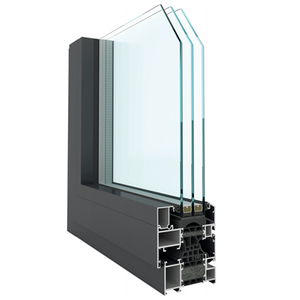
Our aluminum window systems use multi-cavity polyamide PA66 thermal breaks paired with insulated glazing units (IGUs) featuring soft-coat Low-E (e.g., Solarban 60/70 equivalents) and argon gas fills. These configurations reliably achieve whole-window U-factors of 0.26 to 0.22 BTU/(hr·ft²·°F), meeting or exceeding the prescriptive envelope criteria for Climate Zone 4C.
Q:
Can your profiles accommodate standard North American nail-fin installation methods?
Yes. We engineer integrated extruded nailing fins set at 1-3/8" (35mm) set-backs, as well as flush-fin retrofit profiles and clip-anchor systems. This ensures compatibility with standard US water-resistive barriers (WRB), self-adhered flashing membranes, and exterior rainscreen furring strips common across Puget Sound building envelopes.
Q:
What surface treatment prevents salt spray corrosion on homes near Puget Sound?
For coastal and bluff environments, we supply electrostatically applied 70% Kynar 500 / Hylar 5000 PVDF fluoropolymer coatings meeting AAMA 2605 specifications. These finishes endure 4,000+ hours of continuous salt-spray testing without blistering, chalking, or fading, providing significantly higher durability than basic residential powder coatings.
Q:
What are the lead times and shipping routes for factory-direct deliveries to Seattle?
Following approved architectural CAD submittals, fabrication cycles run between 25 and 35 calendar days. Ocean transit from Shenzhen/Guangzhou ports to the Port of Seattle takes roughly 16 to 22 sailing days. Full container loads (FCL) or consolidated LCL shipments are packaged in reinforced, moisture-barrier steel and plywood crates designed for immediate flatbed transport.
Q:
Can DERCHI supply structural glass calculation reports for Seattle building department permits?
Yes. Our structural engineering department provides comprehensive glass and aluminum extrusion wind load deflection calculations (L/175 and L/240 standards), thermal simulation summaries, and certified factory testing reports to facilitate smooth permit reviews across Seattle DCI and regional building authorities.
Q:
How is glass condensation handled during cold, high-humidity Northwest winter months?
Condensation resistance is addressed at three critical junctures: specifying warm-edge silicone structural foam spacers (such as Technoform or Super Spacer), incorporating multi-point compression gaskets that stop cold-draft infiltration, and designing internal drainage chambers that redirect incidental moisture outdoors through concealed drip ports.